Why Your Training Manuals Are Failing Franchisees
Standard training manuals break when scaled. Learn the three manual mistakes that sabotage franchise consistency and how to fix them before your next location opens.
The Consistency Trap: When Your Best Practices Become Bottlenecks
It's Friday night at your second location. The expo is calling three orders at once, a new server is staring blankly at the POS screen, and the line cook just asked how long to sear the salmon. Your training manual is sitting in the manager's office. It's failing you right now. Why Your Training Manuals Are Failing Franchisees isn't a mystery - it's a design flaw you can smell from the dining room.
Every franchise owner starts with the same assumption: write it down once, train everyone the same way. The problem isn't what you're teaching - it's how you're teaching it. Your original location's 15-minute server training that worked perfectly now takes 45 minutes at your second spot. The prep list that made sense to your head chef confuses new line cooks. This isn't about bad franchisees - it's about manuals that can't scale. This connects directly to the systemic challenges we break down in When Your Second Location Breaks Your First, which explains how your best practices become your biggest problems during expansion.
Your manual was written for your A-team at the flagship. It assumes knowledge that doesn't exist at location three. That "cook until golden brown" instruction works for a chef who's made the dish a thousand times. It means nothing to the new hire working their first dinner shift. The disconnect happens during service, not during training.
Your Manual Is Too Smart For Its Own Good
The hard truth: your training manual should be written for your worst trainee, not your best employee. Most owners document what worked at their flagship location with experienced staff. They create manuals that assume knowledge that doesn't exist yet. A recipe card that says "cook until done" works for a chef who's made the dish 500 times. It fails for a new cook who needs exact temperatures and visual cues.
Here's what actually works: Create two versions of every procedure. Version one is the detailed, step-by-step guide for day one training. Version two is the quick-reference version for experienced staff. The burger cook station needs both - a laminated card with exact grill times and temperatures for trainees, and a simple reminder sheet for veterans.
The Rule: If a new employee can't execute the procedure correctly on their third try without asking questions, your manual is too complex.
Take your side work checklist. At your original spot, "stock service station" means refilling straws, napkins, and cleaning spray. At your new location, it means someone walking around looking confused for twenty minutes. Break it down with photos. Show exactly what "fully stocked" looks like with a picture taped inside the station cabinet.
The Friday Night Test That Exposes Manual Flaws
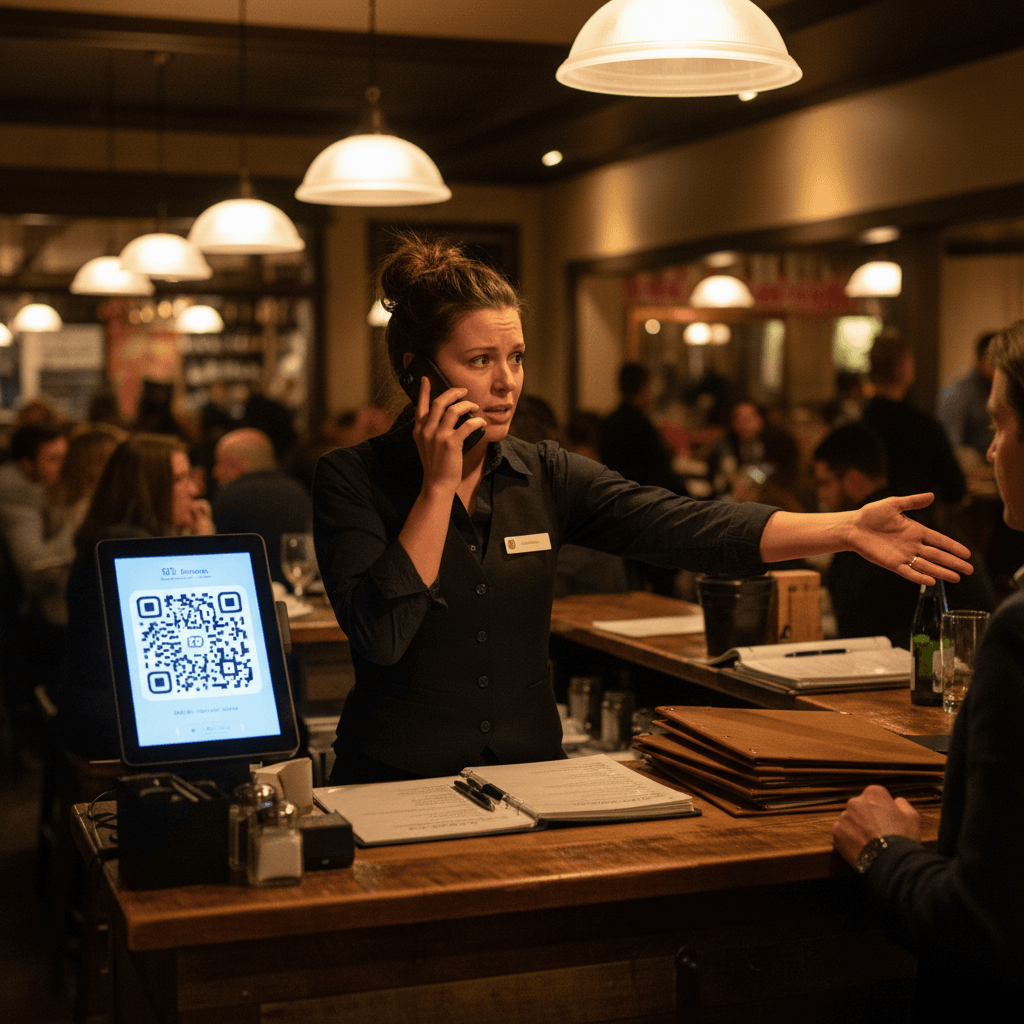
Take your training manual to a Friday dinner rush at your newest location. Watch what happens when three things go wrong at once - a server calls in sick, the POS system glitches, and a large walk-in arrives. Does your manual help or hinder? Most manuals fail here because they're written for ideal conditions.
The pivot happens when you realize: manuals should document exceptions, not just rules. Your server training should include sections on "what to do when" scenarios. What to do when the kitchen is backed up 30 minutes. What to do when a guest has an allergy not listed on the menu. What to do when two large parties arrive simultaneously.
These aren't theoretical situations. They happen every weekend at every location. Your manual becomes useful when it addresses the chaos, not just the calm.
Document what happens during actual service failures. Last Tuesday, when the printer went down during lunch rush, how did your best server handle taking orders? That's now a section in your manual: "Manual order taking during POS failure." Include the exact duplicate pad they used and where it's stored.
From Paper To Practice: The 15-Minute Daily Drill
Stop thinking of training as something that happens before opening day. The most effective franchise training happens in 15-minute daily briefings. Use your manual as a living document, not a static rulebook.
Each day, pick one section of your manual to review with staff. Monday: proper food storage temperatures. Tuesday: greeting sequence for new guests. Wednesday: expo communication during rush hour. Thursday: side work delegation. Friday: handling guest complaints.
This approach does three things: reinforces key procedures, allows for real-time adjustments based on what's actually happening on the floor, and creates a culture where training is ongoing rather than one-time.
The daily drill works because it's short and specific. Don't review "customer service." Review "how to handle a guest who sends back a steak." Use yesterday's actual example if you had one. This connects theory to immediate application.
During these briefings, listen for what confuses people. If three servers ask clarifying questions about splitting checks, that section of your manual needs rewriting tomorrow.
The Real Cost Of Manual Maintenance
Here's where most franchise systems break down completely. You spend months creating the perfect manual, then never update it. Your menu changes seasonally, but your training doesn't. Your POS system gets upgraded, but your cash handling procedures stay the same.
The solution isn't more documentation - it's smarter documentation systems. Assign one person at each location as the "manual keeper" responsible for noting what needs updating. Create a simple feedback loop where staff can suggest improvements based on real service challenges.
Your manual keeper isn't writing new content daily. They're collecting notes on sticky pads during shifts - "new appetizer plating confusing," "dessert menu description wrong," "host stand phone script outdated." Once a week, they compile these into update requests.
This maintenance has a direct cost: time spent updating instead of managing service. But the cost of outdated manuals is higher - inconsistent guest experiences across locations, increased training time for new hires, and preventable mistakes during busy shifts.
When Spreadsheets Stop Working And Systems Start
The moment you realize your training manual needs its own training manual is when you've outgrown paper-based systems entirely. This isn't about technology replacing human training - it's about systems supporting consistent execution across multiple locations.
Consider this: if explaining your manual takes longer than actually using it during service, you need a different approach. The goal isn't perfect documentation - it's consistent results during Saturday night dinner service when you're not there to supervise.
Paper binders work for single locations with daily oversight. They fail when procedures change faster than you can print updates and distribute them to four different restaurants.
This is where digital tools enter the conversation naturally - not as magic solutions but as practical supports for the manual systems you've already built correctly.
What Comes After The Binder Stops Working
Your training manual should be the foundation, not the ceiling of your franchise system. Once you have consistent procedures documented, focus on developing location-specific adaptations that maintain core standards while allowing for local realities.
The next step isn't writing more manuals - it's creating systems that make manual updates automatic when menu items change or procedures evolve.
Modern kitchen display systems can push recipe changes to every screen instantly when you update them once centrally. Digital checklists can track completion in real time across locations instead of collecting paper sheets at week's end. Scheduling platforms can enforce labor compliance rules automatically instead of relying on manager memory.
These tools don't replace training - they enforce the standards your training establishes while reducing administrative overhead.
Remember: your franchisees don't need more information - they need clearer guidance on what matters most during their busiest shifts.
Taking the Next Step
Fixing franchise training manuals starts with recognizing they're communication tools first and rulebooks second. The logic is straightforward: write for clarity during chaos, maintain through simple systems, and reinforce through daily practice.
Your operations already generate all the data you need to improve - every confused question from staff points to unclear instructions; every service breakdown reveals missing contingency plans.
If this approach makes sense but managing updates across locations feels overwhelming, consider how digital platforms designed for multi-unit restaurants handle distribution automatically. View our pricing details to understand how this scales across two locations or twenty. Start a free trial to experience how centralized updates flow directly to kitchen screens and server stations without printing or meetings