Why Your Host Stand Needs a Chatbot for Reservations
Stop playing phone tag with guests. Here's how a chatbot for reservations saves your host staff hours during the dinner rush.
The Phone That Never Stops Ringing
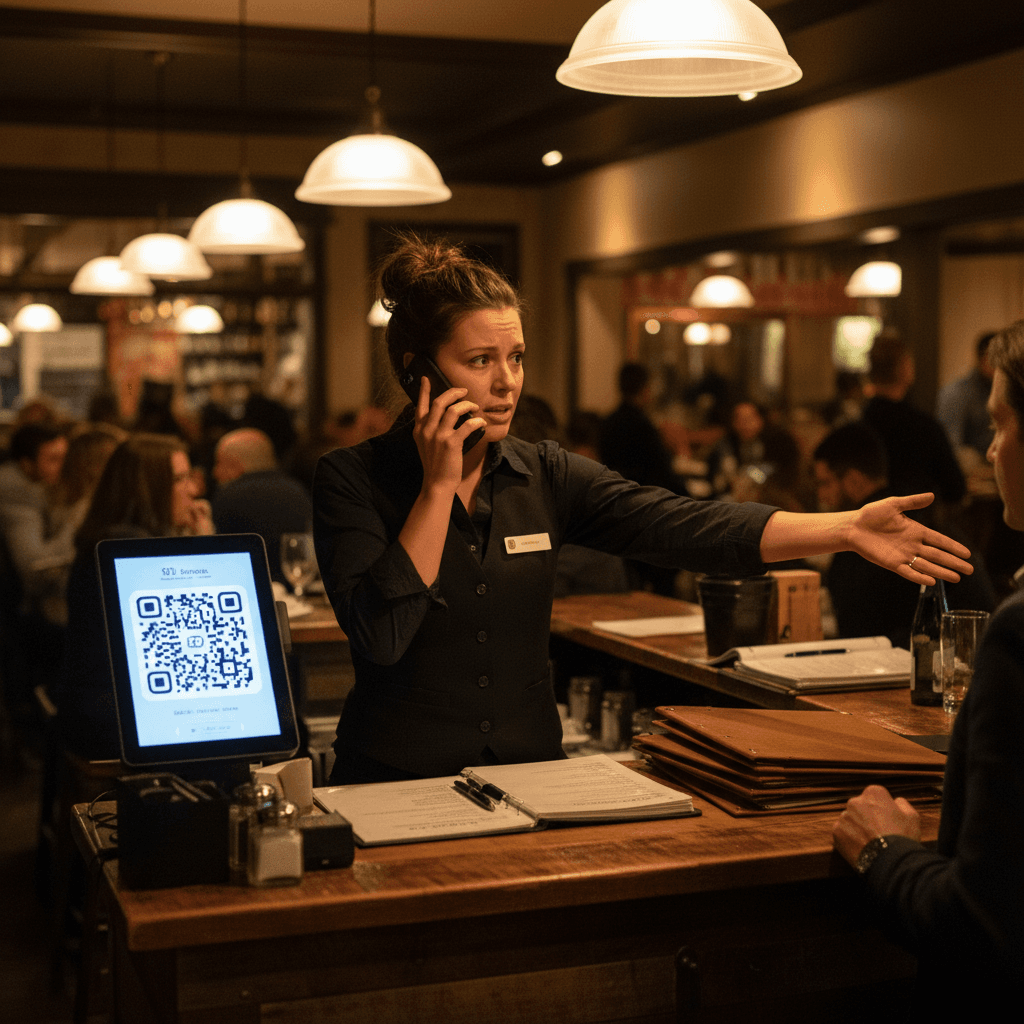
It's 6:45 PM on a Saturday. Your host is juggling three walk-ins while the phone rings for the fourth time. A caller wants to know if you can accommodate a nut allergy. Another wants to know if there's parking. Each call takes two to three minutes. Multiply that by 30 calls during dinner service and you've lost over an hour of your host's attention - time they should spend seating guests and managing the waitlist.
This is the real cost of manual reservation management. It's not just annoying. It's losing you money. And it connects directly to a bigger conversation about how restaurants survive in a changing market. We cover that in detail in Future Restaurant Trends That Actually Matter, which breaks down which shifts are worth your attention and which are just noise.
Here's what's actually happening at your host stand right now. Every time the phone rings during peak service, your host makes a choice: ignore the people in front of them or rush the person on the phone. Neither option is good. Walk-ins who wait too long leave. Callers who feel dismissed don't book.
The math is brutal. A typical Saturday dinner shift runs four hours of peak volume. If your host takes 40 calls at three minutes each, that's two full hours spent on the phone. Two hours where they are not greeting guests, not managing the waitlist, not upselling a bottle of champagne to a birthday party. You are paying someone to answer questions your menu already answers.
The 2-Minute Problem You Can Fix Today
Here's the hard truth most restaurant tech vendors won't tell you: You don't need an expensive booking system overhaul to solve this. What you need is something that answers the repetitive questions so your staff doesn't have to.
A chatbot for reservations handles the predictable stuff - hours, location, menu questions, ingredient info - without tying up your host. It lives on your digital menu or website. Guests interact with it before they ever pick up the phone.
Think of it this way: If 60% of your incoming calls are questions your menu already answers, you're paying your host to read your menu out loud over and over. That's not hospitality. That's wasted labor.
The Rule: If a guest can find the answer on your website in under 30 seconds, your host should never have to say it out loud during service.
Here's what that looks like in practice. Take a standard Tuesday night pre-shift and audit your last weekend's call log. Write down every question that came through the phone. You will find patterns within ten minutes. Hours of operation will appear six times. Parking information will appear four times. "Do you have gluten-free pasta?" will appear five times.
Now write those answers down on a single sheet of paper. Put it next to the phone. Train your host to say: "I can answer that for you right now, but let me also show you where this lives on our website so you can find it instantly next time."
This takes ten minutes of training and saves hours every weekend. Do it today.
When Manual Becomes Impossible
The bottleneck hits around 7:15 PM. The bar is full. The waitlist has 12 names. A server calls in sick. And the phone rings again.
Your host can't be at the door and on the phone at the same time. Something breaks. Either walk-ins get ignored (bad for revenue) or callers get rushed off (bad for reputation). This isn't a training problem. It's a capacity problem.
One host physically cannot handle both channels during peak service during peak service. No amount of "smile and multitask" coaching fixes that.
Here is what a good manual system looks like when it works. You have a dedicated phone station away from the door. You have a printed script next to it that answers the top five questions in under 45 seconds each. You have a clear policy: during peak hours (6:30 PM to 8:30 PM Friday and Saturday), calls go to voicemail and get returned within 30 minutes.
This works better than chaos but it still has problems. Voicemail means missed bookings. Returned calls mean playing phone tag with guests who are already eating somewhere else by the time you call back.
The manual fix buys you time but it does not solve the root issue: too many repetitive questions hitting one person during the busiest moments of service.
What Comes Next
The restaurants that win five years from now won't be the ones with fancier food or bigger bar programs. They'll be the ones who figured out how to let their staff focus on people standing in front of them instead of people on hold.
A chatbot for reservations doesn't replace your host. It lets your host actually do their job - welcome guests, manage flow, build relationships - while the bot handles the noise.
The question isn't whether this technology works. The question is how many more Saturdays you'll watch your host burn out before you try it.
Here is where automation makes sense. The manual fixes above - scripts, voicemail policies, audit logs - all require discipline and consistency from your team every single shift. That works for some operators but breaks down during turnover, training new staff, or when things get busy.
Modern digital tools handle this differently. A chatbot for reservations sits on your website and digital menu 24 hours a day answering questions without needing a break or a reminder about what time you open on Sundays. It captures reservation requests while your host handles walk-ins at the door.
This is not about replacing humans with robots at your host stand forevermore forevermore forevermore . It is about matching the right tool to the right task so your staff can do what only humans can do: read a table, read a room, recover a mistake with genuine warmth.
Taking the Next Step
None of this requires rebuilding your entire operation from scratch every other Tuesday again . The logic is simple: identify what repeats, automate what repeats, free up your people for what matters most - hospitality in real time with real guests standing in front of them.
If Saturday night chaos at your host stand sounds familiar, stop throwing more labor hours at a problem that needs structure instead . Take thirty minutes today to view our pricing and see if this approach fits how you actually run service . Then start a free trial before next weekend hits so you can measure exactly how many calls get handled without tying up your host .