Why Your Sidewalk Sign Is Failing
Most restaurant sidewalk signs get ignored because they look like everyone else's. Learn how to make yours stop traffic and bring people inside.
The Invisible Sign Problem
Why Your Sidewalk Sign Is Failing is a problem you can see at 11:45 AM on any Tuesday. Your host stands by the door watching people walk past. They glance at your chalkboard, then keep moving toward the cafe down the street. Your sign has become part of the street furniture - another piece of background noise that doesn't earn its keep. This happens because you're treating it like decoration instead of your first server.
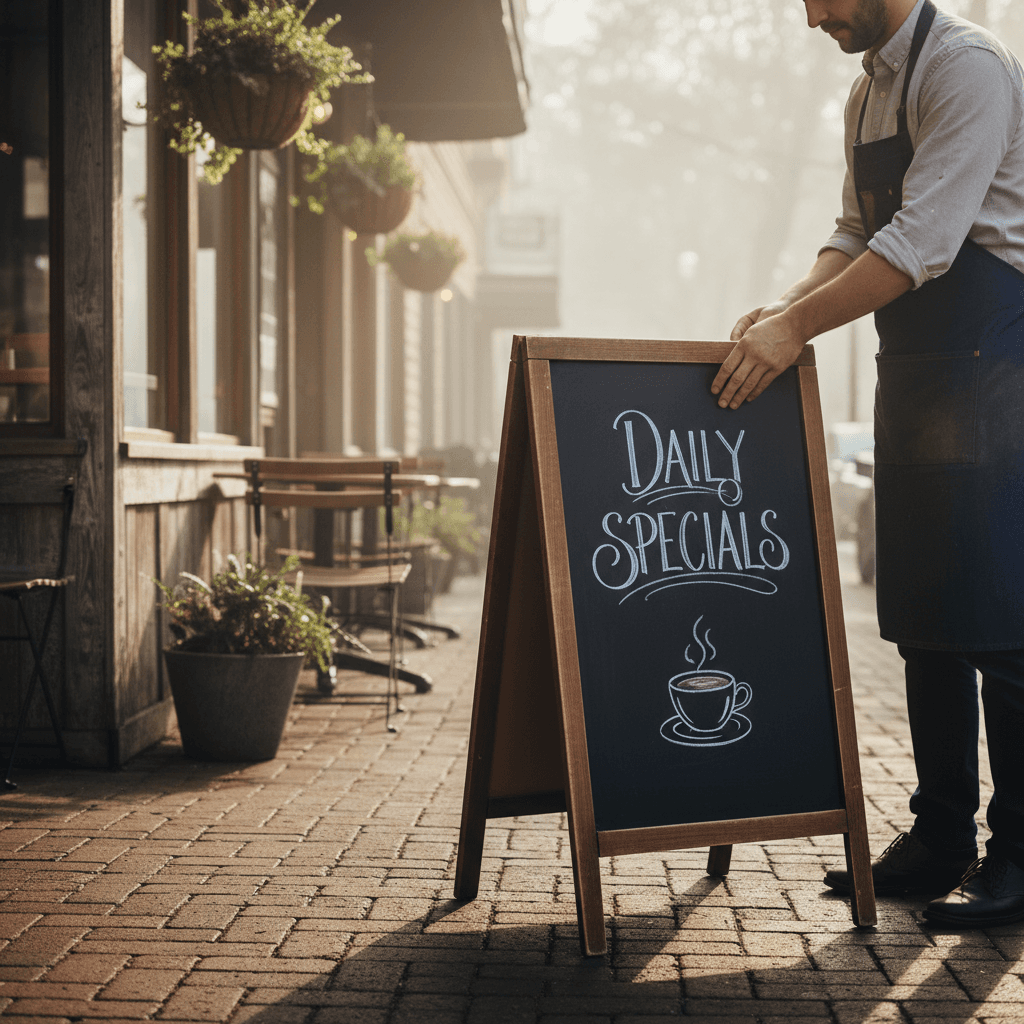
That server works for free, 24 hours a day. But right now, it's saying nothing. It blends into every other board on the block with the same chalk font, the same "Daily Specials" header, the same placement two feet from your door. Customers have trained themselves to ignore it. They've seen this movie before. This connects directly to the deeper identity work we cover in Building Your Restaurant's True Identity, which breaks down how your brand operates when tickets pile up at 7 PM on Friday.
Your sign should interrupt someone's walk home. It should make them pause mid-stride. Instead, it's wallpaper. The manager wrote it yesterday afternoon between counting inventory and checking deliveries. The specials from last night are still up because morning prep took priority. You're losing the morning coffee crowd who might have returned for lunch if they'd seen your soup special.
The Three-Second Rule That Actually Works
Here's the mathematical truth about sidewalk signs: They have three seconds to work or they fail completely. People decide whether to read your sign while walking past at normal walking speed. That's less time than it takes your line cook to plate a salad.
The Rule: Don't list your entire menu. Pick one thing that makes you different and scream it in three words maximum.
A seafood place writes "Fresh Oysters Today" not "Seafood Restaurant Open." A bakery writes "Warm Croissants Now" not "Bakery & Cafe." A barbecue spot writes "Smoked Brisket Ready" not "BBQ Lunch Specials." You're not trying to tell your whole story. You're trying to get someone to stop walking.
Test this tomorrow morning. Stand across the street during your pre-lunch lull and watch people approach your restaurant. Count how many actually slow down versus maintaining their pace. You'll see most people's eyes hit your sign for half a second before continuing down the sidewalk. That half-second is your entire marketing budget for that customer.
This works because you're solving a specific problem for someone walking by: "Where should I eat right now?" Your sign answers that question before they ask it. "Fresh Oysters Today" tells an oyster lover this is their spot. "Warm Croissants Now" tells someone wanting breakfast this is happening here. You're filtering for your ideal customer while everyone else walks past.
When Handwritten Boards Break Down
The bottleneck hits every afternoon at 3:45 PM. Someone has to rewrite yesterday's specials before the dinner rush. The manager gets pulled from counting inventory or reviewing labor costs. The board stays blank until 4:30 because a vendor delivery ran late or an employee called out sick.
This manual system fails during your busiest seasons when consistency matters most. In December, when you need every holiday party booking you can get, your sign might advertise Thanksgiving specials from two weeks ago because nobody had time to update it. During summer patio season, when foot traffic triples, your most valuable real estate sits empty during lunch because morning prep took priority.
The cost is measurable: You lose the morning coffee crowd who might have come back for lunch if they'd seen your soup special. You lose the after-work crowd looking for happy hour deals because your sign still shows lunch prices. You lose consistency - that critical feeling customers get when they know what to expect from you every time they walk by.
Handwritten boards create three specific problems on the floor:
First, they depend on someone remembering to do them. That someone is usually a manager already juggling ten other tasks during shift change. Second, they require physical materials that run out at the worst times - chalk breaks, markers dry up, erasers disappear into the abyss behind the bar. Third, they can't be changed quickly when you run out of something or get an unexpected delivery of fresh product.
I watched a farm-to-table restaurant miss selling twenty pounds of just-delivered heirloom tomatoes because their sign still featured yesterday's beet salad special. The tomatoes went into tomorrow's prep instead of tonight's sales because the chalkboard couldn't keep up with what was actually fresh in the kitchen.
From Street Corner to Front Door
Your sidewalk sign should work like your best host - greeting people before they decide where to eat tonight. It's not decoration at the end of your marketing funnel. It's the beginning of the conversation.
Start by conducting a simple audit this week: Watch people react to your current sign for one full lunch rush. Stand where customers stand when they read it. Notice where their eyes go first (usually the price if you've listed one). Count how many actually stop walking versus glancing while maintaining pace. Track if anyone takes out their phone to take a picture (the ultimate win).
Then test one change for seven days straight:
Move it three feet further from the door if local ordinances allow. Most signs sit too close to the entrance, forcing people to already be committed to your restaurant before they read it. By moving it toward the street, you catch people earlier in their decision process.
Use brighter colors if your city permits them. Many restaurants stick with traditional black and white when a splash of red or yellow would stand out against concrete sidewalks and brick buildings. Check local signage laws first, but often you have more flexibility than you think.
Feature your most photographed dish instead of your most profitable one. What people Instagram tells you what excites them visually - that bright green pesto pasta, that towering burger with onion rings, that perfect latte art heart. Put that on your sign and watch engagement jump.
The Rule: Your sign should create a bridge from the sidewalk to your door, not sit as decoration beside it.
Track results simply: Note if more people mention the sign when they walk in ("I saw you had oysters today!"). Watch if certain specials sell faster after being featured outside versus just being on the menu inside. See if staff report customers ordering specifically what was on the board.
This isn't about being clever with puns or fancy lettering (though those can help). It's about creating a clear, immediate reason for someone to choose your restaurant over the three others they're passing on their walk home from work.
Taking the Next Step
Your sidewalk sign represents daily revenue you're currently leaving on the table - or more accurately, on the sidewalk beside your door. The fix requires changing how you think about this piece of wood and chalk from decoration to employee, then giving it clear instructions that work in three seconds or less.
Manual systems work when disciplined correctly, but they consume manager time better spent on training or quality control during service hours.
Modern digital signage tools solve this specific pain point by automating what should be automatic - updating specials when inventory changes, rotating messages based on time of day, and maintaining brand consistency without daily manual labor.
If you're ready to stop rewriting yesterday's specials and start capturing today's foot traffic, view our pricing for digital solutions that fit restaurant operations or start a free trial to test how automated signage performs during your next busy weekend service