Building Your Restaurant's True Identity
Your brand isn't your logo - it's what happens when tickets pile up at 7 PM on Friday. Learn how to build identity that works on the floor.
When Your Brand Breaks During Friday Rush
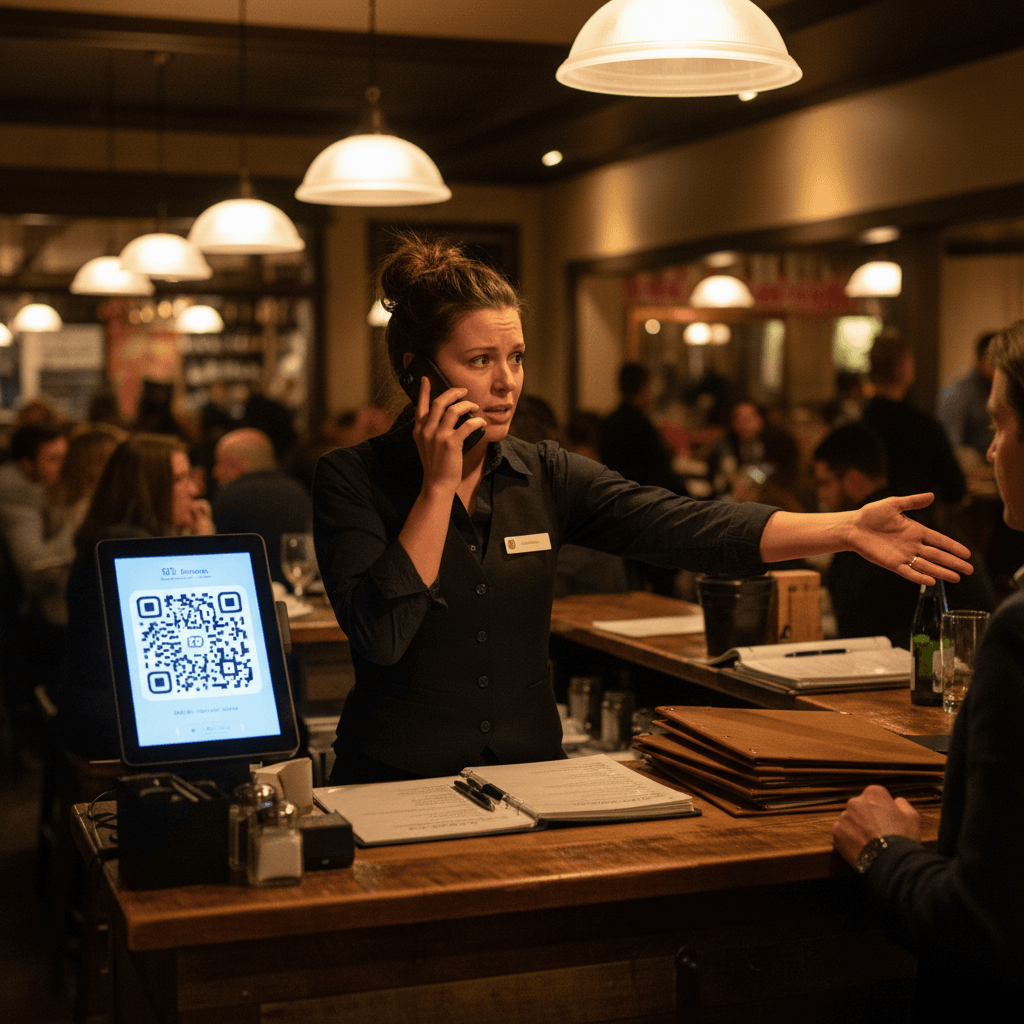
Creating a restaurant brand happens at 7:45 PM on a Friday. The expo station has three tickets hanging, each with a modification. The line cook is waiting for the grill to clear. A server walks up and says, "Table six says their steak is overcooked. They saw the Instagram post about your perfect medium-rare." Your brand is not the Instagram post. Your brand is the overcooked steak, the backed-up tickets, and the server's apologetic face.
Customers do not experience your website or your mission statement. They experience the twelve minutes it takes to get a drink refill during peak hours. They experience the variance between the beautifully plated dish in your marketing photo and the slightly messy version that hits their table when the kitchen is in the weeds. The real cost is not just one unhappy table. It is the erosion of trust. A customer who feels misled does not return. They tell three friends. Your marketing spend brought them in, but your Friday night rush sent them away for good.
Why Pretty Logos Don't Fix Broken Service
You know the problem. Here's why your current fix fails.
Hard Truth: Your brand isn't what you design in an office - it's what your newest server does on their third shift alone. When that server is triple-sat and the printer is spitting out tickets, they will default to their training, or lack of it. No amount of branded merchandise or color-coded logos changes that moment. Treating branding as a visual exercise is like painting a car that has no engine. It looks great parked outside, but it fails the moment you need it to move.
This failure becomes mathematical during stress. When tickets back up, communication breaks down. The line cook starts guessing. The expediter stops calling tickets clearly. The Rule: Under pressure, every team member reverts to their most basic, ingrained habit. If your training only covered the menu and not the rhythm of service, your brand becomes chaos. A beautiful logo on a wall means nothing to a guest waiting forty minutes for an appetizer they saw advertised as "quick and shareable." Your brand is the forty minutes.
Branding Starts With Your Line Cook's Consistency
That's the trap. This is how you escape it.
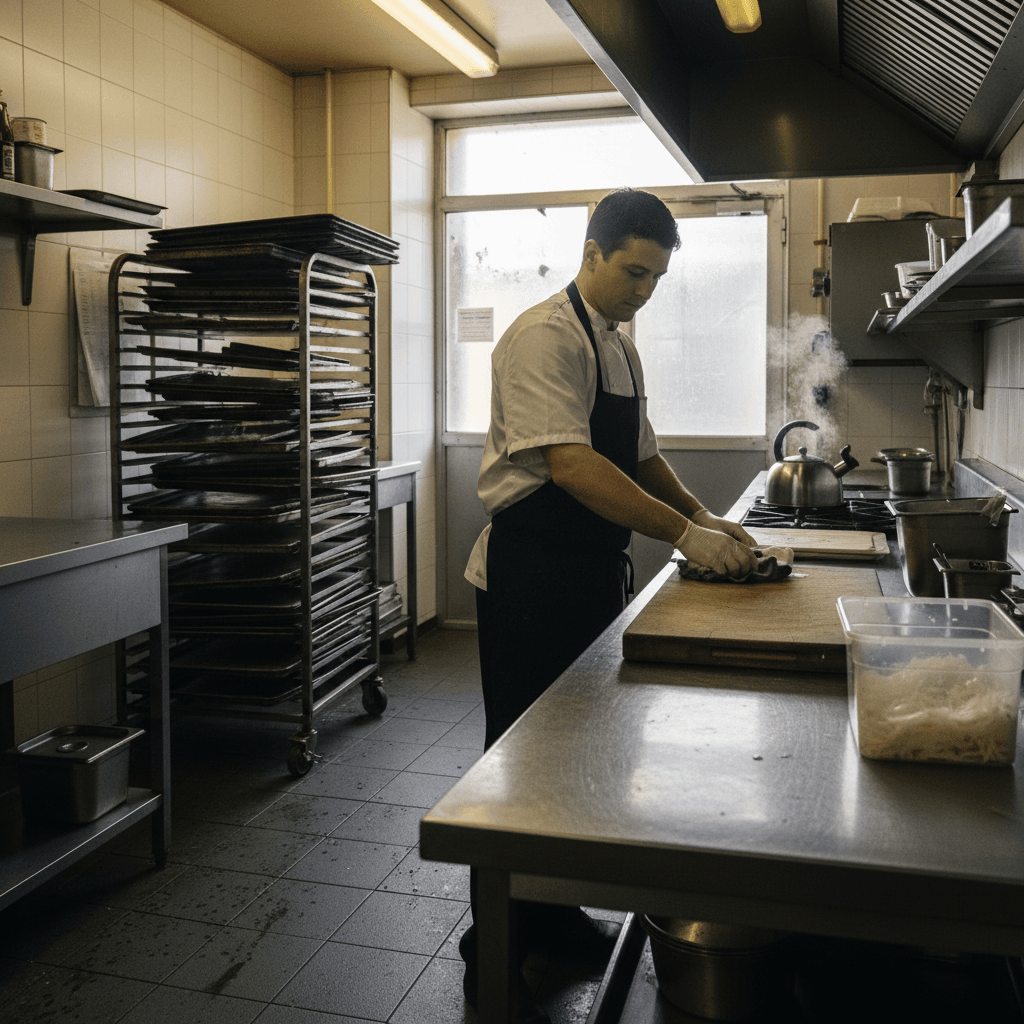
Contrarian Opinion: Your most important brand ambassador wears an apron, not a suit. Every plate that leaves the pass tells your brand story. Is the garnish placed with intention or tossed on? Is the protein cooked to the same temperature every single time? This is where identity is built - through operational habits, not marketing materials.
The core strategy is simple: define your identity through repeatable actions, not adjectives. If your brand is "precise," then the action is a cook using a timer for every protein, every time. If your brand is "generous," then the action is a specific ounce count for fries, measured with a scoop, not eyesight. Your line cook doesn't need to understand branding theory. They need to understand that "four ounces" is a non-negotiable fact of their job, as concrete as the temperature of their grill.
This turns abstract concepts into daily work. "High quality" becomes the prep cook checking lettuce for wilted edges before service starts. "Welcoming" becomes the host making eye contact and smiling before speaking, even when there's a waitlist. The identity lives in these tiny, consistent actions performed hundreds of times a week.
The Daily Checklist That Builds Identity
You must make brand maintenance part of opening and closing routines rather than quarterly meetings.
Start with pre-shift briefing. This is not reading specials from a sheet. This is five minutes where a manager connects one operational standard directly to your identity.
- Example: "Tonight, our focus is pace. Our brand promise is 'relaxed but efficient.' Servers, that means you greet tables within 60 seconds of them sitting down - no exceptions. Kitchen, that means firing apps within 3 minutes of ticket in. Let's deliver relaxed by being efficient."
- Action: Keep a briefing log. One focus point per shift.
Before service begins, conduct plating consistency checks.
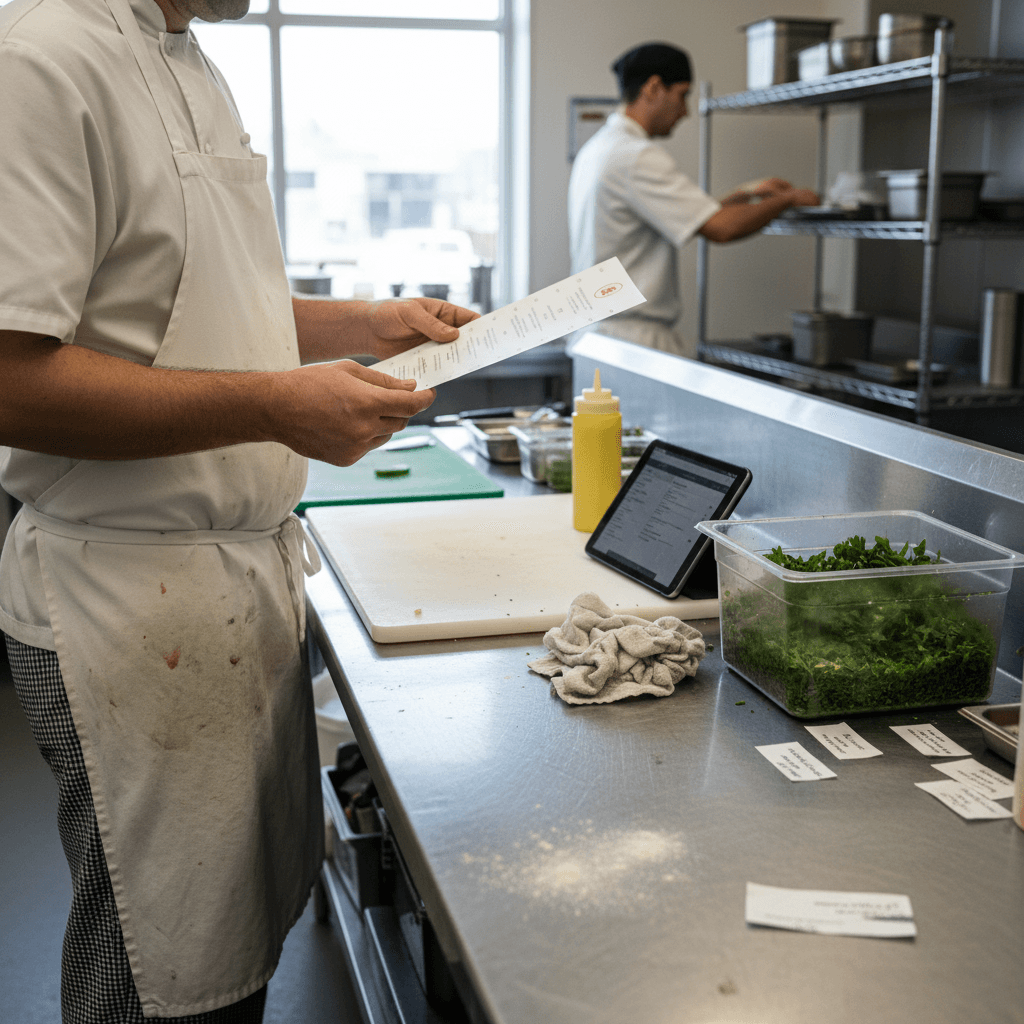
- Action: The chef or manager plates one signature dish to standard - the "brand plate." Line cooks each plate the same dish side-by-side.
- Correction: Adjust every plate until they are identical to the brand plate in placement, garnish, and wipe.
- Frequency: Do this at least twice weekly and whenever a new cook is on that station.
Set server greeting standards that are measurable.
- The Rule: The first words out of a server's mouth must be scripted and practiced.
- Example: "Good evening, welcome to [Restaurant]. My name is [Name]. Can I start you with still or sparkling water?" This isn't robotic; it's reliable. It ensures every guest gets the same confident, welcoming first touchpoint.
- Audit: Managers should secretly time this from host drop-off to server speech during one rush per week.
Close with an identity recap.
- Action: During closing side work, ask each staff member one question: "What was one thing we did tonight that matched our brand?" and "What was one thing that didn't?"
- Purpose: This turns abstract branding into concrete feedback they see daily.
From Chaos to Consistent Experience
Next steps require auditing your current reality versus your desired identity.
First, measure what customers actually experience.
- Secret Shop Yourself: Have someone you trust dine anonymously during your busiest service. Their report should answer: Was the experience consistent with our website claims? Where did it break down? Be specific - "the host seemed rushed," "the burger was dry," "water refills were slow."
- Time Key Moments: Use a simple stopwatch app on a phone.
- Time from guest sitting to server greeting.
- Time from order taken to appetizer arrival.
- Time from entree plate clearance to dessert menu presentation. Compare these times to what you think happens or what you promise ("fresh food fast").
Second, audit one core item for consistency.
- Pick your top-selling dish.
- For one week, have an expo or manager check every single order of that dish before it leaves the kitchen.
- Score it: Perfect / Acceptable / Unacceptable against your "brand plate" standard.
- The goal is not 100% perfect immediately. The goal is to see the real percentage gap between your ideal and your reality.
Third, connect waste directly to brand failure.
- Track all comps and discounts for one week.
- Categorize them: Kitchen Error (wrong temp), Service Error (wrong order), Pace Error (long wait).
- Each category represents a broken brand promise - quality, accuracy, efficiency.
- Show this data to your team in pre-shift: "Last week, we gave away $450 in food because our execution didn't match our promise."
These tools are simple but brutal in their honesty. They move you from guessing about your brand to knowing exactly where it breaks down on the floor.
Taking the Next Step
Building identity through operations is not an optional project for slow seasons; it's how you survive busy ones.
The shift from chaotic reaction to consistent execution begins with measuring reality without excuses.
To build this system into your daily routine without adding managerial overhead requires tools designed for this specific purpose - tracking consistency across shifts and turning data into pre-shift action points.
View our pricing for plans that scale from auditing a single location to managing regional standards across multiple kitchens.
Start a free trial and use it tomorrow night to time your first table turn and grade your first ten plates leaving the pass