Why Your Servers Hate Allergy Questions
Most servers dread allergy questions because they lack clear systems. Here's how to train them to ask the right questions without slowing down service.
The Allergy Question Everyone Dreads
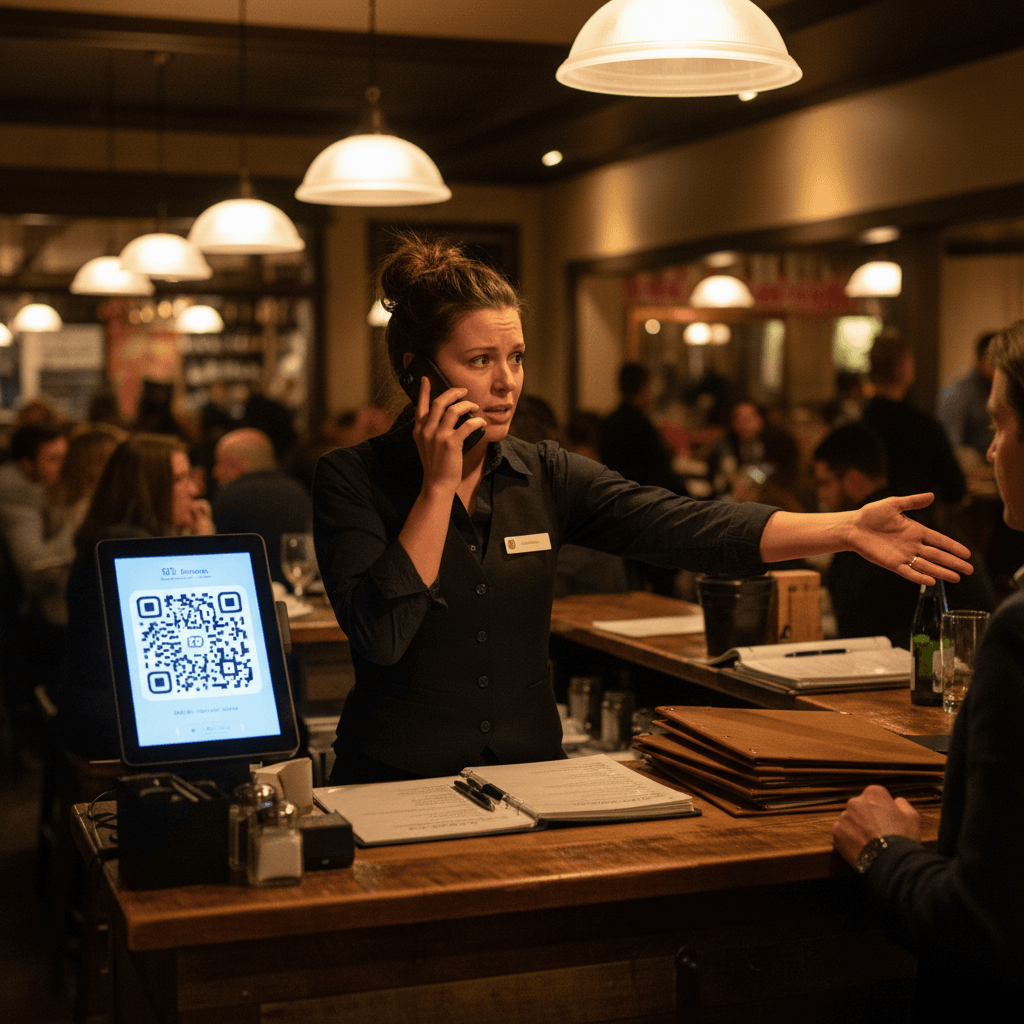
Why Your Servers Hate Allergy Questions. It's Friday night, the dining room is full, and a guest at table 42 stops your server mid-pour. "I have a shellfish allergy," they say. Your server freezes. The expo is calling for pickup on table 31's entrees. The host just sat a new six-top in their section. In that split second, their mind races: What do I ask? Who do I tell? How do I not mess this up? They worry about slowing down the rush. They fear making a mistake that could hurt someone. This hesitation creates an awkward pause the guest feels immediately, eroding trust before the first bite arrives.
This moment of anxiety isn't about negligence. It's about a missing system. Servers are trained to avoid liability, not to confidently navigate a real conversation with a concerned guest. The result is inconsistent information reaching the kitchen, creating risk for everyone. This connects directly to building a complete kitchen-first safety protocol, which we detail in Allergen Safety: Beyond the Menu Card. That guide moves past simple menu notes to create a full operational shield for your busiest nights.
The pain point is predictable. When the pressure is on, human memory fails. A server might remember to ask "Is it an allergy or a preference?" but then blank on the crucial follow-ups. They might scribble "NO SHELLFISH" on a ticket and hope the kitchen understands the severity. This gap - between knowing a problem exists and having a clear path to solve it - is where mistakes happen and servers learn to dread the interaction altogether.
Train Them to Ask Three Questions
The hard truth is that most allergy training teaches servers what not to do, not what to do. It's defensive. We tell them "don't guess" and "don't assume." But we rarely give them a simple script to follow when their brain is juggling six other tasks. You need to flip the script from avoidance to action.
Start with three specific questions every server must ask, in this exact order. This sequence is designed to get critical information fast without overwhelming the guest or your server during peak service.
First question: "Which specific allergens are you avoiding?" This seems obvious, but you'd be surprised how often servers get vague answers like "I can't have dairy" when the guest actually needs to avoid all casein. The Rule: Be specific. "Dairy" includes butter, cream, cheese, and whey. "Gluten" is in soy sauce and some broths. Pinpointing the exact enemy is step one.
Second question: "How severe is your reaction?" This separates a medical emergency from a dietary preference. A guest with celiac disease needs a completely different kitchen protocol than someone avoiding gluten by choice. The answer dictates the urgency and precautions your kitchen must take. This question protects your business from cross-contact lawsuits and your guest from a hospital visit.
Third question: "Would you like me to speak with the kitchen about preparation?" This does two things. It shows the guest you're taking them seriously, building immediate trust. More importantly, it triggers the next step in your system - getting the chef or expo involved directly. It transfers responsibility from the server's memory to a documented kitchen process.
Drill this sequence until it's muscle memory. Role-play it during pre-shift meetings. Make servers practice while you simulate ringing in another order or answering a beverage question. The goal isn't to make them medical experts. It's to give them a clear, three-step path forward when their instinct is to freeze.
When Memory Fails During the Rush
Even trained servers forget protocols when three tables need attention at once. Picture this: The expo calls for pickup on table 31's steaks. A guest at table 35 flags down your server for another round of drinks. Meanwhile, the new six-top at table 38 is ready to order, and one of them mentions a nut allergy. This is the exact moment systems break down.
Under this cognitive load, servers default to shortcuts. They might guess based on a similar ticket from last week. They might assume "nut allergy" just means no pecans on the salad, forgetting about cross-contact from shared fryers or pesto sauce. They write "ALLERGY" in all caps on the ticket but provide zero useful details for the line cook who has eight other tickets in front of them.
The problem isn't willful neglect. It's biology. The human brain under stress seeks the path of least resistance. If your allergy protocol requires remembering seven steps and finding the manager, but guessing seems faster, guesswork will win every time during the Saturday night rush. You must make the right way easier than the wrong way.
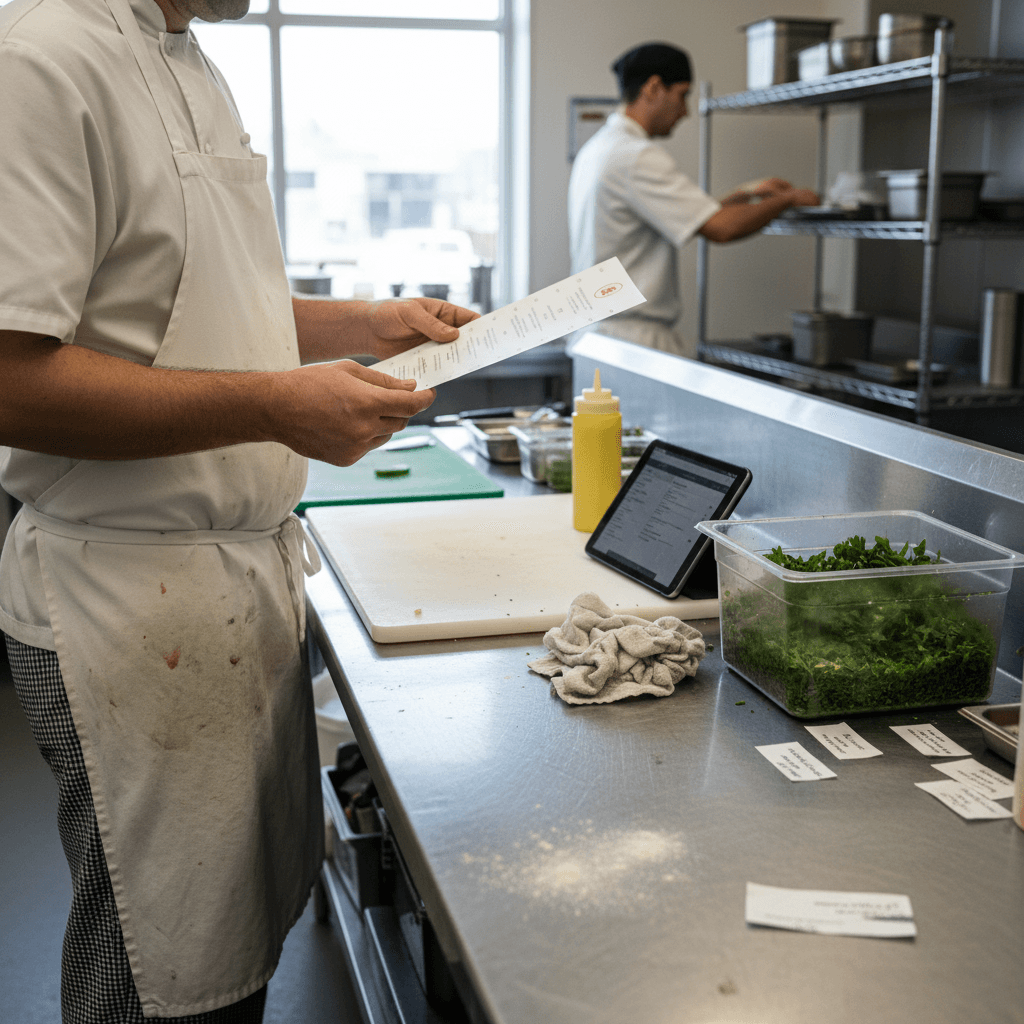
This is where your physical systems either support your staff or abandon them. If your allergy protocol is a three-ring binder in the manager's office, it's useless at 7:45 PM when every manager is expediting food or dealing with a reservation mix-up. If your special instructions are scribbled on paper dupes that get lost or smudged, critical information never reaches the plate.
From Anxiety to Confidence in 15 Minutes
You can fix this with tools that live where the work happens - in aprons and on line stations - not in binders on shelves.
Create a simple reference card that lives in every server's apron pocket. Use durable laminate or thick cardstock that can survive a shift. On one side, print those three questions in large, clear type: 1) Which specific allergens? 2) How severe? 3) Speak with kitchen?
On the reverse side, list your kitchen contact procedure.
- Who does the server tell? (Expo? Chef? Both?)
- What verb does they use? ("I need an allergy alert for table 42, shellfish.")
- Where does the ticket go? (Specific printer? Handed directly?) This card turns panic into procedure. A server can glance at it while maintaining eye contact with the guest.
Next, run weekly five-minute drills. Gather your serving staff before a shift. Have one person play the guest with an allergy. Have another play the server taking an order while also "hearing" the expo call for pickup. Time them. The goal isn't perfection - it's reducing hesitation from 30 seconds of awkward silence to 5 seconds of confident questioning. When servers feel prepared, they stop dreading these interactions. They become advocates who protect guests and your business simultaneously.
Measure success by listening. Are those awkward pauses getting shorter? Is the kitchen getting clearer, more consistent information on allergy tickets? Are servers mentioning allergies proactively instead of waiting for guests to bring them up? These small shifts signal that your training is moving from theory to habit.
Manual systems work, but they require constant reinforcement and discipline from every team member every shift. They rely on human consistency in an environment designed to create inconsistency - that's the nature of restaurant service. This is where modern digital tools can remove friction. A kitchen display system that highlights allergies in red and requires acknowledgment before firing. A digital ordering platform that forces servers through those three questions before submitting a ticket. These tools automate compliance, ensuring the protocol you trained happens even when everyone is in the weeds. They turn your manual checklist into an embedded part of the workflow.
Taking the Next Step
Turning allergy conversations from moments of fear into routine confidence is entirely practical. The logic is clear: give your team simple tools and consistent practice. The result is better guest safety, reduced liability, and servers who feel equipped rather than anxious.
Start by printing those pocket cards this week and running one five-minute drill at your next pre-shift. See how quickly hesitation turns into habit. When you're ready to make that protocol automatic across every shift and every server, view our pricing for systems designed specifically for restaurant operations. You can start a free trial and test how digital workflows handle allergy alerts during your next busy service