Allergen Safety: Beyond the Menu Card
Stop treating allergies as just menu notes. Build a kitchen-first system that protects guests and your business during the Saturday night rush.
The Ticket That Changes Everything
Managing allergens in restaurants starts with a single ticket on a Friday night. Three allergy orders hit the line at once. Not preferences - life-threatening allergies. The server forgot to mark the first ticket. The line cook didn't see the note on the second. The expo plated the third without checking because the printer was spitting out dupes for table 42. This isn't about menu footnotes. It's about protecting real people during your busiest service, when every system is under maximum stress.
The moment that matters is when the expo calls three orders simultaneously. One needs no nuts. One needs no shellfish. One needs no gluten. The verbal warning gets lost in the noise of the pickup window. A cook uses the same spoon for two sauces. The mistake happens not from malice, but from divided attention during chaos. Your entire operation narrows to that single ticket moving through a crowded kitchen.
Why Your Current System Is Failing
You know the problem. Here's why your current fix fails.
Most restaurants treat allergies as menu footnotes or server checklists. Paper tickets get lost in the rush. Verbal warnings don't reach every station. Your current method works until it doesn't - and that failure happens during peak service when the line is six tickets deep and the expo is calling for runners.
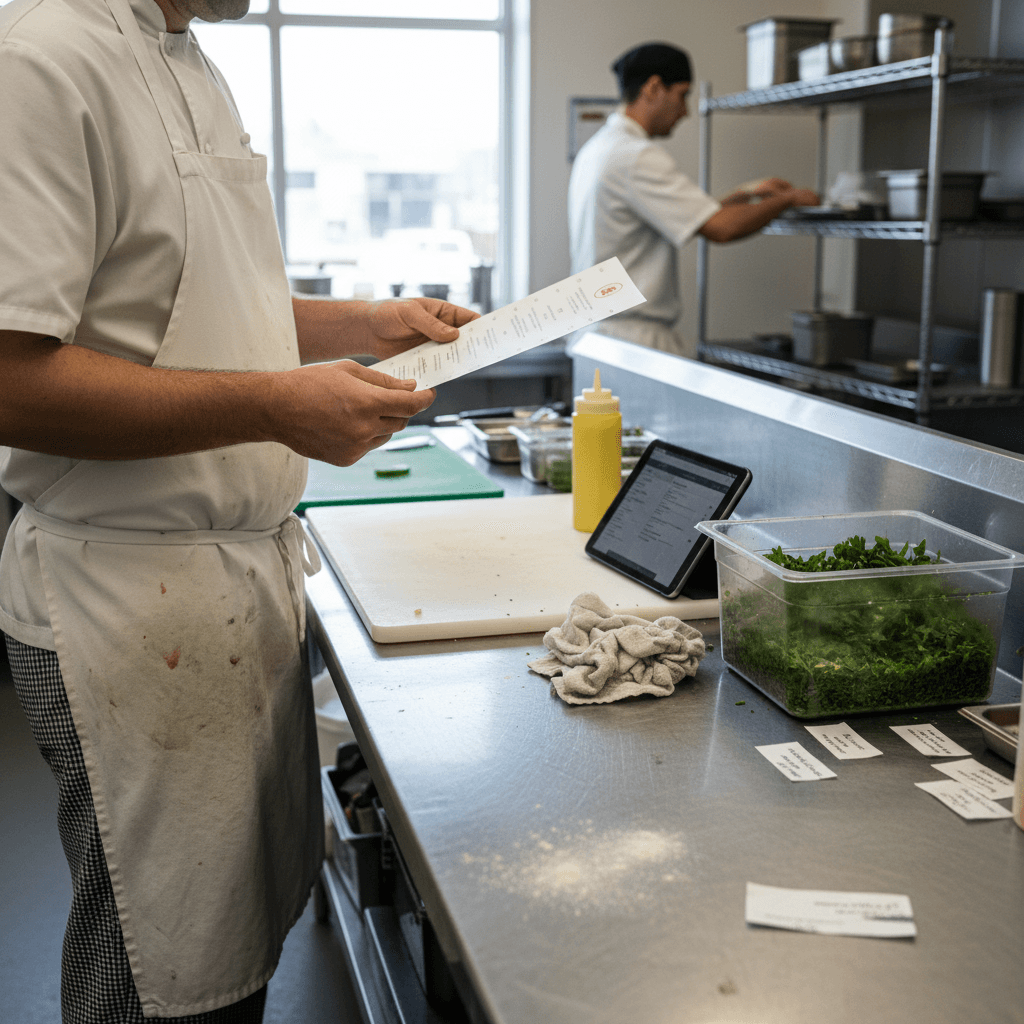
The hard truth: handwritten modifications cause errors. That is a certainty. A server scribbles "no dairy" in the corner during a ten-top order. The kitchen ticket prints with smudged ink. The sauté cook sees "add mushrooms" but misses the allergy note below it. The system breaks between the guest's mouth and the cook's hand.
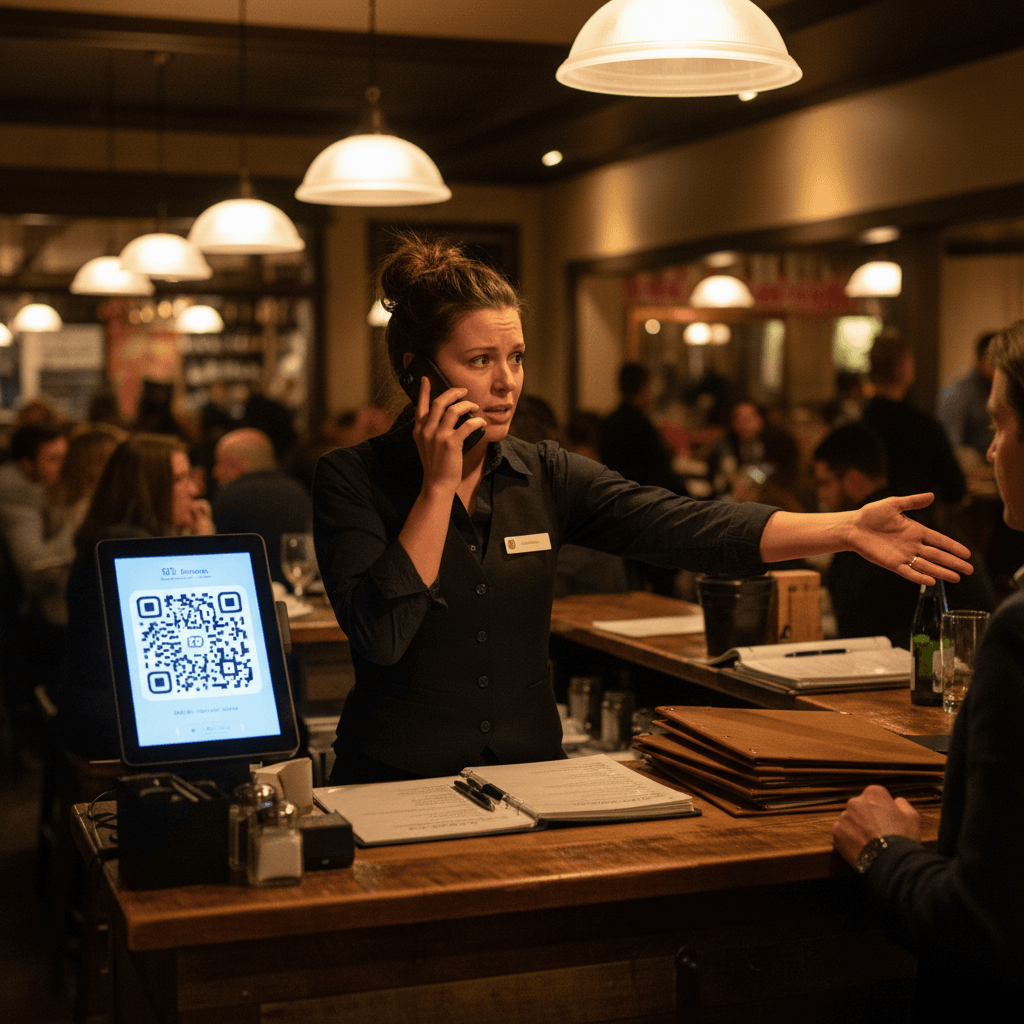
Contrarian opinion: Digital menu allergen filters can create false security. Guests tap their dietary restrictions on a tablet and think 'the app filtered it, so it's safe.' They don't understand cross-contamination risks in your kitchen - the shared fryer, the garnish station, the wiping cloth that touched multiple plates. You still need human verification at every step, especially when the digital order hits your thermal printer as another line of tiny text.
Your most dangerous allergy risk isn't the obvious ingredients. It's the hidden ones in sauces, garnishes, and shared equipment that staff forget about during rush hour. The pesto has pine nuts. The fryer oil has fish batter residue. The croutons on the salad bar touched every serving utensil.
The Kitchen-First Protection System
That's the trap. This is how you escape it.
Build your allergen protocol around what actually happens during service, not what looks good on paper. Start with ticket flow - how does allergy information move from guest to server to kitchen to plate? Create visual systems that work during chaos.
The Rule: Allergy information must be impossible to miss at every station.
Use colored tickets for high-risk allergies. Red for nuts. Blue for shellfish. Green for gluten. The color catches the eye before the cook reads the text. Place dedicated allergy plating areas at expo - one clean cutting board, one set of tongs, one wiping cloth that only touches allergy orders. This creates physical separation during plating.
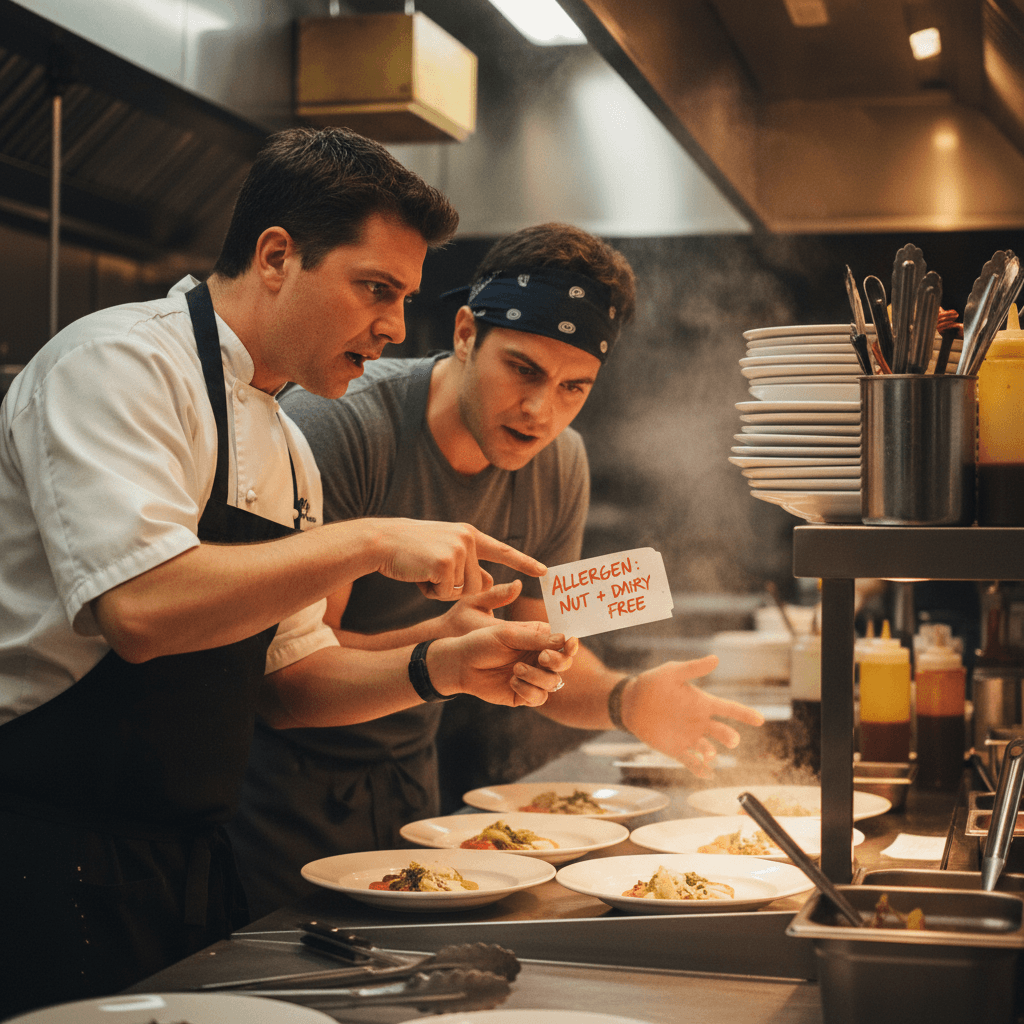
Create clear communication chains that don't rely on memory. When an allergy order hits, the expo announces it to the entire line: "Allergy on ticket 47, no peanuts." Every cook repeats back their station's responsibility: "Heard, no satay sauce." "Heard, clean wok." This verbal confirmation creates multiple checkpoints before food touches plate.
Hard truth: Your sauce station is your biggest hidden risk. Prep cooks batch sauces in the morning, but line cooks use shared ladles during service. Solution: dedicate one ladle per allergen-sensitive sauce, marked with colored tape. Store them separately at the sauce station. During Friday dinner rush, this prevents a cook from grabbing the wrong ladle for the vegan curry that needs no fish sauce.
The 15-Minute Pre-Shift Drill
Systems need practice to survive real service.
Implement daily briefings that actually stick. Instead of generic 'remember allergies' reminders, run specific scenarios based on tonight's reservations and menu specials.
Start with tonight's known allergies from reservations: "We have a peanut allergy at table 12 for 7 PM - who checks the satay sauce?" Answer: "Expo verifies before plating." "We have two gluten-free orders - which fryer do we use?" Answer: "Fryer three is dedicated, baskets marked with blue tape."
Role-play ticket mistakes and corrections until muscle memory takes over. Give servers fake tickets with missing allergy marks during pre-shift. Have them correct each other on proper marking procedure: circle the allergy, initial it, tell expo directly.
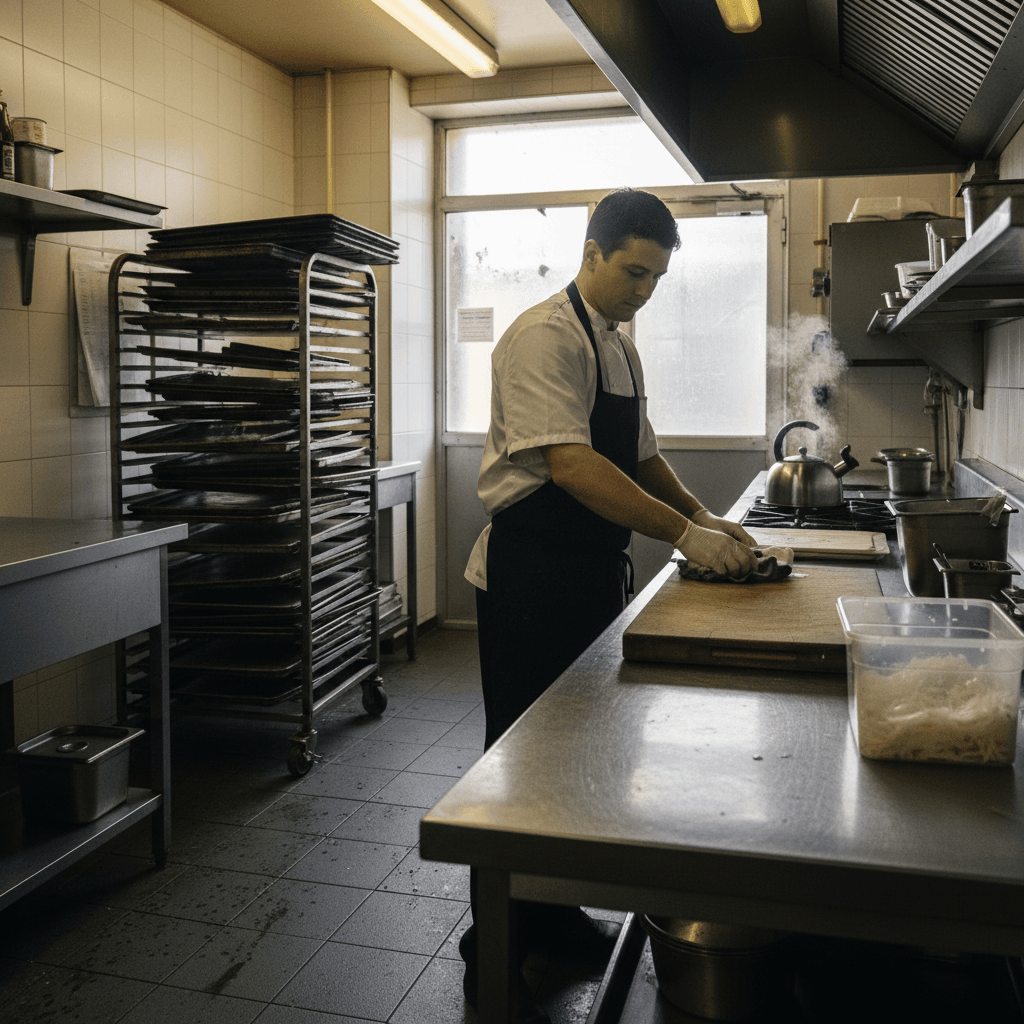
Include cross-contamination drills with actual equipment. Show how wiping a knife on a common towel then using it for another dish creates risk. Demonstrate proper cleaning procedure between allergy orders: fresh cutting board, clean knife from sanitizer bucket, new gloves. Time these drills - they should take under 90 seconds per order.
The Rule: Every team member must handle three mock allergy tickets correctly before service starts.
When Communication Breaks Down
Even good systems fail under pressure during Saturday night rush.
Create clear escalation paths for when something goes wrong. Designate specific roles with single responsibilities for allergy orders.
One person verifies tickets at expo station - they check that every marked allergy has corresponding kitchen modifications. Another person checks plating at dedicated allergy station - they confirm no cross-contact before food leaves kitchen. A third person can confirm with guest if needed, but only after first two checkpoints are clear.
Build in redundancy without slowing service. Simple visual cues create multiple checkpoints without extra conversation. Colored clips on tickets stay attached until order is plated. Dedicated red allergen plates signal special handling to food runners and bussers.
When confusion hits - maybe two tickets get mixed up or a modification isn't clear - there is one response: stop service on that ticket immediately. The expo calls "hold on ticket 51" and gathers all cooks involved until clarity returns. This thirty-second pause prevents a lifetime of consequences.
The Rule: If any team member is unsure about an allergy order, service stops until certainty returns.
The Closing Checklist That Matters
End each shift with a five-minute review of actual allergy orders handled that day.
Gather key staff - expo, lead line cook, manager who handled reservations. Review each allergy ticket from that night's service chronologically: table 12 gluten-free pasta at 6:45 PM, table 27 nut allergy dessert at 8:20 PM, walk-in shellfish allergy at 9:15 PM.
Ask three questions per order: What worked perfectly? What almost went wrong? What one change would prevent that near-miss tomorrow?
This isn't paperwork - it's continuous improvement based on actual kitchen experience from tonight's rush hour pressure test.
Document near-misses without blame culture - focus on fixing systems, not punishing people. Example from last Friday: "Ticket 88 had 'no dairy' written small - almost missed by grill cook." Solution: "Starting tomorrow, servers use red pen for all dairy allergies and circle twice."
Use real examples from that night's service to improve tomorrow's system. If you had a peanut allergy order during busy hour, review how satay sauce was handled at sauté station. If you had multiple gluten-free orders, check if fryer separation was maintained throughout service.
Your Next Shift Starts Here
Don't overhaul everything at once after reading this article.
Pick one weakness from tonight's service and fix it for tomorrow. Maybe it's ticket marking - implement colored pens starting with lunch shift. Maybe it's fryer separation - dedicate one fryer before dinner service begins. Maybe it's server training on asking better questions - role-play three scenarios at pre-shift meeting.
Small, consistent improvements build real protection over time. The goal isn't perfect paperwork or zero incidents forever. The goal is creating a kitchen culture where every team member understands they're protecting guests' health during your busiest moments. Where line cooks announce allergies without being asked. Where servers double-check modifications as second nature. Where expo stations have clean spaces ready before the ticket even prints.
Taking the Next Step
Managing allergens in restaurants requires systems that survive Friday night pressure. Paper tickets and verbal warnings will fail when three allergy orders hit simultaneously. The operational shift toward visual failsafes and kitchen-first protocols is inevitable.
Your next busy service will test these systems under real pressure. See how dedicated tools can streamline this critical safety process without slowing down your line. View our pricing for solutions built around actual kitchen workflow, or start a free trial to implement color-coded tickets and dedicated plating stations before your next weekend rush begins