Why Your Recipes Don't Travel Well
Your signature dish tastes different at every location. Here's what breaks when recipes scale and how to fix it before customers notice.
When Your Signature Dish Becomes Three Different Meals
That first bite should taste exactly the same whether your customer visits your downtown flagship or suburban outpost. But right now, your chicken piccata varies by location - sometimes lemony bright, sometimes flat, sometimes swimming in sauce. Regulars notice immediately. They don't complain to you directly. They just stop coming back to the 'bad' location.
Why Your Recipes Don't Travel Well is a problem you feel on the floor every Friday night. The expo at your second location calls back a plate because the sauce looks wrong. The server returns from table six saying the guest thinks their steak is overcooked compared to last week. You're not dealing with a bad cook. You're dealing with a broken system that worked perfectly with one kitchen and one crew. This is one piece of a larger scaling challenge we cover in When Your Second Location Breaks Your First, which details how to replicate success without losing control.
The breakdown happens in translation. Your original recipe exists in your head chef's muscle memory and taste buds. When you write it down for a new team, the gaps get filled with individual interpretation. "A pinch" becomes a measurement. "Cook until golden" becomes a timer. The new cook's previous kitchen habits take over under pressure. Within three services, you have three versions of the same dish leaving the pass.
Measure Everything That Moves (Even When It Feels Silly)
Here's the hard truth everyone gets wrong: recipes don't scale. A 'pinch of salt' becomes three different measurements across three cooks. 'Cook until golden brown' means five different doneness levels. The fix feels tedious but works: weigh every ingredient that goes into every dish during recipe development.
Not just proteins and starches - measure oils, acids, finishing salts. That splash of white wine in the pan sauce? It needs a volume measurement in ounces. The drizzle of olive oil for finishing? Measure it by weight or use a marked bottle. Create visual guides for plating that show exact placement distances in inches from the rim of the plate.
The Rule: If you can't measure it during prep, you can't control it during service.
Start with your top five selling dishes. During a slow Tuesday afternoon, gather your kitchen leads from all locations. Cook each dish together from scratch, but stop at each step to weigh and record every component. You will argue about the amount of garlic in the marinade. That's the point. Settle on one number, write it down, and lock it in.
This creates what chefs call a "build sheet." It's not a recipe for creativity - it's an assembly manual for consistency. A build sheet for a Caesar salad lists: 4 oz chopped romaine, 1.5 oz dressing, 3 croutons placed at 12 o'clock, 2 oz shaved parmesan scattered, two anchovy filets crossed on top. Any cook can follow it during rush.
Your Best Cook Is Your Biggest Bottleneck
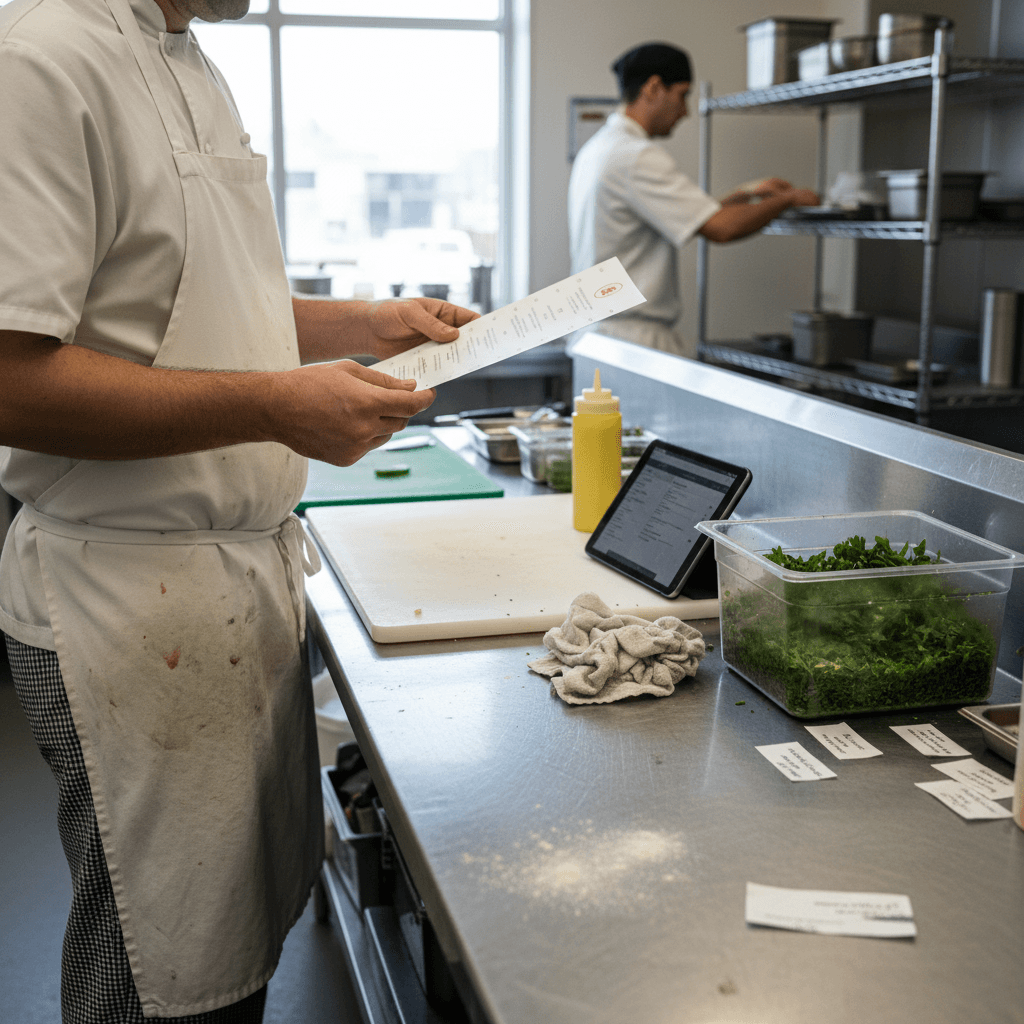
That meticulous prep system works beautifully until Friday night rush hits both locations simultaneously. Your lead line cook who trained everyone is now stuck at expo calling tickets instead of quality checking every plate.
New hires revert to muscle memory when tickets back up. The color-coded portion containers get mixed up in the chaos. Someone grabs the 6-ounce sauce ramekin instead of the 4-ounce because they look similar from across the station. You're back to inconsistent plating within three weeks of opening your second spot.
The problem isn't training quality - it's system fragility. Your consistency depends on your most experienced person being present and paying attention to every detail. When they're pulled away to put out fires (sometimes literally), the system collapses. You've built a beautiful machine that only works when the head mechanic is watching it run.
This shows up as small variances that customers notice immediately: The burger at location A has pickles neatly stacked under the patty, while location B scatters them on top so they fall out with the first bite. The pasta dish gets eight shrimp at one spot and six at another because someone is eyeballing the scoop.
Build Systems That Survive Saturday Night
The solution isn't more training videos or thicker manuals. It's creating foolproof systems that work when you're not there watching.
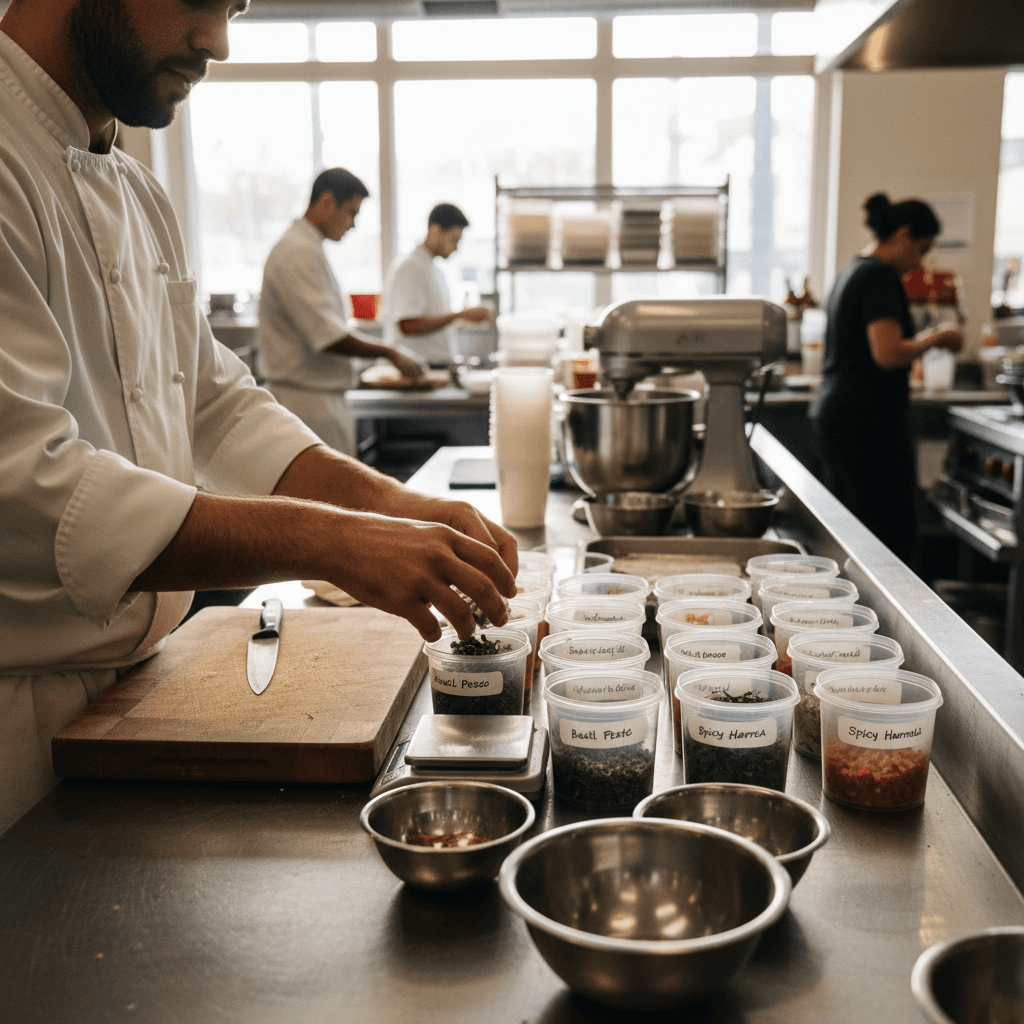
Start with your three most popular dishes - build idiot-proof plating stations with measured sauce bottles and portioned garnishes. For that chicken piccata: pre-portion the lemon butter sauce in squeeze bottles marked with a fill line for one serving. Keep cooked pasta in four-ounce nests ready to go. Have the parsley garnish pre-chopped in quarter-cup containers.
Test them during your next busy shift by putting your newest cook on that station alone. Give them the build sheet and walk away for thirty minutes during peak service. If they can plate consistently during rush hour without asking questions, you've built something that travels.
The goal is what manufacturing calls "poka-yoke" - mistake-proofing. It means designing stations so it's physically difficult to do the wrong thing. Use differently shaped containers for different ingredients so they can't be confused. Place portion scoops directly in ingredient bins. Mark cutting boards with outlines showing exactly where to place protein before slicing.
This extends beyond the kitchen line. Your bar program needs the same treatment. That signature cocktail should have jiggers marked for each component permanently attached to the bottle. The garnish station needs templates showing how to cut citrus wheels to identical thickness.
Manual systems like these work, but they demand constant discipline and oversight. They require managers to audit portion sizes daily and retrain immediately when drift occurs. This is where modern kitchen technology starts to make sense - not as a replacement for good process, but as an enforcer of it. Digital kitchen display systems can standardize cooking times and plating instructions across every screen. Inventory tracking software can flag when portion yields drop below your standard, indicating someone is over-serving.
Taking the Next Step
Getting recipes to travel well is less about cooking skill and more about engineering repeatable actions. The logic is clear: measure what matters, build stations that guide hands, and test systems under real pressure. When you fix these manual processes first, any technology you add later simply amplifies consistency instead of trying to create it from scratch.
If inconsistent plates are costing you regulars across locations, start by auditing one station this week. Then view our pricing to understand how digital tools can lock in those hard-won standards. The fastest way to see if a system works for your kitchens is to start a free trial and run your busiest dish through it next Friday night