Why Your Menu Descriptions Are Costing You Money
Most menu descriptions confuse customers instead of selling. Learn the three-word formula that turns browsers into buyers and boosts your average check.
The Silent Sales Killer on Every Table
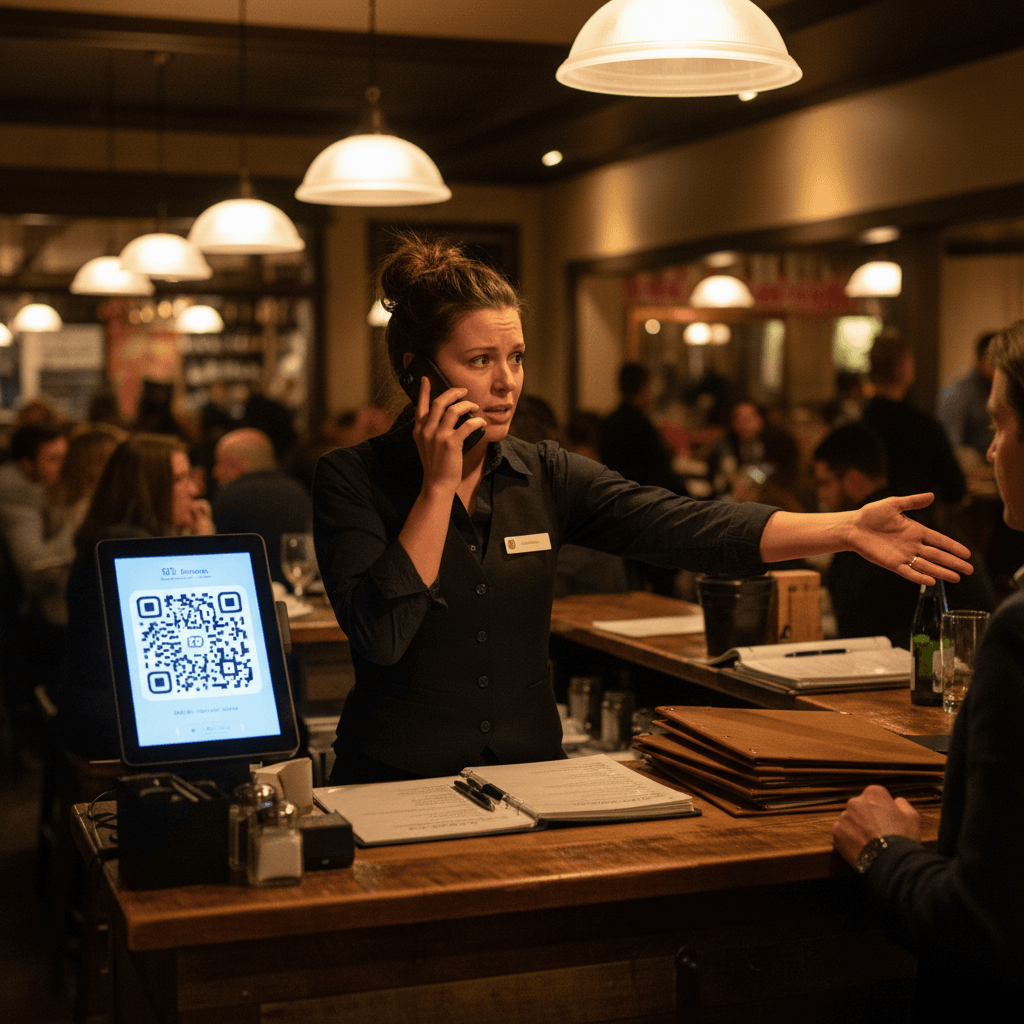
It's Friday night, 7:15 PM. Your expo is calling three orders at once. A server leans over the counter, pointing at a menu. "What's in the 'Market Fish'?" she asks. The line cook looks up, annoyed. "It's salmon today." The server sighs and walks back to table 12. She'll spend two minutes explaining a dish that should have sold itself. That's two minutes she could have spent selling dessert or turning the table. This is why your menu descriptions are costing you money.
Your menu descriptions are working against you right now. They're not just words - they're silent salespeople that either close deals or send customers searching for something better. Most descriptions read like ingredient lists instead of selling stories. Customers see "chicken breast with vegetables" when they could be imagining "wood-fired chicken with roasted seasonal vegetables and herb butter." The difference isn't just words - it's dollars left on the table.
The problem starts before service even begins. You printed menus based on what you thought sounded good, not on what actually sells. You're guessing while customers are deciding. Every vague description creates a question for your servers to answer. Every question slows down service. Slow service means fewer table turns during your peak hours. This connects directly to the financial analysis we cover in Menu Engineering: The Real Math Behind Profitable Plates, which breaks down how every operational delay impacts your bottom line.
Think about your last busy shift. How many times did a server ask the kitchen for clarification? How many customers hesitated between two dishes because neither description gave them a reason to choose? That hesitation costs you money in real time. It's not a theoretical loss - it's measurable in slower ticket times and lower average checks.
The Three-Word Formula That Actually Works
Forget everything you've heard about fancy adjectives. The real formula is simpler: sensory + benefit + specificity. Sensory words make customers taste before they order ("crispy," "smoky," "velvety"). Benefit words answer "why should I care?" ("tender," "refreshing," "hearty"). Specificity builds trust ("locally sourced," "house-made," "24-hour marinated").
Here's the hard truth: customers don't buy ingredients - they buy experiences. "Grilled salmon" becomes "wild-caught salmon grilled over applewood, served with lemon-dill butter." The first is a product. The second is a story that justifies a higher price.
Let's apply this to your next menu print run. Take your three lowest-selling entrees right now. Rewrite them using the formula. For "pasta with meat sauce," try "hand-rolled pappardelle pasta with our slow-simmered Sunday gravy, finished with fresh basil." Notice what changed? You added sensory (slow-simmered), benefit (hand-rolled), and specificity (Sunday gravy). You gave the customer something to imagine.
The Rule: Every description must answer "why this dish?" within ten words or less. If it reads like an inventory list, rewrite it.
Test this during your next pre-shift meeting. Print two versions of a problematic dish description. Have servers read both to each other. Which one makes them want to order it? Which one requires explanation? You'll know within five minutes which version works better. This isn't marketing theory - it's shift-level testing that prevents confusion during service.
When Words Alone Aren't Enough
The problem hits during your busiest shifts. You've written perfect descriptions, but now you need to test them. Which ones actually sell? Which ones get ignored? You're stuck guessing while servers waste precious minutes explaining dishes that should sell themselves. Every confused customer means slower table turns and lower checks.
This is where manual menu management breaks down. You can write great descriptions, but you can't track which ones work in real time. You're flying blind during your most profitable hours.
Consider your happy hour menu versus dinner service. A description that works at 5 PM might fail at 8 PM. Different crowds respond to different language. The business crowd wants efficiency and value words ("quick," "satisfying," "generous portion"). The date night crowd wants experience words ("shared," "decadent," "artisanal"). Without tracking, you're using one description for both audiences and hoping it works.
Here's a manual fix you can implement tonight: Create a simple tracking sheet for your servers. For one week, have them put a checkmark next to any menu item when a customer asks for clarification about it. Tally the results after service. The items with the most checkmarks have the worst descriptions. Start rewriting those first.
Another method: Watch your point-of-sale system during peak hours. Which items have the longest time between ordering and sending to the kitchen? Those delays often mean servers are at the table explaining the dish instead of taking the order quickly.
The Rule: If more than 10% of orders for an item require server explanation, rewrite the description immediately.
This manual tracking works, but it takes time and discipline. Your servers are already busy serving guests - now you're asking them to be data collectors too. The information is valuable, but collecting it manually creates more work during precisely the moments when you need less work.
From Guesswork to Guaranteed Sales
The future isn't about writing better descriptions - it's about knowing which ones work before you print the menu. Imagine testing descriptions like a chef tests recipes. See what sells during happy hour versus dinner service. Track which words drive the highest checks.
This isn't about fancy software adding more work. It's about removing the guesswork that costs you money every night. Your menu should be your best salesperson, working every shift without needing a break.
Modern digital menu platforms solve this exact problem. They let you test different descriptions for the same dish across different dayparts or customer segments. You can see in real time which versions sell faster and for higher checks. When a description isn't working, you can change it immediately without reprinting menus or retraining staff.
These systems track what manual processes cannot: which descriptions reduce ordering time, which increase add-on sales, and which justify premium pricing in customers' minds. They turn menu management from an art into a science based on actual sales data rather than gut feeling.
The transition from manual tracking to automated insight is straightforward once you have the right tools in place.
Taking the Next Step
Shifting from confusing ingredient lists to compelling sales stories is practical restaurant management, not abstract marketing theory. The logic is clear: better descriptions mean faster ordering, higher checks, and smoother service during your busiest shifts.
The platforms to track and optimize this process exist today without requiring endless manual work from your team. If you are ready to eliminate the guesswork from your menu descriptions, you can view our pricing to fit your budget, or start a free trial to test it during your next service