Why Your Food Photos Look Flat
Most restaurant food photos fail because of bad angles. Learn the 3 camera positions that make dishes irresistible and drive orders.
The Problem With Every Restaurant's Instagram
It's 6:45 PM on a Friday. Your expo station is a disaster zone of half-plated specials and a manager's phone. The server who was supposed to run food is crouched over a $32 ribeye, trying to get the "perfect shot" while the line cook yells that the fries are dying. This is why your food photos look flat. You're trying to create marketing content in the middle of a war zone, and the results show it.
Straight-down shots make food look like evidence photos from a crime scene. They flatten everything into a single dimension, killing the texture that makes people hungry. A burger becomes a circular blob. A salad looks like scattered leaves on a plate. These angles tell customers nothing about what they're actually buying - the juicy interior, the crispy edges, the height of stacked ingredients.
Bad lighting compounds the problem. Harsh overhead kitchen fluorescents create deep shadows that hide details and make colors look sickly. That vibrant green pesto becomes a murky brown under bad lights. The connection is direct: flat photos lead to lower check averages because customers don't feel excited about ordering. They see your Instagram and think "hospital food" instead of "I need that right now."
This connects directly to building a complete visual strategy, which we break down in Phone Food Photos That Actually Sell. That guide shows your staff how to capture menu items that make customers order more, not just take pictures.
The Three Angles That Actually Work
The Rule: Stop chasing "perfect" overhead shots. They rarely work in real restaurants with real lighting and real time pressure. Instead, use three angles that require minimal staging but deliver maximum appetite appeal.
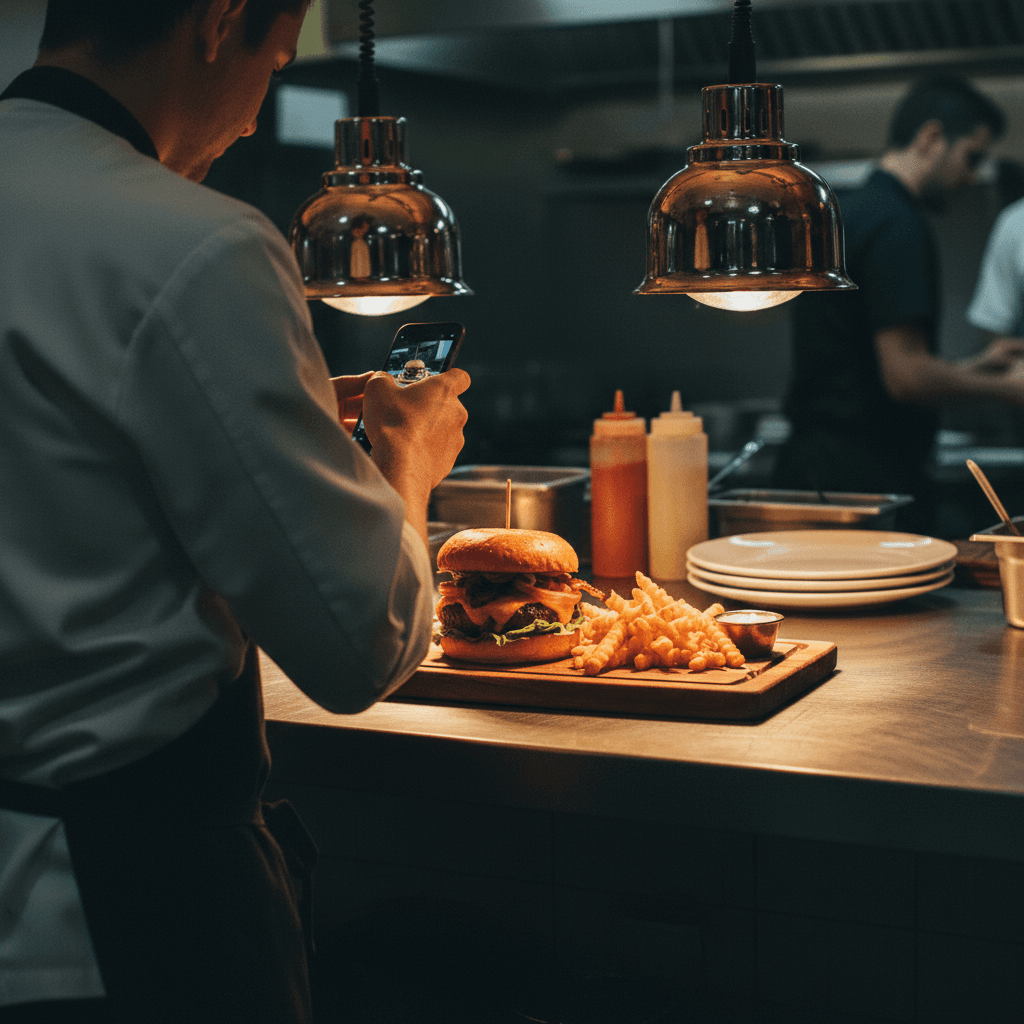
Angle 1: The 45-degree hero shot. This is your workhorse angle for 80% of your menu. Hold the camera at roughly 45 degrees to the plate, slightly above table level. This angle shows texture and height simultaneously. For burgers, it reveals the cross-section of patty, cheese, and toppings. For layered desserts like tiramisu or parfaits, it shows every distinct layer. The hero shot makes food look approachable and dimensional without requiring perfect plating.
Angle 2: The table-level intimate view. Get down to where the customer's eyes actually are when they sit down to eat. This angle creates presence - it makes viewers feel like they're already at your table about to dig in. Use this for shareable plates, family-style dishes, or anything with dramatic presentation like paella in a pan or a whole roasted fish. It's particularly effective for cocktails where you want to show the garnish at eye level.
Angle 3: The ingredient-focused close-up. This tells your sourcing story without saying a word. Zoom in on specific elements: the char marks on a steak, the bubbles in fresh mozzarella, the herbs sprinkled over pasta. This angle works best for high-quality ingredients you want to highlight - local produce, artisanal cheeses, house-made components. It builds perceived value before customers even see prices.
Each angle serves different menu items. Burgers need the 45-degree hero shot to show structure. Salads benefit from table-level views that make greens look fresh and abundant. Cocktails demand close-ups of garnishes and glassware details.
When Photography Slows Down Service
The photography problem becomes an operations problem during rush hours. That "quick photo" during Friday dinner service isn't quick at all when you calculate the real cost.
Expo stations become photo studios instead of food assembly lines. The person responsible for quality control and timing now has their hands full with a phone instead of tickets. They're adjusting plates for lighting while hot food cools on the pass. The line cook who just perfectly cooked three salmon fillets watches them get cold while someone tries different camera filters.
The time cost of "just one more shot" adds up exponentially when tickets are backing up. Each minute spent staging photos is a minute that food quality deteriorates, servers get backed up on their next table turn, and customers at tables wonder where their orders are. Multiply this by multiple dishes across multiple services, and you're losing hundreds of dollars in potential revenue for photos that probably still look flat.
Worse yet, this creates resentment between front and back of house. Kitchen staff see photography as frivolous when they're fighting through a rush. Servers get frustrated when their tips suffer because food runs late. The operational friction costs more than just photo quality - it damages team morale and service flow.
Making Better Photos Part of Your Routine
The solution isn't better photography skills - it's better photography timing. Build visual content creation into your prep hours instead of your service hours.
Schedule photography during slow prep periods between 2-4 PM, not during lunch or dinner rushes. Designate one staff member as your visual specialist - someone with a good eye who can be trained on basic principles. This person handles all staged photography during designated times, freeing everyone else during service.
Simple lighting fixes take 30 seconds but double photo quality immediately. Move plates near natural light sources like windows during daytime shoots. For evening shots, use simple bounce cards (white foam board or even a sheet pan) to reflect existing light onto dishes from the side rather than straight down.
Create a photography station in an unused corner of your dining room or even in office space if available. Keep basic props there - clean napkins, simple utensils, neutral backgrounds - so setup takes seconds instead of minutes during prep time.
Shoot multiple dishes in batches rather than one at a time throughout service. Plate three specials together during prep, photograph them all at once with consistent lighting and angles, then refrigerate what needs holding until service begins.
Train servers to capture authentic "in-the-wild" shots during actual service using simple rules: natural light only, quick snaps without staging, focus on happy customers enjoying food rather than perfect plating.
Modern digital tools can help streamline this workflow further by automating scheduling reminders for photo sessions or providing cloud storage for organized visual assets without manual file management hassles.
Taking the Next Step
Better food photography isn't about buying expensive cameras or hiring professionals - it's about fixing broken timing in your daily operations first.
The logic is clear: remove photography from rush hours, train one person properly instead of everyone poorly, and use simple lighting tricks that cost nothing but deliver immediate improvements.
Start by identifying which fifteen-minute window tomorrow would work best for staged shots without disrupting service flow - then protect that time like you protect your prime dinner reservations.
When you're ready to systematize this approach alongside other operational improvements, view our pricing for tools that help coordinate these workflows or start a free trial to see how digital organization supports better visual content without slowing down your line cooks during Friday night service