Phone Food Photos That Actually Sell
Stop taking blurry food photos. Learn how your staff can capture menu items that make customers order more.
When Your Menu Photos Look Like Evidence
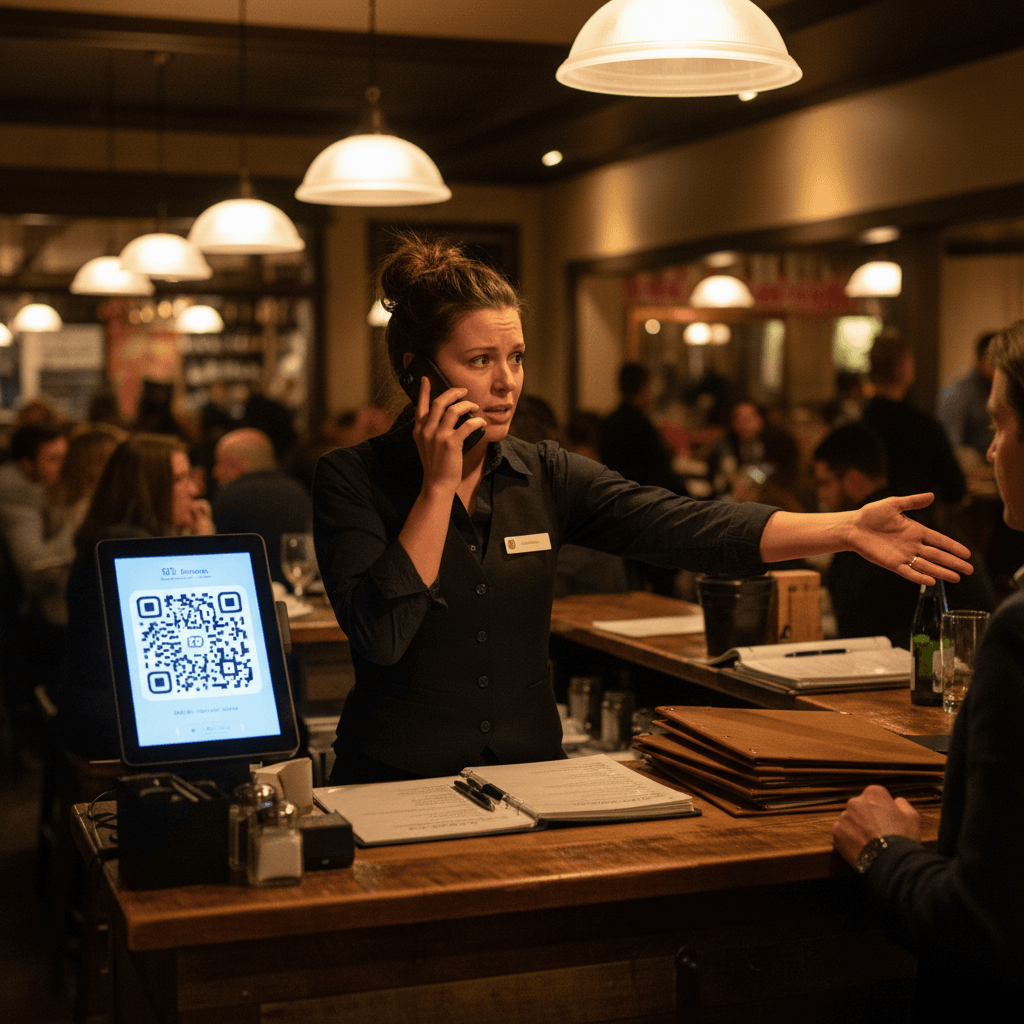
The server holds up her phone at the expo window. "Chef, can I get a quick shot of the special?" The line cook groans. The ticket rail is full. The photo will be a blurry mess taken under the heat lamp's harsh glare. That photo goes online. An hour later, a customer walks in, points to their phone, and says, "I want this." They get a plate that looks nothing like the sad, orange-tinted image. You just lost a repeat customer before the appetizers arrived.
The real cost of bad food photography is not aesthetic. It is operational. A blurry, dark photo of your signature burger creates doubt. That doubt translates to longer decision times at the table. It means fewer online orders because people cannot trust what they are buying. It turns a potential 45-minute table into an hour-long deliberation. Lost turns are lost money. Customers judge your kitchen before they taste anything. They see a poorly lit, greasy-looking plate and assume your standards are low. The disconnect is painful: you spend hours on beautiful plating, only to represent it with a snapshot that looks like evidence from a crime scene.
Why Your Phone's Auto Mode Is Lying To You
You know the problem. Here is why your current fix fails.
What actually happens when you point and shoot in a busy kitchen? Auto mode sees the dark pass, the bright heat lamp, and the shiny plate. It averages everything out into a muddy, unappetizing gray. Your camera tries to "help" by adjusting white balance and exposure, but it has no idea you are photographing food. It thinks you are taking a picture of a room.
Three lighting conditions ruin most restaurant photos every single day. First is the single overhead heat lamp. It creates a tiny spotlight of extreme brightness surrounded by deep shadow, making food look like it is under interrogation. Second is the mixed light from kitchen fluorescents and dining room tungsten bulbs. This gives food a sickly green or orange cast that no filter can fix. Third is the direct flash from three feet away. This creates harsh reflections on sauces and turns every plate into a blinding white circle.
Here is the hard truth: Your $1,000 phone has a better camera than most $3,000 DSLRs from five years ago. The sensor is superior. The processing power is immense. You are just using it wrong by letting the software guess. "Good enough" photos are not good enough anymore because your competition is not other restaurants. It is every food influencer and major delivery app with professionally shot imagery sitting right next to your blurry photo in the search results.
The Three-Second Rule For Restaurant Photos
That's the trap. This is how you escape it.
Forget complicated photography rules. You need a method that works during service. The Rule: Angle, light, clean background. You must solve these three things in three seconds flat.
Angle: Shoot straight down or at a 45-degree angle from the side. Never shoot from table height looking up at a plate. The straight-down "flat lay" works for burgers, pizzas, salads, and bowls - about 90% of your menu. The 45-degree angle is for drinks, stacked dishes, and anything with height.
Light: Stop chasing so-called "natural light" from a window across the dining room during lunch. Learn to work with what you have: the warm glow of tungsten bulbs or the even light of good kitchen fluorescents. Turn off the flash forever. If you have one bright light source like a heat lamp, use a white plate or a piece of parchment paper as a reflector to bounce light onto the shadow side of the food.
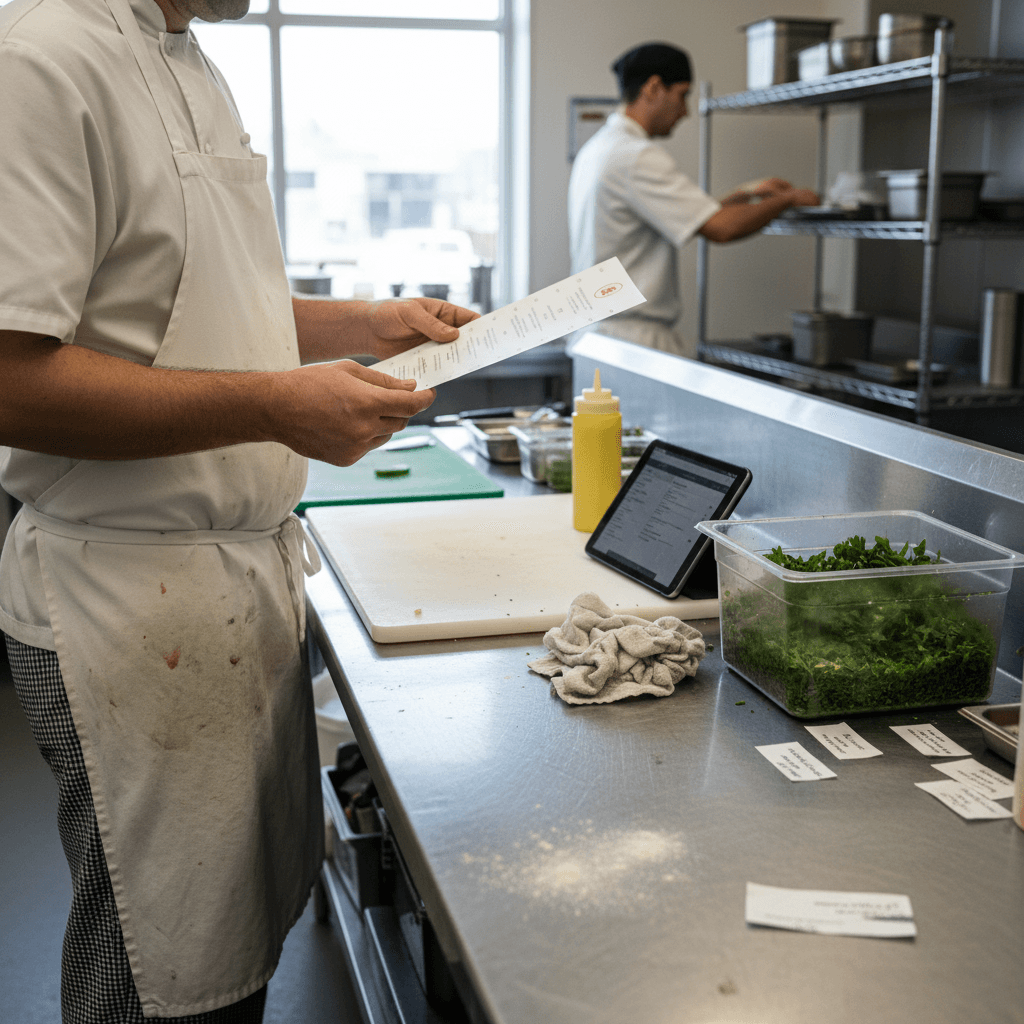
Clean Background: This is non-negotiable. Before you lift your phone, clear the frame. Move the squeeze bottles, dirty towels, and ticket spikes out of the shot. Use your pass, a clean cutting board, or a simple section of wood table as your backdrop. A messy background tells customers you are messy everywhere.
The Pre-Service Photo Drill
You have the method. Now build it into your routine.
Building photo time into your mise en place routine is essential. During prep, before service starts, make one perfect version of each dish you need to shoot that week. This is not waste; it is marketing inventory. Assign this task like any other prep duty.
Know which dishes to photograph fresh versus which hold up under lights. Photograph salads, garnishes, and anything with fresh herbs immediately after plating - they wilt in minutes under hot lights. Steaks, seared items, and most hot foods can hold for a few minutes if needed for a shot during service lulls.
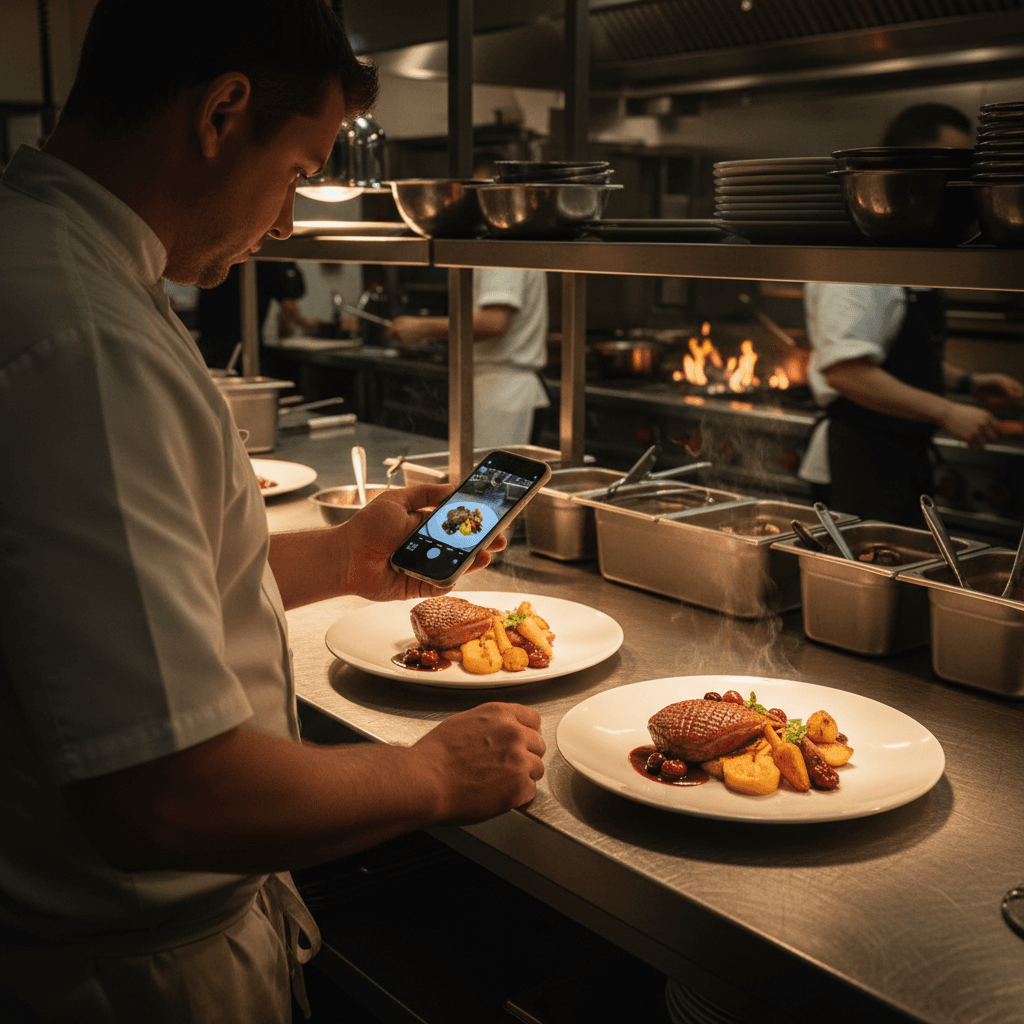
Train servers to spot photo-worthy plates during service without disrupting flow.The directive is simple: "If you see a perfect plate come up on expo - perfect sear, perfect garnish placement - and we are not in the weeds, ask expo to hold it for three seconds for a photo." Empower one person per shift with this duty.
The five-minute edit workflow requires no Photoshop.Take your photo into your phone's native editing tool.Tap "Auto" adjust first - it often gets you 80% there.Manually nudge three sliders: increase "Exposure" slightly to brighten the whole image, decrease "Highlights" to tame shiny spots on sauces or meat,and increase "Shadows" slightly to reveal detail in darker areas.Do not over-saturate.Save.This takes less time than rolling silverware.
From Snapshots To Sales Tools
These photos are not for your personal gallery.They are tools.Use them where they drive business.
Social media photos need life and context - show hands placing the plate,a bite being taken,the steam rising.Website photos need clarity and consistency - use clean backgrounds so items look uniform on your digital menu.Delivery app photos need brutal honesty - show exactly what gets packed in the container,the portion size in the box.This manages customer expectations and reduces complaint calls.
Create a simple photo library anyone on staff can use.Use a shared cloud folder like Google Drive or Dropbox.Create folders: "Website_Mains","Social_Stories","Delivery_Appetizers."Upload your edited photos there with clear filenames like "Double_Cheeseburger_Flatlay_2024.jpg."Now your social media manager,your website developer,and your third-party delivery coordinator all pull from the same asset.This stops servers from taking new,bad photos every time.
Measure what works by tracking which photos increase specific item sales.Put two different photos of your burger on Instagram for one week each.Track which one gets more "tag a friend" comments or direct messages asking "Is this on the menu?"On your website,track clicks on menu items.A/B test two photos of the same salmon dish.Use the one that gets more clicks for three months.Sales data tells you what customers actually respond to.
Starting tomorrow: assign one person per shift as 'photo captain.'Their side duty is to capture three great shots per shift during slow periods.They get first pick of any perfect plate that comes up.They own the five-minute edit and upload to the shared folder.This systematizes what was once chaotic.It makes taking good food photos with phone part of operations,not an afterthought.
Taking the Next Step
The shift from accidental snapshots to intentional sales tools is not about artistic talent.It is an operational procedure that saves time,money,and customer trust.The logic is clean: better visuals lead to faster decisions,fewer mistakes,and higher sales per guest.
Your kitchen already produces photogenic food every day.The system just needs capturing.The simplest way to organize this new workflow and measure its impact is with software built for restaurant operations.You can view our pricing for plans that scale from a single location to multi-unit groups.To implement this photo system alongside your existing routines,start a free trial and assign your first photo captain tomorrow