Why Your Food Photos Are Costing You Money
Bad food photography doesn't just look ugly - it directly hurts your bottom line. Learn how photos influence ordering decisions and what you can fix today.
The Silent Sales Killer on Your Menu
Why Your Food Photos Are Costing You Money becomes clear at 7:45 PM on a Friday. The dining room is full, but the server tablets show a pattern. Table six just ordered the chicken salad instead of the steak. Table twelve downgraded from the seafood tower to shrimp cocktail. You watch as three more tables skip your highest-profit dishes. The problem isn't the food - it's the photos customers see before they order.
Your menu photos work harder than your servers during rush hour. Every blurry shot or bad lighting choice tells customers 'we don't care' before they even taste the food. I've watched restaurants lose $200 on a Friday night because their steak photo looked gray and sad instead of juicy and hot. Customers make buying decisions in three seconds when they scan your menu. A bad photo creates doubt that no server can overcome with description alone.
This connects directly to the financial analysis we cover in Menu Engineering: The Real Math Behind Profitable Plates, which breaks down how every menu item contributes to your bottom line. Your photos should work with that math, not against it.
The Rule: Your highest-profit dishes get the best photos. Period. If your $32 ribeye has a 65% contribution margin (that's what's left after food cost), its photo needs to sell harder than your $18 burger at 55% margin. This isn't about artistic preference - it's about placing your profit drivers where customers can't ignore them.
Photography That Sells Without Being Fake
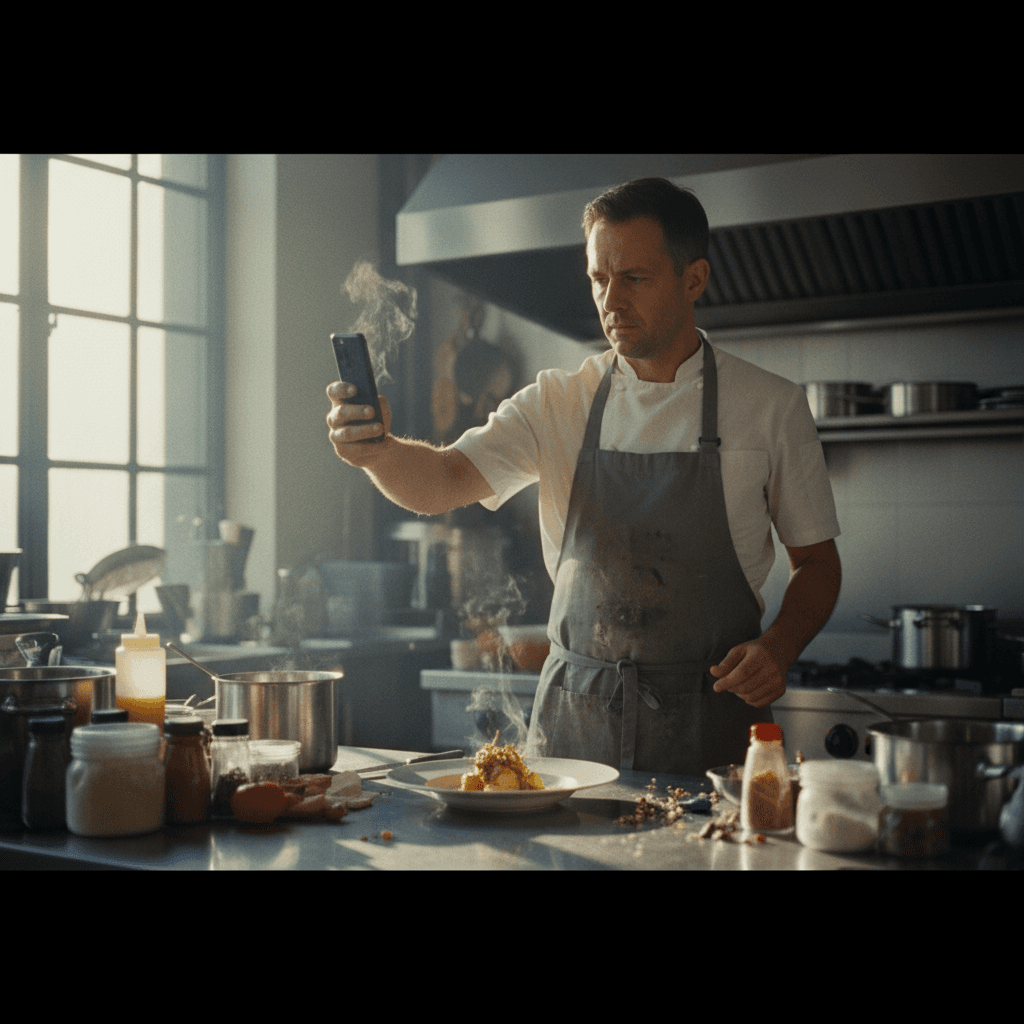
The hard truth: Instagram-worthy photos often sell worse than real kitchen shots. Customers want to see what they'll actually get at 7 PM on Saturday, not a stylist's fantasy. Start with your three highest-profit dishes - photograph them exactly as they leave the pass during service. Use natural window light if you have it, or position under kitchen lights that show true colors. The burger should look like your best line cook's Friday night special, not a food magazine spread.
Shoot during actual service hours when the kitchen is at full speed. The lighting will match what customers experience when they dine with you. If your dining room has warm, dim lighting at dinner, don't photograph dishes in bright midday sun. The disconnect creates subconscious distrust. Customers who see a perfectly lit, studio-style photo wonder if they'll receive the same plate.
The Rule: Photograph during peak service with kitchen lighting. Your expo station is your photography studio. Have a clean white plate ready for each dish as it comes off the line. Snap three shots: one overhead showing full plating, one at 45 degrees showing height and texture, one close-up of the main ingredient (the sear on a steak, the glaze on salmon). This takes 90 seconds per dish during a slow moment between rushes.
When Good Photos Still Don't Sell
You can have perfect lighting and composition, but if the photo doesn't match the price point or menu description, customers hesitate. I worked with a bistro that had gorgeous photos but their $32 salmon dish kept underperforming. The problem? The photo showed a simple fillet with herbs - it looked like a $19 entree. We reshoot with more visible sides and better plating, and sales jumped 40% in two weeks.
The psychology is simple: customers need visual justification for price. A $28 pasta dish needs to show abundant ingredients - visible shrimp, fresh herbs, rich sauce coating every strand. A $16 burger needs to look substantial with melted cheese dripping down the sides. If your photo makes a dish look small or simple, customers will choose something else that appears to offer better value.
Test this during lunch service tomorrow. Print two versions of your menu - one with current photos, one with photos that emphasize portion size and premium ingredients. Give them to different servers and track what sells better. You'll see immediate data on which photos drive orders versus which create hesitation.
The Math Behind Every Click
Food photography isn't art class - it's profit math. Track which photos get ordered most by watching server tablets or POS data. Notice patterns: do close-up shots of melting cheese sell more burgers? Does showing the side dish increase add-ons? Your best photo might be costing you money if it's for a low-profit item taking prime menu real estate.
Create a simple tracking sheet for your next five services. Have servers note when customers comment on photos - "That looks good" or "Is that really what it looks like?" More importantly, track which dishes get ordered after customers spend time looking at specific photos. You're looking for correlation between photo attention and ordering decisions.
The Rule: Menu real estate follows profit contribution. Your highest-contribution items (total profit per item sold) deserve prime photo placement at the top of menu sections or in featured boxes. Low-profit items get smaller photos or text-only listings. This isn't being sneaky - it's guiding customers toward choices that help your business survive while still offering what they want.
From Pretty Pictures to Real Profits
Stop treating photos as decoration and start treating them as sales staff. Rotate photos seasonally like you rotate specials. Test different shots of the same dish - one close-up, one full place setting. Most importantly, make sure every photo answers the customer's unspoken question: 'Is this worth my money?' When photos work with your menu engineering data instead of against it, you stop guessing what sells and start knowing.
Implement a quarterly photo review during slow Tuesday afternoons. Print your current menu and highlight every photo that doesn't match what actually leaves the kitchen today. Has your plating changed? Have ingredients shifted? Update those photos immediately before they create customer complaints about "not looking like the picture."
The manual process works but requires discipline - checking POS data weekly, retraining servers to notice customer reactions, scheduling regular photo updates around kitchen prep time. Modern digital menu platforms can automate much of this tracking by showing you exactly which items get clicked most often in digital menus before ordering begins.
Taking the Next Step
Shifting from decorative photography to profit-driven imagery requires changing how you view every image on your menu. Each photo now has a job description: sell this specific dish to this specific customer at this specific price point. The logic is clear when you connect visual presentation directly to ordering behavior and contribution margin.
The platforms to track photo performance and update menus digitally exist today without requiring constant manual oversight from already-busy managers. If you are ready to connect your food photography directly to sales data and profit margins, you can view our pricing to fit your budget, or start a free trial to test it during your next service when customers are making those critical three-second decisions about what to order from your menu