Why Your Dinner Rush Plan Fails
Most dinner rush plans create more chaos. Learn the three mistakes that break service and how to fix them before Friday night.
When Your Dinner Plan Falls Apart
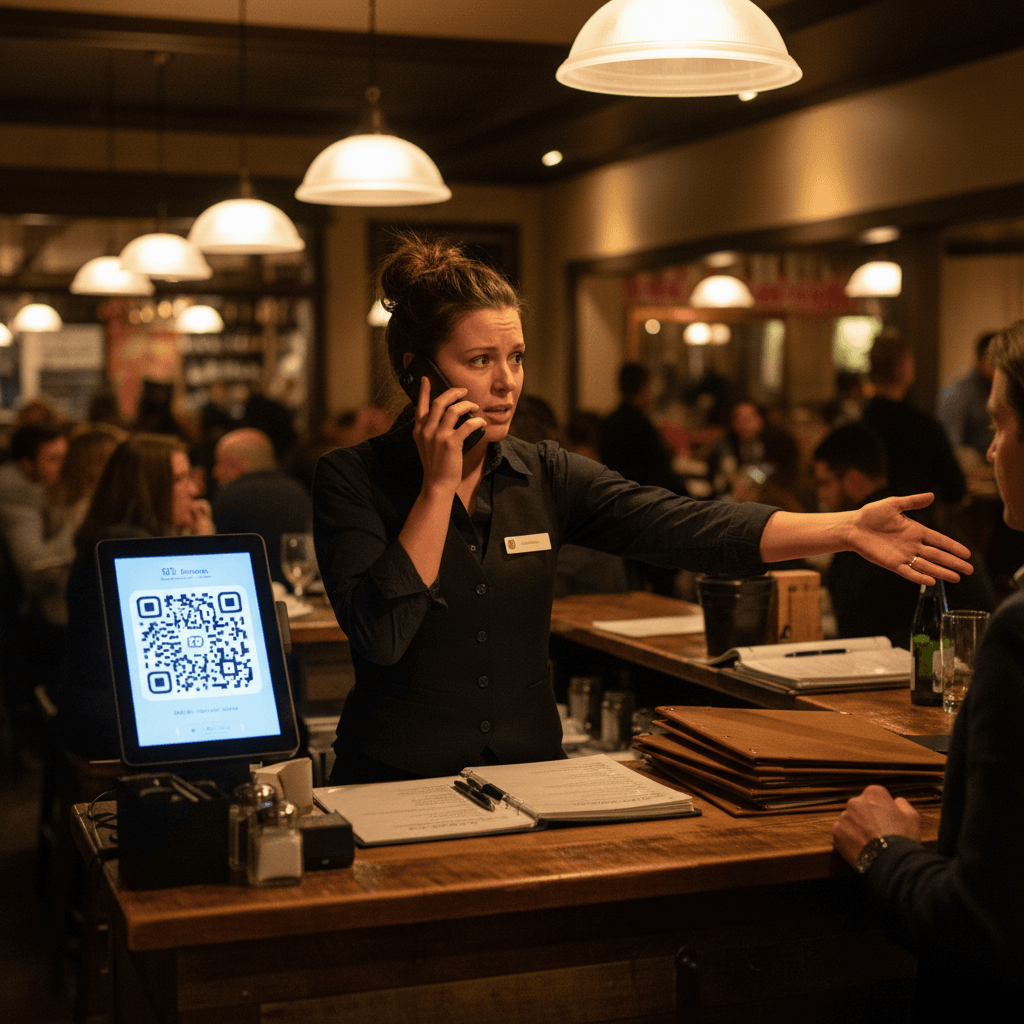
Why Your Dinner Rush Plan Fails the moment your expo calls three orders at once and the grill cook freezes. That's not a people problem - it's a system failure. Most restaurants prepare for dinner rush by adding more bodies, not fixing what breaks. It's 7:30 PM on a Friday. The host just sat a ten-top and two four-tops at the same time. Your server is already carrying three drinks to another table. The printer spits out four tickets in thirty seconds. The expo calls "order fire" for table 42, but the sauté cook is plating for table 38 and doesn't hear it. The first delay starts here, with a missed communication, not a slow cook.
This breakdown is predictable. It happens because your plan focuses on reaction, not prevention. You staff for the peak, but you don't engineer the workflow to handle it. The real fix isn't found in the schedule; it's in the silent hour before doors open, when you build a system that doesn't rely on perfect communication under fire. This connects directly to the core issue we explore in Kitchen Speed: When Your Line Cooks Are Waiting, which breaks down how waiting cooks signal a broken workflow, not a lazy team.
Stop Adding More Cooks
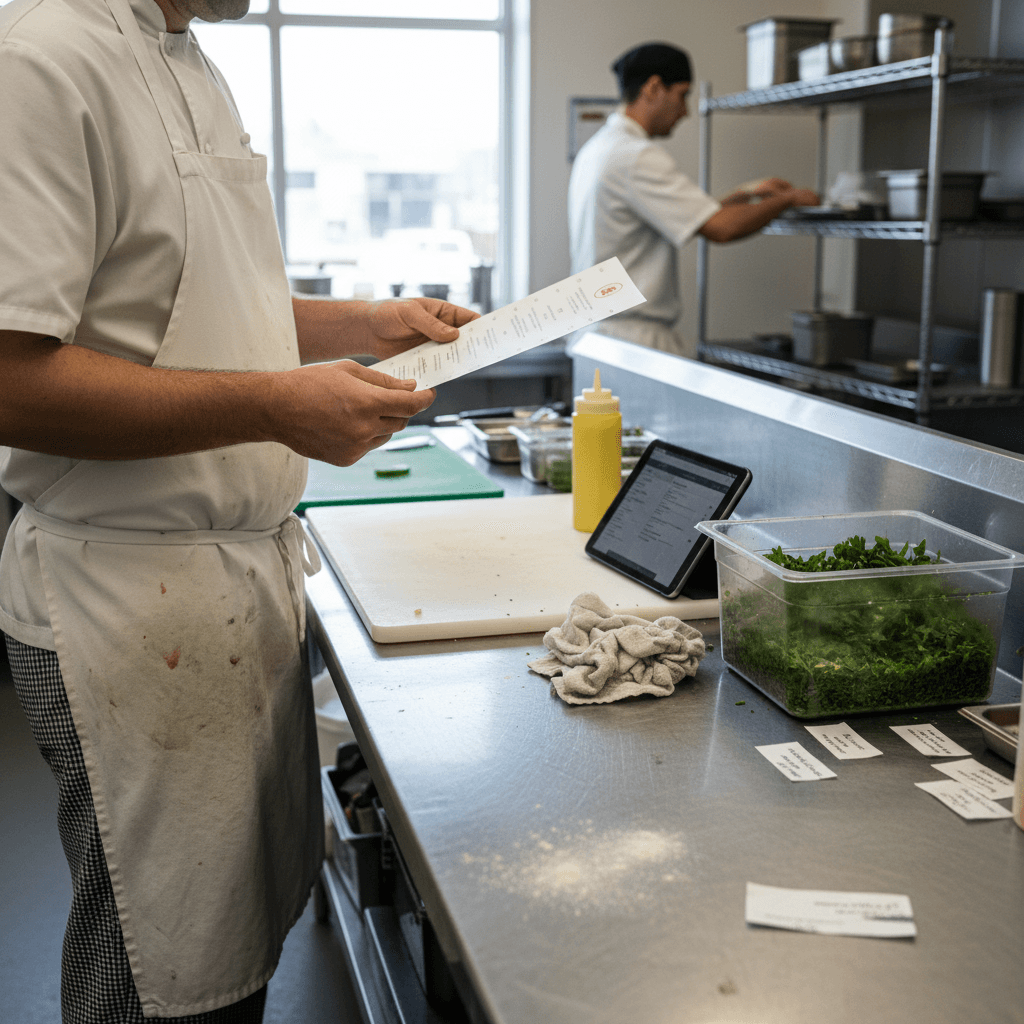
Here's the hard truth: adding another line cook during rush often slows you down. They need space, they create communication gaps, and they interrupt established rhythms. Instead, fix your mise en place two hours before service. Not just chopped vegetables - complete plates ready to fire. Your sauté station should have every sauce portioned, every garnish prepped in reach.
Think about your most popular dish. How many components leave the kitchen on that plate? Now trace each one back to where it's stored during service. If your cook turns around twice to build that dish, you've already lost. The Rule: Every component for your top five sellers must be within arm's reach of the station cooking it. This isn't about organization; it's about motion economy. A cook who pivots to grab prepped mushrooms from a lowboy is a cook who isn't watching their pan.
This preparation creates speed you can't buy with another body. A well-set station means your grill cook can sear six steaks without moving their feet. Your sauté cook can finish three pasta dishes without asking for backup. The bottleneck shifts from physical execution to mental processing - and that's a much easier problem to solve with clear tickets and a calm expo.
The Paper Ticket Wall
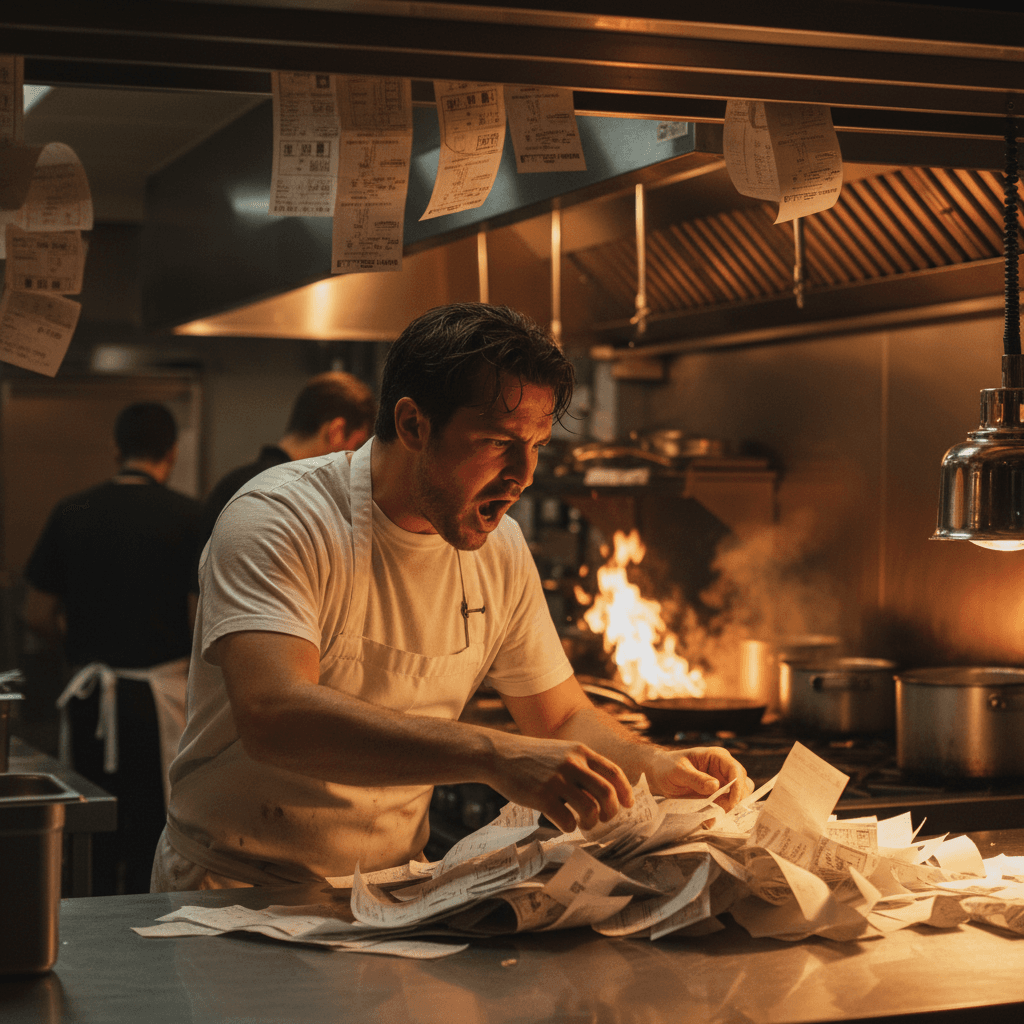
Manual systems work until they don't. When your expo has twelve tickets hanging and can't see which ones are firing, you've hit the limit. This happens every Friday at 7:45 PM. The bottleneck isn't cooking speed - it's information flow. Servers can't see what's delayed, cooks can't prioritize what's next, and managers can't spot which station is drowning.
The paper ticket rail is a perfect example of a system that fails at its designed capacity. It works fine with four tickets. It becomes chaos with twelve. Servers walk up to ask about table 52, blocking the expo's view of the rail. The sauté cook yells "how long on my risotto?" because they can't see the ticket for table 47 behind five others. This isn't a staff problem; it's an architecture problem. You've built a communication channel that collapses under load.
The fix starts with visual management. If you must use paper, implement a color-coded system for course timing. Appetizer tickets go on one clip, entrees on another. Better yet, create a simple whiteboard timeline where the expo marks expected fire times for each table's main course. This gives everyone - servers checking on delays, cooks planning their next move - a single source of truth they can see from across the kitchen.
Building a Rush-Proof Kitchen
Surviving dinner rush isn't enough. You need to thrive through it. Start with one station next week - maybe your grill or sauté. Time how long it takes from ticket to plate during calm Tuesday service versus Friday rush. That gap tells you where your system breaks.
Let's say your grill station averages eight minutes on Tuesday and eighteen minutes on Friday night for the same steak dish. That ten-minute gap isn't about the cook working slower; it's about interference. Maybe tickets get buried on the rail. Maybe the cook runs out of prepped potatoes and has to turn away from the grill. Maybe servers interrupt with questions because they can't see status.
Build your fix from that data point. If tickets get lost, redesign the rail or implement a calling system where the expo announces every new ticket as it hits the line. If prep runs out, establish par levels that are checked two hours before dinner and again thirty minutes before peak. If server interruptions are the issue, create a visual status board in the pass-through that shows which tables are firing, plating, or ready.
These manual fixes require discipline and consistency from your management team. They work because they remove variables and create predictable patterns your team can follow even when stressed.
Modern digital tools can automate much of this repetitive workflow monitoring for you, turning manual checks into automatic alerts and providing real-time visibility that paper systems simply cannot match.
Taking the Next Step
The shift from reactive staffing to proactive system building is practical and its logic is clear: fix what breaks before you ask people to work faster around it.
To build this kind of resilience into your own dinner service, start by mapping just one broken workflow this week - perhaps how tickets move from printer to plate - then implement one manual fix before Friday night arrives.
When you're ready to automate those manual checks and gain real-time visibility into your entire line’s performance during peak hours, view our pricing for options that scale with your volume or start a free trial to see how digital tools can turn your Friday night rush from chaos into controlled execution