Kitchen Speed: When Your Line Cooks Are Waiting
Slow kitchens aren't about lazy cooks. They're about broken systems. Learn the real fixes that work during Friday dinner rush.
The Real Cost of 20-Minute Ticket Times
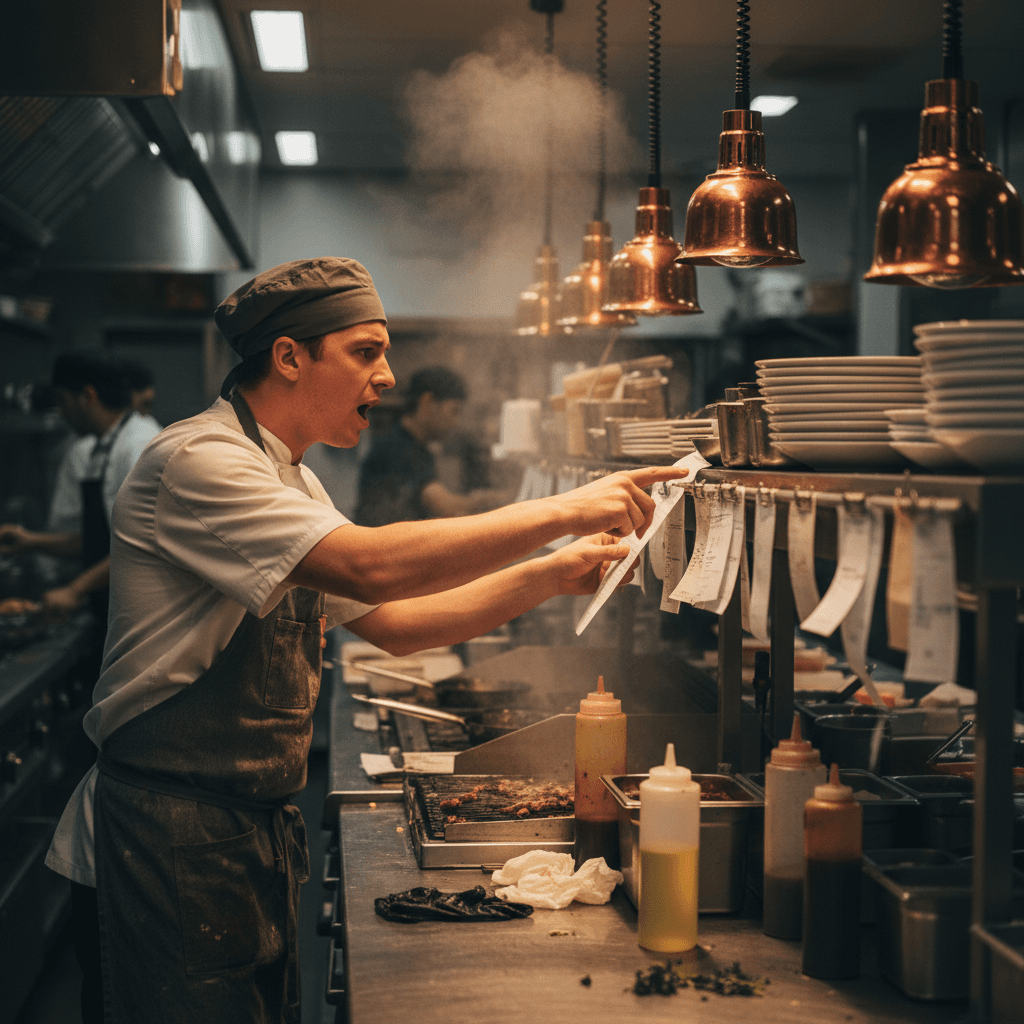
The expo calls three orders at once. Your line cooks are waiting for protein to sear, staring at the flat top. The server just asked for the third time about table twelve's appetizers. This is the moment you realize improving kitchen speed isn't about working harder. It's about fixing a broken system.
What happens when customers wait too long? They don't complain to you. They complain to each other. They post a one-star review about the "slow service" while they're still sitting at the table. The second round of drinks never gets ordered. The dessert menu stays closed. That table of four that should have turned in ninety minutes is now pushing two hours, and the next reservation is waiting at the host stand.
How slow kitchens kill profit margins. Contribution margin is what's left after food cost. A $16 steak that costs $5 to plate has an $11 contribution margin. When that steak takes twenty-five minutes to fire, you lose the chance to sell another one to the next table. You're not just losing food sales. You're losing beverage sales, dessert sales, and the chance to turn that table for a second seating on a busy night. Slow service caps your revenue per square foot.
The hidden waste no one tracks. It's not just spoiled lettuce in the walk-in. The real waste is labor minutes burned while cooks wait for the grill to clear or for the fryer basket to be free. It's the manager running food instead of managing the floor. It's the dishwasher standing idle because plates aren't coming back from the dining room fast enough. This waste never shows up on your P&L, but it drains your shift every single night.
You know the problem costs money. Here's why your current fix fails.
Why Your Prep List Is Failing You
The myth of perfect mise en place is that more prep equals faster service. It doesn't. Over-prepping creates clutter. You have six hotel pans of diced onions when you only need two. Now your cooks are digging through containers, wasting time searching for what they need during the rush. Your cooler is packed, but your line is slow.
When organization becomes the problem. Your prep list has thirty items for the grill station. The cook spends twenty minutes at the start of shift reading it, checking inventory, and making a mental map. That's twenty minutes they could have spent actually cooking. Complex systems create friction. The Rule: If your prep list takes more than five minutes to understand, it is wrong.
Hard truth: Most prep systems create more work than they save. They are built for a perfect world where sales forecasts are always right and no one calls in sick. In reality, a massive prep list leads to overproduction, which leads to waste, which leads to higher food cost. You are preparing for theoretical customers instead of the actual tickets on your rail.
That's the trap of over-planning. This is how you escape it.
The 15-Minute Kitchen Reset
Do this before every service starts. Walk the line with your head chef or lead cook. Do not sit in an office.
What to fix before service starts. Check three things only: fire, ice, and space. Is every burner lit and at the correct temperature? Are all cold wells iced down properly? Is there clear space at every station for plating? If the answer to any of these is no, fix it now. This takes three minutes.
The three stations that matter most. Identify your bottleneck station from last service. It's usually one of three: protein sear (grill/sauté), fryer, or expo. Tonight, that station gets priority support. Move a backup cook closer. Pre-stage back-up product within arm's reach. Clear all non-essential tools from their workspace.
How to spot bottlenecks before they happen. Watch ticket times from the first order. If appetizers are taking eight minutes at 6 PM, they will take fourteen minutes at 8 PM unless you intervene immediately. Bottlenecks announce themselves early if you know what to listen for: repeated calls from expo for the same station, cooks reaching over each other, or a pile-up of tickets at one printer.
You've reset the kitchen for speed. Now you need a plan for when the rush hits.
Friday Night Execution Plan
The ticket flow that actually works is not first-in-first-out during peak rush. It's grouping by cook time and protein.
Here is how it works: Expo sorts incoming tickets into "pools." All tickets with a medium-rare ribeye go together, even if table five ordered five minutes after table three. All fryer items fire together. This lets each station cook in batches instead of one-off orders, cutting ticket times by a third during heavy volume.
Who calls what and when? Expo calls proteins to the grill when they hit eight minutes remaining on their target time - not when they hit the rail. Expo calls sides and garnishes when proteins have two minutes left. Expo calls for pick-up when plates are being sauced. This staggered calling prevents cooks from being overwhelmed with information and keeps their focus on cooking, not listening.
When to break your own rules. Break them when a single ticket is holding up multiple tables. If you have two top-selling items backed up on different tickets, combine them onto one ticket manually and fire them as a batch. Break them when a VIP or regular is in house - get their food out fast even if it breaks sequence. The system serves the service, not the other way around.
The plan worked or it didn't. Monday tells you which one it was.
The Monday Morning Check-In
What to measure from Saturday's rush. Pull two numbers only: average ticket time for your top five entrées, and the time stamp when ticket times jumped by more than five minutes. That jump point - say 7:42 PM - is where your system broke. Find out what happened at 7:42 PM. Was it a large party order? Did a key cook go on break? Did you run out of mashed potatoes? That moment holds your answer.
One change to make this week. Based on that jump point, implement one countermeasure. If tickets spiked after a six-top ordered eight steaks, institute a "large party fire" rule where expo alerts grill thirty seconds before sending big tickets. If tickets spiked when Carlos went on break, adjust break schedules so no two key stations lose a person within ten minutes of each other. One change. One week.
How to know if it's working. Next Saturday, watch for that same jump point. If ticket times hold steady past 7:42 PM, you won. If they spike again at 7:45 PM, you need a different fix. This is not about grand strategies. It is about finding leaks in your operation and patching them one at a time.
Taking the Next Step
Slow ticket times are a solvable equation of fire, space, and sequence. The operational shift from chaotic reaction to controlled flow is inevitable once you see the pattern.
Stop guessing which station will bog down next Friday. A system built for real rushes - not perfect ones - gives you back those lost labor minutes and turns waiting cooks into earning cooks. See exactly how this works for your menu and layout by checking view our pricing or putting the sequence rules to test during your next busy service with a start a free trial.