Why Your Cocktail Menu Creates Friday Chaos
Complex drinks slow service when tickets pile up. Learn how smart menu design keeps your bar moving during peak hours.
The Real Cost of Slow-Moving Cocktails
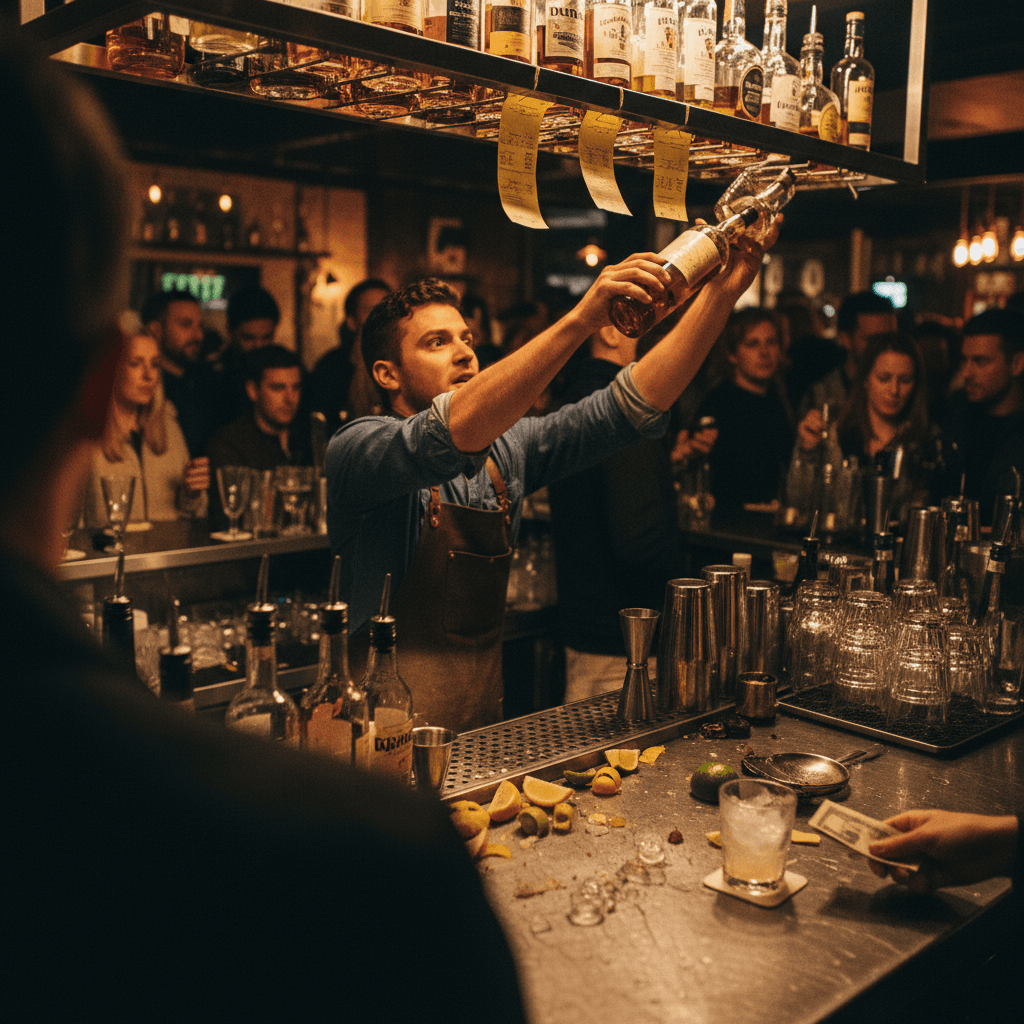
Why Your Cocktail Menu Creates Friday Chaos starts with a simple scene. It's 8:47 PM on a Friday. Your bar is three deep with customers waiting for drinks. The ticket printer is spitting out orders faster than your bartenders can pull bottles. Every extra ingredient in your signature cocktail adds seconds that become minutes across 100 drinks.
Watch your bartender make your most complex drink. Count the steps: reach for the specialty liqueur from the back shelf, grab the fresh herbs from the cooler, muddle in a separate tin, rinse the jigger between pours. That's 45 seconds per drink. Now multiply by the 20 tickets hanging on the rail. You just lost 15 minutes of production time during your peak hour.
Those lost minutes translate directly to lost sales. When wait times hit 20 minutes, customers walk out. They don't complain to management - they just leave and tell their friends your bar is too slow. This isn't about bartender skill; it's about menu design that fights against your physical space and service pace. For a complete breakdown of turning chaotic weekends into controlled service, see our guide on When Your Bar Hits Friday Night Chaos, which builds the full system around these principles.
The math is simple but brutal. Each extra step in a cocktail recipe adds friction. Friction during peak hours costs money. That is a certainty, not an opinion.
Design Drinks That Move at Speed
The solution starts with redesigning your menu for movement, not just creativity. You need drinks that can be built quickly when tickets are backing up and customers are getting impatient.
The Rule: No cocktail on your Friday night menu should have more than five ingredients total. This includes garnishes, syrups, and any special preparations. Count everything that requires a separate action from your bartender. Five ingredients means five movements - any more creates bottlenecks during rush.
Build cocktails around your bar's physical layout, not a chef's dream list. Put your most-used bottles within arm's reach of the well. If you're constantly reaching for a specialty gin that sells two bottles a week, move it to backup storage and feature a different gin that moves faster. Your signature cocktail shouldn't be your bartender's favorite creation - it should be what sells fastest during your busiest shifts.
Test this during your next slow Tuesday lunch. Time how long it takes to make each cocktail on your menu with two bartenders working at normal pace, not rushed. Anything over 90 seconds to build needs redesigning for Friday night speed.
When Pretty Menus Meet Real Service
Beautiful menu descriptions don't pour drinks. That fancy paragraph about "hand-foraged botanicals and artisanal small-batch bitters" creates training gaps that show up at the worst possible moment.
Consider this real scenario: It's Saturday night and your lead bartender calls out sick. The remaining staff can't execute half your specialty cocktails consistently because the recipes rely on one person's memory and technique. New servers can't accurately describe 15 complex drinks to customers, leading to wrong orders and remakes that clog the printer even more.
Menu complexity creates invisible costs beyond just production time. Every specialty ingredient requires separate inventory tracking, more cooler space, and additional prep work before service. Those beautiful house-made syrups? They spoil if not used within five days, creating waste that eats into your profit margin.
Simplify your training by simplifying your menu. Create visual recipe cards with exact measurements in ounces, not "parts" or "dashes." Use the same glassware for multiple cocktails to reduce washing and sorting time behind the bar. Standardize your garnish station so every drink gets the same treatment without thinking.
From Chaos to Controlled Flow
Start with your slowest-moving drink and redesign it for speed this week. Look at your sales data from last Friday - which cocktail took the longest to make relative to its price? That's your first target for simplification.
Test new cocktail designs during Tuesday lunch before their Friday debut. Have your entire bar staff make the drink three times each while you time them. If there's more than a 15-second variation between bartenders, the recipe needs clearer instructions or fewer components.
Build checklists for staff training that match your actual service pace, not ideal conditions. Your training manual should have separate sections for "Tuesday afternoon pace" and "Friday night rush procedures." New hires need to learn both speeds from day one.
Manual fixes work, but they require constant discipline and oversight from management. Modern digital tools can automate the repetitive parts of this workflow - tracking which cocktails slow down service, monitoring ingredient waste in real time, and providing instant recipe access to all staff members during busy shifts.
Taking the Next Step
Redesigning your cocktail menu for speed is a practical shift with clear financial logic. It moves you from fighting fires every weekend to running controlled service that maximizes sales during peak hours.
Start by timing your current cocktails during next Friday's rush, then rebuild one slow-mover using the five-ingredient rule. View our pricing for tools that track these performance metrics automatically, or start a free trial to see how digital recipe management keeps your entire team moving at the same fast pace when tickets pile up.