When Your Bar Hits Friday Night Chaos
Stop fighting fires every weekend. Learn the systems that keep service smooth when tickets pile up and customers wait three deep.
The Moment Everything Falls Apart
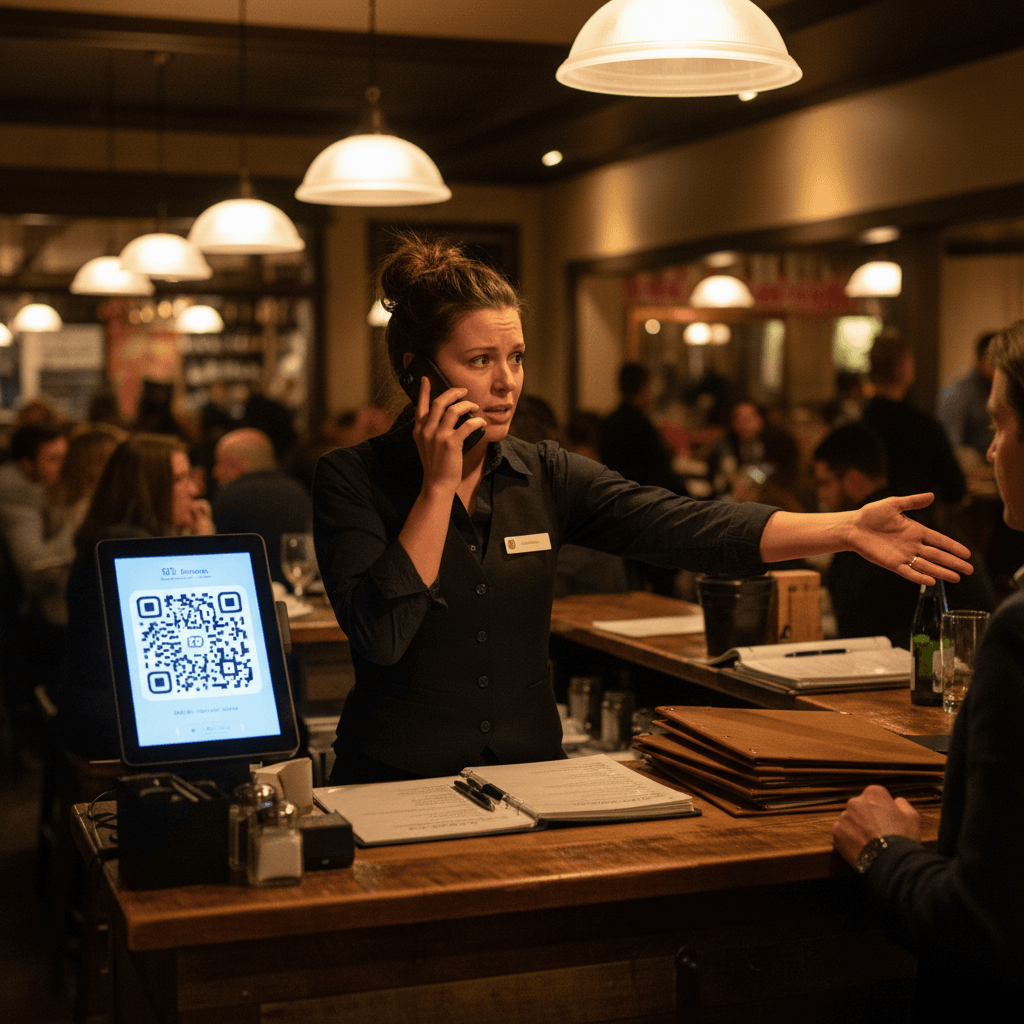
Managing a busy bar means recognizing the difference between a good rush and a system failure. It's 8:47 PM on a Friday. The line at the door is twenty deep, but that's not the problem. The problem is the rail of tickets curling onto the floor because there's no more room on the printer. Three servers are clustered at service well, each holding two empty drink trays. They're not talking to each other. They're staring at the bartender, who has stopped making eye contact with anyone. A regular at table fourteen just waved you down to ask where his second round is. You check the ticket time: twenty-two minutes ago. That's when you know this isn't just busy. Your systems are broken.
The signs are specific and measurable. Tickets back up to the floor when your printer can't keep up with orders. Servers can't get drinks out because they're waiting in a single-file line instead of flowing through stations. Regulars complain about wait times they'd normally tolerate because the experience has shifted from "worth the wait" to "forgotten." You'll see duplicate tickets printed because someone thought the first one got lost. You'll find two bartenders making the same cocktail for the same table because communication broke down. The chaos isn't about volume. It's about flow stopping completely.
Why 'Just Work Harder' Makes Everything Worse
You know the problem. Here's why your current fix fails.
Telling your team to work harder during a breakdown is like pouring gasoline on a fire. Adding more staff to broken systems creates more confusion, not more throughput. When you throw bodies at the problem without fixing workflows, you get crossed wires and duplicate work. A third bartender jumps into the well without a designated station. Now three people are pulling from the same vodka bottle, counting pours in their head while tickets pile up. Manual drink counting fails under this pressure every single time.
Frustrated team members start stepping on each other's toes. One server tries to expedite by calling orders directly to the bar, bypassing the ticket rail. Another server, following protocol, places a paper ticket for the same table. Now two drinks get made for one order. The waste is visible: poured cocktails sitting abandoned on the service counter because no one knows who they belong to. The real cost is invisible: the time spent remaking correct drinks, apologizing to guests, and managing team frustration instead of moving orders forward.
The Rule: Adding labor to a broken process multiplies errors at a geometric rate.
The Rhythm Method for Bar Service
That's the trap. This is how you escape it.
Your fastest bartender might be creating your biggest bottleneck. Speed alone isn't the solution if it means one person hoards tickets instead of flowing orders through stations. The superstar who can make six cocktails in three minutes becomes a single point of failure when twelve tickets hit at once. They become an island, and everyone waits for that island to finish before anything moves forward.
The solution isn't finding superstar individuals - it's building systems where average performers deliver exceptional results consistently. Think of your bar as a kitchen line with stations that pass work forward. A well-organized kitchen doesn't have one cook doing everything from chopping vegetables to plating desserts. They have stations: grill, sauté, pantry, expo. Each station has a specific role in getting food to the table. Your bar needs the same structure.
Set up your physical space into clear stations with defined responsibilities. Station One: beer and wine only. Station Two: high-volume cocktails (your Moscow Mules, Margaritas). Station Three: craft cocktails and spirit-forward drinks that require more time. Each station has its own ticket printer or designated section of a shared rail. Servers know which station gets which type of order before they even put it in the POS.
The Pre-Shift That Actually Works
Systems only work if your team understands them before chaos hits.
What you say in your five-minute briefing matters more than any written manual. Staff will remember clear, simple directives when they're in the weeds, not complex procedures they read once during training.
Start with station assignments: "Maria, you're on beer and wine tonight. Every draft, bottle, and glass of wine goes to you first." Then define hand-off points: "If Maria's well gets three deep with tickets, move any simple vodka sodas or gin tonics to her station too." This creates backup homes before primary stations get slammed.
Set up your mise en place so everything has a home and backup homes for when primary stations get slammed. This is the drink equivalent of having backup prep bowls ready before service starts. For beer and wine: backup chilled glasses within arm's reach, backup bottle openers clipped to each station, backup wine keys on lanyards. For high-volume cocktails: prepped garnishes (lime wedges, mint sprigs) in quart containers with lids, simple syrup bottles filled and labeled, backup ice wells accessible without leaving position. For craft cocktails: measured jiggers at each station (no free pouring during rush), bitters bottles with pour spouts already inserted, specialty glassware stacked safely nearby.
The Rule: If you have to take more than two steps to complete a standard drink component, your mise en place has failed.
Closing Counts That Don't Lie
You've built flow during service. Now you need data that reflects reality.
Traditional closing counts tell you what sold yesterday - not what's selling right now during your peak hours. Spending an hour after close counting every bottle gives you accurate inventory but useless operational intelligence for tomorrow's prep.
Simple tally sheets that live at each station change this completely. Create laminated sheets with your top twenty moving items: house vodka, well gin, draft lager, house red wine by glass. Place them at each station with a dry-erase marker. Every two hours during peak times (7-9 PM Friday/Saturday), have someone quickly mark tallies for what was poured. Not every drink - just key items that drive prep decisions. This takes ninety seconds per station.
The data tells immediate truths. If Station Two's craft cocktail tally shows fifteen Old Fashioneds in two hours but only three Manhattans, you know where to focus garnish prep tomorrow. If Station One's beer tally shows twenty-seven drafts of IPA but only eight pilsners, you adjust your keg ordering before Sunday's inventory count. This isn't about perfect accounting - it's about real-time intelligence for tomorrow's shift.
When to Break Your Own Rules
Good systems create stability great systems allow for smart exceptions.
The exceptions prove your systems work because they're temporary adjustments made from a position of control - not panic-driven reactions to chaos. Letting your lead bartender jump stations during an unexpected celebrity walk-in or sudden thirty-top reservation is smart flexibility. Keeping everyone else in their lanes during that same rush maintains overall structure. One person temporarily floating creates minimal disruption. Everyone floating creates chaos again.
Temporary workflow adjustments should never become permanent bad habits. The key is naming the exception as it happens: "John is floating between stations two and three for the next thirty minutes because we just got that large party seated." Announce it clearly so everyone understands this is a planned deviation. Set a time limit: "Back to standard stations at 9:30." This maintains intentionality instead of letting systems slowly erode through unspoken compromises.
Start With One Station Tomorrow
Don't overhaul everything at once and overwhelm your team.
Pick your busiest well station tomorrow night - probably your beer and wine or high-volume cocktail station - and apply just one system from this guide. See what happens when one part of your operation flows smoothly while chaos continues around it. This creates proof of concept without risking your entire Friday night revenue.
If you choose ticket organization: Designate that station's printer or rail section clearly with colored tape or a sign. In pre-shift briefing: "All draft beers and bottled beers go to Maria's station only tonight." That's it. Don't change garnishes don't change pour counts don't change closing procedures. Just create clear ticket flow to one point. Watch what happens when servers don't have to decide where to place orders watch what happens when one bartender owns one type of drink completely watch what happens to ticket times for those specific items.
The contrast will be obvious within one hour. The organized station will move faster with less stress while other stations struggle with their usual chaos. That visible difference builds team buy-in for expanding the system next week.
Taking the Next Step
Friday night chaos isn't inevitable - it's predictable based on systems you can control or ignore until they fail completely.
Managing a busy bar transitions from reactive firefighting to proactive flow management when you stop treating each rush as unique and start building repeatable patterns that work under pressure every single time.
Stop guessing which wells will run dry first during Saturday service - start a free trial today and build your first station-specific pour tracking system before your next weekend rush begins. When you see exactly how much time gets reclaimed from frantic searching and remaking drinks - view our pricing becomes about calculating recovered revenue rather than just another software expense