Why Your Bartenders Give Free Drinks
The real reasons bartenders comp drinks aren't what you think. Learn the operational gaps that create this problem and how to fix them for good.
Why Your Bartenders Give Free Drinks
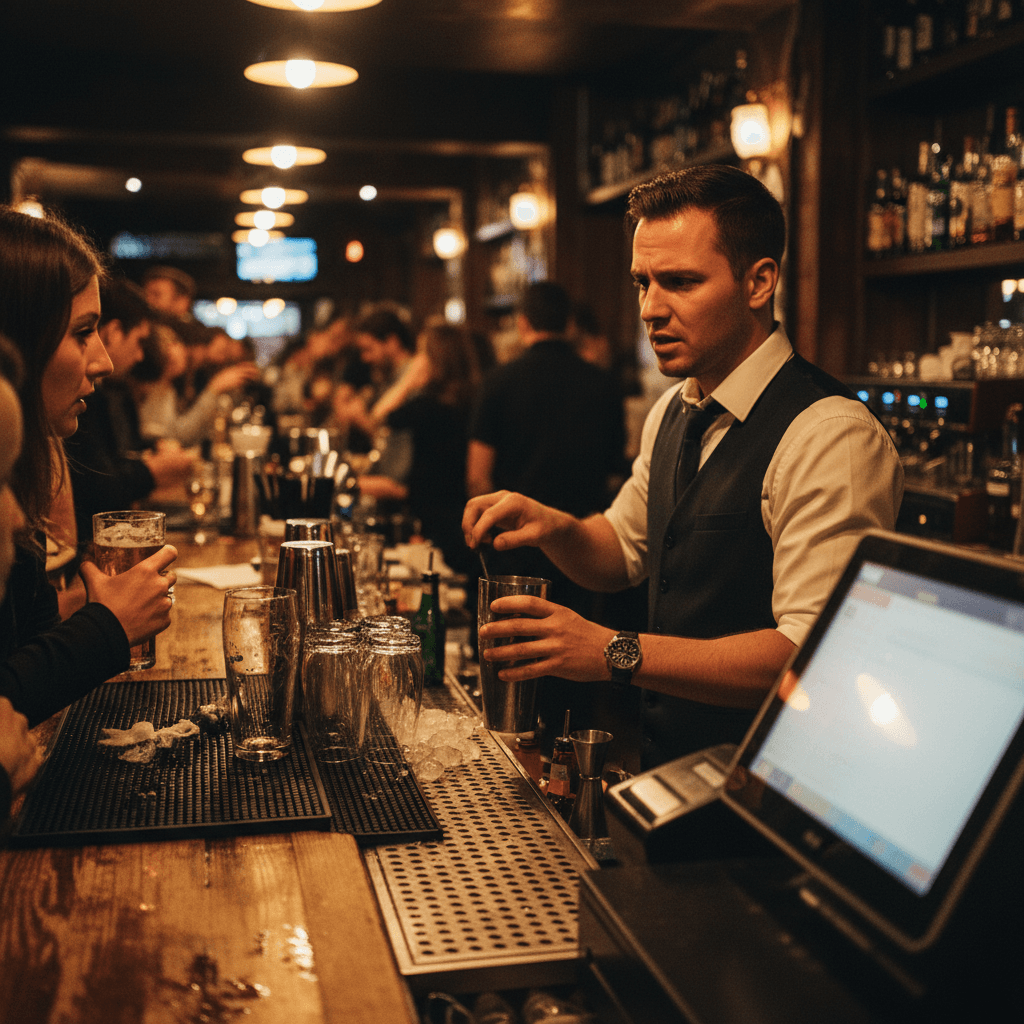
That missing $200 at the end of Friday night isn't theft. It's a symptom of broken systems. When three deep customers are yelling orders and servers need drinks now, bartenders make quick decisions. They comp drinks to keep service moving. They give free rounds to regulars because they don't have time to argue. They pour heavy when they're behind because it's faster than measuring. This isn't about bad employees - it's about impossible situations.
The chaos you feel at 9 PM on a Friday is a predictable outcome. Your bartender is trying to manage five competing priorities at once: taking new orders, making drinks for tickets, handling cash, placating waiting guests, and keeping some mental tally of what they've poured. Something has to give. Usually, it's your pour cost. This specific operational breakdown is part of a larger pattern we map in When Your Bar Hits Friday Night Chaos, which shows how to build systems that keep service smooth when tickets pile up.
The Pour Count That Changes Everything
Start counting pours tonight. Not inventory counts at closing - actual pours during service. Put a notebook by each well station. Every time a bartender makes a drink, they mark it down. Old fashioned? Mark it. Draft beer? Mark it. Wine pour? Mark it. Do this for one Friday night shift. The numbers will shock you.
The hard truth: Your POS system lies about what's actually happening on the floor. That $12 cocktail you sold 40 of according to your reports? Your bartenders poured 48 of them tonight. The difference isn't theft - it's the three you comped to calm down an angry table, the two you gave to servers who dropped drinks, and the three you poured heavy because you were six tickets deep.
This gap has a name: variance. Variance is the difference between what your system says you sold and what actually left the bottle. A 2% variance might be spillage. A 20% variance is a broken process. That missing 20% represents pure profit walking out the door every single shift.
The Rule: You cannot fix what you do not measure. The manual pour count is your starting point for truth.
When Counting Becomes Counting Problems
Manual pour tracking works for exactly one shift before it breaks down. By Saturday night, your bartenders are too busy to write down every drink. By Sunday, they're inventing numbers to fill out your sheets. By Monday, you're back to guessing where your liquor went.
The bottleneck isn't your staff - it's asking humans to do machine work during peak chaos. When tickets are printing faster than you can read them, no bartender can stop to document every pour decision they make in real time.
Think about the sequence: A server runs up saying table six needs their round now because they're leaving. A regular waves from the end of the bar expecting his usual. The printer spits out three new tickets. In that moment, your bartender has two seconds to decide between writing something in a notebook or making the drinks that keep people happy. The notebook loses every time.
This is why manual counts fail. You're adding administrative work to the most time-sensitive role in your building during its busiest moments.
From Counting Pours to Controlling Profit
The solution isn't more paperwork - it's removing the decisions that lead to free drinks in the first place.
Start with comp authority. Bartenders should never have the power to give away product without manager approval. Create a simple rule: If a guest is unhappy, the bartender flags a manager. The manager decides on compensation. This takes the emotional pressure off your staff during rush hour and puts control back where it belongs.
Next, handle regulars with structure, not freebies. Set up a tracked loyalty program where every tenth drink is free. Print simple punch cards or use a basic digital system. Tell your regulars, "We value your business so much we're giving you a card." Now your bartender can point to the system instead of making a guilt-based decision while pulling a pint.
Finally, fix the server interaction problem. Servers should not be begging for remakes at the bar during service. Establish a remake ticket process through your POS or with physical chits that require manager sign-off before the bar makes the drink. This creates a paper trail and slows down impulsive requests.
Your Friday night chaos becomes controlled service where every pour gets paid for because the system handles what humans can't during peak rush.
These manual fixes require consistent management presence and discipline. They work, but they rely on human vigilance during your busiest hours.
Modern digital tools can automate the repetitive parts of this workflow by tracking every order from initiation to payment, removing the need for manual counts and guesswork during service peaks.
Taking the Next Step
The shift from reactive comps to controlled service is practical and its logic is clear: measure what matters, remove emotional decisions from peak pressure moments, and build systems that support your staff instead of working against them.
If you're ready to stop guessing where your liquor went every weekend, view our pricing for tools designed around these exact operational realities or start a free trial and test automated pour tracking during your next Friday night rush