Why Scan-to-Pay Fails (And How to Fix It)
Servers running cards while tables wait costs you real money. Learn how scan-to-pay actually works during your busiest shifts.
When Your Best Server Becomes a Cashier
Why Scan-to-Pay Fails (And How to Fix It) starts with your Friday night rush. Picture your top server just sold $400 in appetizers and drinks at table seven. Now they're standing at the POS running cards while three other tables wave for checks. Every minute they spend as a cashier is a minute they're not selling more food or turning that table.
This happens because traditional payment processing breaks your service flow. The server leaves the floor, loses connection with their section, and creates bottlenecks at the POS station. Meanwhile, customers who wanted to leave ten minutes ago are still waiting.
The problem isn't your server's ability. It's a system that forces your highest-earning employee to become a payment processor during peak revenue hours. This operational breakdown connects directly to the broader strategy of using technology effectively on your floor, which we cover in detail in QR Codes in Restaurants: A Practical Guide. That guide breaks down how to implement digital tools that actually work during busy service, not just as theoretical concepts.
The 90-Second Rule That Actually Works
Most restaurants teach servers to process payments quickly, but they miss the real problem. The hard truth: speed doesn't matter if you're taking servers off the floor entirely.
Instead, focus on keeping servers present with their tables until the very last moment. Train them to drop checks proactively during dessert orders, not after coffee is cold. Have them confirm payment methods before disappearing to run cards.
The manual fix involves creating payment stations throughout your dining room, not just at one central POS. Give servers handheld devices that stay with their section. Teach them to process payments tableside while maintaining eye contact with other tables.
The Rule: Your server should never be more than three steps from their section during payment processing. If they need to walk across the restaurant to run a card, your layout is wrong.
This changes how you train new staff. Instead of teaching "fast payment processing," teach "continuous section presence." Show them how to position themselves so they can see all their tables while handling one table's payment. Practice this during slow shifts until it becomes muscle memory for Friday night.
Why Your Friday Night Rush Always Stalls
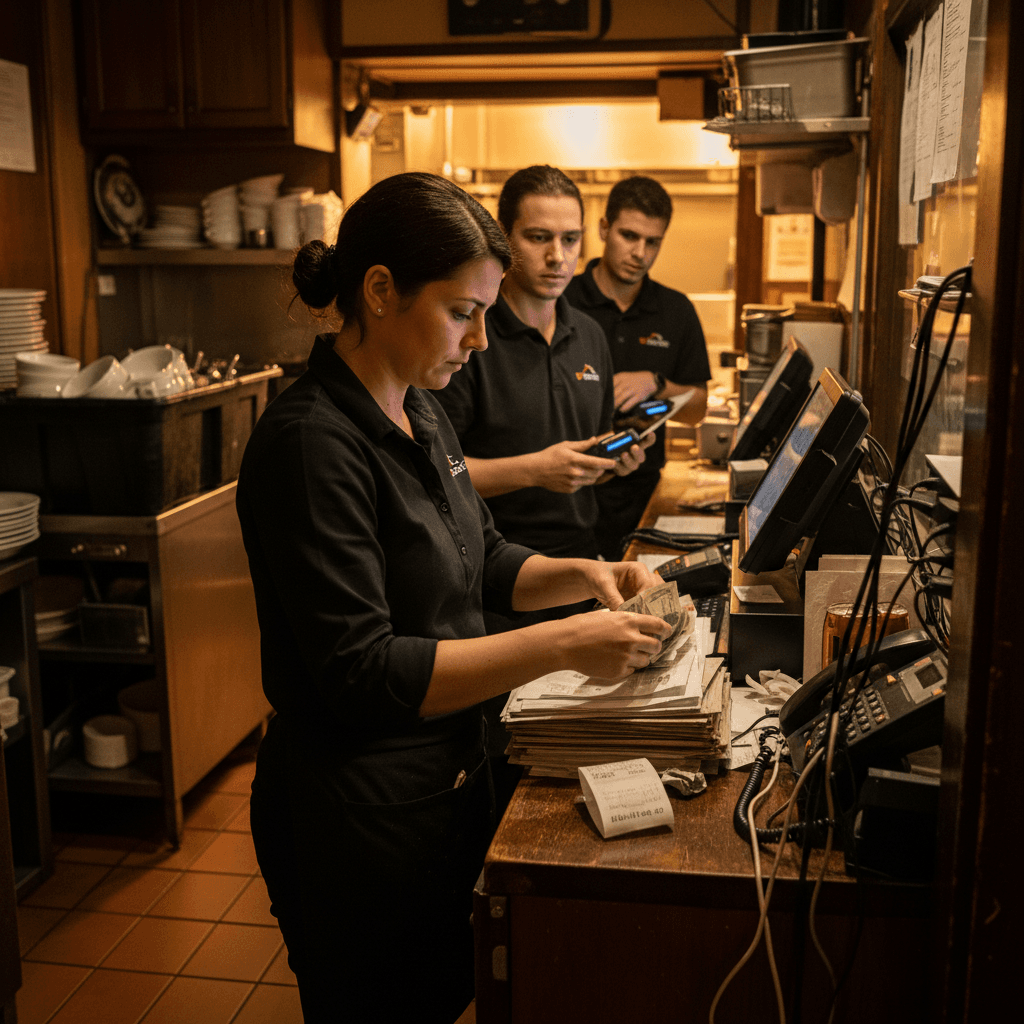
Even with perfect training, manual payment systems hit a wall when volume increases. During your busiest hour, every server needs the POS at once. The line forms, tickets get mixed up, and suddenly you have three servers trying to process seven different checks on two terminals.
The bottleneck isn't your staff's speed - it's physics. Only so many people can use limited hardware simultaneously. This is when customers start checking watches and servers get frustrated with each other.
Worse, these payment pile-ups create ripple effects throughout your operation. Kitchen expo can't communicate with servers who are stuck at the POS. Hosts can't seat new tables because departing guests haven't paid yet. The entire restaurant rhythm breaks down.
Measure this next Friday night. Time how long it takes from when a table asks for their check to when they actually leave. Now multiply that by every table in your restaurant during peak hours. That's lost revenue sitting empty while servers wait in line at the POS.
The real cost isn't just the time spent processing payments. It's the lost opportunities during that time - the extra bottle of wine not suggested, the dessert not offered, the second round of drinks not served because your server was playing cashier instead of salesperson.
Getting Tables Back in 5 Minutes
The solution isn't more training or faster servers. It's removing the bottleneck entirely by letting customers pay directly from their phones.
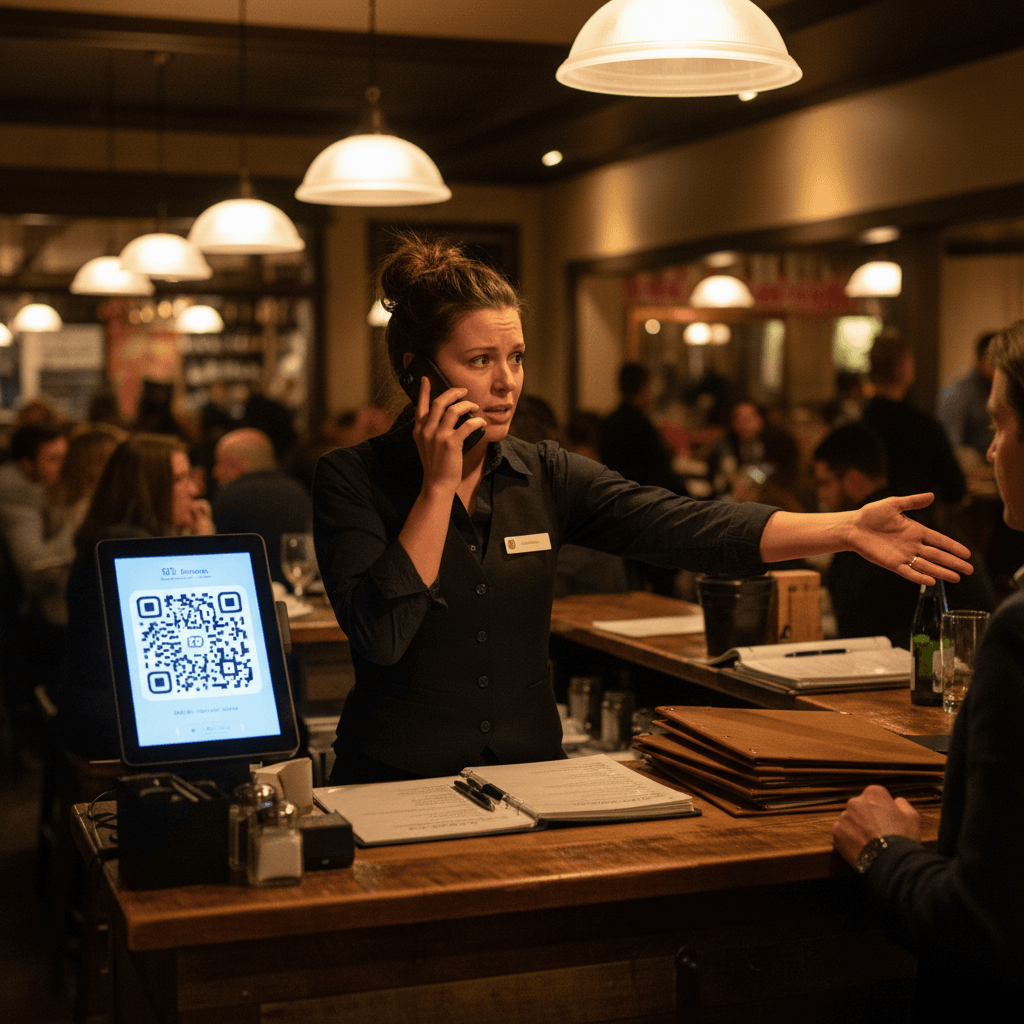
Scan-to-pay works when implemented correctly during actual service hours, not just as a theoretical option. Place QR codes prominently on every table - not hidden under condiments or menus. Train servers to mention it when dropping checks: "You can scan here to pay whenever you're ready."
The key is integration with your existing flow. The system should alert kitchen and management when payment completes, just like traditional POS transactions. Servers should receive notifications so they know when tables are ready for final goodbye.
Start with your busiest sections first, where table turns matter most. Measure how much faster those tables come back into rotation compared to traditional payment areas. Track how many more drinks servers sell when they're not running cards during peak hours.
Remember: technology works when it solves real floor problems, not when it creates new ones for staff to manage.
Test this next Saturday lunch shift. Put QR codes on half your tables and track which section turns faster. Watch what happens when servers don't need to leave their stations during the rush hour crunch between 12:30 and 1:30 PM.
The Manual Work That Makes Technology Work
Before any technology can help, you need clean processes on your floor. This means training every server on when to present payment options and how to handle different scenarios.
Create a simple script for introducing scan-to-pay: "Your check is here whenever you're ready - you can pay right from your phone by scanning this code, or I'm happy to take care of it for you at the station." This gives customers choice while making the technology feel like a service enhancement, not a cost-cutting measure.
Set clear expectations with your team about what happens after digital payment completes. Who clears the table? Who resets it? Who gets notified? These manual handoffs must be flawless before technology can amplify them.
The Rule: Digital payment should feel like premium service, not self-service gone wrong.
Train hosts to watch for completed payments so they can seat new guests immediately without checking with servers first. Teach bussers to monitor which tables have paid so they can clear them faster during turnover rushes between seatings.
When Manual Processes Need Digital Support
These manual fixes require consistent execution and daily reinforcement from management teams already stretched thin across multiple responsibilities.
Modern digital tools can automate the repetitive parts of this workflow while maintaining the human touch where it matters most - at the table itself. The right system handles payment processing silently in the background while freeing your staff to focus on hospitality and sales where they create real value for your business.
Digital ordering platforms integrate directly with kitchen operations and inventory systems, creating seamless flow from order through payment without manual intervention at bottleneck points.
Taking the Next Step
The shift from treating servers as cashiers back to treating them as salespeople is practical and profitable. The logic is clear: every minute spent processing payments is a minute lost selling higher-margin items and turning tables faster during peak revenue hours.
Measure your current payment processing time during next Friday's dinner rush, then implement one manual improvement from this guide before considering any technology investment. When you're ready to automate what works manually, view our pricing for systems designed around actual restaurant operations rather than theoretical concepts, or start a free trial during your next busy service period to see how digital payments integrate with your existing floor flow without disrupting what already works well in your restaurant today