Why QR Code Menus Fail at 7 PM
QR stickers promise efficiency but create chaos when tickets pile up. Learn how to make them work during your busiest shifts.
The Chaos of Silent Tables
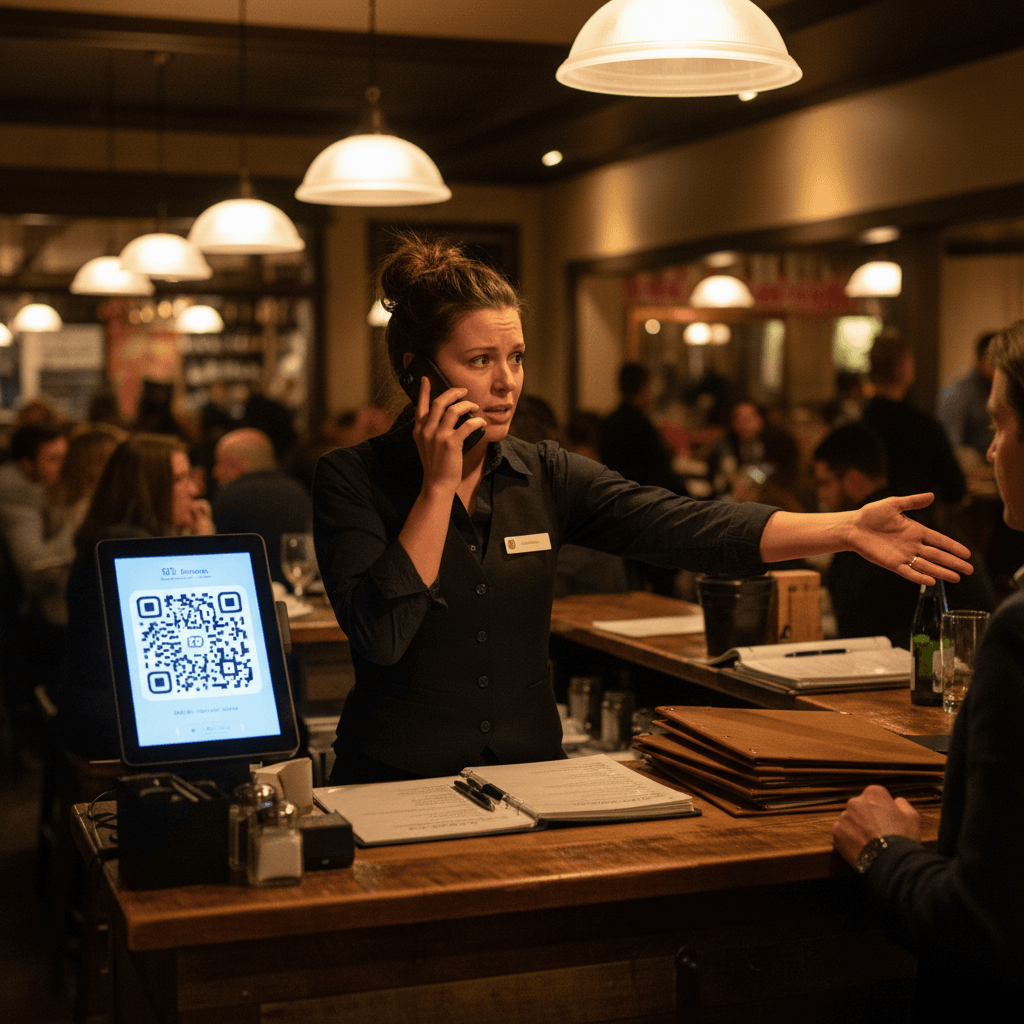
Why QR Code Menus Fail at 7 PM. It's Friday night, the dining room is full, and you have three new tables seated in the last five minutes. Your server, Sarah, is at the POS trying to split a check for table twelve. She glances at her section. Table four has been staring at their phones for three minutes. Table six is waving a hand, trying to get her attention. Table eight is empty - their drinks haven't even been ordered yet. The kitchen printer starts spitting out tickets, but they're all appetizers and salads. The entrees aren't coming because the orders aren't in. Every silent table staring at a QR code means a delayed drink order, a backed-up bar ticket, and a kitchen that's about to get slammed all at once instead of a steady flow.
This isn't about technology being bad. It's about a broken process that kills your pace. When guests can't figure out the menu, servers become tech support instead of salespeople. The bottleneck shifts from the kitchen line to the front of house, where minutes evaporate into explanations. This specific failure at peak hour connects directly to the core identity of your restaurant - what happens when pressure hits. For a complete breakdown of building systems that survive rush hour, see our guide on Building Your Restaurant's True Identity, which explains how your brand is defined by these exact moments.
The cost is measurable. A two-minute delay per table on ordering drinks means six lost minutes for a three-table section. That's six minutes where those guests aren't spending money on cocktails or wine. It's six minutes where the kitchen isn't building their food tickets. By 7:30 PM, that delay has compounded across every server's section, creating a tidal wave of orders that hits expo all at once. The Rule: A silent table is a cost. Every minute guests spend confused is revenue you will never recover.
Placement That Actually Works
The chaos starts with where you put the sticker. Creative placement kills efficiency during a rush.
You see it everywhere - QR codes stuck to salt shakers, tucked under napkin holders, placed vertically on table legs. During a calm Tuesday lunch, this might seem clever. At 7 PM on Friday, it's a disaster. A guest spends thirty seconds searching for the code while their server waits. Another guest can't find it at all and just flags down the nearest employee. Suddenly, your entire staff is playing hide-and-seek with a piece of paper instead of running food and pouring drinks.
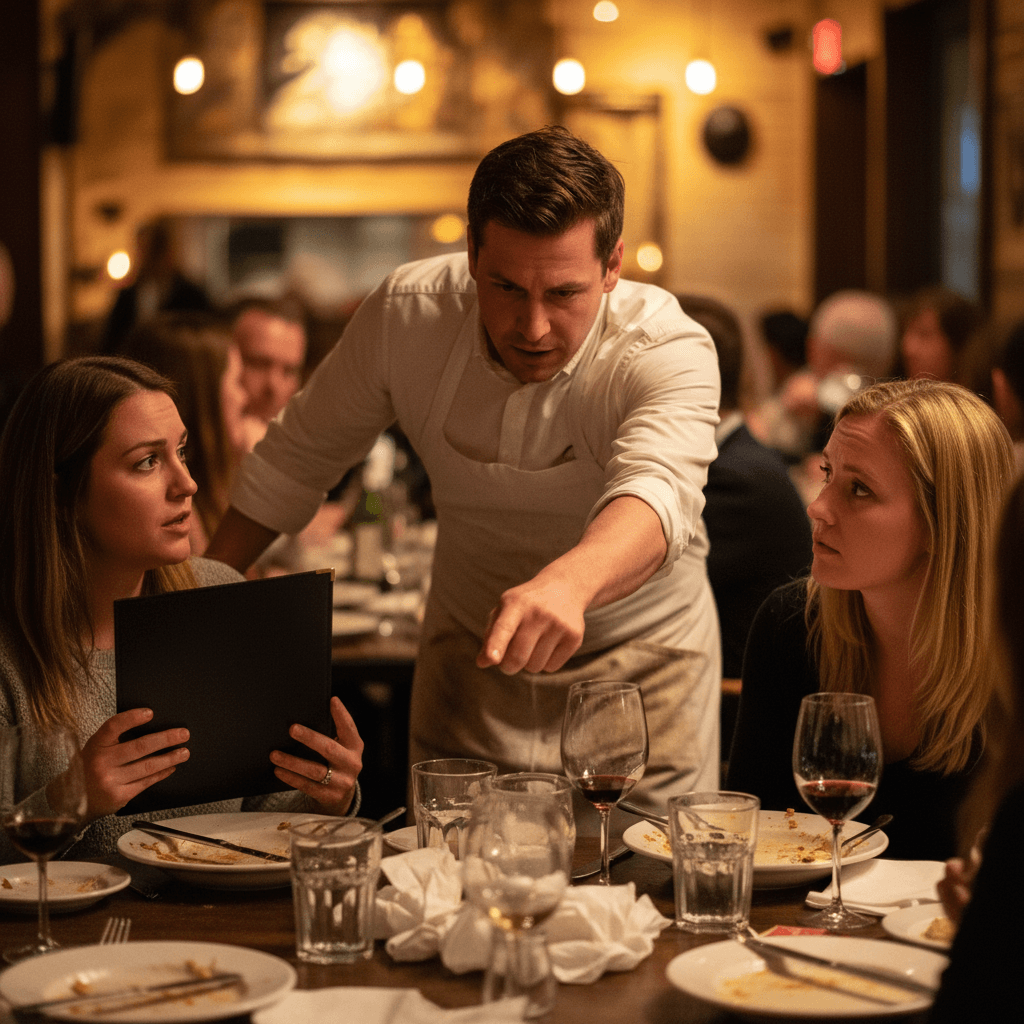
The hard truth: QR stickers belong in predictable spots, not creative locations. Choose one corner of every table - the same spot, same height, every time. The right front corner when facing the table is often best. It's the first place a guest naturally looks when they sit down. It's also the easiest spot for your server to point to without breaking stride. Train your staff on this motion: approach the table, make eye contact, and point with two fingers to the sticker while giving their welcome spiel. "Welcome in! Our menu is right here whenever you're ready." This takes two seconds and eliminates the search.
Consistency is your weapon against confusion. If table four has the sticker in the front right corner, table five must have it in the exact same spot. This trains your guests' eyes for their entire meal. When they want to order another round or check dessert options later, they know exactly where to look without asking. This simple standardization saves precious seconds during your busiest hour, keeping the order flow moving.
When Digital Becomes a Distraction
Even perfect stickers fail when the supporting system breaks down.
Your placement is flawless. Your staff is trained. At 7:15 PM, your Wi-Fi slows to a crawl because every guest in the building is on their phone. A family of four can't load the menu on two different devices. An older couple's phone battery is dead. A group at the bar can't get past your website's splash page on their mobile browser. Your server, now playing tech support, spends five minutes troubleshooting instead of taking an order for four steaks and three bottles of wine.
The bottleneck isn't the code itself - it's the lack of a human backup system. Digital tools fail. Phones die. Internet drops. Your service model must survive these failures without collapsing. The Rule: Technology should assist service, not become service. When the digital path fails, there must be an immediate, frictionless manual path that every staff member can execute without thinking.
This means having physical menus ready to go. Not tucked away in a back office, but within arm's reach of every server station - maybe five or six per server. When a guest can't access the digital menu, your server says "No problem at all," grabs a physical menu, and places it on the table without missing a beat. The transaction continues. The order gets taken. The kitchen receives the ticket. This isn't about abandoning technology; it's about having a plan B that doesn't require a manager's approval or a frantic search during peak volume.
Train this switch like a fire drill. During pre-shift, remind servers where the backup menus are located. Make grabbing one as natural as grabbing a water glass. The goal is zero downtime when technology falters. Your guests shouldn't feel your technical problems; they should feel your team's competence in solving them instantly.
Building Service That Survives Rush Hour
QR codes work when they're part of a system, not a replacement for one.
Start with three tables tonight during your next busy shift - watch what happens when tickets pile up. Assign one server to monitor those three tables specifically for QR code friction time - how long from seating to drink order placement when using only the digital menu? Time it with a stopwatch on your phone from across the room.
You'll likely see three distinct failure points: finding time (guest locates sticker), loading time (menu loads on device), and decision time (guest navigates digital interface). Each point adds seconds that compound across your dining room.
Now run it again with your new system in place: consistent placement (finding time solved), backup menus ready (loading time solved), and trained staff who point and move on (decision time accelerated). The difference in ticket times will be stark - maybe thirty seconds per table initially seems small until you multiply it by twenty tables during rush hour.
That's ten minutes of recovered ordering time across your floor - ten minutes where drinks are being made and appetizers are being fired instead of guests staring at phones.
This system thinking extends beyond menus - it applies to payment processing too.
When you treat technology as an integrated tool rather than a standalone solution, you build resilience into every shift.
Modern digital tools can automate parts of this workflow once your manual system is solid.
Platforms that sync digital ordering directly with kitchen display systems eliminate manual ticket entry errors - but only if your staff knows how to handle offline mode when Wi-Fi drops.
Digital inventory tools can track which backup menus are getting used most - giving you data to refine your physical menu count - but only if you have those physical menus stocked and accessible first.
The automation supports the manual process; it doesn't replace the fundamental need for human-driven service systems that work when screens go dark.
Taking the Next Step
The shift from chaotic digital dependence to integrated service systems is practical and its logic is clear: predictable processes survive unpredictable rushes.
Your restaurant makes money when orders flow smoothly from guest to kitchen - any friction in that flow costs you revenue and damages guest experience during your most profitable hours.
Start by mapping just one failure point tonight - perhaps how long it takes for drink orders to reach the bar after seating - then build one manual solution around it.
When you're ready to explore how digital tools can support this refined manual workflow without introducing new bottlenecks view our pricing for platforms designed around restaurant realities or start a free trial to test integration during your next quieter service period before rolling it out on Friday night