Why Mocktails Fail During Friday Night Chaos
Your mocktail program dies when tickets pile up. Learn the three prep mistakes that cost you sales and how to fix them before your next rush.
The Mocktail Bottleneck That Kills Your Friday Night
Your bar hits Friday night chaos. Tickets pile up three deep. Your servers are waiting on drinks. And your beautiful mocktail menu - the one you spent weeks perfecting - becomes the first thing to fail. It's not about recipes or ingredients. It's about three prep mistakes that happen before service even starts. This is why mocktails fail during Friday night chaos.
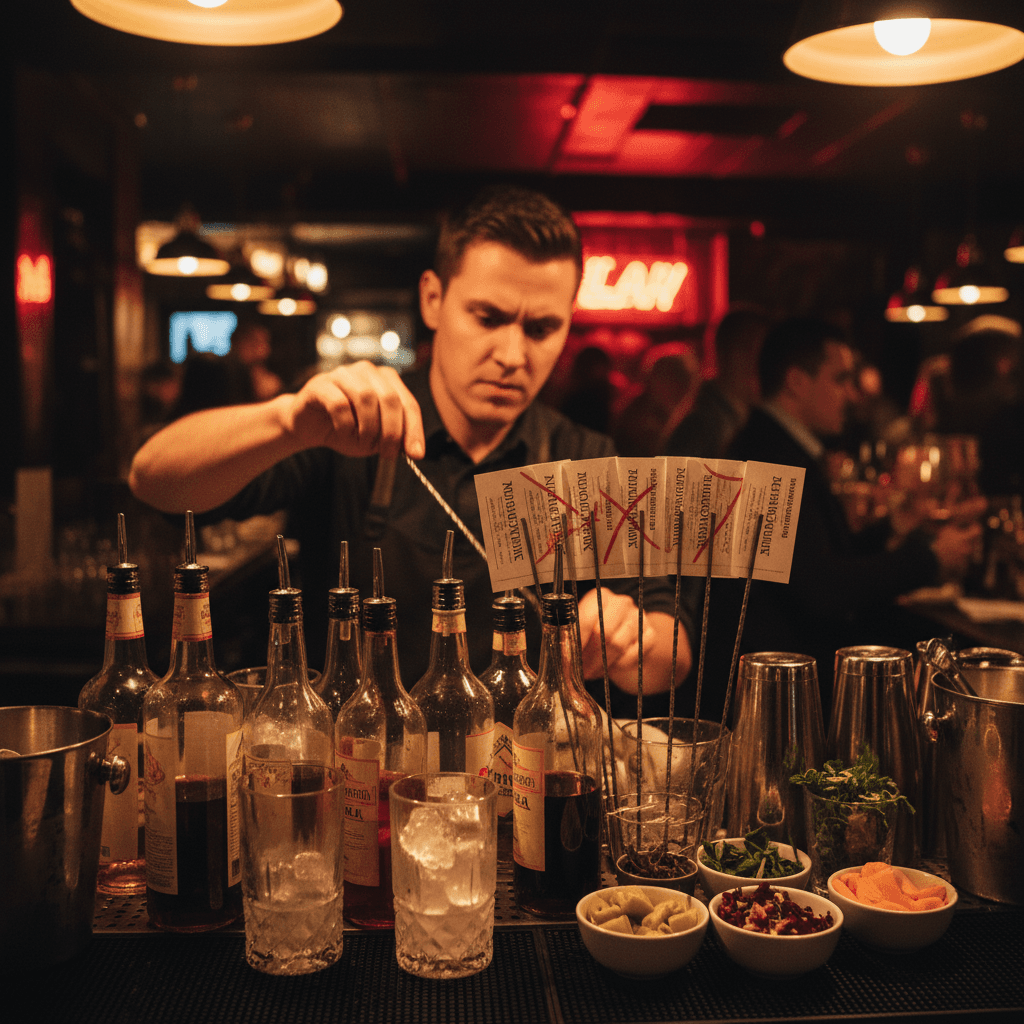
The scene is specific. It's 7:45 PM. Your expo is calling three orders at once. Your bartender is looking for a muddler while a server taps their pen on the bar rail. The ticket printer hasn't stopped for twelve minutes. That gorgeous lavender-lemongrass mocktail with the edible flower garnish? It just became a thirty-second bottleneck while five other drink tickets wait. This breakdown isn't about creativity. It's about a preparation system designed for photos, not for volume.
This connects directly to the broader operational systems we break down in When Your Bar Hits Friday Night Chaos, which shows how to stop fighting fires every weekend and build service that holds under pressure.
The failure point is always the same: your mocktail program was built during slow afternoon prep, not tested against Friday night reality. You taste-tested for balance, not for speed. You designed for Instagram, not for the moment when your bartender has to build twelve different drinks in four minutes. That disconnect between prep room perfection and service floor execution is what costs you sales and frustrates your staff.
Prep Like You're Already Three Tickets Behind
The hard truth: Most mocktail programs fail because they're designed for slow Tuesday afternoons, not Friday night rushes. Your bartenders need drinks that can be built in 30 seconds or less when the expo is calling three orders at once.
Start with batchable components. Pre-mix your syrups and infusions in squeeze bottles labeled with dates. Use clear containers so anyone can see what's running low at a glance during rush. Create a physical cheat sheet taped to the cooler door with build times for each mocktail - anything over 45 seconds gets cut or simplified immediately.
Organize your station by drink type, not ingredient type. Keep all mocktail garnishes together in one rail within arm's reach of the well. Store pre-cut citrus wedges in ice water to prevent drying out during the first two hours of service. Use speed pourers on every bottle, even simple syrup - reaching for a jigger adds three seconds per drink, which becomes three minutes over sixty orders.
The Rule: Every mocktail must have a backup version that uses shelf-stable ingredients when fresh runs out. When your mint wilts at 9 PM or your blood oranges are gone, your bartender should know exactly what to substitute without asking a manager. That backup version should be on your recipe card, in your POS notes, and trained to every server.
Measure your success with one metric: build time during peak volume. Time how long it takes to make each mocktail when the bar is three deep and tickets are backing up. If it takes longer than pouring a draft beer or making a simple vodka soda, you have a problem that will surface every Friday night.
When Your Beautiful Menu Meets Real Service
You've prepped perfectly. Your station is organized. Then Friday hits and you realize the bottleneck isn't your bartenders - it's your menu structure itself.
Complex garnishes that require tweezer placement? Gone during rush. Drinks that need three different fresh juices? Simplified to two or batched ahead completely. Custom ice shapes that take extra time to prepare? Swapped for standard cubes from your machine. The menu that looked beautiful on paper becomes impossible when you're sixty covers deep.
The pivot happens when you watch your bartender pause to read a recipe card while six tickets wait in the rail. That hesitation costs you seconds that multiply across every order. That's when you know your menu needs service-speed editing, not just creative development.
Create a rush-hour version of every mocktail on your menu. Strip it down to its essential flavor components. Train servers to suggest these faster versions automatically when the bar is three deep or when ticket times exceed fifteen minutes. This isn't about lowering quality - it's about maintaining consistency when volume demands speed over presentation.
Your menu descriptions should match this reality. Instead of "hand-muddled basil with house-made ginger syrup and freshly squeezed lime," list it as "basil-ginger lime fizz" on your rush menu. The customer still gets the same core flavors without the operational burden during peak hours.
The Rule: If a server has to explain more than two ingredients in a mocktail during rush, simplify the description or simplify the drink. Your staff should be able to describe any mocktail in under ten words while maintaining eye contact with customers.
From Chaos to Controlled Flow
The real shift happens when mocktails stop being special occasion drinks and become reliable revenue streams during your busiest hours. When your bartenders can build them without thinking, when your servers can sell them with confidence, and when your customers get consistent quality even at peak volume.
That's when your mocktail program stops being a liability and starts contributing to smooth service flow rather than disrupting it. It's not about having the most creative drinks on the block - it's about having drinks that work when everything else is breaking down around you.
Start with one mocktail this week. Time how long it takes to build during peaceful prep versus during Saturday night rush hour. Simplify one element - maybe batch the syrup instead of building it fresh each time, or pre-cut all garnishes before service begins instead of as needed. Train one server on selling the faster version when they see tickets backing up at the bar.
Watch what happens next Friday night. Does that drink move faster? Does your bartender seem less stressed when that ticket comes through? Do servers remember to suggest it without prompting? Those small changes compound across an entire shift.
Modern digital tools can help maintain this consistency once you've established the manual systems. Kitchen display systems ensure every ticket shows build times and simplified recipes during peak hours automatically based on volume triggers in real time.
Taking the Next Step
The shift from chaotic breakdown to controlled flow is practical and its logic is clear: design drinks for your busiest moments, not your slowest ones.
To implement these changes systematically across your entire beverage program, consider how digital tools can reinforce the manual systems you build - view our pricing for platforms designed specifically for high-volume beverage operations, or start a free trial to test simplified recipe management before your next weekend rush begins