Why Menu Printing Eats Your Profits
Menu printing costs hide in plain sight. Learn where your money disappears and how to reclaim it with simple tracking methods.
The Hidden Tax on Every Table
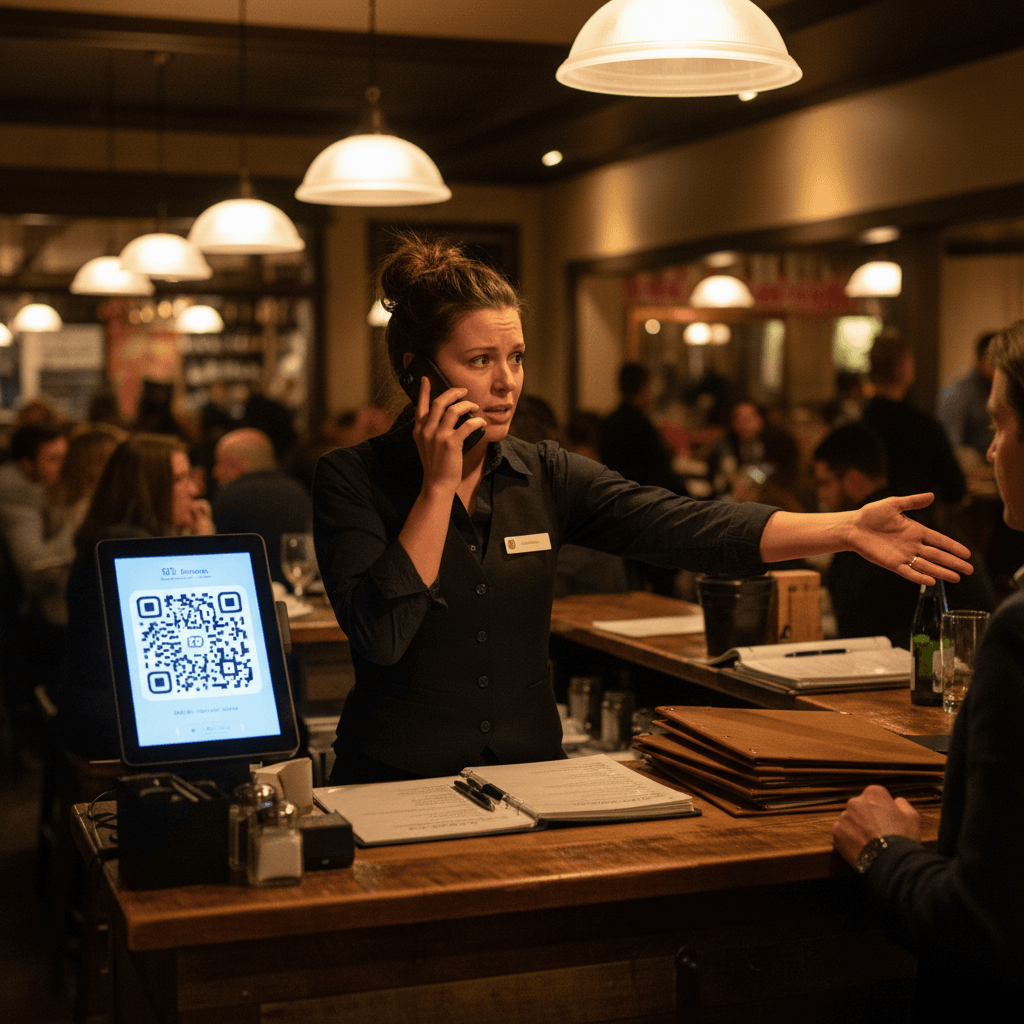
Why Menu Printing Eats Your Profits becomes clear when you're standing at the host stand on a Saturday night. A server hands you a menu with a red wine stain spreading across the steak section. You have three parties waiting, and your last clean menu just went to table seven. The rush hasn't even started, and you're already down inventory. This isn't an emergency - it's your normal Friday.
Menu costs don't stop at paper and ink. Every reprint after a price change adds up. You raise burger prices by a dollar on Tuesday, and by Thursday you're throwing away two hundred menus that worked perfectly on Monday. The real expense hides in staff time - servers explaining unavailable items for five minutes per table, hosts replacing stained menus between seatings, managers tracking down missing pages from the back office. You pay for these minutes in lost tips, slower table turns, and frustrated customers who just want to order.
This connects directly to the system-wide financial drain we map in The Real Cost of Paper Menus, which breaks down how daily operational chaos translates into lost profit. Your menu isn't just a piece of paper - it's a cost center with its own labor budget, waste percentage, and update cycle. Treat it like one.
Track Every Dollar Before It Disappears
Start with a simple three-column spreadsheet: date, reason for print, total cost. This sounds basic because it is. The power comes from including everything - not just the designer's invoice, but the paper stock upgrade you chose last minute, the laminating for the bar copies, the delivery charges from across town. Most restaurants miss the labor cost of someone driving twenty minutes to pick up menus or the thirty minutes your manager spent proofreading errors that still got printed.
The hard truth: if you're not tracking design revisions separately from production runs, you're paying for mistakes twice. You approve a menu with the wrong phone number, catch it after printing five hundred copies, then pay for another round of design changes before reprinting. That's two design fees for one usable menu. The Rule: Design time and print time get separate columns in your spreadsheet. If they're combined on an invoice, ask for the breakdown.
Here's what most tracking misses: the opportunity cost of wrong information. A server spends three extra minutes at a table explaining the salmon is 86'd because the printed menu says it's available. That's three minutes they could have spent greeting another table, running food, or processing a payment. Multiply that by every server during a busy shift, and you're losing real revenue over a piece of paper that should have been accurate.
When Spreadsheets Become Part of the Problem
The manual system works beautifully until Friday night rush hits at 7:15 PM. You notice a pricing error mid-service - the wine by-the-glass prices are wrong by two dollars - but you can't fix it until Monday when your designer is available. Seasonal ingredients change but your printed menus stay static for weeks because you ordered five hundred copies to get the bulk discount. You spend more time updating spreadsheets about menu costs than actually reducing those costs.
The bottleneck isn't tracking - it's reacting too slowly to what you've tracked. Your spreadsheet tells you reprints cost $400 last month. Great information. But if it takes two weeks to implement changes based on that data, you've already wasted another $200 on unnecessary reprints during those fourteen days. The system shows you where money leaks out, but it doesn't plug the holes fast enough.
This happens most often with price changes. You decide to adjust menu prices based on food cost increases that hit three weeks ago. By the time you get new menus printed and distributed, your food costs have already changed again. You're always reacting to last month's problem instead of controlling this week's reality. The spreadsheet becomes historical documentation rather than an operational tool.
From Cost Tracking to Cost Control
The goal shifts from knowing where money goes to stopping the leaks before they happen. Build menu changes into your weekly prep schedule like any other inventory task. Monday morning isn't just for counting chicken - it's for reviewing what needs updating on your menu this week. Test small batch prints before committing to hundreds of copies. Print twenty menus first, use them for two days, check for errors or customer confusion, then order the full run.
Most importantly, recognize when manual tracking has shown you all it can - and what solutions actually move the needle on your bottom line. Your spreadsheet proves menu changes cost money and time. The next question is how to reduce both costs simultaneously.
This is where digital tools enter the conversation as practical next steps, not magic solutions. Modern restaurant platforms allow instant menu updates across all customer touchpoints - tablets at tables, QR codes on tables, screens at the bar. When your distributor raises salmon prices on Tuesday morning, you can adjust your digital menu before lunch service starts. No reprint costs, no delivery delays, no stacks of obsolete paper.
The technology doesn't replace your tracking discipline - it amplifies it. Instead of measuring how much each reprint costs, you measure how quickly you can respond to market changes. Instead of calculating waste from stained menus, you calculate time saved from accurate information reaching customers faster.
Taking the Next Step
The shift from seeing menus as printing projects to seeing them as profit centers is practical and logical. Your spreadsheet has already shown you where money disappears each month - now it's about implementing systems that prevent those losses before they occur.
If manual tracking has revealed consistent reprint cycles and predictable waste patterns in your operation, explore how digital menu platforms could convert those fixed costs into variable savings that scale with your business needs by checking view our pricing or implementing changes during your next quiet period through start a free trial.