Why Bartenders Hate Upselling (And How to Fix It)
Most upselling training fails because it feels pushy. Learn the three drink suggestions that work during Friday night chaos without annoying customers.
The Friday Night Pressure Cooker
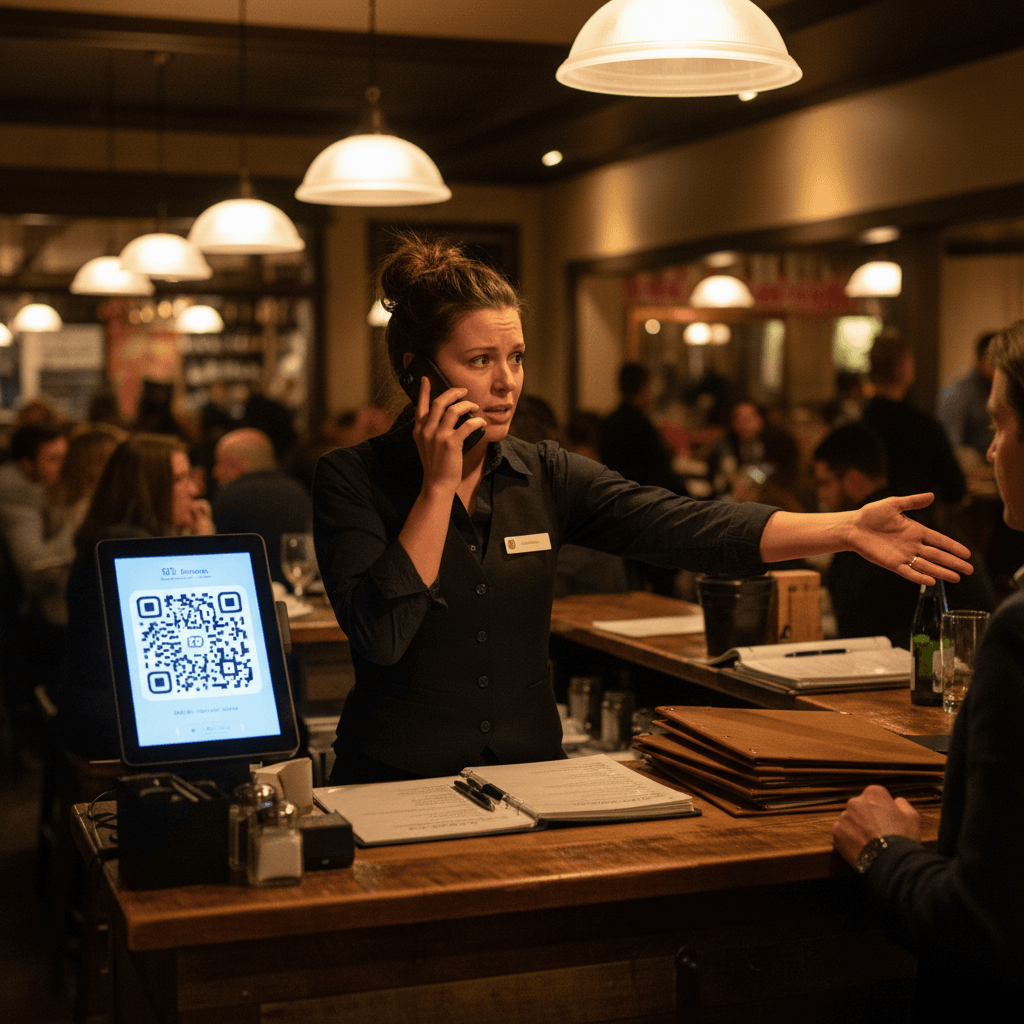
Picture this: It's 8 PM on Friday. Your bar is three deep. Tickets are stacking up. A bartender gets an order for a basic vodka soda. They know they should suggest a premium vodka or add a splash of cranberry. But they don't. Why? Because every second counts, and forced upselling feels like slowing down service to annoy customers.
This is where most training fails. Managers hand bartenders a list of premium liquors and tell them to push them. The bartenders nod, then ignore it when the rush hits. The problem isn't knowledge - it's execution under pressure.
Why Bartenders Hate Upselling (And How to Fix It) starts with understanding that pressure. You're asking someone to perform a sales task while their primary job - making drinks fast and accurately - is already at maximum difficulty. It's like asking a line cook to explain the farm-to-table sourcing of the tomatoes while they have eight burgers on the grill. The system breaks down because the priority is wrong.
The real issue is that traditional upselling training adds cognitive load during peak chaos. A bartender has to remember price points, brand names, and scripted phrases while also remembering if the customer wanted lime or lemon, counting pours, and watching for the next ticket. Something gets dropped, and it's always the "optional" sales part.
This connects directly to managing the entire rush, which we break down in When Your Bar Hits Friday Night Chaos. That guide shows you how to build systems that keep service smooth when everything feels like it's falling apart.
The Three-Second Rule That Actually Works
Here's the hard truth: Customers don't want to be sold to during peak hours. They want efficient service with helpful suggestions that feel natural, not pushy.
Instead of memorizing price points, train bartenders on three specific moments:
- The 'Instead Of' Swap: When someone orders a well drink, suggest one premium alternative by name. "Instead of house vodka, try Tito's - it's smoother and only $2 more." One option, not three.
- The 'Add On' Nudge: After taking the main drink order, pause for one second. Then ask: "Want to make that a double?" or "Add a splash of cranberry for color?" Simple yes/no questions that don't require thought.
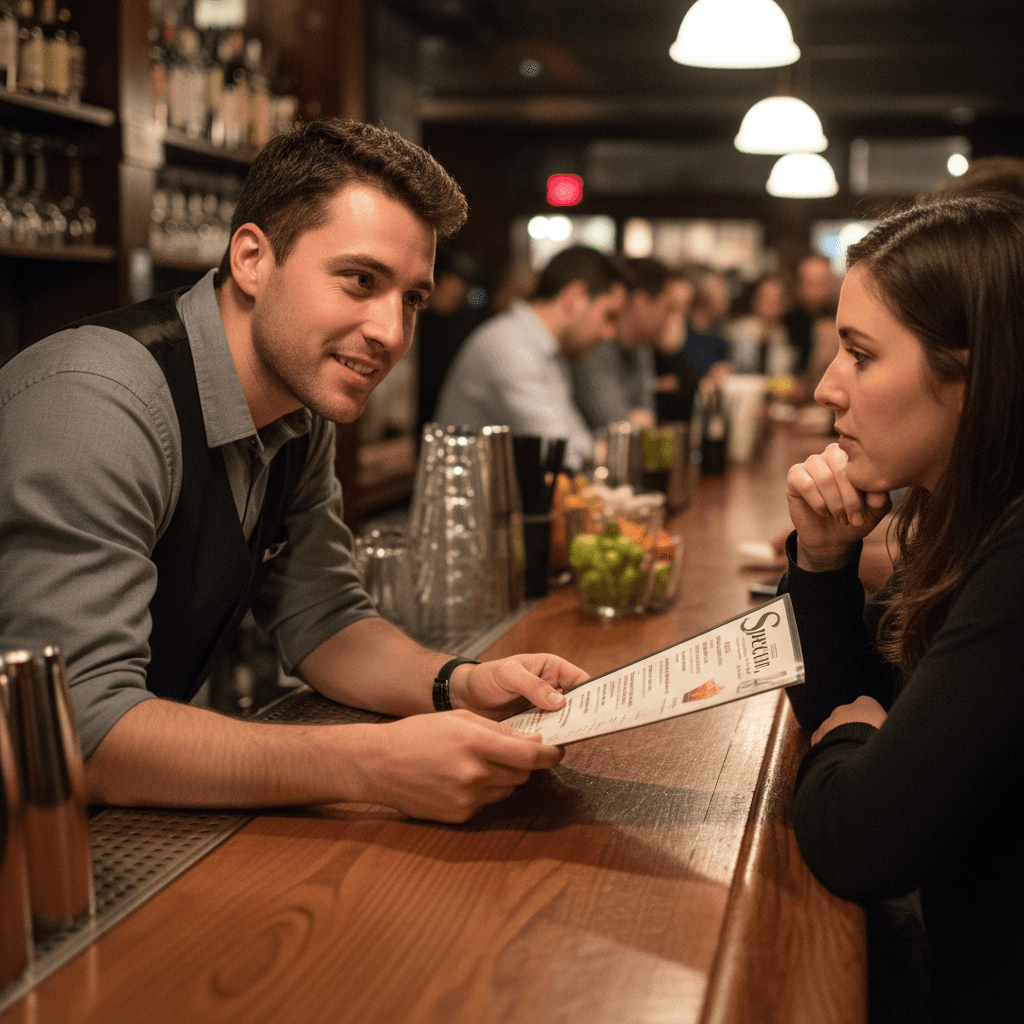
- The Visual Prompt: Keep one specialty cocktail visible on the bar top - garnished beautifully. When customers ask about it, you have your upsell ready without pushing.
These work because they're fast, specific, and respect the customer's time during chaos.
The Rule: Every upsell attempt must be completable within three seconds of normal conversation flow. If it takes longer than that to say or requires the customer to think about multiple options, it will fail during a rush.
Notice what's missing here: product knowledge sessions about terroir in Scotch regions. Price comparison charts. Scripts longer than five words. Those are for slow Tuesday afternoons, not Friday nights. Your training must match the operational reality of when these suggestions actually need to happen.
When Memory Fails Under Fire
The bottleneck comes when you have five new bartenders rotating through weekends. Even trained staff forget under pressure. You can't stop service every Friday to retrain basics.
This is where systems beat memory. Instead of hoping bartenders remember your premium tequila list during Saturday night madness, create visual cues they can't ignore.
Start with your physical bar setup. The most expensive bottle that makes you the most money should be at eye level directly behind the well where bartenders look all night. Not tucked away on a top shelf. Not hidden behind cheaper options. Right in their line of sight every time they reach for a pour spout.
Next, use your menu as a silent salesperson during busy times. During lunch or early evening when you have time for conversation, you can explain cocktail ingredients. At 9 PM on Saturday, you need a menu that does the work for you.
Place your highest-margin cocktail at the top left of your drink menu - that's where eyes go first according to every restaurant study ever done. Put a star next to it or call it "Bartender's Choice." Give it a name that sounds interesting but doesn't require explanation ("Smoky Maple Old Fashioned" works better than "Liquid Autumn").
The Rule: If you have to explain why something is worth more money during peak service, your pricing or presentation is wrong. The value should be immediately apparent through placement, description, or visual appeal.
Building Bars That Sell Without Pushing
The future isn't more training sessions - it's building environments where upselling happens naturally. Start with one change this week: Place your highest-margin spirit at eye level behind the bar where bartenders see it constantly.
Next week, add a small chalkboard with today's featured cocktail near the register where every order passes through it.
These small changes create what we call 'passive upselling' - the bar sells for you even when everyone's too busy to think.
Let's talk about contribution margin for a second - that's what's left after you subtract the cost of making something from its selling price. A $14 cocktail that costs $4 in ingredients has a $10 contribution margin toward paying your rent and staff. A $10 beer that costs $3 has only $7 contribution margin.
Your goal isn't just higher check averages - it's higher contribution margin per minute of bartender time spent making drinks. That $14 cocktail might take 45 seconds longer to make than pouring that beer, but if those 45 seconds generate $3 more contribution margin, you're winning.
Now apply this thinking to your physical space: Which drinks have the highest contribution margin per second of preparation? Those should be easiest for bartenders to see and suggest during busy times.
The goal isn't turning bartenders into salespeople. It's creating a bar where better choices are easier choices for both staff and customers.
Taking the Next Step
Upselling during chaos requires removing friction from the process entirely. The logic is clear: simplify suggestions, create visual reminders, and structure your physical space to guide behavior naturally.
Manual systems work but require constant reinforcement and discipline from your team during their busiest moments. Modern digital tools can automate these reminders by prompting servers with specific suggestions based on what was just ordered, tracking what actually sells during different dayparts, and giving managers real-time visibility into what's working without interrupting service flow.
If building these systems manually feels like another task on an already full plate, view our pricing for tools designed specifically for high-volume hospitality operations or start a free trial to see how automated prompts can work during your next Friday night rush without adding training overhead