When T-Shirts Become Table 12's Problem
Merch sales should build your brand, not break your service. Learn how to sell shirts without slowing down Friday dinner rush.
The Server's Merchandise Station
When T-Shirts Become Table 12's Problem, it's because your merch lives in the wrong place. That back office closet or random shelf behind the bar creates chaos. Servers disappear for three minutes looking for a medium shirt while their table's drinks sit empty. The line cook gets pulled off the grill to help find a hoodie, and suddenly ticket times stretch by five minutes. This isn't about selling shirts - it's about protecting your service rhythm.
Create one dedicated spot that works like your expo station. This isn't about fancy displays or expensive fixtures. It's about speed and consistency. Put all sizes in clear plastic bins with bold black labels anyone can read from five feet away. Keep a simple cash box with exact change pre-counted for the day's shift. Tape a laminated price list to the wall directly above the station so servers never have to ask "how much is the hat?"
Train every server on the 90-second rule. The Rule: If you can't complete a merch sale in under 90 seconds, you're losing money on that table. Time it during a slow Tuesday lunch. Have servers practice grabbing the right size, collecting payment, and making change while keeping one eye on their section. The hard truth? Your best merch sellers become your worst food sellers if they're spending time folding shirts instead of turning tables.
This connects directly to building systems that work under pressure, which we break down in Building Your Restaurant's True Identity. Your brand isn't what you say in a marketing meeting - it's what happens when three tables want shirts during Friday dinner rush.
Think about flow. Place the merchandise station near the host stand or exit, not in the middle of the dining room. Servers should pass it naturally when seating guests or walking checks to the terminal. The goal is zero extra steps. A server heading to the kitchen shouldn't detour for merch unless that's their specific task right now.
Use visual management. Color-code your bins - red for small, blue for medium, green for large. When a bin gets below three items, that's your visual cue to restock during downtime, not during service. Train your closing crew to check levels as part of their final walk-through, just like they check salt shakers and ketchup bottles.
When Inventory Becomes Interruption
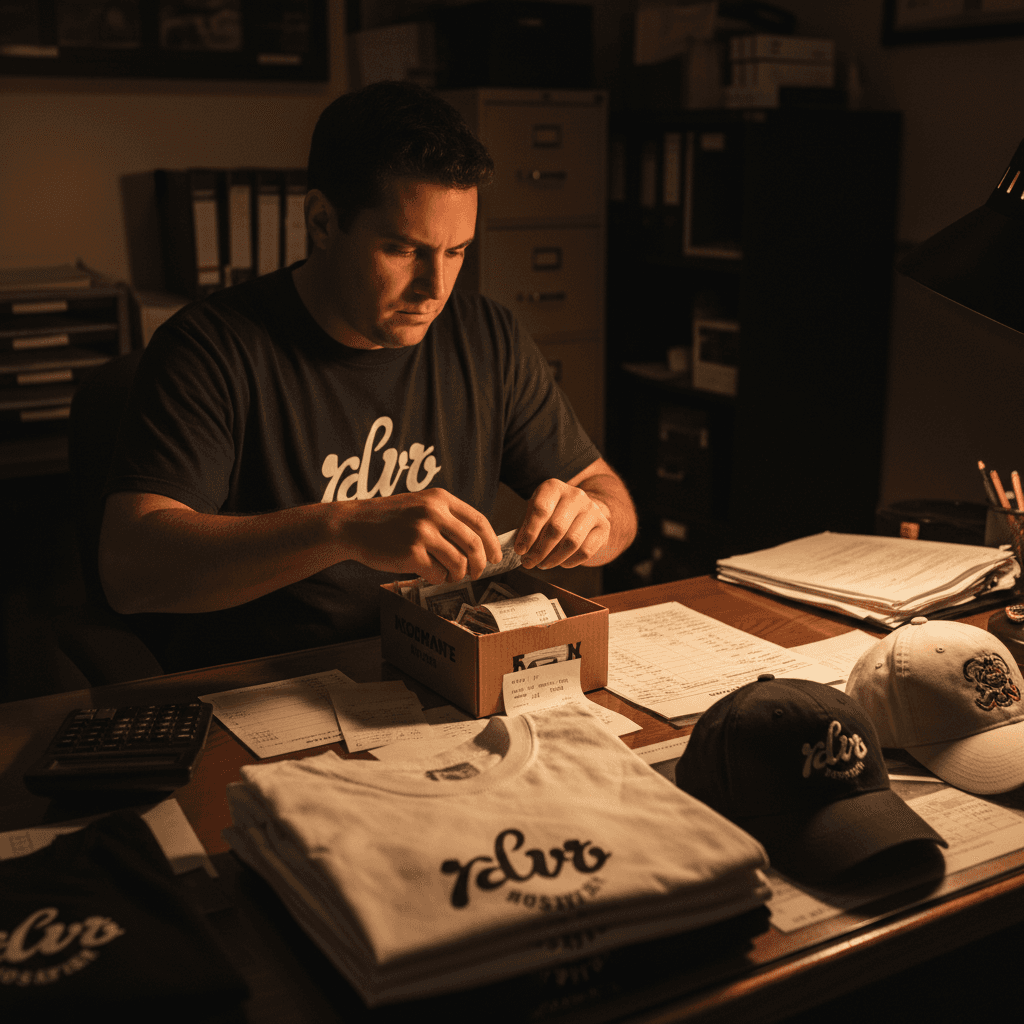
You'll know you've hit the bottleneck when your manager spends Friday night counting shirts instead of managing the floor. That spreadsheet you update "when you have time" becomes the reason you're out of large sizes during your busiest month. The server who sells the last hoodie doesn't tell anyone until three more guests ask for it. Manual tracking works until it doesn't - and it always stops working during peak season.
Inventory confusion creates two specific problems: lost sales and wasted labor. Lost sales happen when you tell a guest "sorry, we're out of your size" after they've already decided to buy. Wasted labor happens when three different staff members dig through boxes looking for something that isn't there. Both problems cost real money during your most profitable hours.
Set a weekly inventory ritual. Pick one slow hour - Tuesday morning before lunch, or Wednesday after the lunch rush clears. Count everything then, not "when you get around to it." Use a simple clipboard with pre-printed sheets showing every item and size. The person counting should be alone in the room with no interruptions. This takes fifteen minutes if done consistently, but stretches to two hours if done sporadically.
Create clear replenishment triggers. The Rule: When any size drops below five units, order more immediately. Don't wait for "the next big order" or "when we have time." Treat merch like toilet paper - you never want to run out because someone forgot to check. Assign one person responsibility for checking levels every Monday morning and placing orders by Tuesday noon.
Communicate shortages instantly. When you sell the last medium shirt at 7:15 PM on Friday, that information needs to reach every server immediately. Use your pre-shift meeting board or a simple whiteboard near the server station: "NO MEDIUM SHIRTS - 7/15." Train servers to announce sold-out items just like they'd announce 86'd menu items.
Track what actually sells versus what collects dust. That trendy design you loved might sit on shelves while basic logo tees fly out the door. Keep a simple tally sheet at the merchandise station where servers mark what they sell each shift. Review this data monthly before placing new orders. Don't guess what will sell - use actual sales data from your floor.
Building Brand Without Breaking Service
Your merch program should feel like part of the experience, not an interruption to it. Think about timing: sell hats when guests are leaving, not when they're ordering entrees. Train hosts to mention merch during seating instead of servers during service. Use your closing routine to restock and count, not your pre-shift meeting. The goal isn't just selling shirts - it's building a brand that guests take home without slowing down the meal they came for.
Integrate merch into natural service moments without forcing it. When a guest compliments your decor or asks about your story, that's an opening - not during appetizer delivery when hands are full and attention is divided. Train servers to listen for brand-related comments: "I love this place!" or "Your logo is cool!" Those are invitations to mention merchandise naturally.
Display merchandise where it sells itself without staff intervention. A simple rack near the exit with clear pricing lets browsing happen without server involvement. Guests can look while waiting for their check or on their way out the door. This removes pressure from servers and creates impulse buys that don't interrupt service flow.
Use your check presenter as a silent salesperson. Include a small merch menu or business card-sized flyer with every check dropped at table 12's dessert course or with their final bill. Guests see it while calculating tip or waiting for card processing - exactly when they're thinking about their experience ending and what they might want to remember it by.
Train different roles for different moments. Hosts mention merch during seating: "By the way, we have some great shirts if you want to take home a memory!" Servers only mention it if guests ask or if there's natural conversation about your brand. Managers handle complex sales or questions about custom orders during slower periods.
The Rule: Merchandise discussions happen during lulls in service, never during peak activity times. If table 12 is waiting for drinks or entrees, that's not merch time even if they ask about it first - get their food moving, then circle back with merch information once their immediate needs are met.
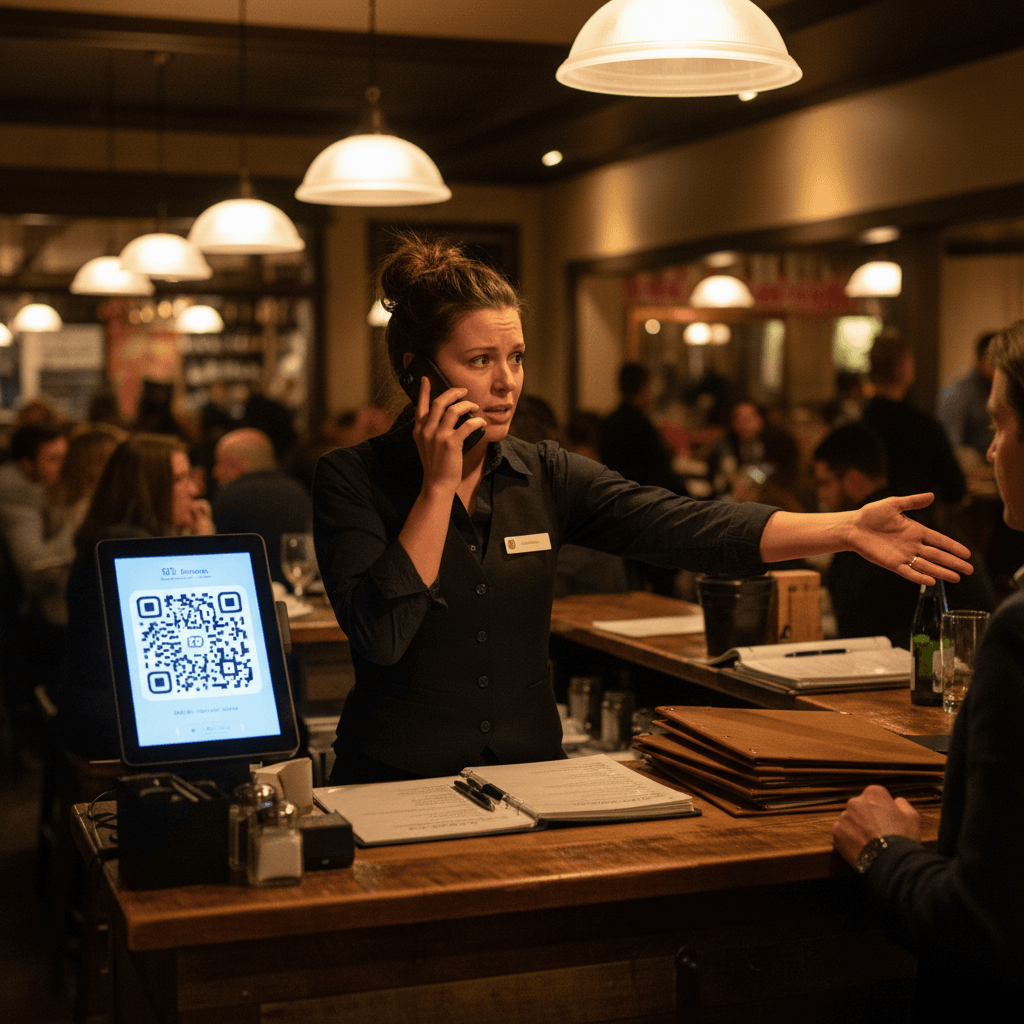
Create bundle opportunities that enhance rather than complicate service. Offer free shipping for online orders placed after guests leave - give them a card with a QR code instead of trying to process complex transactions at the table during busy periods. Or include merch discounts with large group reservations booked in advance, handled through email follow-up rather than at-table sales.
Measure success by total contribution margin per hour open, not just units sold. Contribution margin is what's left after product cost. A $25 shirt that costs $10 has a $15 contribution margin. But if selling that shirt takes five minutes of server time during peak dinner rush when that server could be turning another table worth $50 in food sales with $20 contribution margin, you've lost money. Track both revenue streams together.
Taking the Next Step
Merchandise should build connection without breaking rhythm. The systems described here work because they're simple enough to implement tomorrow and measurable enough to track next week. Your servers should sell food first and merchandise second - in that specific order because food pays tonight's bills while shirts build tomorrow's brand recognition.
The manual fixes establish control over what matters most: protecting service flow during revenue-generating hours. Once those foundations are solid, digital inventory tools can automate counting and reordering alerts. Point-of-sale integrations can track merch sales alongside food sales in real time. These technologies solve residual pain points but only after you've built disciplined manual processes first.
Start by timing one merch sale this weekend. See how long it actually takes from guest request to completed transaction. Then build your station around cutting that time in half. View our pricing for tools that track both sides of this equation together. Or start a free trial to see how automated inventory alerts work alongside your existing floor operations next service period