When Paper Menus Break Your Service
Paper menus create chaos during busy shifts. Learn how digital boards eliminate miscommunication and speed up service when you need it most.
The Chaos of Friday Night Specials
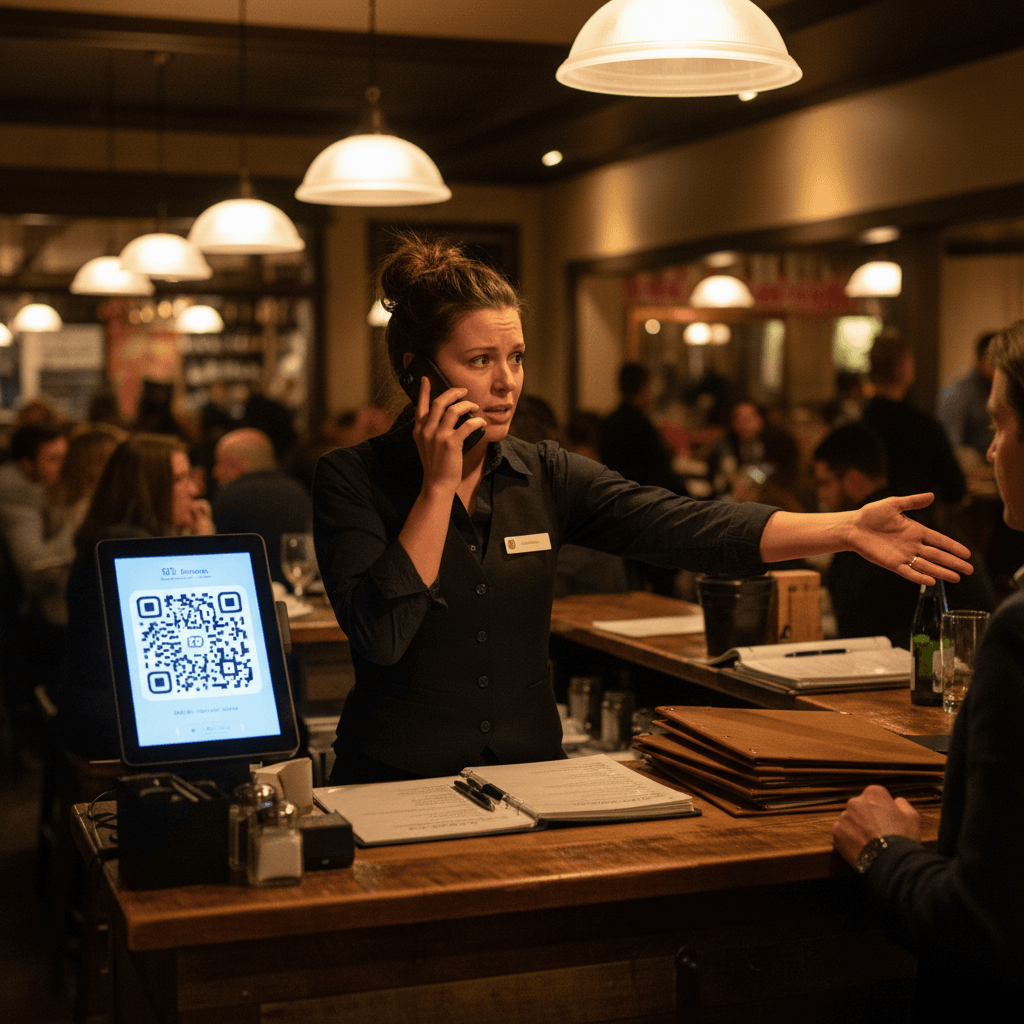
When paper menus break your service, you feel it first in the noise. Picture your busiest server trying to remember three different daily specials while holding four paper menus. The table asks about gluten-free options. She flips through pages, searching for the tiny symbols she knows are there somewhere. Meanwhile, two more tables need menus. This happens every shift with paper.
Every server becomes a walking encyclopedia of menu changes. They memorize what's 86'd today, which prices increased yesterday, and which items have substitutions. The problem isn't their memory - it's that information changes faster than paper can keep up. The mental load is constant. A server shouldn't need to translate between what the menu says and what the kitchen can actually make. That translation is where mistakes happen and time gets wasted.
This operational friction has a real cost in wasted time and lost sales, a full breakdown of which we cover in The Real Cost of Paper Menus. That guide shows how these small moments of chaos add up to significant profit loss every single day.
The 15-Minute Menu Update Drill
Some restaurants try to manage this manually. They print new inserts every morning. They hold pre-shift meetings to announce changes. They use colored stickers for specials. This works until 7 PM when the kitchen runs out of salmon.
Here's the hard truth most restaurants miss: More menu options don't mean more sales. A smaller, frequently updated digital menu actually sells more because everything on it is available right now. Customers don't order what they can't have. They order from what they see is possible.
The Rule: Your menu must reflect reality at the moment the customer reads it. Any gap between what's printed and what's available creates confusion, slows service, and frustrates your team.
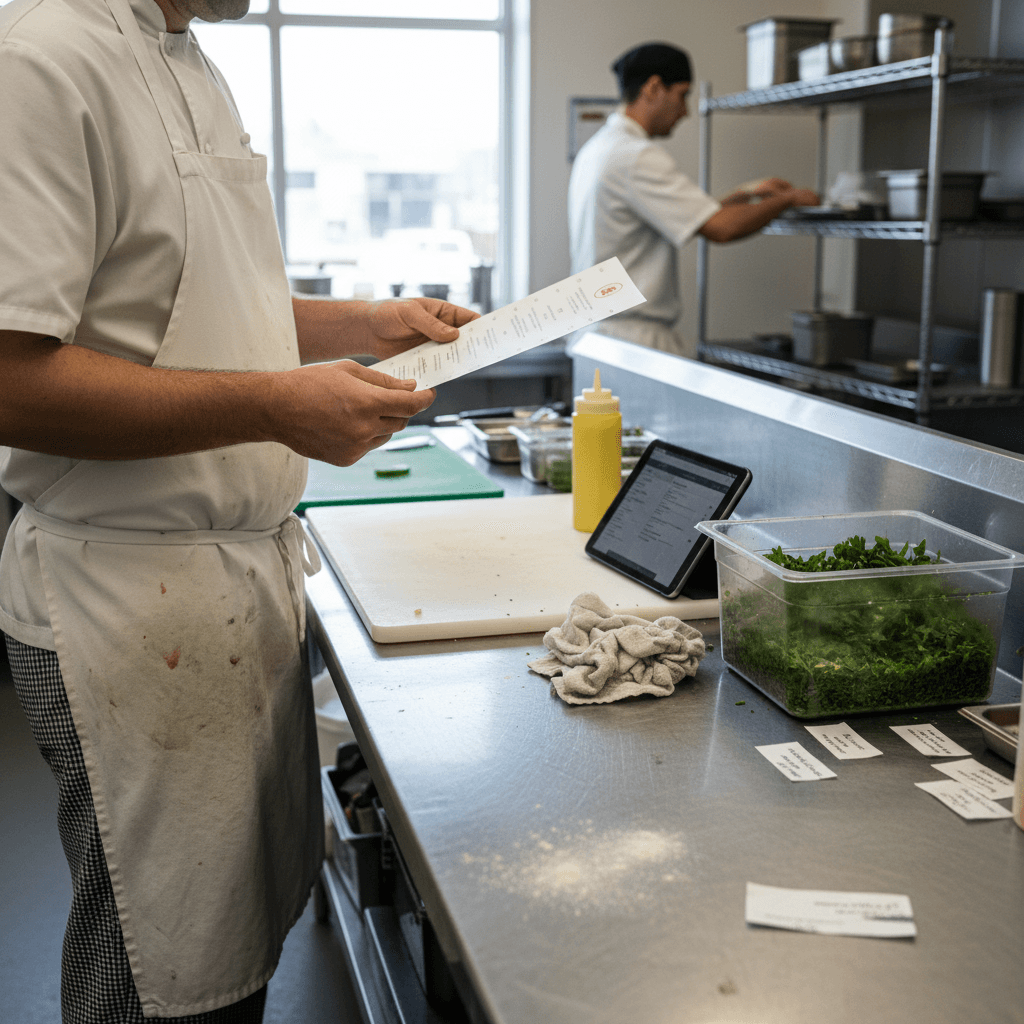
Think about the last time you had to 86 an item mid-shift. The server goes table to table with verbal corrections. The expo tells the line cooks to stop selling it. The host tells arriving guests. This is three separate communication streams for one piece of information. It's inefficient by design.
When your printer becomes the bottleneck
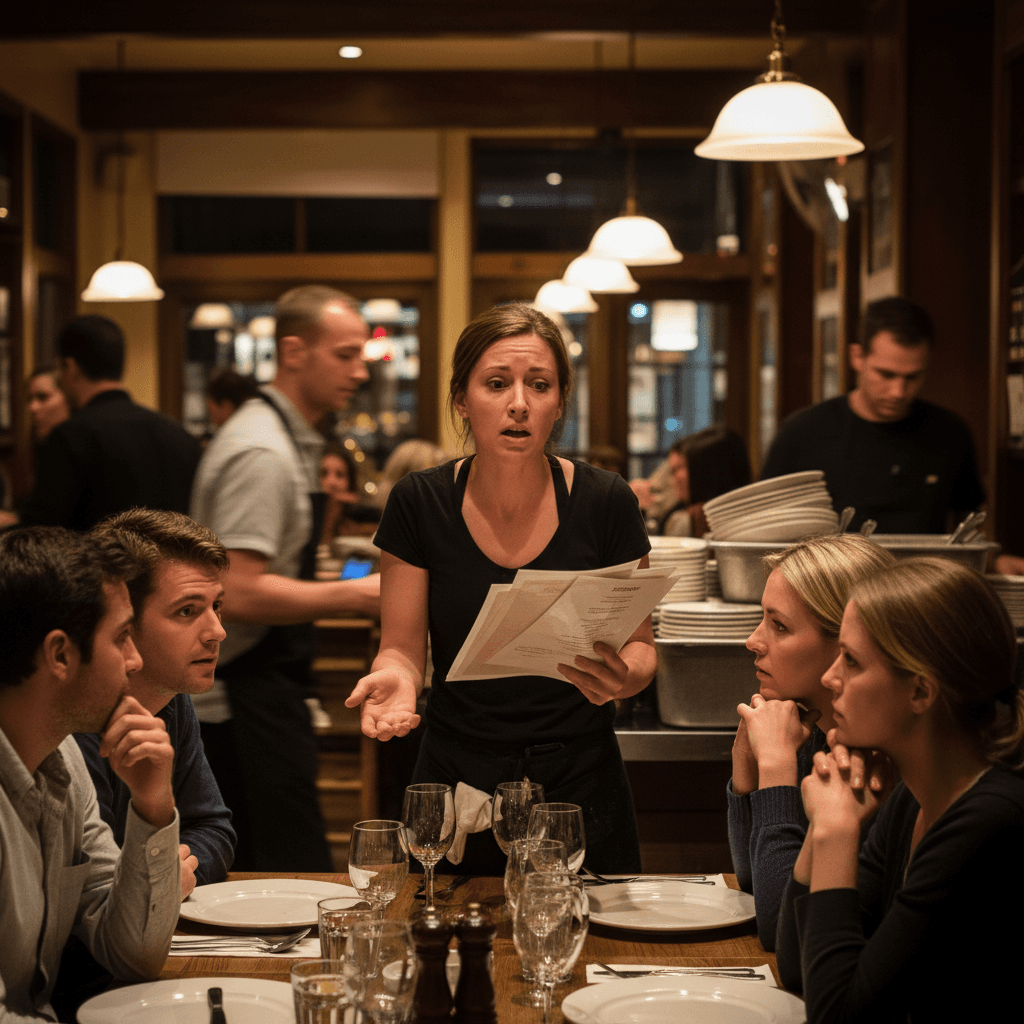
That moment when you realize you're out of menu inserts at 8 PM on Saturday is pure panic. You can't reprint without closing the kitchen line for ten minutes. So servers start making verbal corrections at every table.
Paper creates physical bottlenecks that digital removes entirely. The printer jams. The specials insert stock runs low. The manager who knows how to change the template isn't on shift. Each of these is a single point of failure that can stall your entire service flow during peak hours.
Digital boards solve this by letting you update everything from your phone in thirty seconds. No more 'Sorry, we're out of that' conversations. No more price confusion. The menu your customers see is exactly what you have available right now.
This isn't about fancy technology - it's about removing points of failure. Your service should not depend on a working printer, a full box of inserts, or perfect staff memory. Those are weak links in your operation.
From menu chaos to service control
The real shift happens when your entire team works from the same information in real time. Servers stop playing telephone with the kitchen. Customers get accurate information immediately. And you save those precious minutes during peak hours when every second counts.
Start by testing digital boards for your daily specials only. See how much time it saves your servers during Friday dinner rush. Notice how many fewer 'we're out' conversations happen. Then expand from there.
Measure the change in simple ways: count how many times servers have to check with the kitchen about availability during one dinner service. Time how long it takes to communicate a menu change to every staff member on the floor. Track how many incorrect orders get sent back because of outdated menu information.
These manual fixes - better communication protocols, streamlined update processes - work but require constant management discipline. Modern digital tools can automate this workflow by connecting your inventory directly to your customer-facing menu displays.
Kitchen display systems that talk to digital menu boards eliminate the translation step entirely. When the kitchen marks an item as 86'd, it disappears from customer view automatically. No meeting required, no sticky note needed.
Taking the Next Step
The logic here is straightforward: information should flow freely in your restaurant, not get stuck on paper that can't change fast enough. Controlling your menu means controlling your service speed and customer experience during your busiest moments.
If you're tired of managing menu chaos instead of running smooth service, view our pricing for solutions that scale with your operation or start a free trial to see how real-time updates change your next Friday night shift from stressful to controlled