When 'Nut-Free' Isn't Enough
Your 'nut-free' menu note won't protect guests during Friday dinner rush. Here's what actually works when seconds count.
The Friday Night Table 12 Emergency
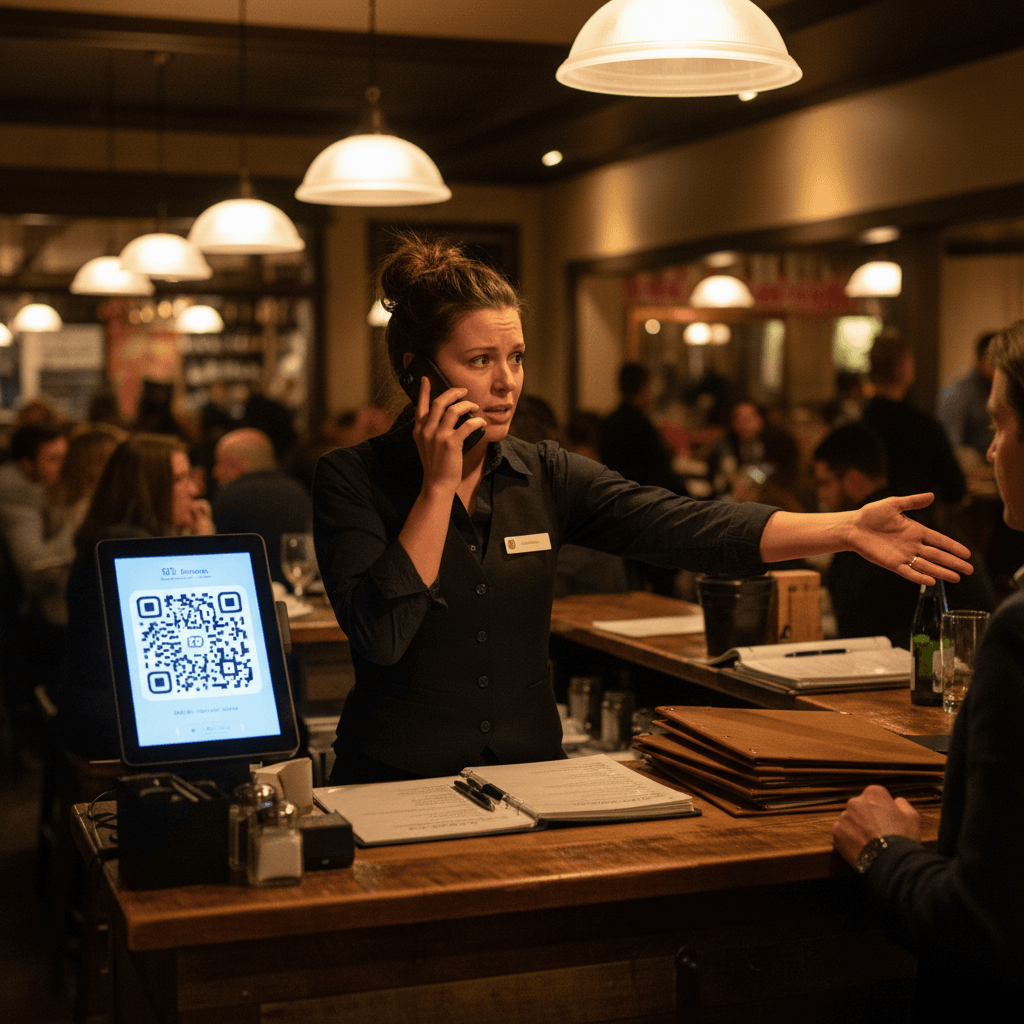
When 'Nut-Free' Isn't Enough, you're standing at the expo station with three tickets hanging and a server running back from table 12. Her face is pale. "Severe nut allergy," she says, her voice tight. Your heart drops because you know your menu note is just ink on paper. The sauté station just used peanut oil for the chicken. The dessert garnish contains crushed pecans. The server forgot to ask about the bread service. This isn't about disclaimers - it's about what happens when your manual system meets Friday night chaos. The ambulance could be at your door before you finish plating the next order.
This specific breakdown in protocol is why you need a kitchen-first system, not just menu notes. For the complete framework that moves beyond reactive fixes to build proactive safety into every shift, read our guide on Allergen Safety: Beyond the Menu Card. It connects the dots between your prep schedule, your line layout, and your team's muscle memory.
Your Three-Zone Kitchen Defense
Color-coded cutting boards create false confidence. A blue board for fish and a red board for meat means nothing when your line cook is in the weeds and grabs the closest knife. The real protection comes from time, not colors.
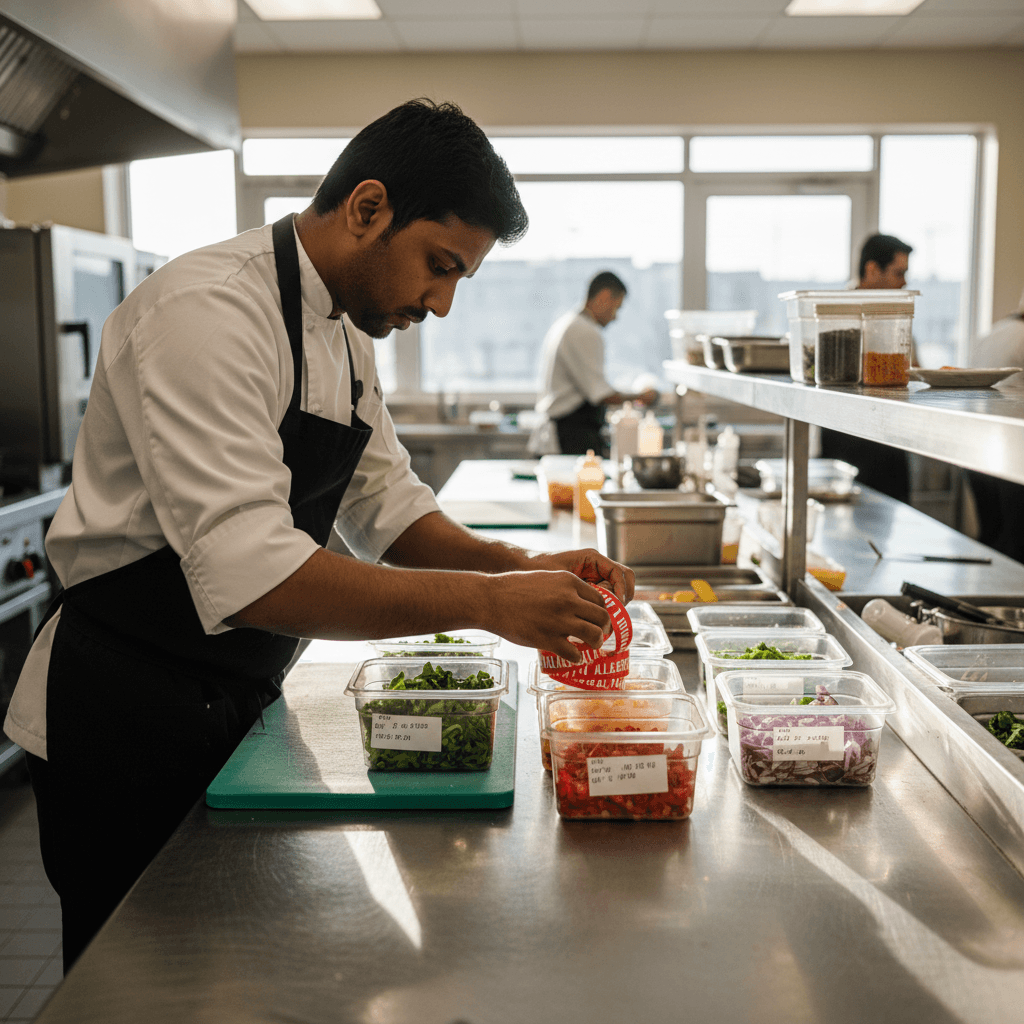
Designate Tuesday mornings as your absolute nut-free prep window. No peanuts, tree nuts, or nut oils enter the kitchen until after 2 PM. Use that three-hour block to batch every sauce, dressing, and garnish that needs to be safe. Make your vinaigrette, your herb oil, your dessert coulis. Then store them in containers with red lids.
The Rule: Red lids never leave their designated shelf on the cold line. They get their own set of spoons kept in a separate container of sanitizer water. They get their own small plating area on the pass, marked with red tape. Your expo knows that any ticket with a nut allergy sticker means they only touch red-lidded items with the red-handled spoon. This isn't a suggestion - it's Saturday night rush protocol, baked into your setup before the first customer arrives.
When Your System Breaks at 8:15 PM
You nailed the Tuesday prep. Your red-lidded containers are perfect. Your spoons are in their sanitizer bath. Then Friday dinner hits.
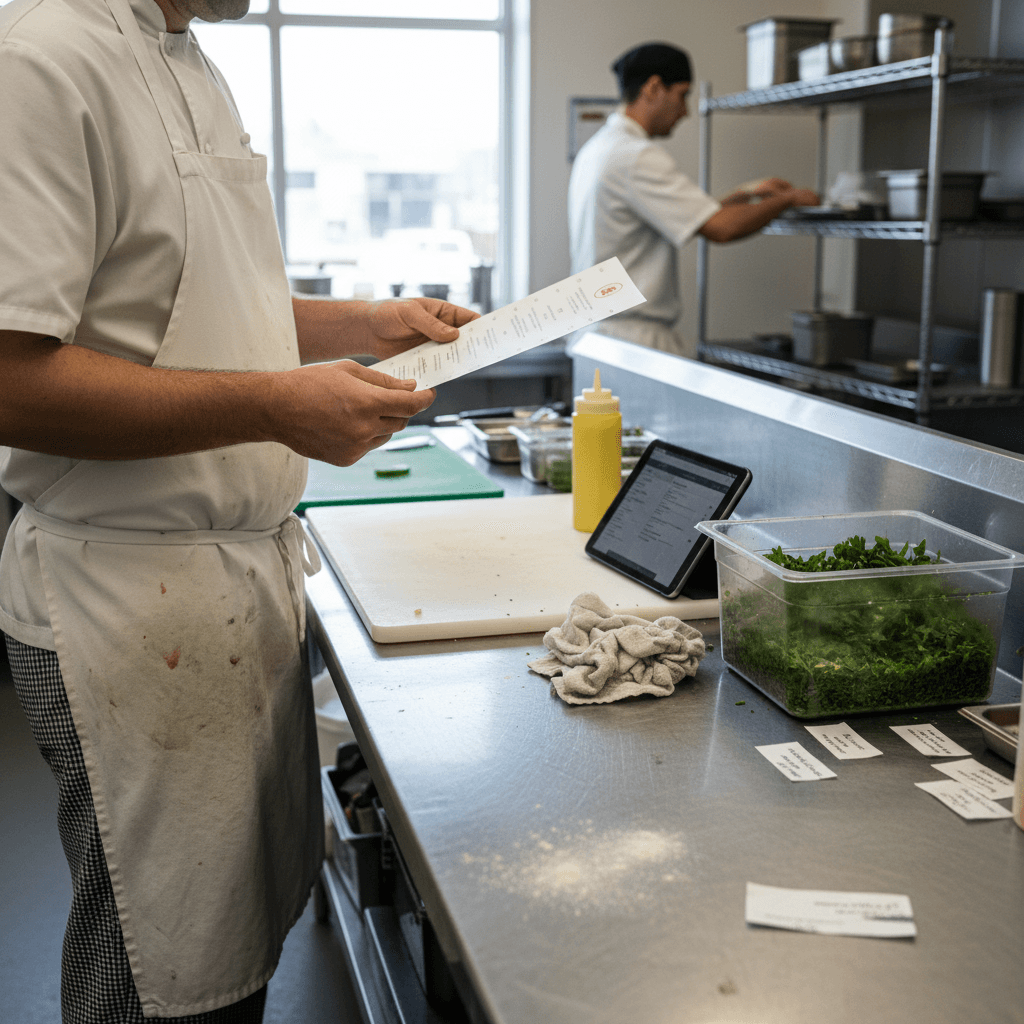
Your new sauté cook is three tickets deep. He reaches for a spoon to taste the pan sauce and grabs the nearest one - it's from the nut station. Your expo is calling three orders at once and misses the allergy sticker on ticket 42. Your server, double-sat with two large tops, forgets to ask table 7 about dessert modifications after they've already ordered the chocolate torte.
The manual checks you built - the color coding, the separate storage - all depend on human attention during peak chaos. You're one distracted moment away from a mistake that travels from the kitchen to a guest's plate. The system works until the rush makes people forget the system exists.
Building Allergy Memory Into Your Routine
Stop treating nut allergies as special occasions you handle when they come up. Make them part of your daily rhythm, like counting cash drawers or checking fridge temps.
Start each shift with a 30-second allergy reminder at lineup. Don't just say "be careful." Be specific. "Red lids only for nut-allergy tickets tonight." "Dessert station - verify with expo before plating any nut-allergy order." Point to the red tape on the pass. Show the red-handled spoon.
End each night with a mandatory two-minute equipment wash for anything that touched nuts that day. The sauté pans, the blenders for pesto, the knives for chopping walnuts. This isn't deep cleaning - it's a reset so tomorrow's morning prep starts with a clean slate.
The goal isn't perfection - it's building muscle memory so your team operates on instinct when the rush hits. When the expo sees that allergy sticker, her hand should reach for the red spoon without her brain having to think about it. When the line cook hears "allergy on table 5," he should wipe his station and grab a clean towel automatically.
This requires repetition, not just training. Drill it during slow periods. Run a mock allergy ticket during pre-shift when you have time to correct mistakes calmly. The memory needs to be in their hands, not just their heads.
Taking the Next Step
Shifting from menu notes to kitchen systems is practical work with clear logic. It protects your guests and removes a massive operational risk from your busiest shifts.
The manual processes described here - time-blocked prep, dedicated equipment, daily drills - create a strong foundation. Modern kitchen display systems can then automate the alert process, ensuring every allergy ticket is flagged visually at every station without relying on verbal calls over a noisy line.
If you're ready to build this kind of deliberate safety into your operation, view our pricing to understand how digital tools support this workflow and start a free trial to see how automation can lock in the protocols your team trains on every day