When Menu Notes Aren't Enough
Customers see allergy warnings as legal disclaimers, not protection. Build kitchen systems that prove you're serious about safety during Friday night chaos.
The Legal Disclaimer Problem
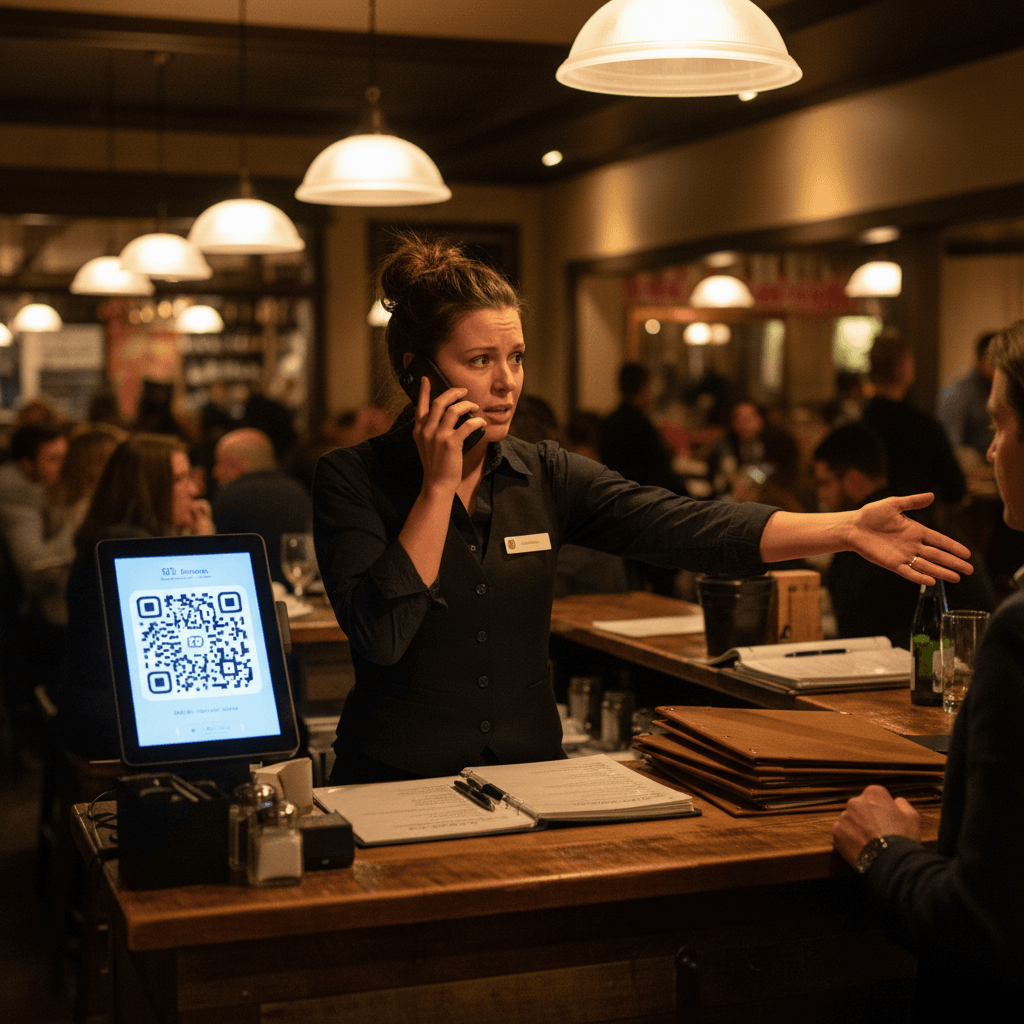
When menu notes aren't enough, you see it in the server's face at 7:45 PM on a Friday. She just took an order for a shellfish allergy, said "I'll check with the kitchen," and now she's staring at the expo station. The line is six tickets deep. The expo is calling three orders at once. Her handwritten note - "no shrimp" - is on a ticket that's already getting splattered with sauce. The customer watches her wait, and in that moment, your legal disclaimer becomes meaningless. They've seen this before: the promise of safety that vanishes when the rush hits.
Customers read those allergy warnings and think "legal protection," not "safety system." They've been burned by restaurants that treat allergies as paperwork. The server who disappears for ten minutes during Saturday dinner rush. The ticket that comes back with "no nuts" scribbled in fading pen. These moments break trust faster than any bad review. Your menu note is just words until your kitchen proves it means something during chaos.
This connects directly to building a complete safety approach, which we break down in Allergen Safety: Beyond the Menu Card. That guide shows how to move from reactive notes to proactive kitchen systems that work when you're busiest.
Kitchen Language Everyone Understands
The hard truth is simple: your expo station during rush tells customers everything about your safety standards. Forget what's printed on the menu. Watch what happens when an allergy ticket hits the line at 8 PM on Saturday. Does it get treated differently? Or does it blend into the stack of twenty other tickets?
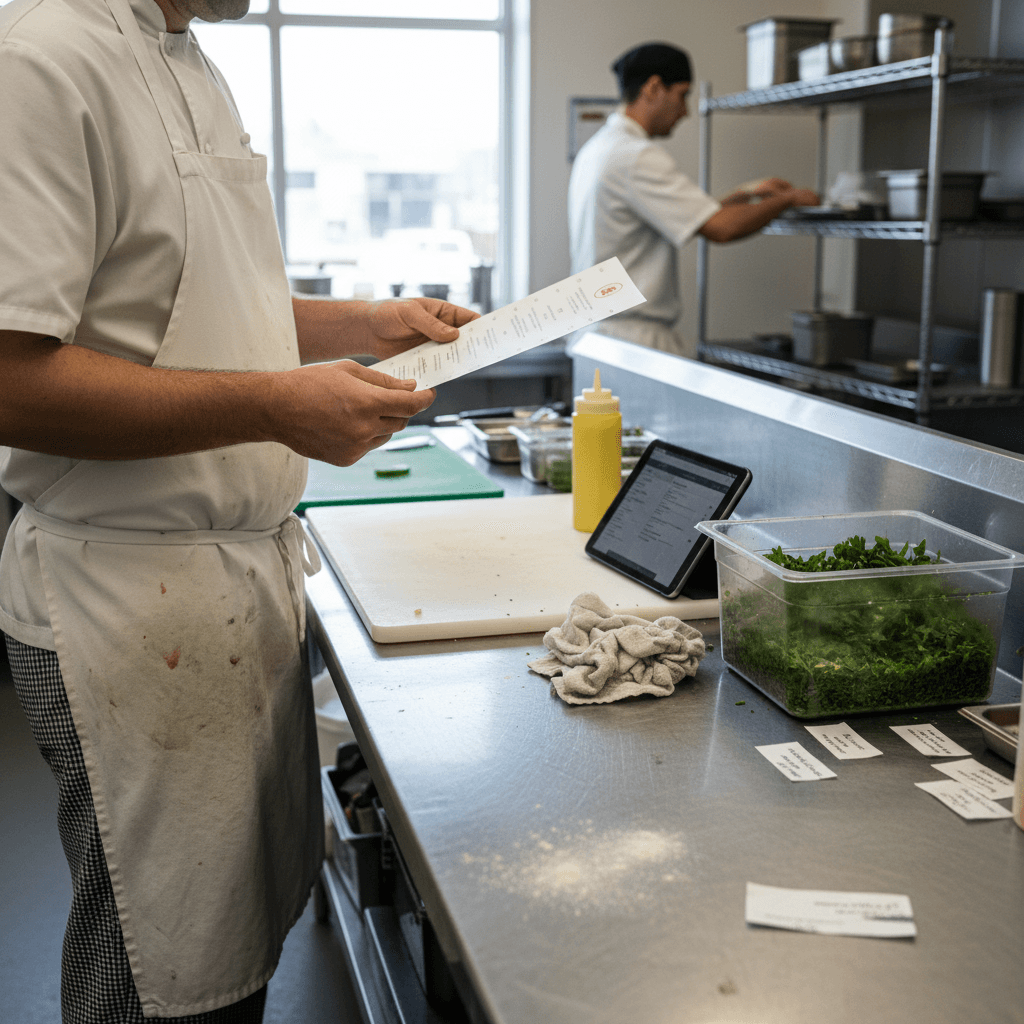
Start with color-coded allergy tickets that can't be missed. Red for shellfish, green for nuts, blue for dairy - make them physically impossible to ignore when three orders are called at once. Use different colored paper stock, not just a pen mark. The Rule: If an allergy ticket looks like a regular ticket during Friday night rush, your system has already failed.
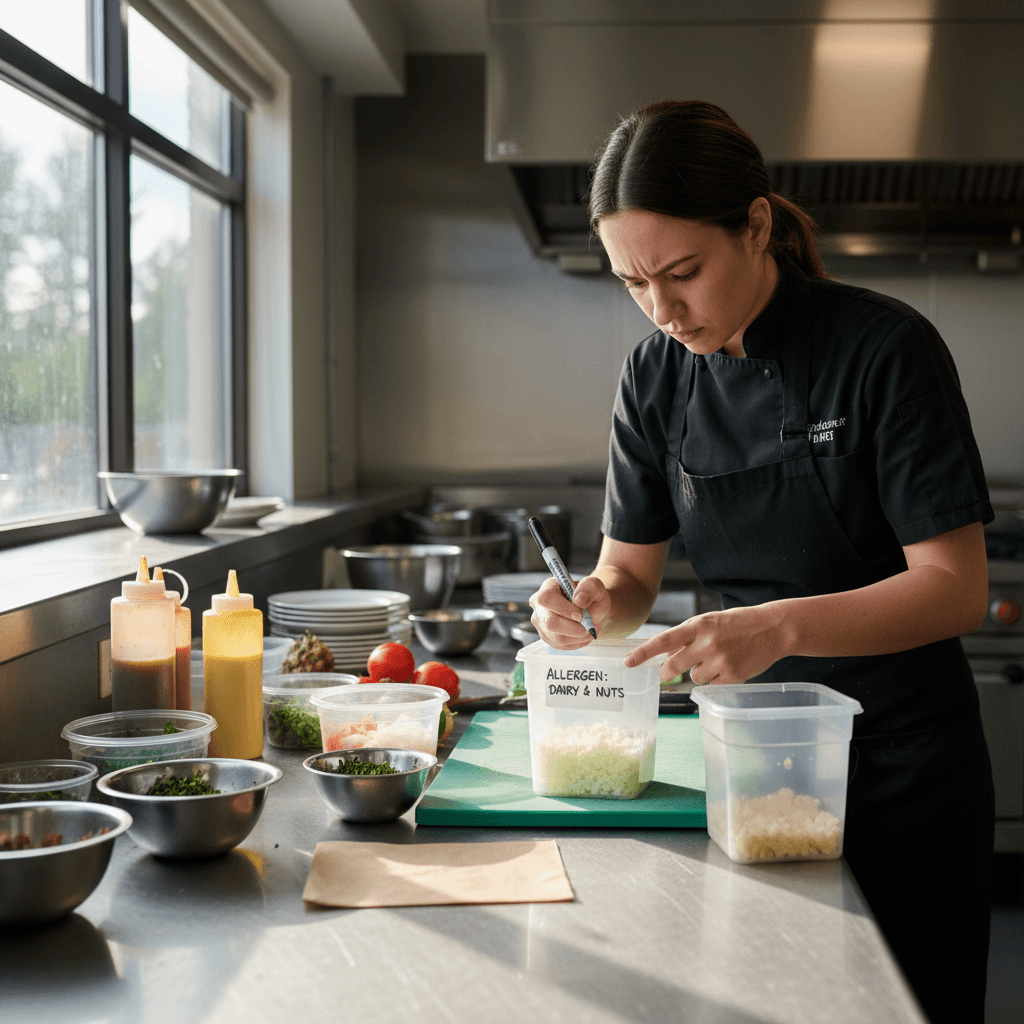
Train your line cooks to treat these tickets like fire alarms, not suggestions. The grill cook who sees a red ticket should stop everything and clean the surface before cooking. Not after finishing the current burger. Not when they have a free moment. Immediately. This isn't about being dramatic - it's about creating muscle memory that works when thinking time disappears.
Watch your sauté station next busy night. When a blue dairy allergy ticket comes up, does the cook reach for the same butter-laden pan? Or do they have a clean pan ready because they saw the color from across the line? That visual cue - the flash of blue paper in the ticket rail - is more reliable than any verbal reminder during noise.
When Your System Becomes the Bottleneck
Your perfect color-coded system will collapse under volume if you don't plan for failure. The Friday night rush hits and suddenly you have five allergy tickets up at once. The expo is calling orders while trying to remember which color means what restriction. The line cook has three red tickets but only two clean pans ready. Your manual checks work beautifully at 6 PM but fail completely at 8 PM when every table has a different "no" list.
This breakdown happens in specific, predictable moments. Watch for them next service: when the expo has to verbally repeat allergy instructions because the ticket got buried. When a cook asks "which one was the nut allergy?" two minutes after plating. When a server double-checks at the window because they don't trust the visual system anymore.
The bottleneck isn't intention - it's physical workflow under pressure. Your color-coded tickets work until there are too many colors to track mentally. Your clean-pan protocol works until you run out of clean pans during back-to-back allergy orders. Your verbal confirmation system works until the kitchen noise drowns out every word.
Build redundancy into every step. If you use red tickets for shellfish, also put a red clip on the plate rail where that order will land. If you use green for nuts, have the expo point to the green ticket when calling the order to the line. Create multiple failure points where mistakes can be caught before food leaves the window.
Time your current process during a slow Tuesday, then again during Saturday dinner rush. How many extra seconds does each allergy order take when the kitchen is at capacity? Those seconds multiply across multiple allergy tables and suddenly your ticket times stretch from 12 minutes to 20 minutes. Customers waiting for "safe" food feel every one of those extra minutes as doubt.
Building Trust That Lasts Past Closing Time
Customer trust isn't built on perfect nights - it's built on consistent systems that work when you're at your worst. They don't remember the smooth Tuesday service where everything went right. They remember the Saturday night when you were slammed and still handled their allergy with calm precision.
Start tomorrow's shift with one simple change: make allergy tickets physically different from regular tickets in at least two ways. Thicker paper stock so they feel different when handling them. Different colors that can't be confused even in low kitchen light. A separate section of the ticket rail reserved only for allergy orders.
Then watch how your team responds during the first rush of the night. That moment - when everyone instinctively treats the allergy order differently without being told - is where real trust begins. The server who sees the blue ticket and automatically gives extra space on her tray for that plate's special handling. The expo who calls "dairy allergy on station two" without looking at her notes because she saw the color.
This consistency creates a story customers tell their friends. Not "they have an allergy warning on the menu," but "they actually know what they're doing." That story spreads further than any marketing copy because it's backed by lived experience during your busiest, most stressful moments.
The pivot happens when you realize manual systems require constant vigilance and discipline from every team member every shift. Modern kitchen display systems can automate much of this workflow by flagging allergies digitally before tickets print, ensuring visual cues are always present regardless of who's working expo that night.
Taking the Next Step
Building kitchen-first safety systems is practical work with clear logic behind it: create visual cues that work under pressure, train muscle memory instead of just knowledge, and build redundancy so one person's bad night doesn't become a customer's dangerous meal.
The systems described here don't require expensive technology - they require commitment to consistent execution during your hardest services.
If you're ready to move beyond menu notes and build trust that survives Friday night chaos, view our pricing for tools that help automate these critical safety workflows or start a free trial to see how digital systems can reinforce your kitchen protocols during peak volume