When Guests Get Loud at Table 12
Angry customers aren't yelling about cold food. They're screaming to be heard. Here's how to listen before they walk out for good.
The Scream You Can't Ignore
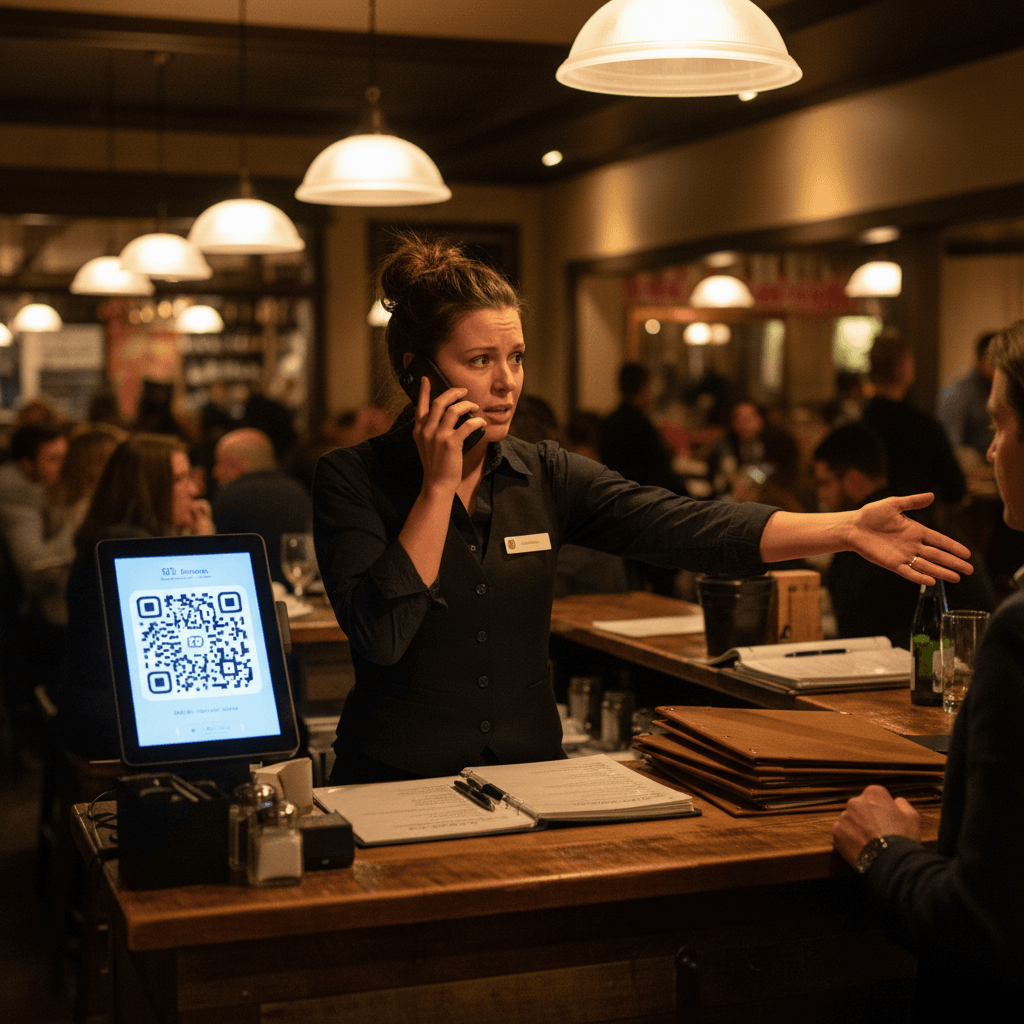
When guests get loud at table 12, the sound cuts through the dining room like a dropped plate. Everyone hears it. Servers glance over, then look away. The hostess pretends to check the reservation book. You feel the energy shift from smooth service to damage control. That loud voice isn't about the overcooked steak. It's about five ignored water refills and three missed check-ins. Angry customers escalate when they feel invisible. The server who avoids eye contact makes everything worse.
This is a specific symptom of a larger system failure. The feeling of being forgotten is what drives guests to complain in the first place, as we detail in When Service Breaks Down at 7 PM. That guide breaks down why guests don't complain about slow food - they complain about feeling ignored. Fix that feeling, and you fix the real problem before they walk out for good.
The mistake is treating the loud complaint as the problem itself. It's not. The complaint is the final symptom. The problem started twenty minutes earlier when their server got triple-sat and stopped doing table touches. It grew when the expo called three orders at once and their food sat under the heat lamp. By the time the guest raises their voice, they've already decided your restaurant doesn't care about them.
The Three-Second Reset Rule
Stop trying to fix the problem immediately. Your instinct says to run for a manager or offer a free dessert. That instinct is wrong. The first thing you say should never be "let me get my manager." Take three seconds to make eye contact and say "I hear you." This isn't about agreeing they're right - it's about acknowledging they exist.
The hard truth? Most restaurants train staff to solve problems, but angry people need validation before solutions. You cannot logic someone out of an emotional state. A guest yelling about cold fries isn't actually angry about potato temperature. They're angry because they spent $18 and feel disrespected. Your job in those first three seconds is to show respect.
The Rule: Before you offer any solution, you must acknowledge the emotion. Say "That sounds incredibly frustrating" or "I would be upset too." Do not move to fixing until you see their shoulders drop or their voice lower by one volume level. This takes discipline because every other table needs something, and your brain screams to hurry up.
Watch what happens when you skip this step. A server rushes over, says "I'll get you new fries," and walks away. The guest feels dismissed. Their anger doesn't decrease - it simmers. They'll find another thing to complain about because the core issue remains unaddressed. They still feel invisible.
When Apologies Make Things Worse
You followed the reset rule. You listened. You acknowledged their frustration. Now your manager is tied up with another fire, and you're stuck watching table twelve get louder while their remade food dies in the window. Manual de-escalation works beautifully until you have three angry tables at once.
That's when individual attention becomes impossible, and systems break down. You're one person with two hands and one brain. When multiple guests feel forgotten simultaneously, no amount of personal charm can save the shift. The server starts making promises they can't keep because they're just trying to survive the next five minutes.
The apology itself becomes part of the problem when it's not backed by action. Saying "I'm so sorry for the wait" while their food visibly cools on the pass makes you look incompetent or dishonest. Guests don't want apologies - they want competence. They want to see evidence that someone is actually fixing the breakdown.
This is where most restaurants fail completely. They train servers on scripted apologies but don't fix the kitchen communication that caused the delay in the first place. The expo is still calling tickets into a void because the fry cook has headphones on. The grill station still runs out of buns because no one told prep. The apologies are bandaids on a bleeding artery.
The real work happens before table twelve ever gets loud. It happens in your pre-shift meeting when you review which stations are short-staffed tonight. It happens when your manager walks the line at 6:45 PM and notices the salad station is three tickets deep already. Prevention isn't sexy, but it's cheaper than comping entire meals.
Turning Volume into Loyalty
The guest who complains loudly today could become your regular tomorrow - if you handle it right. Stop seeing angry customers as problems to contain. Start seeing them as opportunities to build trust that lasts longer than any marketing campaign.
Think about it from their perspective. They had a bad experience and spoke up about it. How you respond tells them everything about your restaurant's character. Do you make excuses? Do you disappear? Or do you take ownership and make it right? That moment of truth creates a memory far stronger than any perfectly executed smooth service ever could.
The real work begins after they leave your restaurant. The follow-up matters more than the immediate fix. A handwritten note from the manager with a gift card for their next visit shows you actually care about making things right, not just quieting them down tonight. That note costs you two minutes and a stamp but buys more loyalty than a hundred dollars in Facebook ads.
Most restaurants miss this step entirely because they're too busy putting out today's fires to think about tomorrow's customers. But here's the math: A regular who spends $75 every Friday night is worth $3,900 per year to your business. Losing them over one bad experience that you could have recovered properly is pure financial stupidity.
Modern tools can help with this recovery process without adding managerial overhead. Digital systems can flag tables that experienced long waits or had items comped, prompting automatic follow-up emails from management that feel personal but require zero manual effort after service ends.
Taking the Next Step
When guests get loud at table 12, you now have a clear path forward: acknowledge first, fix second, follow up always. This approach transforms complaints into connections and turns frustrated diners into loyal regulars.
The logic is straightforward - people want to feel heard more than they want free dessert. Your staff needs permission to pause before solving, and your systems need to support recovery after service ends.
If manual tracking of service breakdowns feels overwhelming during busy shifts, consider how digital tools designed for restaurants can automate this visibility for your team view our pricing or start a free trial to see how real-time alerts work during your next Friday night rush