When Service Breaks Down at 7 PM
Guests don't complain about slow food. They complain about feeling forgotten. Fix the real problem before they walk out.
The Night Everything Goes Wrong
The expo station is buried. Three tickets are called at once. A server is waiting for a side of ranch that never left the kitchen. Another is asking about a well-done steak that just hit the grill. The printer keeps spitting out new orders. This is 7 PM on a Friday, and improving guest satisfaction feels like a distant memory. You are not failing at hospitality. You are failing at logistics.
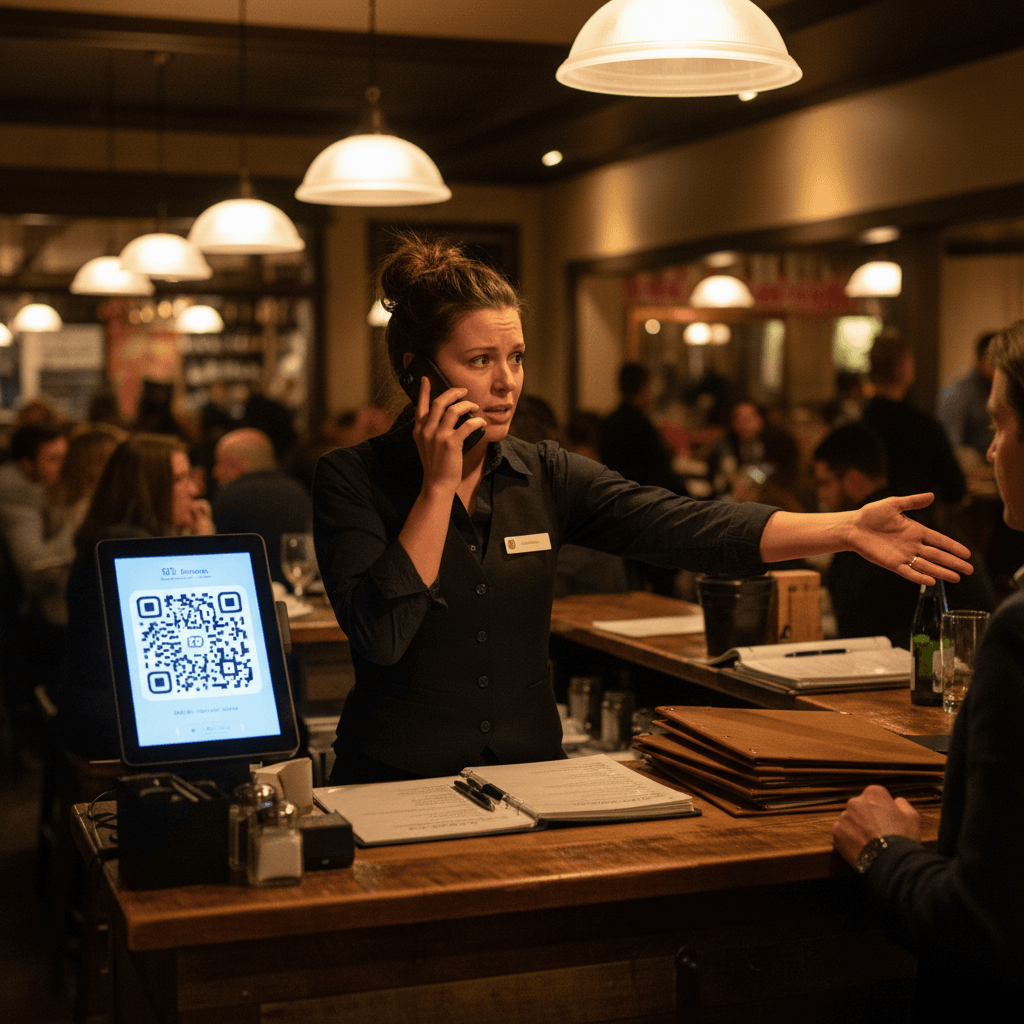
Guests do not get frustrated when their food is five minutes late. They get frustrated when they cannot find their server to ask about it. The moment of anger happens in the silence - when a guest raises a hand, makes eye contact, and gets nothing back. That is the exact second you lose them. It has nothing to do with your food quality.
There are three silent complaints that never reach management. First, the "invisible server." The guest sees their server three times: to order, to drop food, and to present the check. They feel ignored for the 45 minutes in between. Second, the "broken promise." A server says "I'll check on that" and disappears for ten minutes. The guest stops trusting anything they say. Third, the "apology without action." "Sorry for the wait" means nothing when the problem continues. Guests hear it as "I know this is bad, and I cannot fix it."
Broken service costs more than comped meals. It costs future revenue. A comped $20 appetizer is a visible loss. The invisible loss is the table of four who will never return, taking $3,000 in annual revenue with them. It costs staff morale. Servers who feel set up to fail quit faster. It costs your reputation. One bad online review from a 7 PM meltdown scares away fifty potential guests before they even walk in your door.
Why Your Training Program Is Failing
You know the problem: service breaks down under pressure. Here's why your current fix fails.
More training creates better actors, not better servers. You can teach menu knowledge and wine pairings all day. That does not help a server navigate eight tables when the kitchen is twenty minutes behind. They learn to smile while delivering bad news. They become excellent at pretending everything is fine when the system is broken around them. That is not service excellence. That is theater.
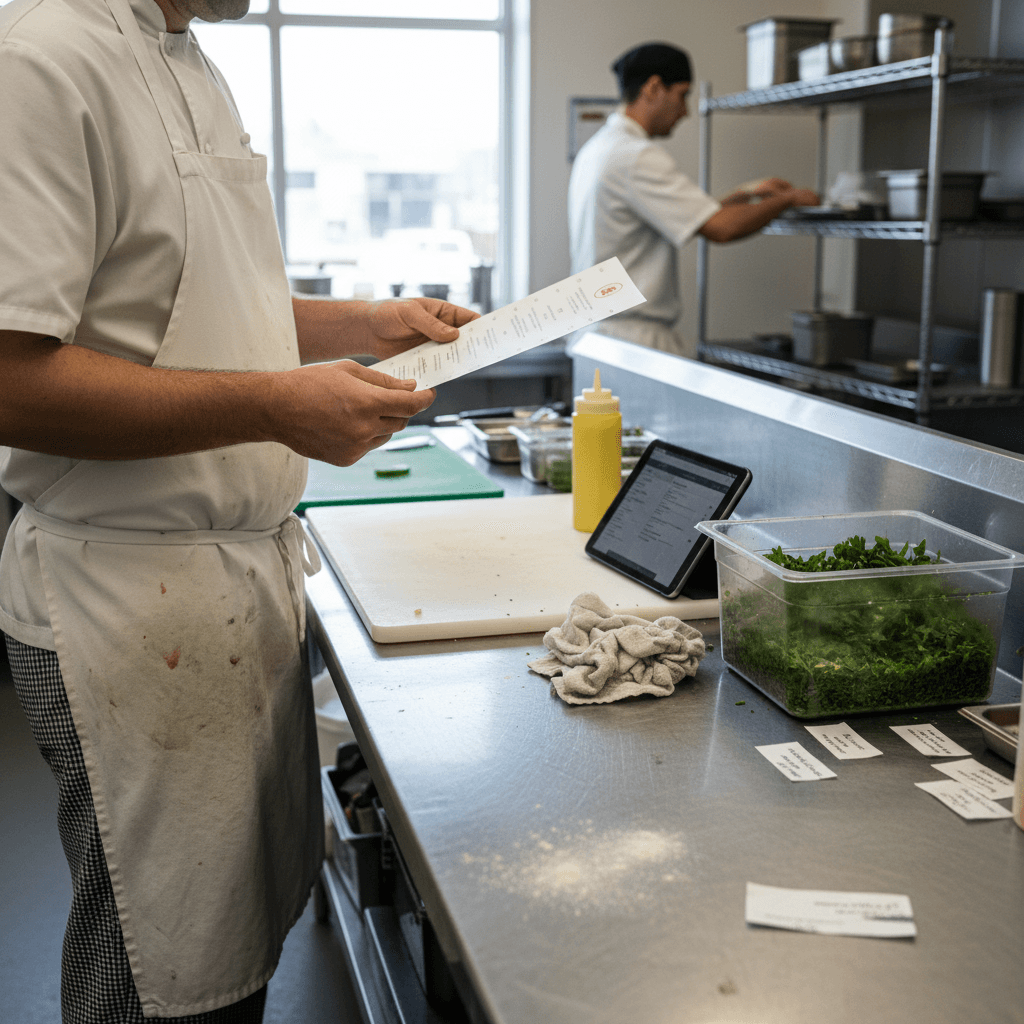
Manual methods collapse under Friday night pressure. Your paper ticket system works fine at 5 PM with three tables in the dining room. At 7 PM with a full house, it becomes a liability. Servers forget to fire appetizers because they are waiting by the kitchen door instead of on the floor. Cooks misread handwritten modifiers because they are rushing. The expo cannot sequence orders because tickets are piling up in random stacks. These are not people problems. They are system problems.
Checklists become wallpaper instead of tools. You have a side work list, a pre-shift checklist, an opening procedure document. They hang in the office or live in a binder. During rush hour, no one looks at them because they do not solve the immediate crisis: three tables need drink refills, one needs a check, and another is waving for their missing entree. Your systems work in theory but fail in practice because they are disconnected from the real-time flow of service.
The 90-Second Recovery Rule
That's the trap of trying to prevent every mistake. This is how you escape it.
The contrarian opinion is this: do not prevent mistakes - master recovery instead. Mistakes will happen during rush hour. A cook will drop a plate. A server will mis-ring an order. The POS will freeze for thirty seconds. Trying to eliminate all errors is impossible and stressful for your team. Instead, build a system that assumes something will go wrong and has a clear path to fix it within ninety seconds.
Building systems that work when people are tired and stressed means simplifying communication to one-word commands. "Expo, I need two hands for table 42." "Runner, hot behind." "Manager, I need a reset on table 16." These are not full sentences because your team does not have time for them at 7 PM. The Rule: If an instruction takes more than three words to say during peak service, it is too complicated.
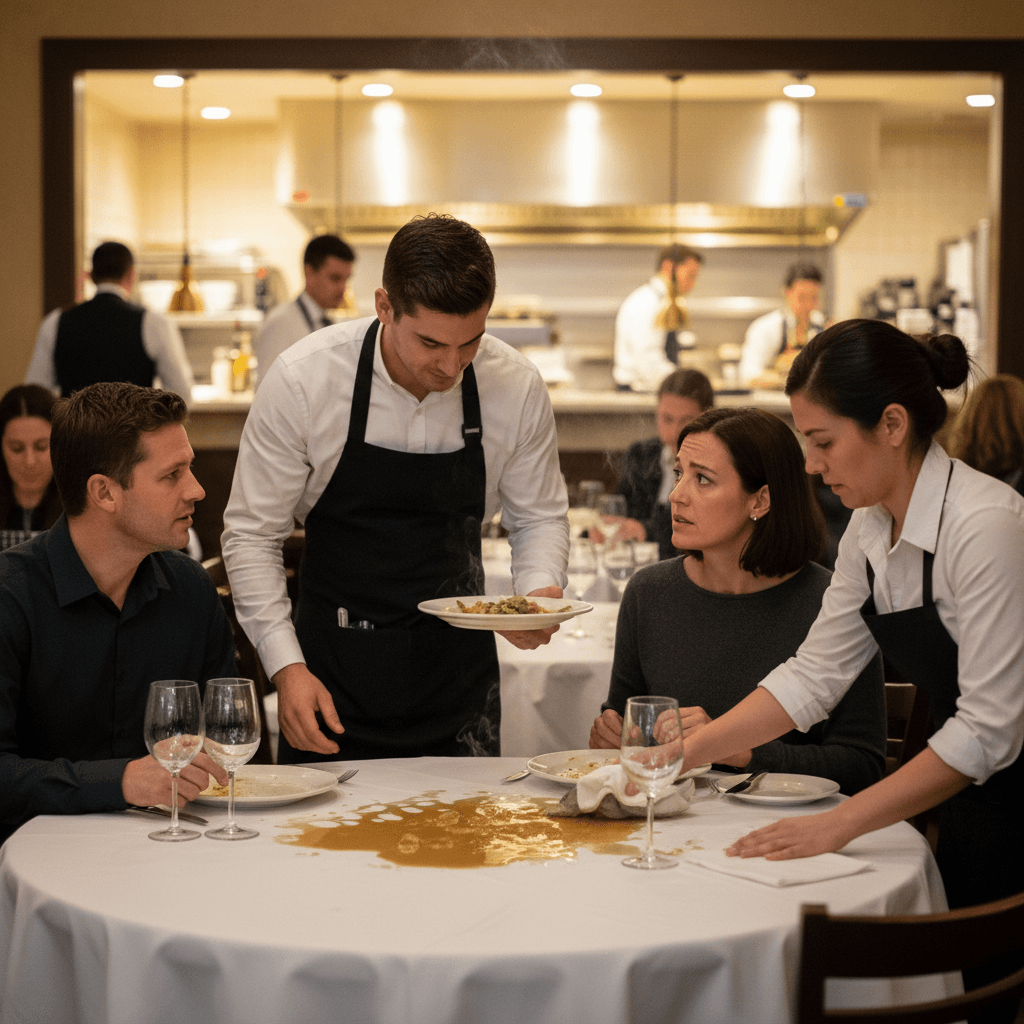
Turning service failures into loyalty moments requires giving your team permission to act. A server should not need manager approval to comp a dessert if a meal was ten minutes late. A cook should be able to refire a steak immediately if it was cooked wrong. Empower your staff with small, predefined solutions - a free dessert card, a drink on the house - so recovery happens at table side in real time. A guest who has a problem solved quickly and generously becomes more loyal than a guest who never had a problem at all.
Drills That Work During Rush Hour
You know recovery matters. Now you need tools that function when the pressure is on.
The pre-shift huddle that takes 4 minutes but saves 40 has one agenda item: bottlenecks. Do not talk about specials or new menu items. Ask two questions. "Where did we get stuck last Friday night?" "What is one thing we can do tonight to prevent it?" Maybe last week it was runners not knowing which server got which food. Tonight's fix: servers will call out their name when picking up plates. That simple agreement solves confusion before it starts.
How expo becomes your early warning system requires changing their role from announcer to conductor. An expo calling tickets into the void does not help. An expo who tracks ticket times and says "Chef, we have two pasta tickets at twelve minutes" gives the kitchen actionable data. An expo who tells a server "Your table 52 salads are next, go check their drinks now" keeps service moving proactively. Give your expo a timer and the authority to speak up. They see every ticket and every plate - they should be managing flow, not just calling food.
Simple language shifts change guest perception instantly. Stop saying "Sorry for the wait." Start saying "Thank you for your patience." Stop saying "I'll check on that." Start saying "I'll have an answer for you in two minutes." Stop saying "The kitchen is backed up." Start saying "We're making sure your meal is perfect." These are not empty phrases. They reframe the situation from something going wrong to something being handled with care.
Starting Tomorrow's Shift Differently
The theory is clear. Execution starts with one change before your next service.
Implement this one change tomorrow: install a physical service clock visible to FOH and BOH. This can be a simple digital timer counting up from zero when doors open. When servers see tickets hitting fifteen minutes, they know to check on table drinks without being told. When cooks see the clock at ninety minutes into dinner service, they know the rush is building and to communicate more clearly. A shared sense of time aligns your front and back of house better than any meeting.
Measuring what actually matters to guests means tracking recovery time, not just ticket times. Start recording how long it takes from when a guest first signals a problem - a raised hand, a question to a runner - to when it is fully resolved at their table. Aim for under ninety seconds. This metric tells you if your systems work under pressure far better than average ticket time ever could.
You will know your system is working when you hear silence during rush hour. Not the silence of panic, but the quiet hum of effective operation. Servers are not running back and forth asking questions. The expo is calling tickets in a steady rhythm. Managers are walking the floor talking to guests instead of putting out fires in the kitchen. The noise of chaos has been replaced by the quiet confidence of a team that knows what to do when things get hard.
Taking the Next Step
The shift from reactive panic to controlled recovery during peak service is not optional for restaurants that want to last.
Your next Friday night rush does not have to repeat last week's breakdowns.
Begin building your 90-second recovery system today by viewing our pricing for tools designed specifically for high-pressure service environments, then start a free trial before your next busy weekend to implement one drill from this article with real-time support