The Daily Math That Saves Your Food Budget
Stop guessing where your food costs go. Learn the simple daily tracking system that shows you exactly what's wasting money before Friday's rush hits.
When Your Walk-In Becomes a Money Pit
The Daily Math That Saves Your Food Budget starts when you open the walk-in door at 10 AM and see the case of romaine you prepped yesterday already wilting in the back. It's not your menu prices - it's what happens between deliveries. That case of avocados turning brown before Thursday's service. The extra ounce of salmon going out on every plate because your grill cook has been "eyeballing it" for three years. The prep cook who dumps another quart of house dressing into the bottle without tracking it. These aren't small mistakes - they're death by a thousand cuts that add up to thousands lost each month while you're busy managing the floor.
You're looking at waste, but you're really seeing a tracking problem. You can't fix what you don't measure consistently. This daily measurement is the foundation for smarter decisions about your entire menu, which connects directly to the broader strategy we cover in Menu Engineering: The Real Math Behind Profitable Plates. That guide breaks down how to analyze what actually sells and makes money, once you have the basic data from daily tracking.
The real cost isn't just the food you throw away. It's the labor spent prepping items that get tossed. It's the cooler space taken up by products that won't sell. It's the mental energy your kitchen manager wastes trying to remember what they used yesterday versus what they should have used. When your line cooks are digging through three containers of the same sauce because no one labeled dates, you're losing time during prep and money during service.
The 15-Minute Morning Count That Changes Everything
Here's the hard truth most restaurants ignore: You can't manage what you don't measure daily. Not weekly. Not when you do inventory. Daily. Start with three numbers every morning before service: What you have, what you sold yesterday, and what you should have left. The gap between 'should have' and 'actually have' is your waste number. Teach every manager to track this for just three key items - your most expensive protein, your most perishable produce, and your highest-volume starch.
Pick your ribeye if that's your top seller. Pick your arugula if it turns in two days. Pick your fries if you go through fifty pounds on a Friday. Weigh what's left this morning. Check yesterday's sales report to see how many portions sold. Do the simple math: Starting amount minus portions sold equals what should be left. Now compare that to what's actually in the container.
The Rule: If your actual count is lower than your calculated count, you gave away food. If it's higher, you wasted food through over-portioning or spoilage. There is no other explanation.
This isn't about catching thieves - it's about finding patterns. When your salmon count is consistently low every Tuesday, check who's on the grill that night. When your avocado waste spikes every Thursday, adjust your ordering for Wednesday delivery instead of Monday. The 15-minute morning count gives you specific data instead of general frustration.
Make this a pre-shift ritual like checking the ice machine or testing the fryers. Your opening manager does it with one cook as witness. Use a simple whiteboard in the kitchen - not a complicated spreadsheet that gets ignored by week two. Write today's date, the three items, and the variance number. A "+2" means two extra portions wasted. A "-3" means three portions given away.
When Manual Tracking Meets Friday Night Chaos
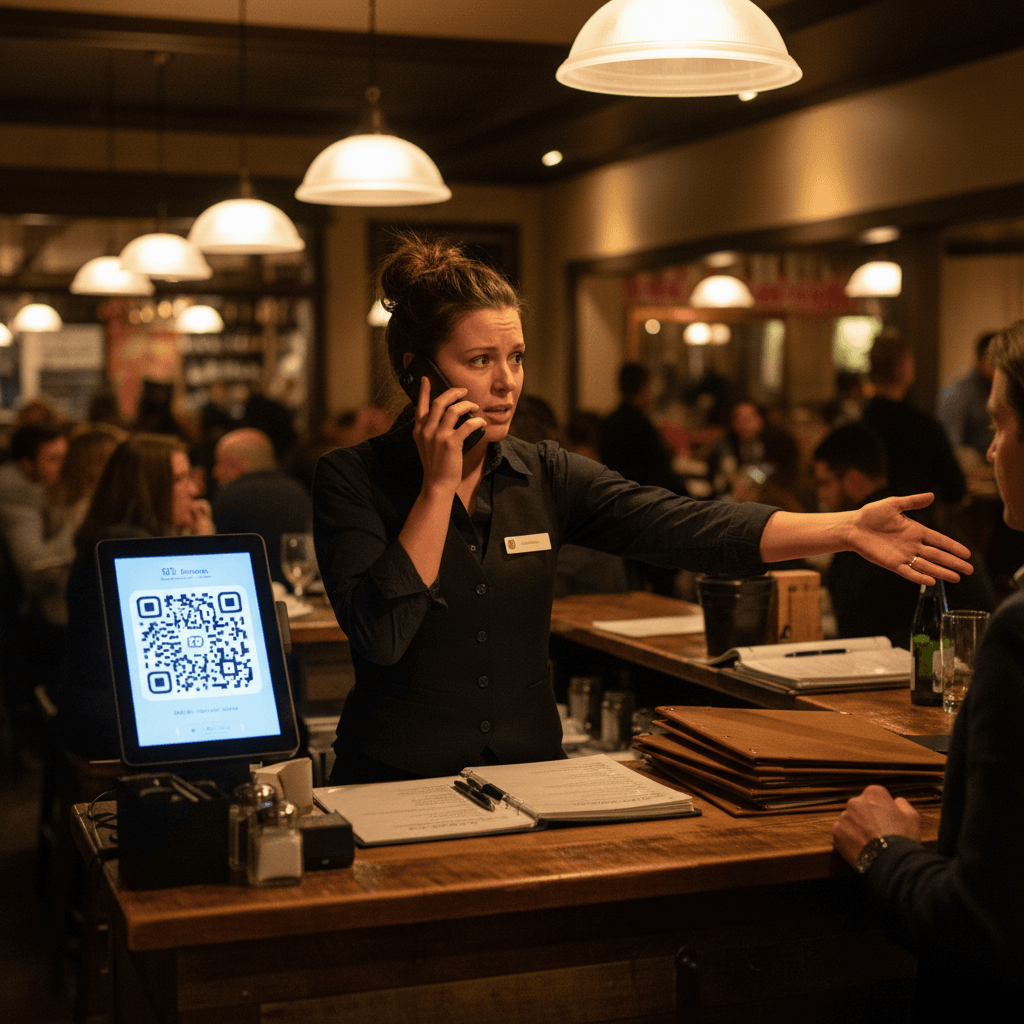
The system works beautifully until 7 PM on Friday when expo is calling three tickets at once and your new server forgets to ring in a modification. Suddenly your perfect counts are guesses again. You're trying to track waste while managing a rush, which means you're doing neither well. The paperwork piles up, staff gets frustrated with 'one more thing to track,' and within two weeks you're back to guessing.
This is where most manual systems break down. Your expo is focused on getting food out hot, not writing down that table six sent back their steak for being overcooked. Your dishwasher is crushing the to-go container with uneaten fries before anyone can record it as waste. Your bartender is making five drinks at once and doesn't have time to measure every ounce of simple syrup that spills.
The solution isn't more paperwork - it's smarter process design.
Create physical waste stations that force tracking without thinking. Put a clear bin with a scale near dish pit for all plate waste. Label it "WEIGH ME - EVERYTHING COUNTS." Put a clipboard with a simple tally sheet near expo for all send-backs and comps - just item and reason. Use colored stickers on prep containers: green for today, yellow for yesterday, red for two days ago so everyone knows what to use first without asking.
Train your staff on the "why," not just the "what." Show them the math during pre-shift: "When we waste one portion of salmon at dinner, that's $14 gone before we even pay for labor or rent." Make it tangible. Connect their actions directly to their tips and their job security - restaurants that control costs stay open longer and busier restaurants mean better tips.
The Rule: Every item that leaves the kitchen must be accounted for - sold, wasted, or comped. There are no exceptions.
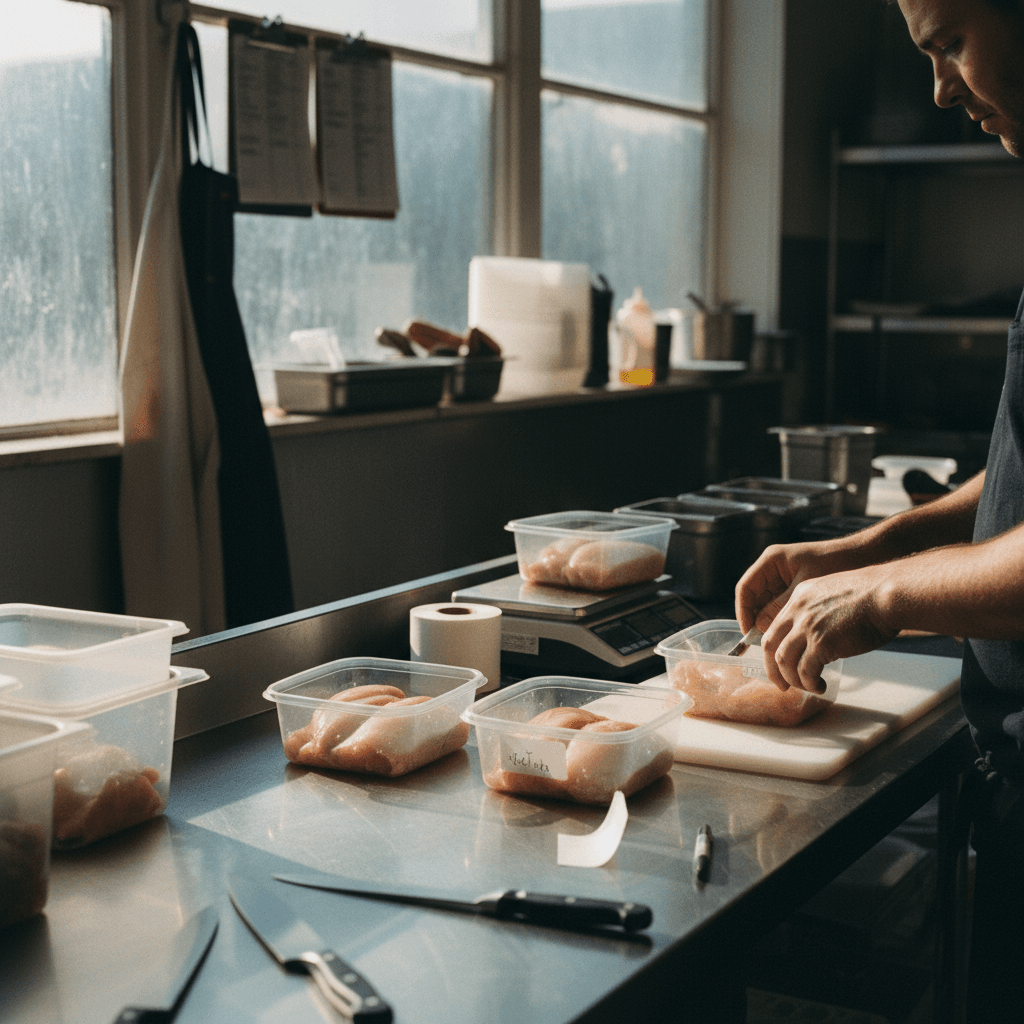
This means your servers ring in every modification correctly so kitchen knows exact portions. Your line cooks use scales for proteins during prep, not just "close enough" scoops. Your managers check waste bins before they get dumped at night shift change.
From Daily Drills to Menu Engineering Mastery
These daily numbers aren't just about saving food - they're the raw data for smarter menu decisions. When you know exactly how much waste each dish creates, you can engineer your menu around what actually works on your floor.
Start noticing patterns in your morning counts beyond simple variance numbers.
When your scallop dish shows consistent waste every time it sells less than ten orders, that tells you something about portion size or price point. When your beet salad shows zero waste but constantly runs out by 8 PM, that tells you about demand versus preparation.
Contribution margin is what's left after food cost. A $16 steak that costs $5 to plate has an $11 contribution margin. But if 20% of those steaks get sent back for being overcooked, your real contribution margin drops dramatically once you account for waste and re-fires.
This daily tracking reveals which dishes are actually profitable after accounting for real-world kitchen execution - not just theoretical food costs on paper.
Use your waste data to make simple menu adjustments first. If your truffle fries show high waste because they get soggy in twenty minutes, either make smaller batches more frequently or take them off the late-night menu when orders slow down. If your fish special consistently has leftover portions that get tossed next day, either reduce the portion size slightly or feature it earlier in the week when freshness matters less for leftovers.
The Rule: Menu items must pass two tests - customers want to buy them, and your kitchen can execute them consistently with minimal waste. Fail either test and the dish costs you money no matter what your theoretical food cost percentage says.
This is where daily cost control connects directly to profitability. You stop guessing which dishes make money and start knowing based on actual performance data from your floor. You build tomorrow's specials around ingredients showing low waste in today's counts. You adjust portion sizes based on real send-back rates instead of industry standards that don't fit your customer base.
Manual systems work but require discipline. They demand consistent attention from managers already stretched thin during service. This is where modern digital tools enter the conversation - not as magic solutions but as automation for repetitive tracking tasks. Kitchen display systems can track modifications automatically. Digital inventory tools can calculate usage from sales data without manual counting. The goal isn't replacing human judgment but freeing up time for analysis instead of data entry.
Taking the Next Step
The shift from guessing to knowing happens through consistent daily practice, not complex theory. The logic is clear: measure what matters most every day, find patterns in the gaps between expected and actual usage, then adjust operations based on those patterns. This creates a feedback loop where today's data improves tomorrow's service.
Start with one protein count tomorrow morning before service opens. See what variance number appears. Use that single data point to ask one specific question of your kitchen team during pre-shift meeting. Build from there over thirty days until daily tracking becomes as routine as checking reservations or counting cash drawers. When you're ready to scale this practice beyond manual tracking, view our pricing options designed for independent restaurants and start a free trial to see how automated tracking integrates with your existing kitchen workflow during next Friday's rush