Stop Wasting Paper and Money
Paper waste costs more than you think. Learn practical steps to cut paper use without slowing service, saving thousands annually while going green.
The Hidden Cost of Every Ticket
Stop Wasting Paper and Money. It's Friday night, 7:15 PM, and your expo is calling three orders at once. A server rushes back to the printer, grabs a fresh ticket for table 42, and realizes it's a duplicate. The first ticket is somewhere under the heat lamp, already getting soggy. She prints a third just to be safe. That's three pieces of paper for one $85 check, and two of them are headed straight for the trash. This happens twenty times a night. You don't see the cost in the moment - you see the rush, the chaos, the need to keep food moving. But that cost is real, and it's measured in thousands of dollars walking out your back door with the recycling.
Paper waste isn't just about recycling bins. It's about the $12,000 you're throwing away each year without noticing. Every ticket, every misprint, every outdated menu adds up faster than you track. Servers waste minutes hunting for paper instead of serving guests. Managers spend hours reprinting instead of managing. The financial drain is silent but constant, a slow leak in your profitability that most owners never plug because they're fighting fires on the floor. This is a core principle of running a lean operation, which we break down in detail in Sustainable Practices That Actually Save Money. That guide moves beyond simple recycling to show how intentional process design directly protects your bottom line.
Let's do the math you never have time for on a Saturday night. A standard thermal paper roll costs about $12. If your kitchen printer runs through one roll per shift, that's $84 per week just on paper. Now add in the server printer tickets, the manager's shift reports, the handwritten specials boards, the paper menus that get replaced quarterly, and the endless notepads for taking orders. The national average for restaurant paper waste sits between $8,000 and $15,000 annually per location. That's not an abstract statistic - that's a new piece of equipment, a staff bonus pool, or pure profit you're literally throwing away.
Start With What You Can Control
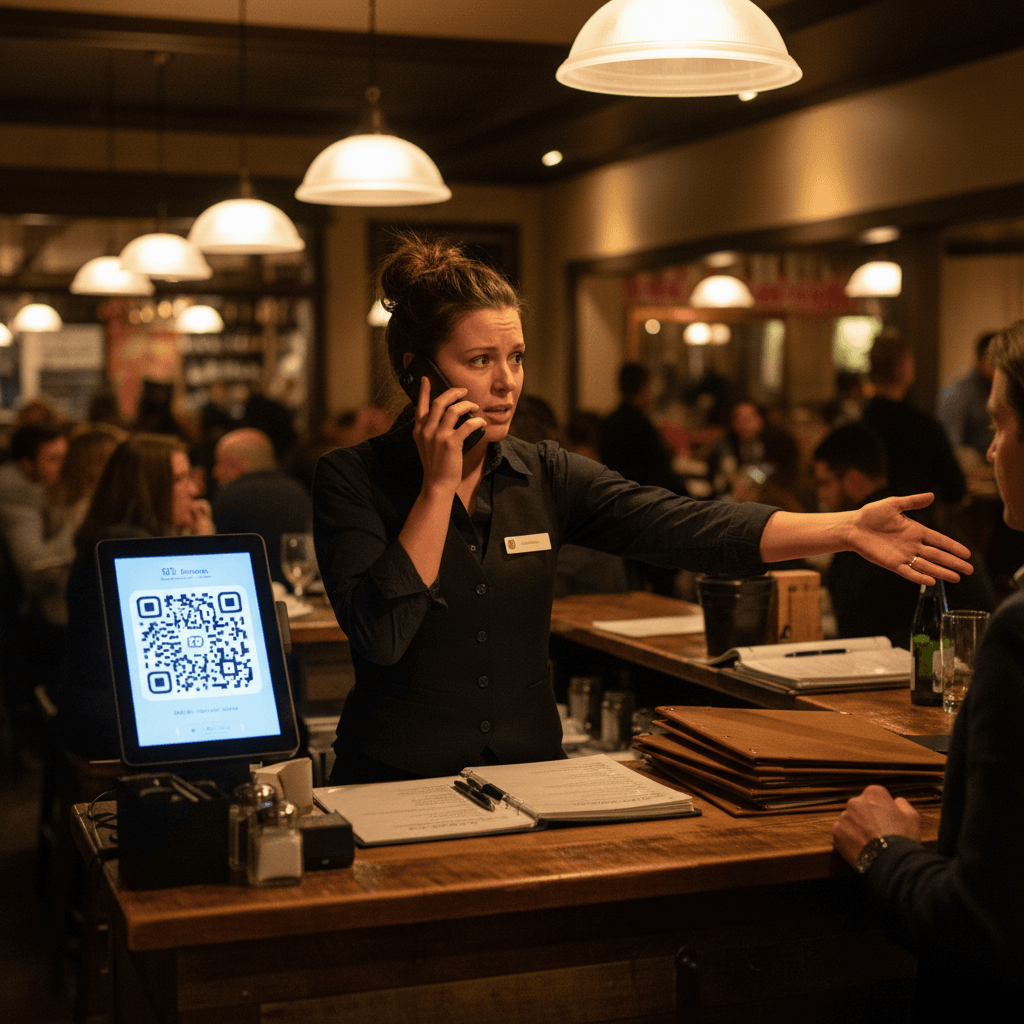
The hard truth: digital menus won't fix your paper problem if your kitchen still runs on chaos. You can have QR codes on every table, but if your line cooks are drowning in duplicate tickets and your prep team can't find yesterday's inventory sheet, you've only moved the waste from the dining room to the kitchen. Focus first on the back-of-house systems that create 80% of your waste. These are the processes you control completely, without any new technology or guest adoption.
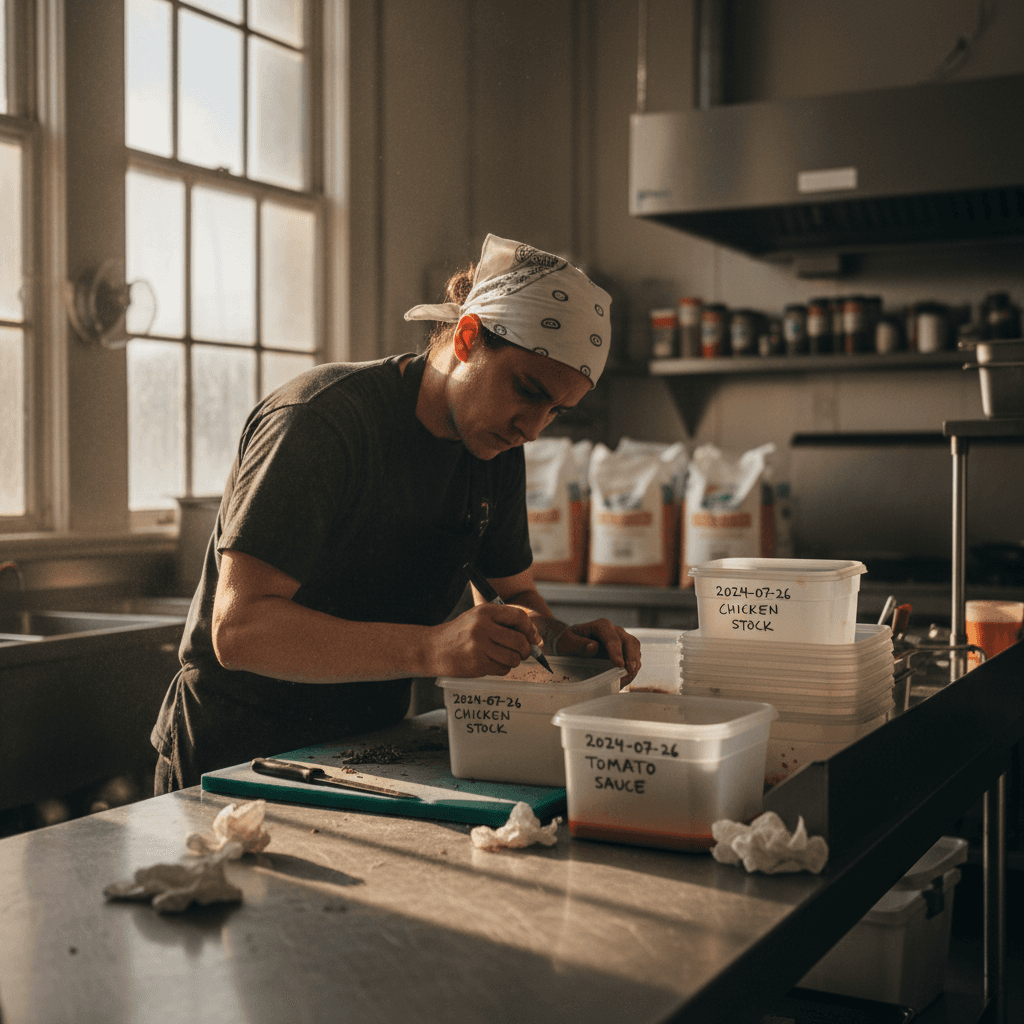
Implement a simple container labeling system that cuts food waste by 30% immediately. The Rule: Every item that goes into the walk-in gets a label with its name and the date it was prepared. Use masking tape and a sharpie - this isn't about fancy gadgets. When your morning prep cook opens the cooler at 6 AM, they should see "Chicken Stock - 10/26" and "Diced Onions - 10/25" on every container. This eliminates the guessing game that leads to tossing perfectly good product because no one knows how old it is. It takes ten seconds to write a label and saves hundreds in wasted food each month.
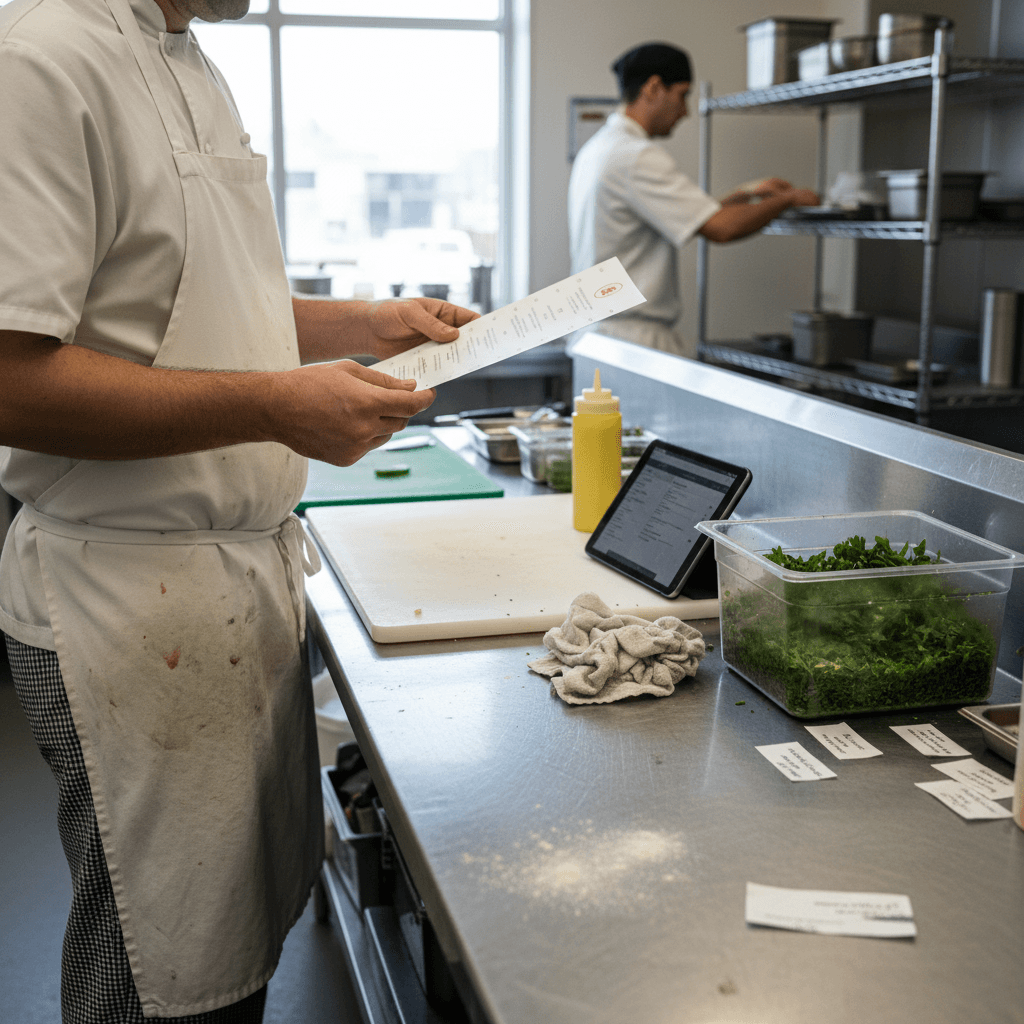
Train staff to print only what they need, not what they might need. This starts with your expo during pre-shift. Show them how to clear old tickets from the printer rail before service begins. A cluttered rail causes confusion, which causes reprints. During service, if a ticket gets lost or damaged, have them check with the line cook first before hitting print again. Often the cook already has it clipped to their station. This simple communication habit saves dozens of unnecessary prints per shift.
Consolidate your managerial paperwork. How many different reports are you printing daily? Sales summaries, labor reports, inventory sheets, scheduling notes? Most point-of-sale systems can email these reports directly as PDFs. Designate one master clipboard for essential daily notes that must be on paper - perhaps the shift log or critical repair requests. Everything else moves to digital. This alone can cut your office paper use by half within a week.
When Paper Habits Fight Back
Even with perfect systems, old habits die hard during Friday dinner rush. You can train all you want during slow Tuesday lunches, but pressure reveals true behavior. Servers revert to printing extra tickets 'just in case' because last month an order got lost and they got yelled at. Line cooks ignore date labels when three orders hit at once because reaching for the older container takes an extra two seconds they don't have. The manual fix works beautifully until the tickets start flying, then paper floods back because it's the familiar safety net.
This resistance isn't stubbornness - it's risk management by your staff. They've been burned before by systems that failed under pressure, so they create their own backups using what they know: more paper. To break this cycle, you must prove your new system is more reliable than their old habit during peak chaos. Run a controlled test during your next busy service. Pick one high-volume station - maybe the grill or expo - and commit to running it 100% by the new rules with a manager supporting it directly.
For example, tell your expo: "Tonight, we are not reprinting any lost tickets until we've physically checked all three line stations first." Have a manager stand there during the first rush wave to enforce this and help look. When the first ticket goes missing at 7:30 PM, instead of letting them print a new one immediately, help them find it clipped to the sauté station. Show them it worked. Prove that the system holds under fire. Once staff see that following the process actually prevents mistakes instead of causing them, adoption becomes organic.
The Rule: Never implement a paper reduction policy without also providing a reliable alternative for staff anxiety. If you tell servers not to print duplicate tickets, you must also create a clear protocol for what they should do when an order seems lost (e.g., "Check with expo first, then sauté station, then grill"). Give them steps instead of just taking away their crutch.
Building Systems That Last
The real solution isn't eliminating paper completely - it's creating systems that work when you're not watching. Some paper will always have a place in a restaurant - allergy alerts, quick sketches of table layouts for large parties, temporary notes during POS outages. The goal is intelligent reduction, not impossible perfection.
Design workflows that make the right choice the easy choice during peak hours. Place small trash cans specifically for paper recycling right next to every printer and expo station. If the recycling bin is closer than the general trash can, staff will use it without thinking twice about walking across the kitchen.
Track what actually gets used versus what gets tossed for one week straight. Have your closing manager save all discarded paper in a separate box each night - misprinted tickets, outdated specials sheets, old prep lists. At week's end, sort through it. You'll likely find patterns: maybe 40% are duplicate tickets from one particular printer. Perhaps 30% are outdated prep sheets because someone is printing new ones daily instead of updating existing ones. This audit gives you specific targets instead of guessing where waste comes from. Adjust your ordering and printing habits based on this real data. If duplicate tickets are your biggest waste stream, investigate why. Is printer placement causing confusion? Are tickets falling off clips? Fix that specific problem first.
Standardize your menu updates. How many times do you print new menus because someone found one typo? Establish a rule: minor corrections wait until your scheduled quarterly menu update unless it's a critical error like an incorrect allergy warning. For daily specials, use chalkboards or digital displays instead of printed inserts that get tossed nightly. This single policy can cut menu printing costs by 60%.
Manual systems require vigilance, but they build discipline into your team's daily rhythm. Once these habits become muscle memory, you've created a culture of efficiency that pays dividends far beyond paper savings. It makes every other operational improvement easier to implement because your staff understands process thinking.
For restaurants ready to automate these repetitive tasks, modern kitchen display systems can eliminate ticket printing entirely by showing orders directly on screens at each station. Digital inventory tools track product dates automatically, removing human error from labeling. These technologies solve for consistency at scale, handling tasks where human attention inevitably wanders during busy periods.
Taking the Next Step
Reducing paper waste isn't about grand sustainability gestures - it's about fixing small leaks in your daily operation that quietly drain profit. The logic is straightforward: every piece of unnecessary paper represents money spent without value returned to your guests or your business. The systems described here work during Friday night rushes because they're built for real restaurant pressure, not theoretical ideals.
The financial impact becomes visible quickly - within weeks, you'll order fewer supplies, spend less time managing clutter, and watch your team move with clearer purpose. That clarity translates directly to better service and tighter cost control.
If you're ready to implement these changes systematically, view our pricing for tools that support this operational discipline, or start a free trial to experience how streamlined workflows function during your next service period. Begin tracking your paper waste this coming Monday - simply save what gets thrown out for seven days. The data will show you exactly where to start cutting first