Stop Guessing Your Food Costs
Most restaurants calculate food cost wrong. Learn the simple method that actually works during busy service, not just on paper.
Why Your Food Cost Numbers Are Probably Wrong
Stop Guessing Your Food Costs. It's Friday night, the expo is calling three orders at once, and your line cook just dropped a full pan of prepped salmon on the floor. That $80 loss won't show up in your spreadsheet until next week, if it shows up at all. Most restaurant owners calculate food cost wrong because they use math that works on paper but breaks down during service. The real number lives in the moments between deliveries, in the family meal you didn't track, and in the waste your team sweeps away at midnight.
This isn't about complex accounting. It's about connecting your kitchen's reality to your bank account. For the complete system of reports that turn daily chaos into clear decisions, see our guide on Restaurant Reports That Actually Work.
The Friday Night Reality Check
Your theoretical food cost percentage is a quiet Tuesday afternoon number. Your actual food cost happens during the Friday dinner rush when tickets are piling up. The difference is what you pay for.
Think about your last busy shift. A server rings in a steak medium-rare. The cook pulls it at medium-well by mistake. The server apologizes to the table, the cook fires a new steak, and the first one gets sliced for family meal. That's a double food cost hit - one wasted steak and one given away. Your spreadsheet shows two steaks sold at full price. Your reality shows one steak sold and one steak lost.
The Rule: Your food cost is not what you plan to sell. It's what you actually plate and serve, minus what gets thrown away, given away, or stolen.
This gap appears in small moments all night long. The line cook who over-portions fries to avoid running out during the rush. The bartender who pours a heavy hand for a regular. The dishwasher who eats leftover chicken wings before closing. None of these show up in your ideal recipe costing. All of them drain your profit.
The Simple Math That Actually Works
Forget tracking every single lemon and sprig of parsley. That system collapses under the weight of a real service week. Start with what moves the needle.
Your top five menu items likely drive 70% of your food cost. Focus there first. For a pizza place, that's cheese, dough, pepperoni, sauce, and maybe one specialty topping. For a steakhouse, it's beef, potatoes, seafood for surf-and-turf, salad greens, and butter. Track those five with absolute precision. The rest you can manage in broader categories like "produce" or "dry goods."
You need three numbers: what you started with, what you bought, and what you have left.
Starting inventory plus purchases minus ending inventory equals your cost of goods sold. Divide that by your food sales for the period. That's your actual food cost percentage.
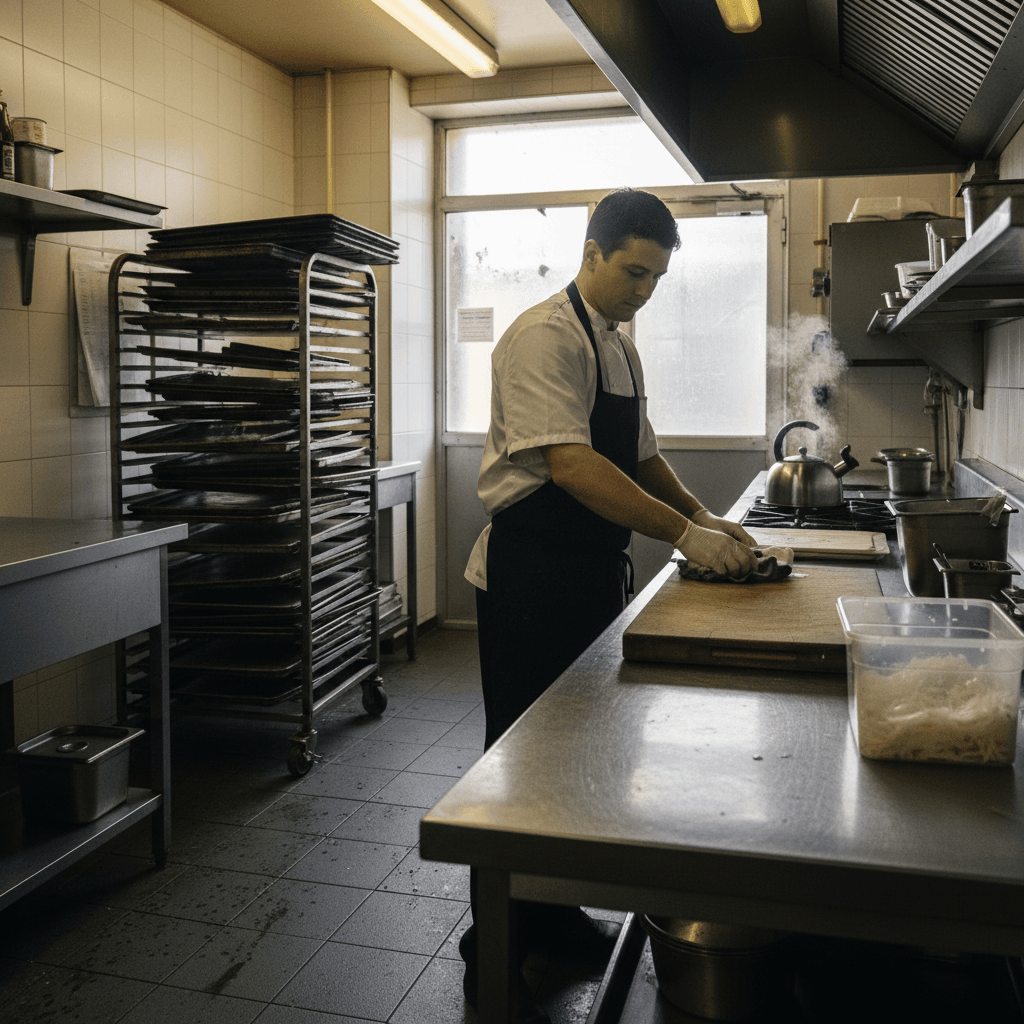
Do this during your weekly closing routine without adding hours. The manager counting cash can also count the walk-in while the closers clean. Use a simple sheet on a clipboard - no spreadsheets needed yet. Weigh your prime proteins. Count cases of your top sellers. Estimate the rest in broad strokes.
The goal isn't accounting perfection. It's directional accuracy that tells you if you're trending up or down from last week.
When Manual Counting Breaks Down
Your system will fail on delivery day. Your invoice says 10 cases of chicken breast arrived. Your walk-in holds 8 cases from last week plus today's delivery. But did you remember that the morning prep cook used 2 cases for today's lunch special? Now your count is off before you even start.
Family meal breaks manual systems every time. That "free" staff meal comes from your inventory. Those leftover fries from last night's service that become today's family meal potatoes represent real cost. If you don't account for them, your food cost percentage is fiction.
Staff snack theft isn't about morality - it's about mathematics. A cook eating $5 worth of bacon each shift costs you $1300 per year if they work five days a week. Multiply that by multiple team members across multiple items, and suddenly your theoretical 28% food cost is actually 32%.
When you're busy, weekly counts become monthly guesses. You skip counting because service ran late. You estimate because you're short-staffed. You round numbers because you're tired. Each small compromise adds error to your calculation until you're managing based on gut feeling rather than real data.
From Calculation to Action
A food cost percentage is useless if it doesn't change what happens tomorrow. Turn that number into daily kitchen decisions.
If your burger food cost spikes this week, question your supplier before you change the menu. Did they short you on weight? Did the price increase without notice? Your weekly count gives you evidence for that conversation.
Use your numbers to decide which specials to run next week. If salmon waste was high because it didn't sell, don't feature salmon again next Thursday night. If the meatloaf special flew out the door with minimal waste, put it back on as a weekly feature.
Batch prep based on what's moving and what's not. If your ending inventory shows too much chopped onion left on Sunday night, prep less onion on Monday morning. If you're constantly running out of mashed potatoes by Friday dinner, increase your Wednesday batch size.
This is where calculation becomes profit protection.
Manual systems work when discipline is high and time is available. They require consistent counting, honest recording, and weekly analysis time that many managers don't have after a 60-hour week.
Modern digital inventory tools can automate the repetitive parts of this workflow - tracking deliveries against invoices, calculating usage between counts, and flagging cost variances before they become monthly problems.
Taking the Next Step
The shift from guessing to knowing is practical, not theoretical. The math is simple addition and subtraction applied to what actually happens in your kitchen each week.
Start with your top five items this coming Monday morning. Count what you have before service begins. Track what comes in and what goes out. See what number emerges at week's end. That number will be more accurate than any spreadsheet guess.
When you're ready to move beyond manual tracking, view our pricing for systems that scale with your operation, or start a free trial to see how automated counts work during your next inventory cycle