Restaurant Reports That Actually Work
Stop drowning in spreadsheets. Learn which restaurant reports matter and how to use them to make better decisions daily.
When Reports Collect Dust Instead of Answers
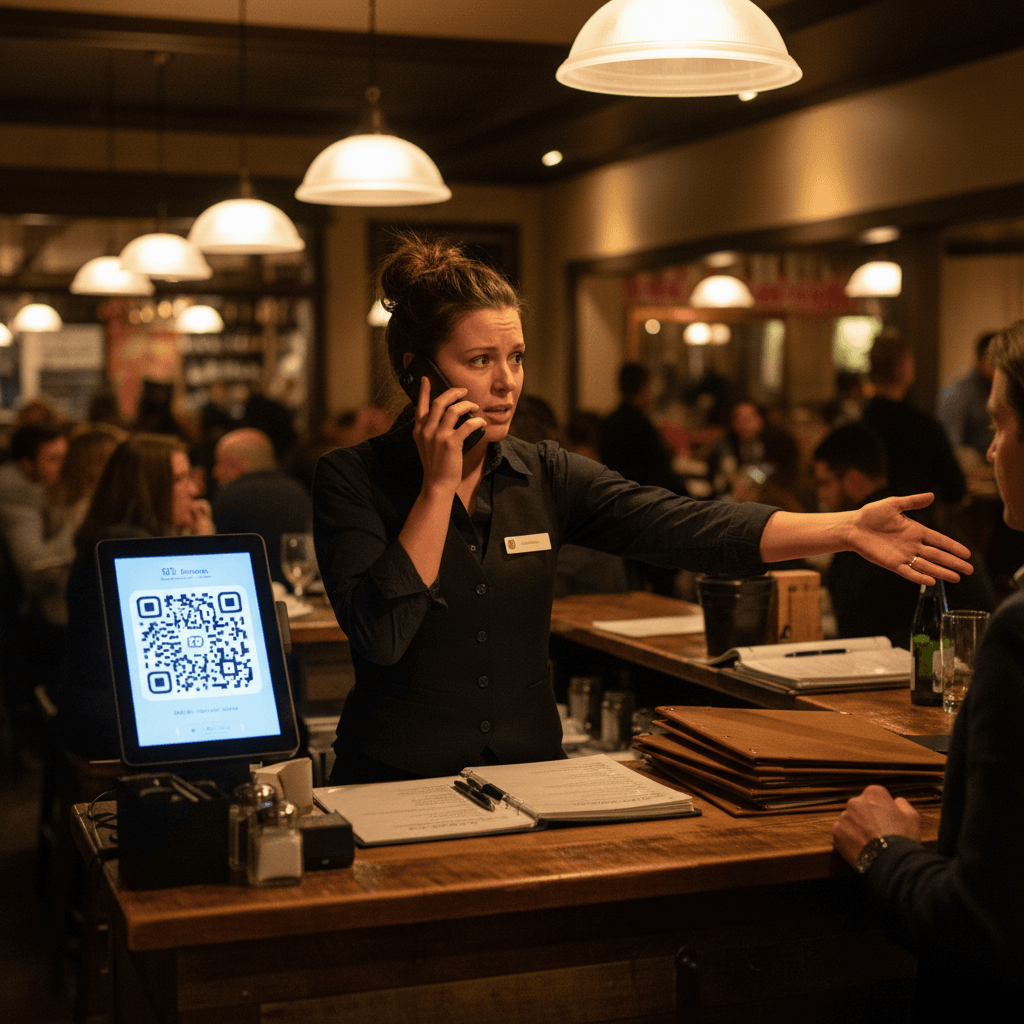
Understanding restaurant reports begins on a Friday night when the printer jams. The expo station is buried under paper tickets, the kitchen is three orders behind, and you are staring at a spreadsheet that tells you last week's food cost was 28%. That number does not help you right now. It does not get the seared scallops to table seven. It does not stop the server from running back to ask if the burger is medium or medium-rare. The report is collecting dust while your service falls apart.
You know this scene. The manager's office has binders of weekly summaries and monthly P&Ls. They contain perfect graphs and percentages that look impressive in a meeting. On the floor, they are useless. The disconnect between the paperwork and the plate is where profit disappears.
Why Your Spreadsheet Addiction Is Costing You Money
That's the trap. You are solving for last month's problems instead of tonight's service.
The paper pile-up problem is universal. You print yesterday's sales report, a labor schedule, and a waste log. You staple them together and put them on your desk. By Tuesday, you have four identical packets. By Friday, you have a stack. You glance at the top sheet, see sales were fine, and move on. The data underneath never gets touched. It becomes administrative clutter, not an operational tool.
Too much data creates decision paralysis. When you have fifteen metrics on a dashboard, you focus on none of them. You cannot act on everything at once. The brain shuts down. You default to checking the one familiar number - like total sales - and ignore the rest. This is why complex reports fail. They provide information but no clear instruction.
Here is the hard truth: most restaurants track metrics that do not affect daily operations. You track food cost percentage religiously. But that weekly calculation does not tell your line cook to stop over-portioning fries during the lunch rush today. You track labor cost percentage. But that does not help you decide whether to cut a server at 9 PM or 9:30 PM on this specific Saturday.
The real cost is time. You spend two hours every Monday compiling reports that never get used in a pre-shift meeting. That is two hours you could have spent training a host on table rotation or tasting the new soup recipe with your sous chef. You are paying yourself to do accounting work that does not change how your team operates during service.
The Three Numbers That Actually Move Your Business
You know the problem with noise. This is how you find the signal.
Forget every percentage you learned in a textbook. Your business moves on three numbers: contribution margin, labor efficiency, and table turn time.
Contribution margin is what is left after food cost. A $16 steak dinner that costs $5 in food has an $11 contribution margin. That $11 pays for everything else - labor, rent, utilities, and profit. Stop obsessing over food cost percentage alone. A 40% food cost on a high-margin item like pasta is better than a 25% food cost on a low-price item like soup. Focus on the dollar amount each plate contributes to covering your fixed costs.
Labor efficiency is different from labor cost percentage. Labor cost percentage is a historical look at what you spent. Labor efficiency is a real-time measure of productivity. It asks: Is this person generating enough sales to justify their wage right now? A server costing $30 per hour during a slow Tuesday lunch is inefficient if their section only generates $100 in sales. That same server during a busy Saturday dinner generating $500 in sales is highly efficient.
Table turn time is your revenue driver, not just a service metric. If your average turn time is 75 minutes, you can seat each table once per dinner period. If you reduce it to 65 minutes through better bussing and dessert prompting, you can turn it 1.15 times. On a Friday night with 20 tables, that difference is three extra table turns. At an average check of $60, that is $180 in pure incremental revenue with almost no added cost.
The Rule: If a metric does not help you make a decision before or during tonight's service, stop tracking it weekly.
Here is the contrarian opinion: obsessing over food cost percentage misses bigger profit opportunities. Saving 1% on food cost might add $200 to your weekly bottom line. Improving your table turn time by 10 minutes on Friday and Saturday nights can add $800. Which lever would you rather pull?
These three numbers connect directly to Friday night rush performance.
- Contribution margin tells you which menu items to feature and push.
- Labor efficiency tells you if you are over or understaffed as the rush builds.
- Table turn time tells you if your hosts, servers, and kitchen are synchronized.
Your Daily Report Checklist That Takes 15 Minutes
That's the theory. This is the practice.
Your reporting habit must be fast and focused on today's shift, not last week's history.
Morning Prep (5 Minutes): Review yesterday's sales mix and waste report. Look at two things only. 1) What were your top three selling items? Tell the kitchen to prep more of those today. 2) What was thrown out? If you wasted 4 lbs of mashed potatoes, ask the line cook why prep was so high yesterday. This is not about blame; it is about adjusting today's production.
Pre-Shift (3 Minutes): Compare today's labor projection to the actual from a similar day last week. Pull up last Tuesday's sales and labor hours from your POS system. If today is Tuesday and you have scheduled the same crew for the same hours, you are done. If sales were slow last Tuesday but you are forecasting a busier day today, this is when you decide to call in an extra server or tell someone they can leave early if it stays quiet. Do this with your kitchen lead present.
During Service (Live Tracking): Watch live sales without leaving the floor. Your POS system should show a rolling sales total for the day. Check it at 6 PM and again at 8 PM. If sales at 6 PM are pacing 20% behind yesterday, you know immediately that your 7 PM cut might need to happen sooner. If sales are surging ahead of projection at 8 PM, you know not to cut anyone and to check kitchen prep levels. This takes 10 seconds.
Post-Shift (7 Minutes): Do a quick variance analysis while cleaning down. Grab two numbers: total sales and total labor hours worked. Compare them to what you projected in your pre-shift check. If sales were $300 lower than expected but labor hours were exactly as scheduled, you just identified an efficiency loss for tomorrow's discussion. Write one sentence about what caused the variance - "Slow start after 5 PM rain" or "Large party canceled" - and move on.
Real examples make this stick. On a Tuesday lunch, your pre-shift check shows last week was dead. You start with one less server on the floor. Your live sales tracking confirms the slow pace continues. You send a server home at 1 PM instead of 2 PM, saving one hour of labor. On Saturday dinner, your morning waste report shows high fish waste. You instruct servers to mention it as a fresh special but stop actively pushing it once half the portioned fillets are sold. Your live sales tracking shows a huge rush at 7:30 PM. You delay cutting your food runner by an hour to maintain turn time speed.
From Paperwork to Profit: Building Your Reporting Habit
You have the checklist. Now build the rhythm that turns data into daily action.
Start with a five-minute daily huddle with key kitchen and floor staff. Stand in the kitchen before pre-shift meal. Say three things: 1) "Yesterday we sold a lot of salmon." 2) "We wasted mashed potatoes." 3) "Tonight's forecast is similar to last Thursday." That is it. You have just communicated prep needs, waste control, and labor expectations in thirty seconds.
Turn report insights into pre-shift talking points for servers. Do not say "our appetizer attachment rate is low." Say "the crispy brussels sprouts are our highest margin starter. Mention them to every table tonight." Connect the data point directly to a behavior they can execute on their next round.
Know when to dig deeper versus when to trust your gut. If table turn time slows down for three consecutive Saturdays, dig deeper. Look at reservation spacing, kitchen ticket times, and dessert sales. That is a pattern worth investigating. If turn time is slow one random Wednesday because a table celebrated a birthday with four desserts, let it go. Trust your gut that it was an anomaly.
Pick one metric to improve next week. Announce it to the team on Monday. "All week we are focusing on beverage refills during entrees." Measure it simply - maybe by tracking iced tea sales or asking servers for feedback each night. By Friday, you will have moved that number without writing a single formal report.
The system works because it respects time and focuses on cause and effect. You stop reporting on history and start managing for tonight's results.
Taking the Next Step
The shift from paperwork clutter to operational clarity is not optional; it is how profitable restaurants run day-to-day.
Stop generating reports that end up in binders and start using data that changes how your team works each shift.
To see how this looks with software built for restaurant floors - not accounting departments - view our pricing. For hands-on experience turning these principles into practice during your next service period without any commitment start a free trial.