QR Code Stickers That Survive Friday Night
Stop replacing peeling QR codes every week. Learn which sticker materials work on greasy tables and which fail during dinner rush.
When Stickers Peel During Peak Hours
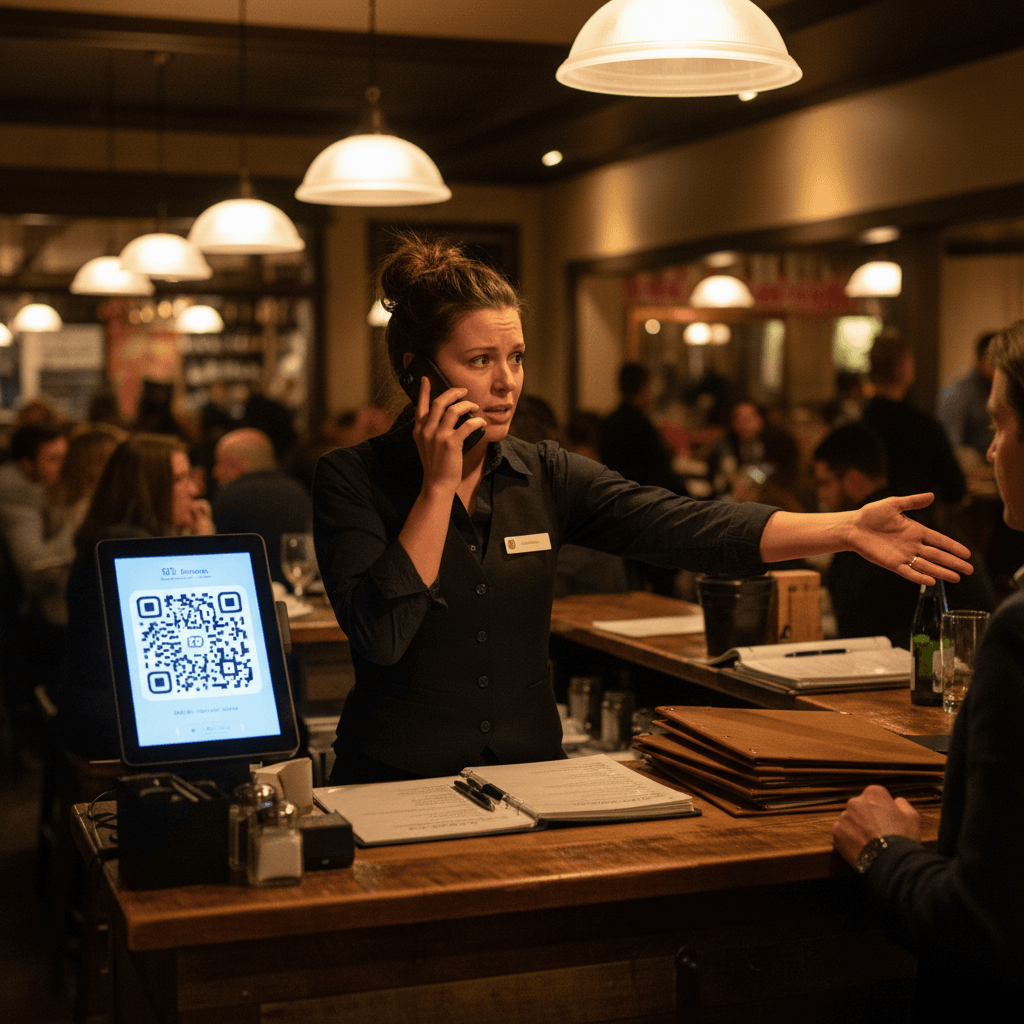
QR Code Stickers That Survive Friday Night start with understanding what happens when they don't. It's 7:45 PM on a Saturday. The dining room is full, the bar is three deep, and a server is crouched by table six. She's trying to smooth a peeling QR code sticker back onto a wooden tabletop with her thumb. The customer is holding their phone up, waiting. The expo line is calling for table six's appetizers, but the order never transmitted. That five-minute interruption costs more than a year's supply of quality materials. You lose the immediate sale, the server's time for the next ten tables, and the kitchen's rhythm for the next twenty tickets.
This specific failure point is why a system matters. For the complete picture on building an ordering system that works under pressure, see our guide on QR Codes in Restaurants: A Practical Guide. It connects the dots between durable materials, staff training, and kitchen communication.
The real cost isn't the vinyl or the laminate. It's the compounded operational drag. A server explaining a broken system to a frustrated guest creates a bottleneck that ripples through the entire house. The kitchen waits for a verbal order taken on a notepad. The food runner doesn't know which mods to watch for. The manager gets pulled off the floor to troubleshoot a technology problem that started with a 50-cent sticker. You fix it by starting with the physical object that touches every customer.
Vinyl Outlasts Paper Every Time
Hard truth: laminated paper stickers fail within weeks on restaurant surfaces. They curl at the edges from condensation under drink glasses. The laminate film separates from the paper core after repeated wipe-downs with sanitizer spray. The adhesive turns gummy and collects dust and grease, making the QR code impossible to scan. This isn't a theory - it's what you'll find on your busiest tables every Monday morning during cleanup.
The manual fix starts with industrial-grade vinyl. This material is designed for outdoor signage and vehicle decals. It withstands constant cleaning chemicals, customer wear from phones and purses, and the heat from plates and coffee cups. You are not buying stickers. You are buying a component of your ordering system that must perform for months without maintenance.
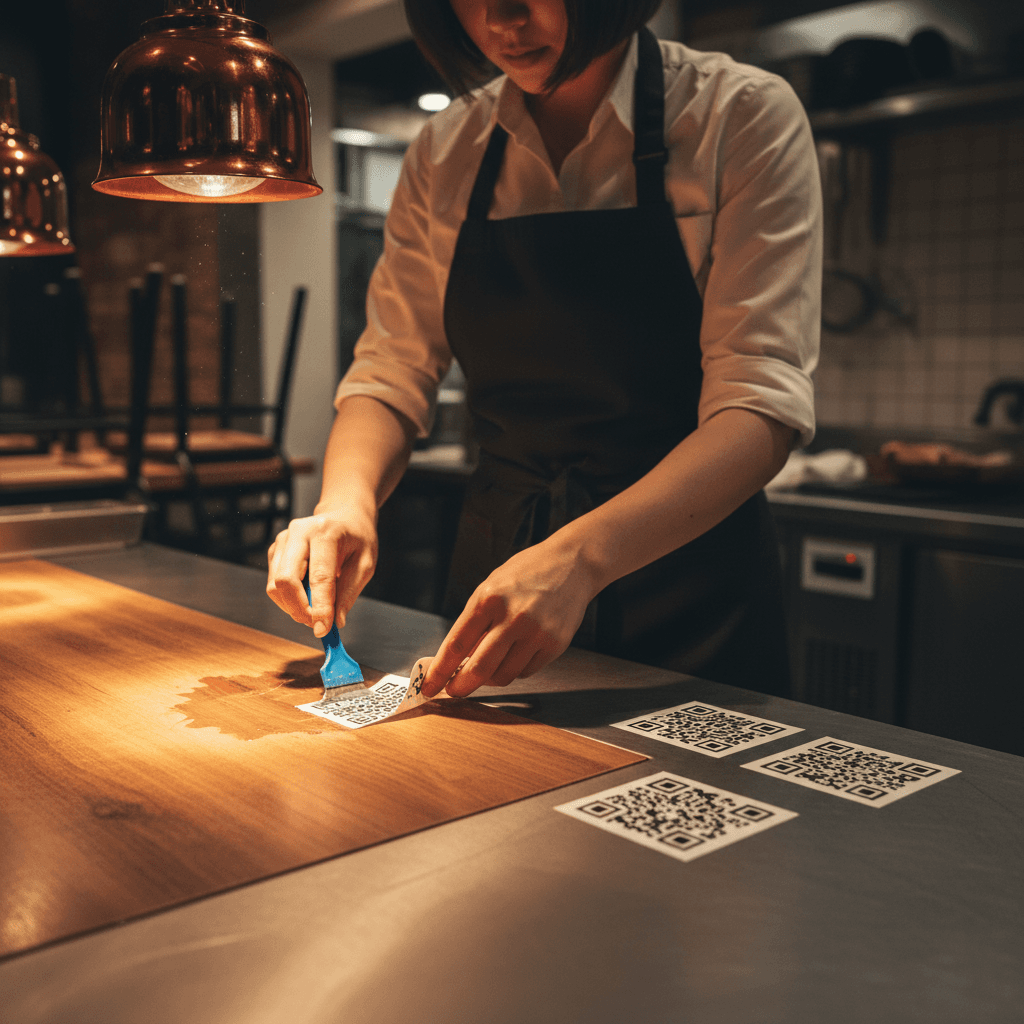
Application timing is everything. Apply new stickers to clean, dry surfaces during slow daylight hours - never right before dinner service or right after a deep clean when surfaces are still damp. Condensation from a recently wiped table will ruin adhesion in minutes. The Rule: Sticker replacement is a daytime prep task, scheduled like changing fryer oil or portioning chicken. Assign it to an opening server or manager with a spray bottle of rubbing alcohol and a microfiber cloth to ensure perfect bonding.
The Bottleneck Nobody Talks About
Even perfect stickers create new problems if you don't manage the workflow. Weekly replacement becomes another prep task that gets skipped when you're short-staffed. The 20-minute sticker refresh during Tuesday lunch prep competes with inventory counts, line checks, and folding napkins. It feels optional, so it becomes the first thing cut when time gets tight. Then you're back to servers apologizing for peeling codes by Friday.
This creates a hidden inventory problem. You need a system for tracking which stickers are where. Without one, you'll waste time searching for the right QR code link during a reprint, or worse, place a table's sticker linking to last month's menu specials. The customer tries to order something you no longer serve, and the server has to start over manually. That error chain begins with poor sticker management.
Build a simple map. Keep a laminated floor diagram in your manager's office with each table number and its corresponding QR code ID (e.g., T1-001, T1-002 for a two-top). When you print a new batch of stickers, label the sheet with the date and code range before you cut them apart. Now you know exactly which codes are active and where they live in your dining room. This takes two minutes and prevents thirty minutes of confusion during service.
From Maintenance To Momentum
Stop thinking about stickers as disposable consumables you replace when they break. Treat them like equipment that needs scheduled maintenance. Your coffee machine gets decalcified every week. Your hood vents get degreased every month. Your QR code system deserves the same disciplined upkeep because it is just as critical to service flow.
Build replacement into your weekly opening checklist. Place it right after checking salt levels and before testing POS printers. Make it a non-negotiable line item completed by 11 AM every Tuesday. This predictable schedule does two things: it ensures the task always happens, and it builds a habit so your team doesn't have to think about it. They just execute.
The final piece is staff communication. When you replace stickers, you must tell everyone at pre-shift meeting. "New QR codes are on tables 1 through 10 today." This prevents servers from telling guests "just ignore that old sticker" or trying to scan a code that's already been removed. It takes fifteen seconds to say and saves five minutes of customer confusion per table.
Taking the Next Step
Durable QR code stickers are not about buying better supplies - they're about installing a reliable system that removes friction from your busiest shifts. The logic is clear: predictable maintenance prevents unpredictable breakdowns when you can least afford them.
If managing this physical layer reveals how much time manual tracking consumes, modern digital tools can automate those repetitive parts of your workflow. Kitchen display systems sync orders instantly, removing the risk of lost tickets from failed scans. Digital inventory platforms can track supplies like sticker rolls alongside your food costs. The goal is to let your team focus on service, not system upkeep.
Ready to stop worrying about what fails during dinner rush? View our pricing for tools designed around restaurant realities, or start a free trial and see how automation handles the details while your team runs service