Prep Station Chaos: Why Your Line Cooks Are Waiting
When your prep station is a mess, your cooks waste time searching instead of cooking. Fix the chaos with simple systems that work during Friday dinner rush.
The Hidden Cost of Prep Station Chaos
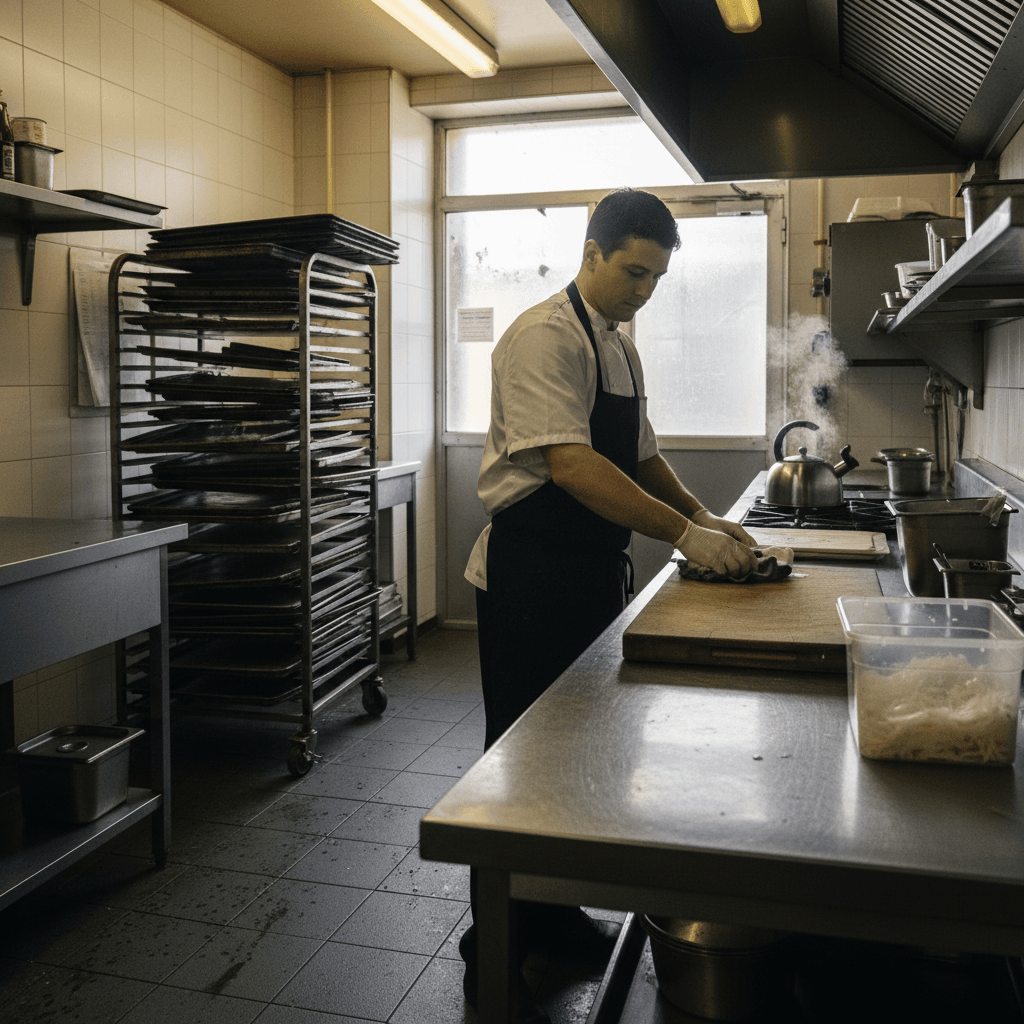
Prep Station Chaos: Why Your Line Cooks Are Waiting is the sound of your Friday night profit margin leaking onto the floor. It's 6:45 PM. The first wave of tickets is hitting the rail. Your sauté cook needs diced onions. He opens the lowboy and finds three identical sixth pans - one with fresh onions, one from yesterday's lunch shift, and one that might be shallots. He spends 45 seconds digging, then asks the grill cook. The grill cook points to a container behind the fryer. That's 90 seconds gone before a single pan hits the flame. Multiply that by every ingredient search during your rush, and you've lost 10-15 minutes of productive cooking time before the night even gets busy.
This wasted motion isn't about lazy cooks. It's about a broken system that forces your team to think instead of execute. Every second spent searching is a second not spent cooking, which directly extends ticket times and frustrates your servers. The real cost shows up in two places: longer wait times for guests and higher labor costs because you need more cooks to handle the same volume. This connects directly to the root cause analysis we cover in Kitchen Speed: When Your Line Cooks Are Waiting, which breaks down how these small delays cascade through your entire operation.
The problem starts hours before service. Your morning prep cook finishes his list and stores everything "where it fits." He knows where he put the parsley because he just placed it there. But the night crew doesn't have that mental map. When the dinner rush hits at 7 PM, your line cooks are archaeologists - digging through layers of containers to find what they need. This chaos creates three specific losses: wasted time, increased food waste from using older product, and mental fatigue that leads to more mistakes.
Organize Like You're Running Out of Time
The hard truth: perfect organization is impossible during service. Stop trying to maintain Instagram-worthy stations all day. Instead, focus on the 15-minute reset between lunch and dinner. This is your critical window. The lunch crew cleans their stations, but the dinner crew needs them set up for speed, not for inspection.
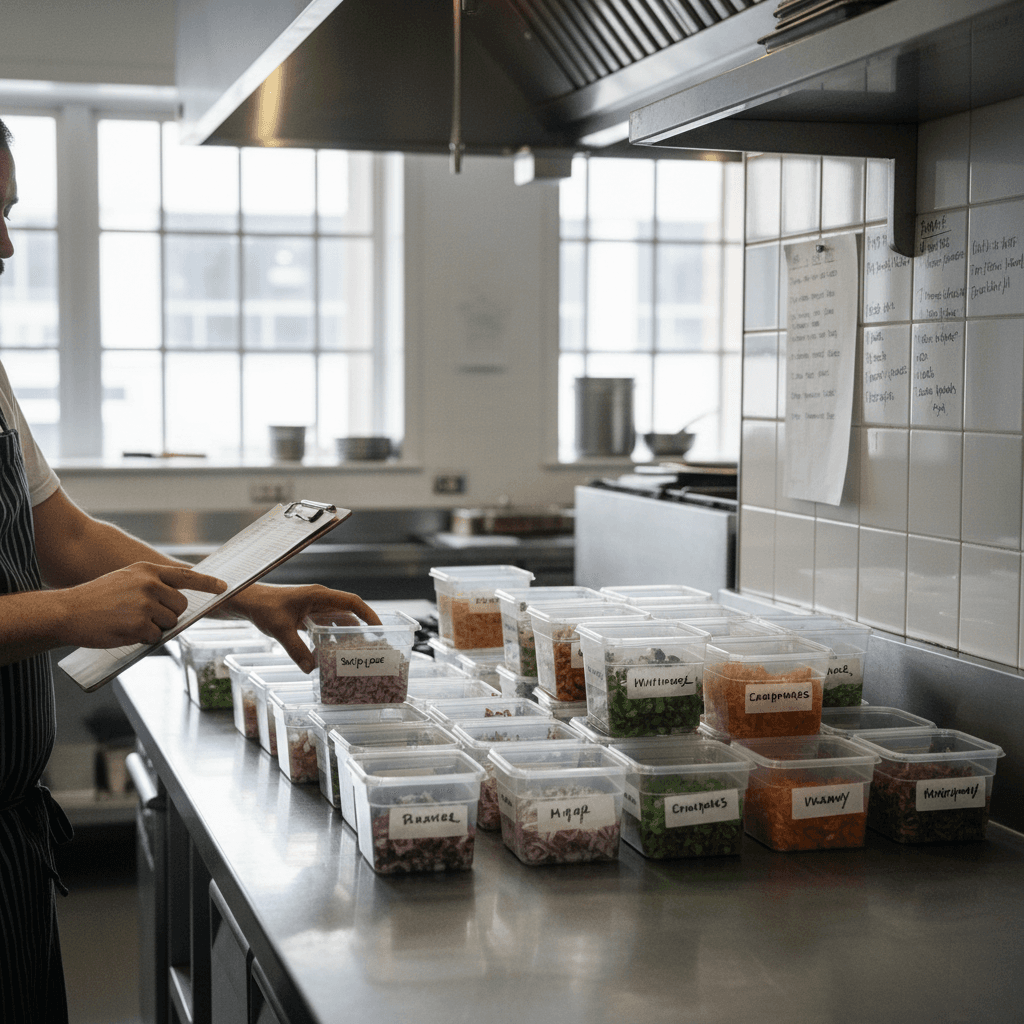
Use color-coded tape for different stations - red for grill, blue for sauté, green for garde manger. This isn't about being fancy. It's about visual communication that works when the expo is calling three orders at once. A cook reaching into the lowboy sees a blue-taped container and knows instantly it's for his station. No questions needed.
Label everything with masking tape and sharpie - not just what's inside, but when it was prepped. "Diced Onions - 3/14 - Dinner" tells the whole story. The date prevents waste from using yesterday's product. The shift designation tells cooks this batch is fresh for tonight's service. This takes ten seconds per container during prep and saves minutes per cook during service.
The rule that contradicts lazy advice: organize for speed, not for looks. Your station doesn't need to be pretty at 7 PM. It needs to be functional. Place your most-used items at chest height in the lowboy - you shouldn't have to bend down for onions you use in 80% of your dishes. Keep backups below or above eye level. Group ingredients by dish type - all your pasta mise together, all your salad components together.
This system works because it's built for human behavior during stress. When tickets are flying, cooks grab by color and location, not by reading labels carefully. The color system does the thinking for them. The labeling system prevents quality mistakes. Together, they cut 2-3 seconds off every ingredient grab, which adds up to minutes saved per hour during peak service.
When Manual Systems Break Down
Your cooks can keep this system going for about two weeks before it falls apart. Someone forgets to label the backup tomato sauce because they're rushing to finish prep before their shift ends. The new hire doesn't know your color system and puts grill items in a blue container because that's what was clean. The Friday night rush hits and suddenly you're back to chaos - cooks shouting across the line asking where the roasted peppers went.
This isn't about lazy staff - it's about human nature. Manual systems work until they don't. They depend on perfect execution from every person, every day, regardless of how tired they are or how busy service gets. The moment one person breaks protocol, the whole system starts to unravel.
The breakdown happens in predictable patterns. First, labeling gets inconsistent - some containers have dates, some don't. Then placement gets sloppy - items drift from their designated spots because someone needed space temporarily and never moved things back. Finally, communication fails entirely - no one knows what's actually prepped versus what needs to be made on the fly.
You'll see this manifest during your busiest shifts. The expo calls "two chicken parm, one salmon." The sauté cook reaches for breadcrumbs and finds an empty container that wasn't flagged during prep check. Now he has to make breadcrumbs while tickets back up behind him. That five-minute delay affects every table in the restaurant at that moment.
Manual systems also fail during transitions. Your best line cook who maintains perfect organization gets promoted or leaves. Training a replacement takes weeks, and during that time your station efficiency drops by 20-30%. New hires don't understand why organization matters until they've lived through a chaotic Friday night themselves.
The Rule: Any system that requires perfect human memory will fail under pressure. Your organization method must survive tired brains, new staff, and unexpected rushes.
The Next Step: From Chaos to Control
You've proven that organized prep stations save time and reduce waste. Your cooks move faster when they know where everything is located. Your food costs drop because older product gets used first instead of getting lost in the back of the cooler. Your ticket times improve because cooks spend their energy cooking instead of searching.
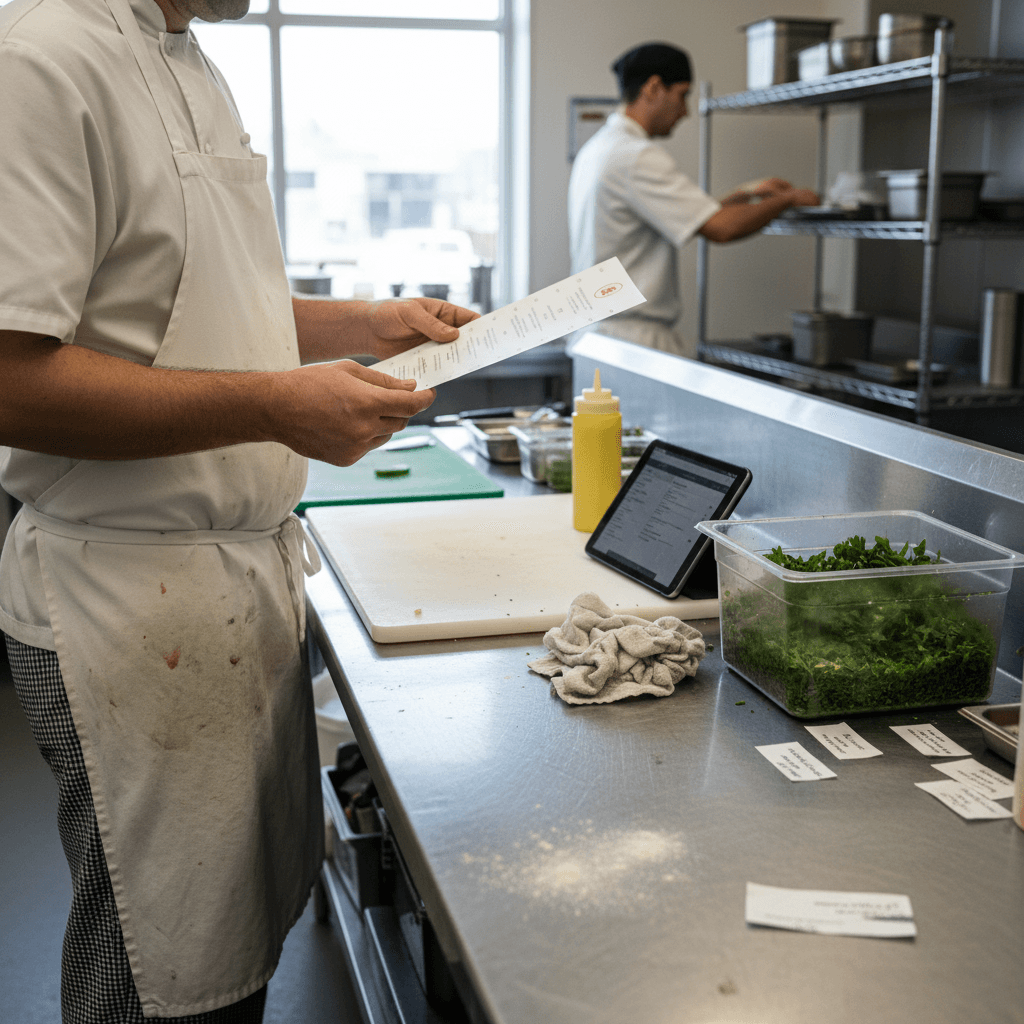
Now imagine if your system didn't depend on perfect human execution every single day. What if your prep lists automatically updated based on what you actually sold yesterday? If you sold 40 salmon entrees last Friday night, your prep sheet for this Friday would start with "salmon - 40 portions" already calculated.
The real fix isn't more discipline - it's building systems that work even when people are tired and busy. Digital inventory tools can track what you have versus what you need without anyone writing on a clipboard at midnight after a double shift. Kitchen display systems can show prep needs based on real-time sales data instead of guesswork.
These tools don't replace your cooks' skills or your organizational systems. They automate the repetitive parts - counting inventory, calculating prep amounts, generating shopping lists - so your team can focus on execution instead of administration.
Taking the Next Step
Organized prep stations transform kitchen chaos into controlled execution during your busiest shifts.The logic is clear: less searching means faster cooking, which means happier guests and better margins.The systems described here work because they're built for real restaurant floors, not theoretical perfection.
If manual organization has improved your kitchen speed but you're ready to eliminate the daily maintenance it requires, explore how digital tools can automate these workflows.You can view our pricing to understand how automation fits different restaurant sizes or start a free trial to see how real-time prep tracking works during your next dinner service