Kitchen Scraps That Become Menu Stars
Stop throwing money in the trash. Turn vegetable peels, meat trimmings, and stale bread into profitable menu items that cut food costs by 15% or more.
The $100 Bill in Your Trash Can
Kitchen Scraps That Become Menu Stars is the difference between a profitable prep shift and a daily donation to the dumpster. It's 3:45 PM on a Friday. Your line cook is finishing prep, scraping carrot peels, onion skins, and celery ends directly into the trash can. That's not compost. It's cash. The average kitchen loses 15-20% of food costs to the dumpster. Every handful of trimmings tossed during that final push before service is real money you paid for, now gone.
This waste isn't a moral failing. It's a system failure. You train for speed and consistency, not for seeing potato skins as potential crispy garnishes or herb stems as the base for a house vinegar. The good news is fixing this connects directly to your bottom line. This is one piece of a larger, profitable system we break down in Sustainable Practices That Actually Save Money, which shows how treating sustainability as an operational strategy cuts costs and boosts profits.
Turn Trash Into Cash (The Contrarian Rule)
The shift starts with a hard truth. Perfect-looking produce costs more and wastes more. You pay a premium for symmetry and uniformity, then throw away 30% of it during prep. Ugly vegetables with knobs and curves make better, deeper flavored stocks because they're often more mature. Wilted herbs still have intense flavor perfect for blending into pestos or stirring into compound butters. Stale bread becomes premium croutons or breadcrumbs that taste better than anything from a bag.
The Rule: Nothing edible hits the compost or trash until it has been evaluated for a secondary use.
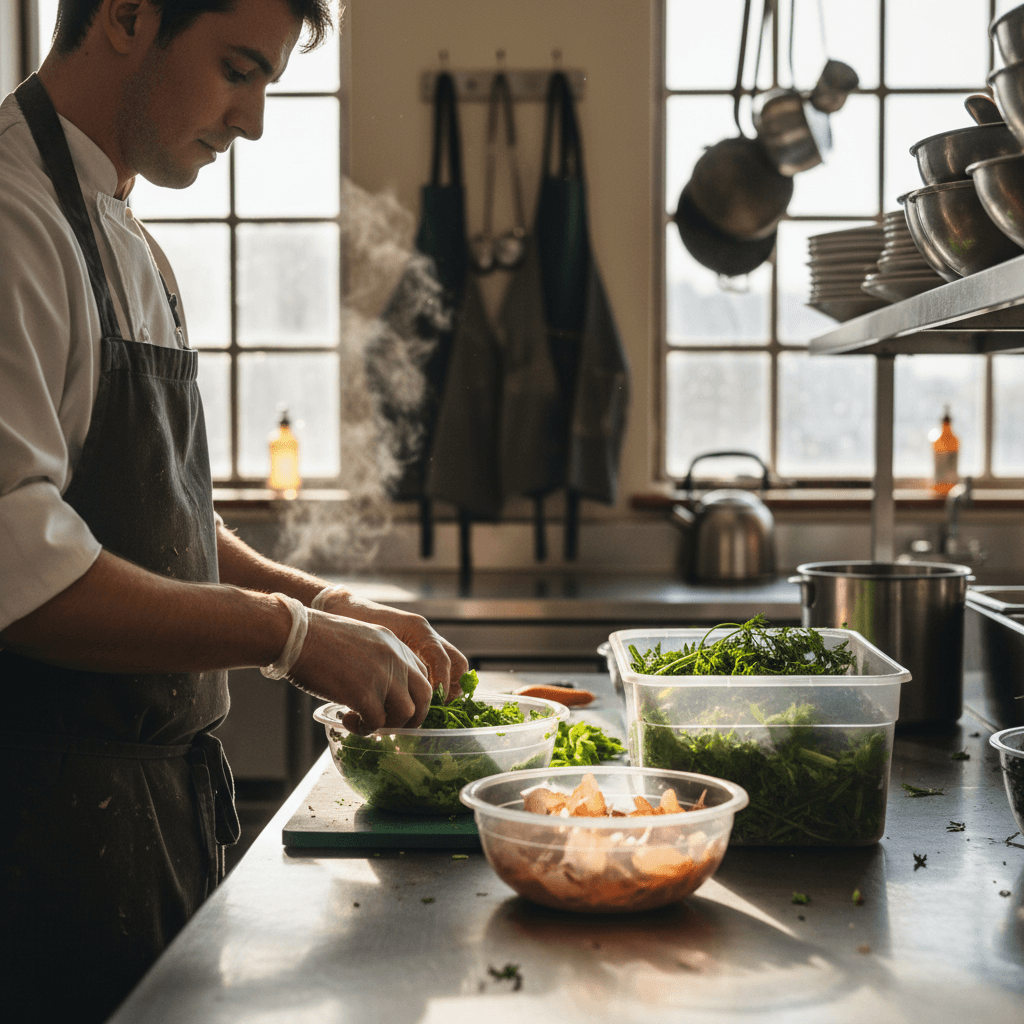
Start with three simple shifts that happen during normal prep. First, place a dedicated hotel pan or bin next to your cutting board. All vegetable trimmings - carrot tops, onion skins, celery leaves, mushroom stems - go straight in, not in the trash. That pan gets covered and walked to the stock pot at the end of the shift. Second, save fat trimmings from proteins. Render duck fat for potatoes. Save bacon grease for sautéing greens. Third, collect citrus peels from the bar or kitchen in a jar with sugar to make oleo saccharum, a fragrant syrup for cocktails or desserts.
These aren't extra recipes that complicate your menu. They're methods for using what you already paid for. A gallon of scrap vegetable stock costs you the energy to simmer it, replacing a $4-$8 carton of purchased stock. That's pure profit margin recovered from yesterday's trash.
When Your Prep Table Overflows
The manual system works beautifully until service demands speed. The bottleneck hits at 6:30 PM on a Friday dinner rush. Your sauté cook has three tickets in the window and no time to walk carrot tops to a stock bin. The storage fridge overflows with containers labeled "scrap stock" and "fat render" that never get used because no one remembers they're there during Saturday lunch setup. Good intentions meet the reality of a busy pass.
You end up with the same old waste patterns because the system relies on human memory during peak stress. A cook focused on firing six salmon orders won't prioritize saving fennel fronds. A server weeded with eight tables won't carefully separate lemon wedges from rinds for the bar back. Without a clear, simple process that integrates into existing workflows, those scraps become trash again.
The waste often becomes invisible, buried in your overall food cost percentage. You see a 34% food cost and think it's fine, not realizing that 5 points of that are peels and stems you bought but never sold. The financial leak is silent but constant.
From Scraps to System
The goal isn't zero waste overnight - that's a recipe for frustration and abandoned projects. The goal is turning one waste stream into one profit center this week.
Pick one thing you consistently throw away. Maybe it's vegetable trimmings or bread ends. Build one menu item around it. Announce a "Daily Scrap Soup" where the base is made from yesterday's prep trimmings. Price it as a special but cost it at nearly zero food cost - just the aromatics and cream you add. The profit margin on that soup will be staggering.
Measure what you save in actual dollars, not just feel-good metrics. Weigh your scrap bin for one week before and after implementing the soup special. Multiply that weight by your average produce cost per pound. That number is your weekly savings from one change.
Then expand to the next waste item. Citrus peels become bar syrups. Stale bread becomes bread pudding or panzanella salad specials. Herb stems get blended into green sauces for fish or chicken.
The Rule: Every new "scrap use" must have a designated home (a specific pan in the lowboy) and a clear next step (goes to stock pot every night at 10 PM). This turns intention into habit.
Over time, this changes how your team sees ingredients. A cook looks at beet greens not as waste to be trimmed away, but as a potential sautéed side dish garnish. This mindset shift is where real money gets saved, because it happens dozens of times per shift without needing manager oversight.
Manual systems require discipline and consistent training, which can be challenging during staff turnover or seasonal rushes. Modern digital inventory tools can help track these alternative ingredient streams alongside your regular stock, turning what was invisible waste into visible, usable inventory right on your kitchen display screen.
Taking the Next Step
Turning kitchen scraps into menu stars is practical restaurant economics, not abstract environmentalism. The logic is clear: you already paid for the entire ingredient; finding ways to use more of it directly improves your food cost percentage and profitability.
The shift starts with observing one waste stream during your next prep shift and committing to one simple change. To see how integrating this kind of thinking into your daily operations can scale, view our pricing options designed for busy kitchens. The easiest way to start is by start a free trial and applying this week's scrap idea during your very next service