How to Get More Google Reviews Without Annoying Customers
Most restaurants ask for reviews wrong. Learn when to ask, what to say, and how to make it feel natural instead of transactional.
Why Your Review Requests Are Falling Flat
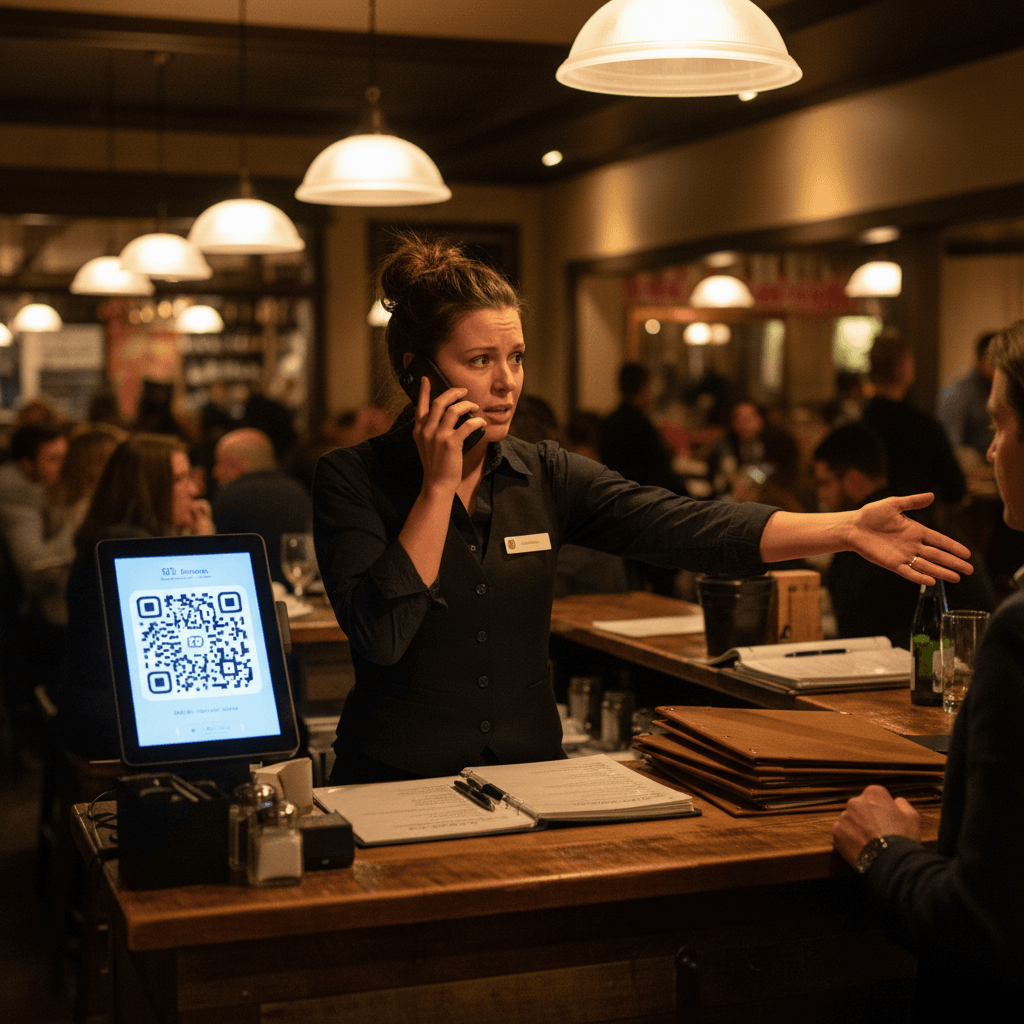
How to Get More Google Reviews Without Annoying Customers starts with recognizing the moment you're losing them. It's Friday night, 7:45 PM. Your server just dropped the check, processed the card, and is handing back the slip. They smile and say, "If you have a minute, could you leave us a review on Google?" The table nods politely. You watch them walk out, pull out their phones in the parking lot, and drive away. The review never happens.
Most servers ask for reviews like they're collecting payment - transactional and awkward. You see it every Friday night: "Hey, can you leave us a review?" thrown out during credit card processing. Customers smile politely but never follow through because the timing feels forced and self-serving.
The problem isn't the request itself. It's the placement within the guest experience. Asking at checkout turns hospitality into a transaction. Guests feel like they're being asked to pay twice - once with money, once with their time and endorsement. This mechanical approach fails because it ignores human psychology. People share positive experiences when they feel genuine enthusiasm, not when they're settling a bill.
This connects directly to building a marketing system that works without wasting time, which we break down in Simple Restaurant Marketing Ideas That Actually Work. Getting reviews right is one piece of that larger puzzle.
Think about your own behavior as a customer. When do you actually write reviews? It's when you're still riding the high of a great meal, telling your friends about the amazing dessert, or remembering how the server handled a special request perfectly. You don't write reviews when you're calculating tip percentages and digging for your car keys.
The Rule: Never ask for a review during payment processing. That moment belongs to settling the transaction, not extending the relationship. Treating it as a review opportunity tells guests their value is measured in online ratings, not in their enjoyment of your food and service.
The Right Moment Changes Everything
Stop asking when you're handing back the credit card slip. The hard truth? Timing matters more than frequency. Ask when guests are genuinely happy - right after they've complimented the food, when they're laughing over dessert, or as they're gathering coats still smiling about their experience. That's when "We'd love to hear about your night on Google" feels like an invitation to share joy, not a transaction.
Watch your floor during Saturday dinner service. Look for the natural peaks in guest satisfaction. Table six just tried the new scallop appetizer and told their server it was incredible. That's your moment - not ten minutes later when they're paying. Table three is celebrating an anniversary with your signature chocolate torte, taking pictures and laughing. That's your moment - not after they've put on their jackets.
Train your servers to recognize these cues. The compliment about food quality is the most obvious signal. A guest saying "This steak is cooked perfectly" or "The cocktails here are amazing" isn't just making conversation - they're giving you permission to ask for their opinion publicly. The emotional high point of dessert is another golden opportunity. People are relaxed, satisfied, and often sharing memories.
The gathering coats moment works because guests are physically leaving but emotionally still present in the experience. They're talking about what they enjoyed, making plans to return, and feeling good about their night out. Asking then feels like a natural extension of that positive conversation.
What do you say in these moments? Keep it simple and authentic. After a food compliment: "I'm so glad you enjoyed it! If you have a moment later, we'd love to hear what you thought on Google." During dessert enjoyment: "It looks like you're having a wonderful celebration! We'd be honored if you shared your experience online." While gathering coats: "Thank you for joining us tonight! If you felt like sharing your thoughts on Google, it helps other people discover us."
Notice what's missing from these phrases? Pressure. Urgency. Transactional language. Each invitation is tied to a genuine moment of satisfaction and framed as sharing rather than performing a task.
When Consistency Becomes Impossible
Even with perfect timing, getting every server to remember during Saturday dinner rush is like herding cats. You train them on Monday, but by Friday's third turn, servers revert to old habits or skip requests entirely because tables are waiting. The system breaks when you're three tickets deep at expo and three new parties just sat.
Consistency is where most manual review systems fail completely. You can have the best training, the perfect script, and ideal timing theory - but none of it matters if servers don't execute during peak pressure moments. Think about last Saturday's dinner rush: six tables turning simultaneously, two large parties waiting at the door, expo calling three orders at once. In that chaos, asking for reviews becomes the first thing dropped from service standards.
The problem isn't server dedication - it's human memory under stress. Cognitive load theory explains this simply: people can only hold so much information in working memory when overwhelmed. During rush periods, servers' mental bandwidth gets consumed by order accuracy, timing courses correctly, handling special requests, and managing table turns. The review request - no matter how well trained - gets pushed out by more immediate demands.
You'll see predictable failure patterns emerge. Servers who asked three tables in a row will suddenly skip five straight because they got weeded with drink orders. Strong performers will remember during slower lunch shifts but forget completely during Friday dinner madness. Newer staff will be so focused on not making mistakes with orders that review requests never enter their consciousness.
This creates uneven results that frustrate everyone. You'll get bursts of reviews after staff meetings followed by complete droughts during busy weekends - exactly when you need positive social proof most. The manual approach depends entirely on individual discipline during moments when discipline is hardest to maintain.
The physical mechanics also work against you. Servers need to remember timing cues while carrying plates, processing payments while managing multiple checks, and delivering invitations while watching other tables' needs. There's no built-in reminder system beyond human memory, which fails predictably under restaurant pressure.
Making Reviews Part of Your Service Rhythm
Build review requests into your closing sequence naturally. Train servers to look for genuine satisfaction moments instead of treating it as another checkout step. When done right, asking for reviews becomes an extension of hospitality - one happy guest telling others why they should visit too.
Start with server training that focuses on recognition rather than memorization. Instead of teaching "ask at this specific point," train staff to identify satisfaction signals throughout service. Create a simple mental checklist: Did the guest compliment any food or drink items? Are they visibly enjoying themselves through laughter or conversation? Did they mention celebrating something special? Any yes answer creates a natural opening.
Incorporate review language into existing service phrases servers already use comfortably. When clearing dessert plates: "I'm so glad you enjoyed everything tonight! If you felt like sharing your thoughts on Google later, we'd really appreciate it." When dropping the check (but before payment processing): "Thank you for joining us! We'd love if you could tell others about your experience online when you have a moment."
Use physical reminders that don't feel corporate or forced. A small sign near the server station saying "Share the love!" with Google's logo can serve as a visual cue without being intrusive to guests. Some restaurants use different colored check presenters for tables that showed particular enjoyment - green for "great experience potential review" versus standard black.
The Rule: Review requests must happen before payment processing begins completely separate from the transaction flow This maintains the hospitality relationship instead of turning it commercial
Measure what matters track which servers generate reviews not just how many requests they make A server who asks twenty tables mechanically during checkout will get fewer reviews than one who asks five tables at genuine satisfaction moments Quality of invitation beats quantity every time
Create team incentives around authentic sharing rather than volume targets Reward servers whose reviews mention specific positive experiences like "Server Jamie recommended the perfect wine pairing" or "The kitchen accommodated my allergy beautifully" This encourages staff to create memorable moments worth sharing
During pre shift meetings highlight recent positive reviews that mention staff by name Read them aloud briefly This reinforces that genuine hospitality gets recognized publicly creating natural motivation beyond financial incentives
The pivot happens when you realize manual consistency requires constant management energy Modern digital tools can automate invitation timing based on actual guest experience signals removing human memory from the equation during busy services These systems integrate with your existing operations sending personalized invitations at optimal moments without server intervention
Taking the Next Step
Getting more Google reviews without annoying customers comes down to simple hospitality principles executed consistently Stop treating reviews as transactions and start treating them as natural extensions of great experiences The logic is clear ask when people are happy not when they re paying
If this approach makes sense for your restaurant view our pricing options designed for operations like yours Better yet start a free trial and see how automating this process affects your review volume during next week s service