How Servers Can Sell Your Best Dishes
Stop letting servers guess what to recommend. Train them to highlight your most profitable items with these simple techniques.
When Servers Recommend the Wrong Dish
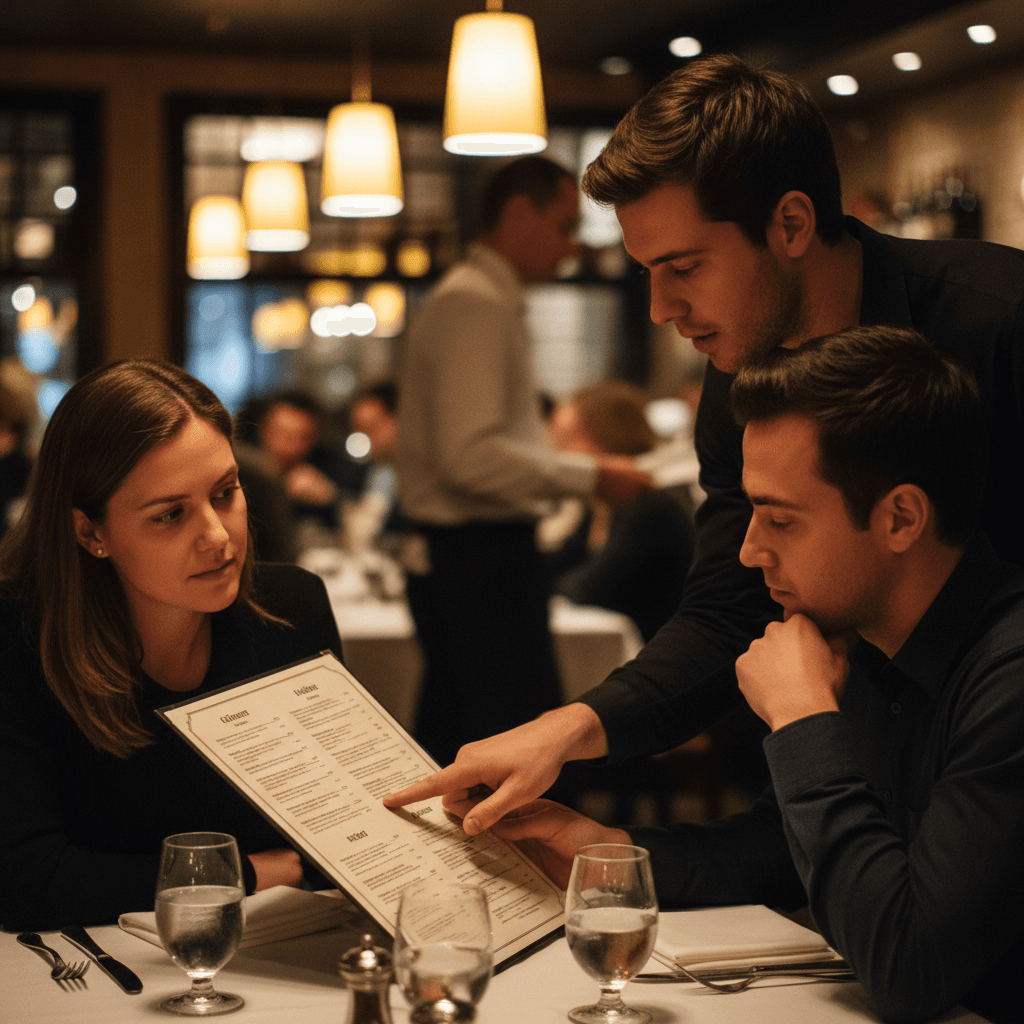
How servers can sell your best dishes starts with a simple Friday night scene. It's 7:45 PM. The waitlist is 45 minutes. Your best server, Sarah, is at table six. The guests ask for a recommendation between the 14-ounce ribeye and the house-made pasta. Sarah smiles and says, "The pasta is incredible." She just cost you $18 in potential profit.
The real damage isn't just that one lost sale. It's the wasted prep from yesterday. Your kitchen team spent two hours portioning steaks that are now sitting in the lowboy, while the pasta - your lowest margin item - is flying out of the kitchen. You're working harder to make less money. This connects directly to the financial analysis we cover in Menu Engineering: The Real Math Behind Profitable Plates, which breaks down exactly how to identify which dishes are actually paying your bills.
Servers default to familiar dishes because it's safe. During a rush, their brain looks for the path of least resistance. They recommend what they know sells easily, what they've eaten themselves, or what requires the least explanation to the guest. The steak might have a higher price point, which feels risky. The pasta feels like a sure thing. But that "sure thing" is slowly draining your profitability every single shift.
The Three-Second Rule for Menu Talk
The solution isn't more information - it's less, delivered faster. Stop trying to train servers on every ingredient in every sauce. They don't need to know the provenance of the oregano. They need three pieces of information about your top dishes, and they need to recall them in three seconds flat while carrying three drinks.
The Rule: For each of your top three most profitable dishes, every server must know these three things before their first shift of the week.
- The Profit Story: Which dish has the best margin? Not the food cost percentage - the actual dollars left after food cost.
- The One Memorable Detail: What's the single thing customers love about it? This is not a recipe. It's one sensory detail.
- The Best Time to Sell It: When does this dish shine? Lunch crowd? Date night? Late night?
Let's make this concrete. Your top seller is the herb-crusted salmon.
- Profit Story: "This salmon leaves us $14 after food cost." (Contribution margin is what's left after food cost. A $24 salmon that costs $10 to plate has a $14 contribution margin.)
- One Memorable Detail: "Customers say the crispy skin is the best part."
- Best Time to Sell: "It's perfect for our weekend brunch guests."
That's it. Three bullets. Thirty seconds to learn. Now when a guest asks about fish, Sarah doesn't freeze. She says, "Our salmon is a staff favorite - people really love getting that piece of crispy skin." She sold the experience and pushed your most profitable fish without sounding like a used car salesman.
Why Menu Training Never Sticks
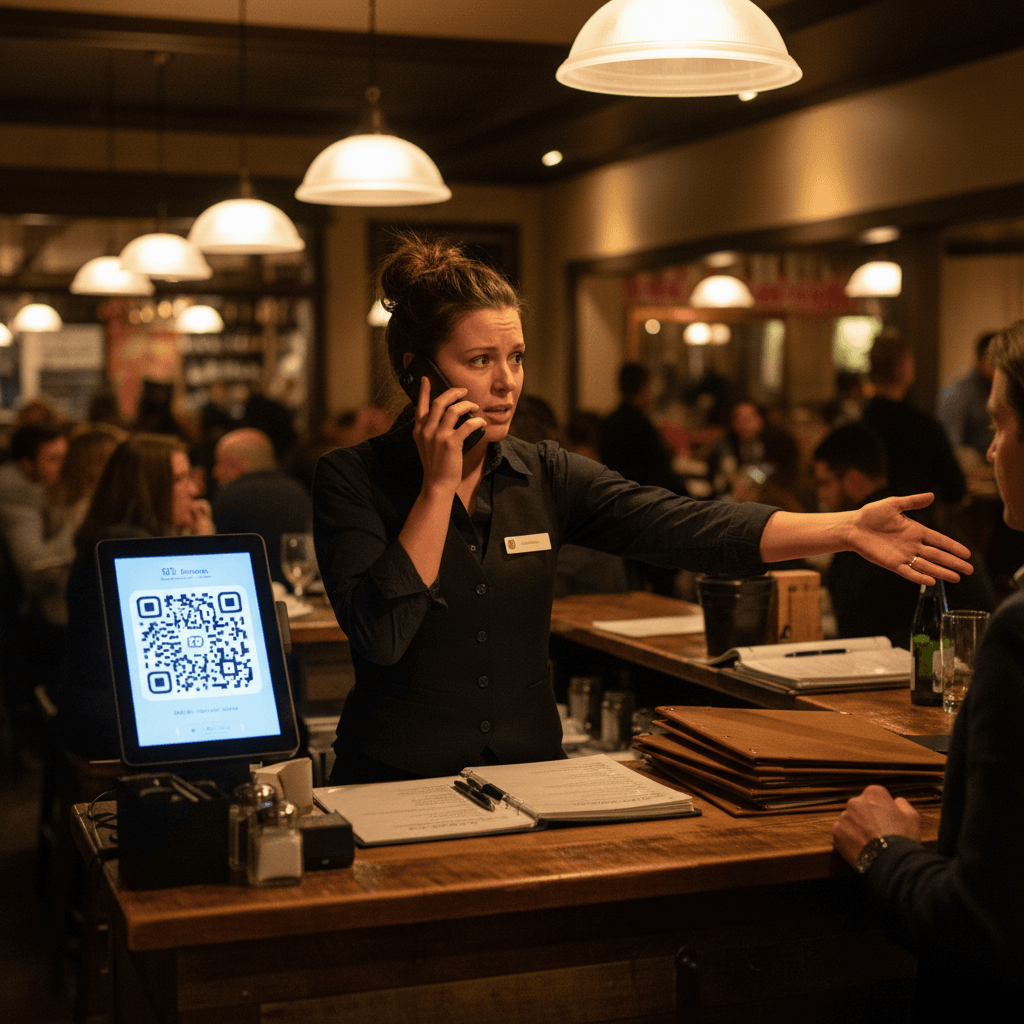
You've held the menu meetings. You've printed tasting notes. You've even done role-playing exercises. And by Tuesday dinner service, it's all forgotten. Why? Because traditional training happens in a vacuum - a quiet dining room before open - but selling happens in chaos.
The bottleneck isn't knowledge. It's recall under pressure. When Sarah has three tickets hanging in the window, table four needs water, and table two is waving for their check, her brain reverts to autopilot. She will not recall the nuanced tasting notes from last week's meeting. She will grab the first descriptor that comes to mind: "The pasta is great." Training that doesn't survive contact with a busy shift is wasted time and money.
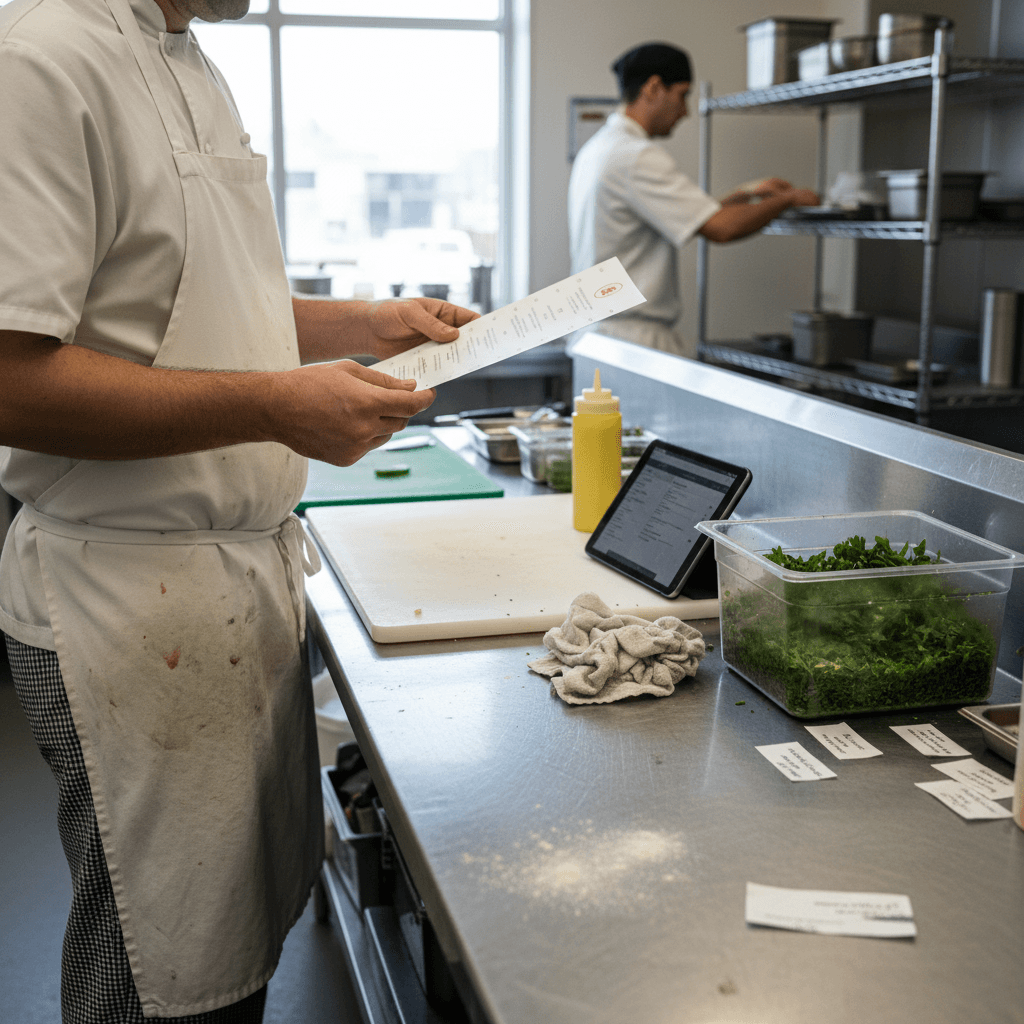
The fix is to make your key selling points unavoidable. Write the three bullet points for each star dish on a single sheet of paper - call it the "Pre-Shift Cheat Sheet" - and tape it inside the server station POS terminal. Put another copy by the coffee machine. The goal is repetition in context, not memorization in a classroom.
Making Profit Part of Every Shift
Profit awareness can't be a quarterly meeting topic. It needs to live in the daily rhythm of your restaurant. This means connecting every operational moment back to those profitable plates.
Start with your pre-shift meeting today. Instead of saying "Don't forget to upsell," be specific. Say: "Tonight, I need everyone pushing the salmon and the ribeye. The salmon leaves us $14 after cost. The ribeye leaves us $18. For every one of these you sell instead of the pasta, you're putting an extra $15 toward our team goals this month."
Connect it to something they care about. That "$15 extra" could be framed as funding next month's staff party, or contributing to a better bonus pool. Suddenly, selling the salmon isn't about corporate profit - it's about their work environment.
During service, managers should reinforce this with real-time coaching. If you hear a server recommend a low-margin dish, pull them aside for 30 seconds post-rush. Don't scold. Say: "Hey, I heard you recommend the pasta earlier. Next time, lead with the salmon detail about the crispy skin. It helps us all out." This immediate, specific feedback creates new habits faster than any formal training.
Finally, close the loop at shift's end. During checkout, make it quick and positive: "Great shift tonight. I saw you put three extra salmon plates on the board. That directly helped our food cost. Thank you." This shows servers their actions have a measurable, appreciated impact.
These manual steps build a culture where selling your best dishes becomes second nature. It turns abstract profit goals into concrete daily behaviors. But maintaining this discipline requires constant manager attention and flawless communication.
Modern digital tools can automate this reinforcement. A kitchen display system can flag high-margin items on tickets as they print. Digital checklists can ensure pre-shift talking points are never forgotten. The right platform surfaces key information - like which dishes need pushing tonight - right when your team needs it, reducing the mental load on managers and servers alike.
Taking the Next Step
Shifting how your servers sell is a practical change with clear financial logic. It moves profit from a back-office spreadsheet to the dining room floor where it’s actually earned.
To implement this system consistently across every shift requires tools that support your team’s workflow without adding complexity. You can view our pricing for platforms designed specifically for restaurant operations or start a free trial to see how digital checklists and real-time performance tracking can make highlighting high margin items a seamless part of your service rhythm today