Happy Hour Pricing That Actually Works
Stop guessing happy hour discounts. Learn pricing strategies that boost revenue instead of just giving away profits. Real examples from busy bars.
The Happy Hour Trap: When Discounts Cost You Money
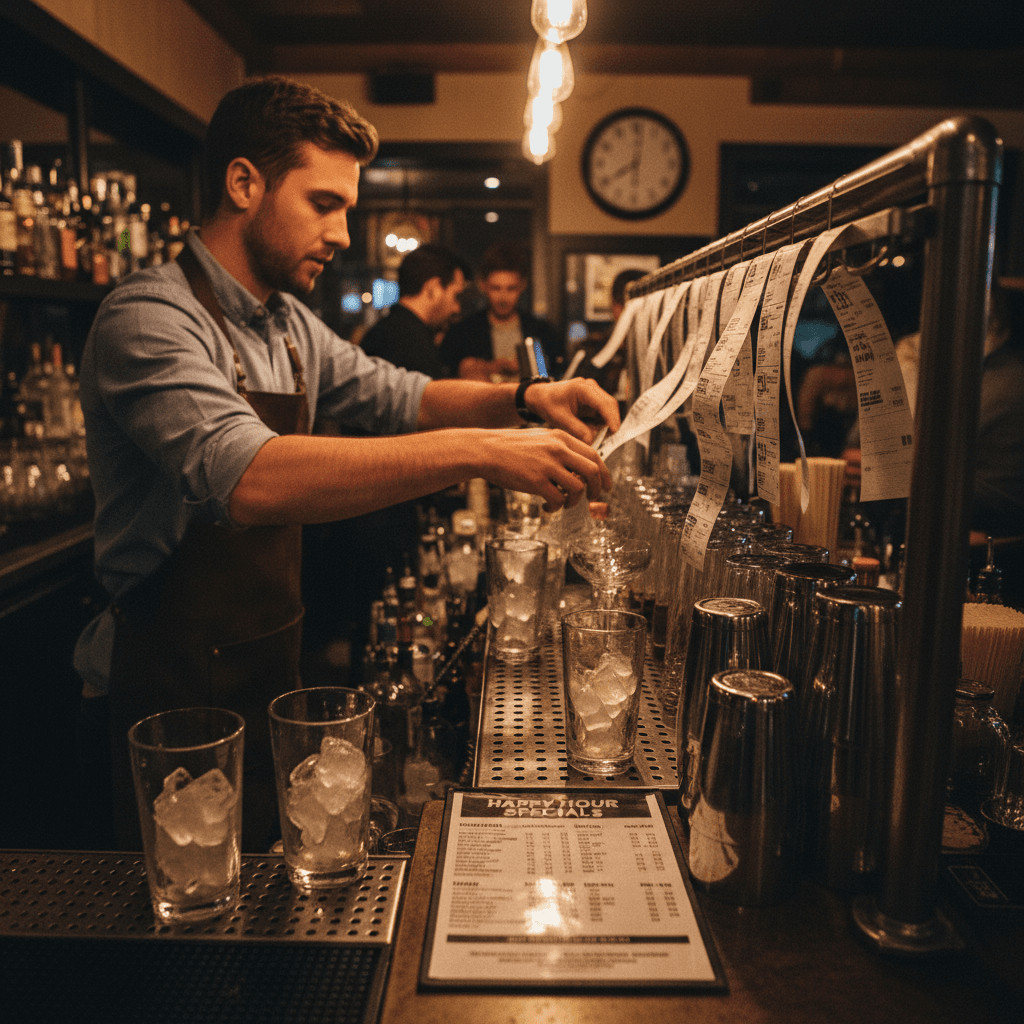
Happy Hour Pricing That Actually Works starts with a simple scene. It's 4:05 PM on a Friday. Your bartender is already three deep at the rail, pouring $5 house margaritas. The printer in the kitchen is spitting out tickets for $8 nachos. Your manager is smiling because the place is packed. But if you ran the numbers from last Friday, you'd see the problem. That "busy" happy hour often makes less money than a quiet Tuesday dinner service with full-price drinks.
Every bar owner knows the drill - slash prices at 4 PM, watch people flood in, then wonder why your nightly profit looks thin. The problem isn't happy hour itself. It's how most places approach it. You're not running a charity. You're running a business that needs to make money during those crucial hours.
The trap is thinking that any crowd is a good crowd. A bar full of people drinking discounted well drinks and sharing one appetizer for ninety minutes creates volume without profit. It ties up your staff, uses your inventory, and fills seats that could be turning over with higher-paying customers later. This is about more than just happy hour math; it's about building a sustainable sales system, which we break down in Restaurant Sales Growth: Practical Strategies.
Price for Profit, Not Just Volume
Here's the hard truth most bars ignore: The goal isn't to pack the house with people drinking $5 cocktails. The goal is to increase total revenue during slow hours. That means thinking beyond simple percentage discounts.
Consider tiered pricing where well drinks get the biggest discount but premium spirits stay closer to regular price. A customer who wants Tito's vodka instead of your well vodka should pay more, even during happy hour. This protects your margin on the products people are willing to pay for.
Or use bundle pricing where customers get a better deal when they order food with drinks. The Rule: Your happy hour special should always encourage an additional purchase. A $12 beer and burger combo works better than a $5 beer alone. The burger has a lower food cost percentage than the beer, so you make more money even at the discounted bundle price.
Think about your kitchen during happy hour. Are they prepping for dinner service anyway? Then food specials that use existing prep make more sense than deep drink discounts that just move revenue from one time slot to another. If your line cooks are already chopping onions and peppers for fajitas, a happy hour fajita skillet special uses that prep labor efficiently.
The Manual Bottleneck: Changing Prices Mid-Shift
Now you've got a smart pricing strategy. But implementing it means someone has to physically change menu boards, update POS systems, and print new specials sheets. During the Friday afternoon rush, your bartender is making drinks, not updating prices. Your manager is handling deliveries, not reprogramming the register.
This creates two problems. First, timing errors - happy hour starts at 4:02 instead of 4:00 because someone got busy. Those two minutes might seem trivial, but if three tables order full-price drinks before the switch, you've created customer confusion and resentment before happy hour even begins.
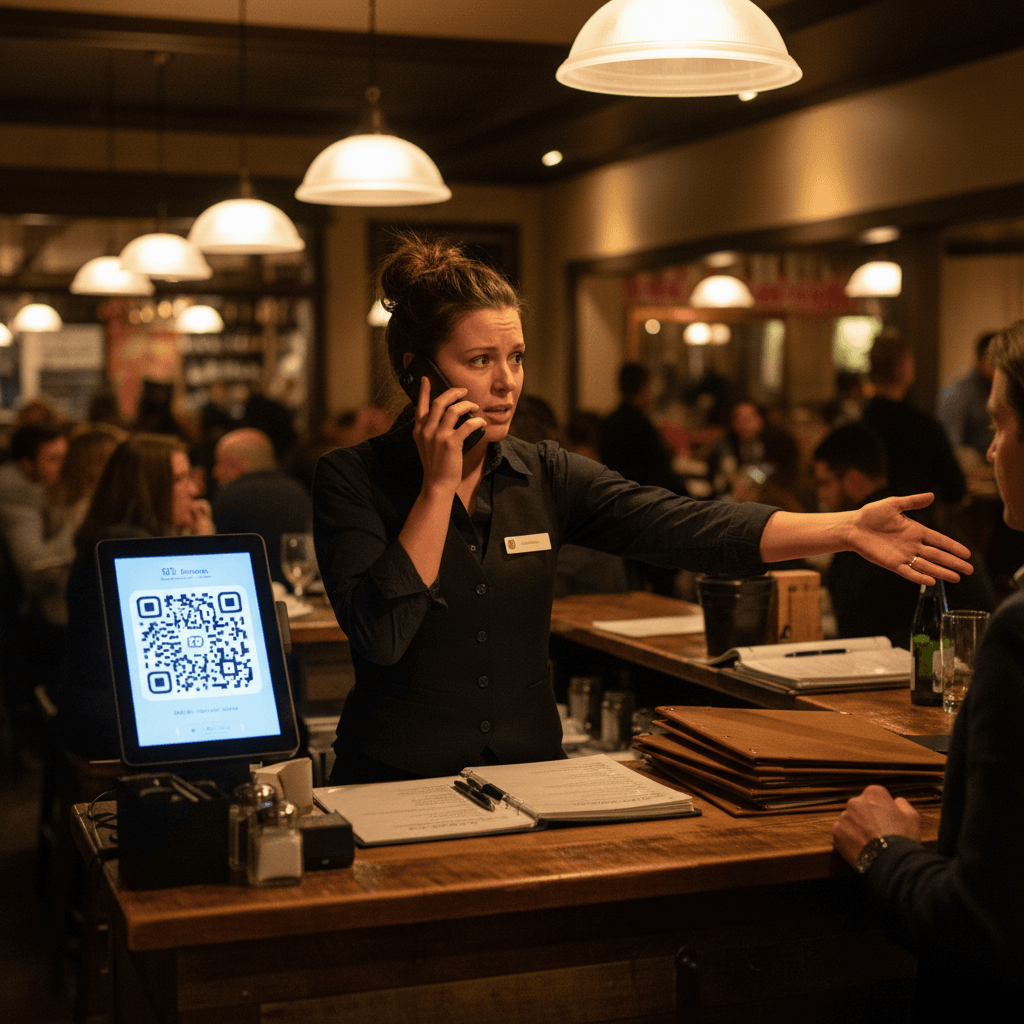
Second, consistency errors - the printed menu says one price, the digital menu says another, and the POS charges something else. Customers notice these discrepancies and it makes your operation look sloppy. A server has to explain why the $9 cocktail on the table tent rang up as $11, which wastes their time and annoys the guest.
The worst part? You can't test different pricing strategies easily. Want to try a new cocktail special next Tuesday? You need to coordinate menu changes, staff training, and system updates days in advance. By the time you get results, you've forgotten what you were testing in the first place.
From Strategy to Execution Without Friction
The solution isn't more complicated spreadsheets or better staff training alone. It's removing the friction between your pricing strategy and what customers actually see and pay.
Start with a physical process that anyone can follow during a busy shift. Create a happy hour playbook that lives at the host stand and behind the bar. This single sheet of paper lists every special, its exact price, and when it starts and ends. The Rule: If a server can't explain all happy hour prices in ten seconds during pre-shift meeting, your system is too complex.
Use visual cues that require zero staff intervention. A simple flip sign on the bar that says "Happy Hour Now" tells customers immediately that specials are active. Different colored coasters for happy hour versus regular service help bartenders remember which price tier to use without checking a list.
Schedule your price changes around existing shift routines. If your dinner crew arrives at 3:30 PM to set up, make changing the menu boards part of their opening side work. This happens before service starts, so there's no rush or distraction.
The real win comes when your pricing strategy becomes something you can execute consistently, test easily, and adjust based on real results - not just gut feelings about what might work.
Modern digital tools can automate this entire workflow. Instead of manually updating menus and POS systems, you can schedule price changes in advance using digital menu platforms. These systems activate specials at precise times across all customer touchpoints - table tablets, online ordering, and printed receipts - eliminating timing errors and price confusion entirely.
Taking the Next Step
Happy Hour Pricing That Actually Works requires shifting your focus from filling seats to filling your cash drawer with profitable sales. The logic is clear: design specials that protect margin on premium items and encourage additional purchases, then build foolproof systems to execute those prices consistently every single shift.
This approach turns your slowest hours into predictable revenue generators instead of loss leaders. To see how this fits into your operation without disrupting service, view our pricing options designed for busy bars or start a free trial to test automated price scheduling during your next happy hour shift