Energy Efficient Kitchen Equipment That Cuts Bills
Stop wasting money on outdated equipment. Modern energy-efficient kitchen gear reduces power bills by 30% while improving cooking consistency during busy services.
The Hidden Cost of Your Old Equipment
Your monthly power bill tells only half the story. The real expense shows up in inconsistent cooking temperatures during Friday dinner rush, when your old oven struggles to recover between batches. That's lost tickets and unhappy guests.
Energy Efficient Kitchen Equipment That Cuts Bills starts with understanding the hidden costs. It's 6:45 PM on a Saturday. Your expo is calling three orders at once. The fryer oil temperature just dropped 20 degrees because the recovery is too slow. Now your fish and chips are soggy, the ticket is backing up, and a table is getting comped drinks. That's not an equipment failure. It's a profit leak disguised as a busy night.
The problem isn't just the kilowatt-hours on your utility statement. It's the operational drag. An old reach-in cooler that runs its compressor constantly during lunch prep wastes electricity. More importantly, it creates temperature swings that spoil your delicate greens. You're paying for the power and throwing away the product. This connects directly to the system we explain in Sustainable Practices That Actually Save Money, which shows how real eco-friendly actions are profit drivers, not cost centers.
Think about your dish pit. An outdated dishwasher might use 5 gallons per rack. But if your servers are pre-rinsing every plate under a running faucet for 30 seconds first, you've already wasted 10 gallons before the machine even starts. The equipment cost is visible. The process waste is invisible until you track water usage by shift.
The Manual Fix: Audit Before You Buy
Most owners buy new equipment when something breaks. The hard truth: replacing one broken piece with another energy-efficient model won't solve your problem. You need to audit your entire kitchen's energy flow first.
Start with your biggest energy users - refrigeration and cooking equipment. Track their run times during different services. Notice how your old reach-in cooler runs constantly during lunch prep but cycles properly at night. That's wasted electricity.
The Rule: Audit usage before you audit age. Your 15-year-old convection oven might be fine if it only runs for two hours at dinner. Your three-year-old prep table cooler is the problem if it runs 24/7 because the gasket is failing.
Here's how to do it without fancy meters. For one week, have your opening manager note which equipment is already running when they arrive. Is the fryer on? Is the walk-in fan audible? That's equipment that ran all night unnecessarily. During service, listen for compressor cycles on refrigerators during peak heat. If they're running when the kitchen is hottest, they're working against themselves and wasting power.
Map your kitchen's energy flow like you map your ticket flow. Your charbroiler and oven are your high-heat stations - they consume the most energy during service hours. Your refrigeration is your baseline load - it should run consistently but cycle off during cooler night hours. Your ventilation system is your hidden monster - it runs whenever cooking happens and moves massive amounts of air.
This audit reveals patterns. You might discover that preheating your oven two hours before service wastes more energy than having it ready 30 minutes early costs in recovery time. You might find that stacking pans in front of your reach-in cooler's condenser coil makes it run 40% longer.
When New Equipment Creates New Problems
You install that shiny new induction range. It heats faster and uses less power. But now your line cooks are burning sauces because they're used to gas response times. The equipment works better, but your team isn't trained for it.
This bottleneck happens when you upgrade pieces without upgrading processes. Your energy-efficient dishwasher saves water, but if servers still pre-rinse plates with running water, you're wasting the savings.
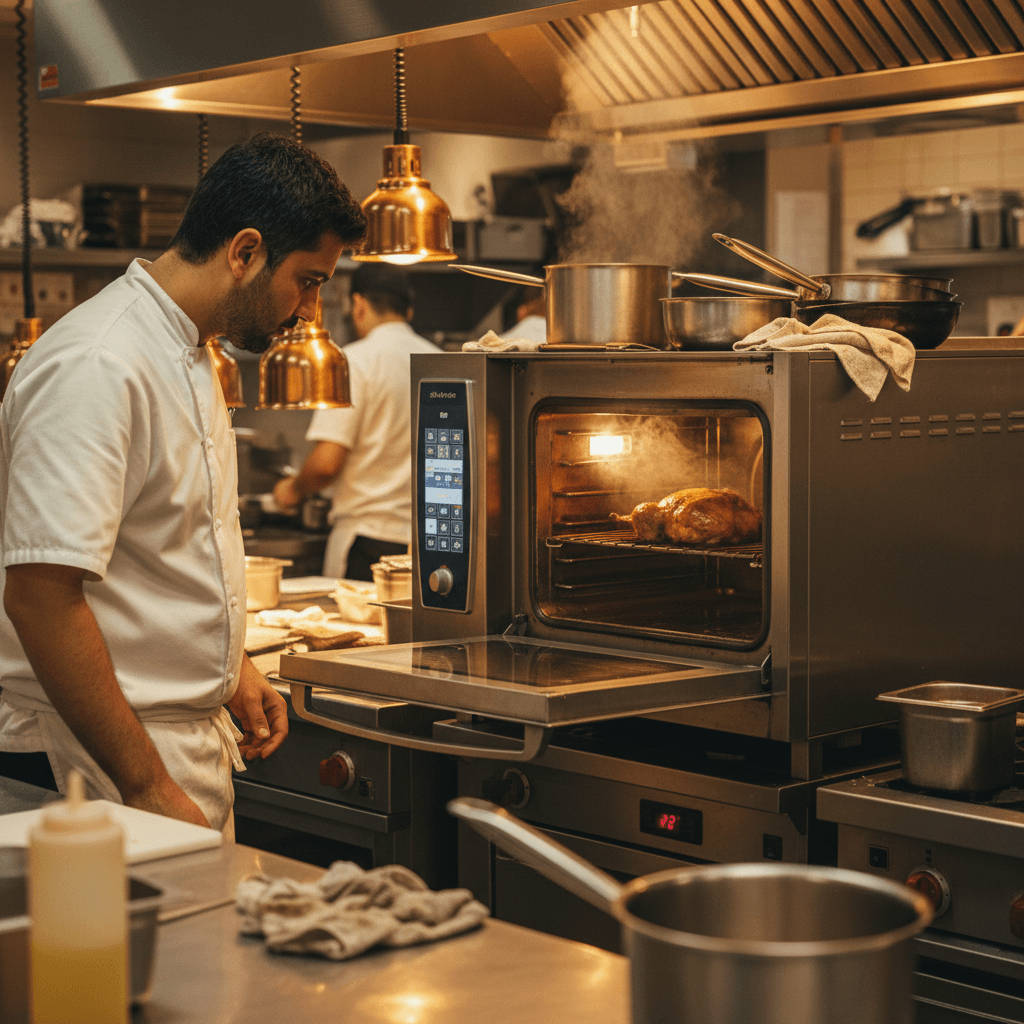
I watched a restaurant install a high-efficiency combi oven. The specs promised 30% energy savings. The reality: cooks kept using it like their old convection oven, running it at full blast for everything instead of using its steam functions properly. They burned through more energy trying to force it to behave like old equipment.
Training is not a one-time demonstration. It's integrated workflow redesign. When you switch from gas to induction, you must retrain muscle memory for temperature control. When you install a high-efficiency fryer with faster recovery, you must adjust batter recipes that assumed slower cooking times.
Process failure looks like this: Your new energy-star rated walk-in has perfect insulation. But your night crew props the door open while breaking down boxes for 20 minutes every night. All that cold air escapes, the compressor kicks on hard, and you've negated the efficiency gains through poor habit.
The worst scenario is mixing old and new without adjusting workflow. Your new induction burner heats water in 90 seconds instead of four minutes. But if your prep cook still fills pots at the three-bay sink farthest from the induction station, they're walking further with heavy pots - slowing down prep and creating safety issues.
Building Your Energy-Efficient Kitchen
The future isn't about buying the latest gadget. It's about creating systems where efficient equipment supports efficient service.
Start with refrigeration organization - this gives immediate returns without capital investment. Group products by temperature zone in your walk-in. Put dairy and proteins in the coldest section near the evaporator fan. Put produce in warmer zones away from direct airflow. This reduces how often and how long the compressor runs to maintain temperature differentials.
The Rule: Load equipment correctly or don't buy efficient equipment. A half-empty dishwasher running an energy-saving cycle wastes more than a full conventional cycle.
Train for the specific behaviors of new equipment during slow shifts first. Run side-by-side tests with old methods during prep hours, not during service rush. Let your sauté cook practice with induction during Tuesday lunch when mistakes are recoverable, not Saturday dinner when tickets are flying.
Measure what matters beyond the power bill. Track food waste from inconsistent cooking before and after equipment changes. Time how long tickets take during peak hours with old versus new equipment recovery times. Count how many times servers walk to a different station because workflow wasn't redesigned around new equipment placement.
Create maintenance checklists tied to efficiency, not just breakdown prevention. Clean condenser coils monthly - dirty coils make compressors work 30% harder. Check door gaskets quarterly - a failing gasket can double a cooler's energy use. Calibrate thermostats seasonally - a thermostat reading 2 degrees off makes equipment cycle incorrectly.
Schedule equipment use around energy rates if you have time-of-use billing. Do your bulk roasting during off-peak morning hours instead of peak dinner prep. Run your dish machine's sanitize cycle after midnight when rates drop. Use delay-start functions on combi ovens to finish cooking during lower-rate periods.
Taking the Next Step
Shifting to an energy-efficient kitchen is practical when you treat it as operational redesign rather than appliance shopping. The logic is clear: reduce waste in process first, then invest in equipment that supports those leaner workflows.
The savings appear on your power bill, but more importantly in consistent ticket times and reduced food spoilage during busy services. View our pricing to see how digital tools can automate the tracking and scheduling that makes these manual fixes sustainable long-term. Start a free trial to test how connecting equipment performance data to your daily prep sheets changes what you measure and manage