Creative Tables That Don't Slow Service
Learn how to design table settings that impress guests without creating headaches for your staff during busy dinner rushes.
When Pretty Tables Cost You Money
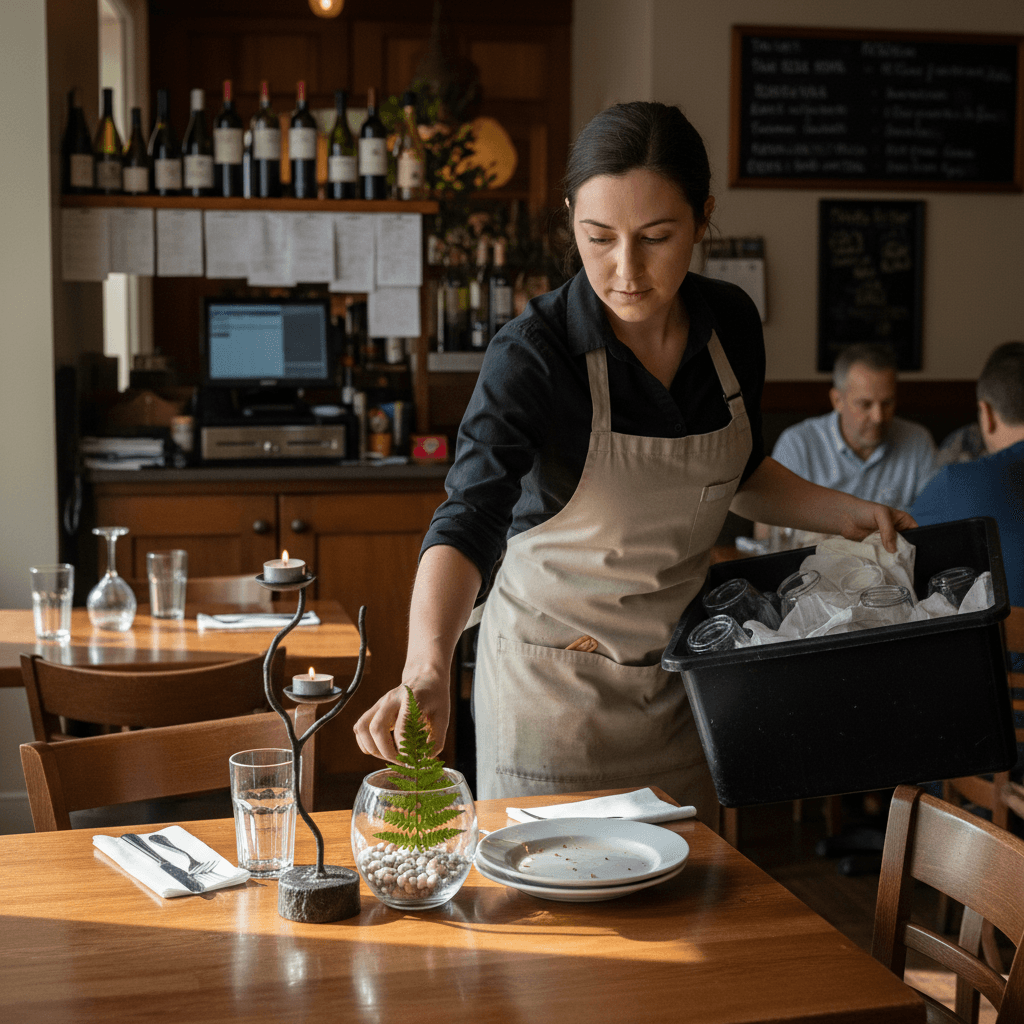
Creative tables that don't slow service sound impossible when you're in the weeds. It's 7:15 PM on a Friday. The expo is calling three orders at once. A server tries to clear a four-top, but they can't pick up the heavy ceramic centerpiece with one hand while balancing three dirty plates in the other. They set the plates down, use two hands for the centerpiece, then scramble to re-gather the plates. That's 45 seconds lost. Multiply that by twenty tables turning twice that night. You just lost thirty minutes of productive labor to a decorative rock.
This is where brand identity meets the floor. Your restaurant's true character isn't in the mood board. It's in what happens when pressure builds. For a complete system on building an identity that functions under fire, see our guide on Building Your Restaurant's True Identity. That guide breaks down how every design choice must survive the reality of a dinner rush.
The hard cost is measurable. Every second a server spends wrestling with a table setting is a second they're not greeting a new table, not running food, not taking a drink order. That decorative cheese grater filled with dried flowers? It costs you money every time a busser has to carefully lift it instead of just wiping the table clean. The math is simple but brutal.
The Hard Truth About Instagram Tables
That beautiful tablescape got you featured on a local blog. It also created three new problems you didn't have before service started. First, it added steps to your reset routine. Your busser now has a five-point checklist for that one table: clear plates, wipe crumbs, reposition charger, re-center floral arrangement, adjust candle holder. A simple wipe-down became a multi-step production.
Second, it created decision fatigue for your staff. "Does this go here or there?" "Which way does the bread plate face?" "Is the napkin fold correct?" During a rush, you need automatic actions, not artistic judgments. Every moment of hesitation at a table slows the entire section.
Third, and most dangerously, it introduced fragile variables. That hand-blown glass water carafe is stunning. It's also a liability when a server is carrying four entrees and needs to refill water quickly. One slip and you have broken glass on the floor during peak service - a safety hazard and a ten-minute cleanup operation that halts traffic flow.
The Rule: If a table element cannot be cleared, cleaned, and reset by one person using only one hand, it fails the Friday night test.
Why Your Bussers Hate Fancy Centerpieces
Listen to your bussing staff. They are your most honest critics of table design because they interact with it at its messiest point. A busser's goal is speed and efficiency: clear the debris, sanitize the surface, make it ready for the next guest. Anything that obstructs this mission is their enemy.
Take the popular "family-style sharing board" trend. A large wooden slab sits in the center of the table for shared appetizers. Guests love it. Bussers despise it. Why? It's heavy. It's awkward to carry while also holding a bus tub. It needs special cleaning (you can't just spray and wipe wood). It often has food debris stuck in its grooves. Resetting it requires walking it back to the dish pit, cleaning it separately, then walking it back out - three trips instead of one.
The same logic applies to multi-piece settings. Separate bread plates, butter knives on a special dish, individual salt cellars - each piece is one more item to clear, one more item to wash, one more item to place perfectly during reset. During a 30-minute turn time, these seconds compound into minutes of lost capacity.
Your bussers don't hate beauty. They hate inefficiency disguised as beauty. They hate anything that makes their already physically demanding job harder for no functional payoff.
Tables That Work When Tickets Pile Up
Good design serves the operation first and aesthetics second. Start with the reset cycle - work backwards from the moment the guest leaves to the moment the next guest sits down. Every element on your table should survive this cycle without requiring special handling.
Choose centerpieces with wide, stable bases that can be lifted with one hand from above. A low ceramic bowl with submerged flowers works. A tall vase with delicate stems does not. The bowl can be picked up like a cup; the vase requires two hands and careful balancing.
Use durable, stackable dishware for everything except perhaps the entree plate. Your bread plates should stack neatly for clearing and resetting. Your water glasses should be sturdy enough to be pre-set on tables without constant fear of breakage from minor bumps.
Standardize placement with clear physical guides if needed. A subtle etched line on the tablecloth where the cutlery bundle goes eliminates guesswork during reset. A small indentation on the charger plate for the bread plate creates automatic alignment.
Attach decor to permanent fixtures when possible. Instead of individual candle holders on each table, install simple wall sconces or overhead pendant lights for ambiance. This removes eight items from your busser's clearing routine and eight items from your server's reset checklist.
Test every new item during a mock rush before it goes live on your floor. Have your fastest server clear and reset the table ten times while you time them. Have your newest busser try it while carrying a full bus tub. If they struggle or slow down consistently, that item fails.
The pivot from manual discipline to digital support happens here. Maintaining this level of operational rigor requires constant attention and training reinforcement. Modern restaurant management platforms can automate parts of this workflow by tracking table turn times in real-time and flagging stations where reset speed drops - alerting you to a procedural breakdown before it costs you an entire Saturday night's revenue.
Taking the Next Step
Creative tables that don't slow service are not an oxymoron; they are an operational requirement. The logic is straightforward: every object on your table must earn its place by speeding up service, not slowing it down. This shift from decorative thinking to functional design pays you back in faster turns and smoother shifts.
Implementing this system starts with auditing your current settings against the Friday night test this week. View our pricing for tools that help track these metrics automatically, and start a free trial to see how digital oversight keeps your creative vision aligned with your service speed goals