5 Ways to Sell More Drinks & Desserts
Stop leaving money on the table. Train your staff to suggestively sell higher-margin items without sounding pushy.
The $50 Table You're Missing Every Night
It's Friday night, 7:45 PM. Your server just dropped the check for a four-top that ordered three entrees and water. The table paid $112 and left. You lost $50. That's the reality of 5 Ways to Sell More Drinks & Desserts - the average table leaves that much in drinks and desserts untouched because no one asked.
Server hesitation during the rush is the killer. "I don't want to seem pushy" is what they think while clearing plates. Meanwhile, the check averages tell the true story. Pull last night's reports. Look at the beverage attachment rate - how many tables ordered something beyond water. Look at dessert sales per server. The numbers don't lie. A table spending $100 on food should spend another $30-40 on drinks and $15-20 on dessert. When they don't, that's pure profit walking out the door.
This connects directly to the systematic approach in Restaurant Sales Growth: Practical Strategies, which breaks down the full operational math behind every revenue decision you make.
The visual proof is in your own data. Print yesterday's server sales report. Circle every table that ordered only entrees and water. Do the math on what they could have spent. That's your missing money, sitting there every single service.
Dessert Sales Don't Happen By Accident
Hard truth: your menu design is working against you right now. Desserts listed at the very end, in small print, after the check has already been decided mentally? That's a design failure.
The 3-second rule dictates dessert decisions. When a server says "dessert menu?" and points to the back page, the customer's brain has already checked out. They're thinking about getting home, not chocolate cake. Physical menu placement matters. The Rule: Dessert options need visual presence before the meal ends. Some places use a separate card placed on the table after clearing mains. Others have a small dessert section visible on the main menu's first page.
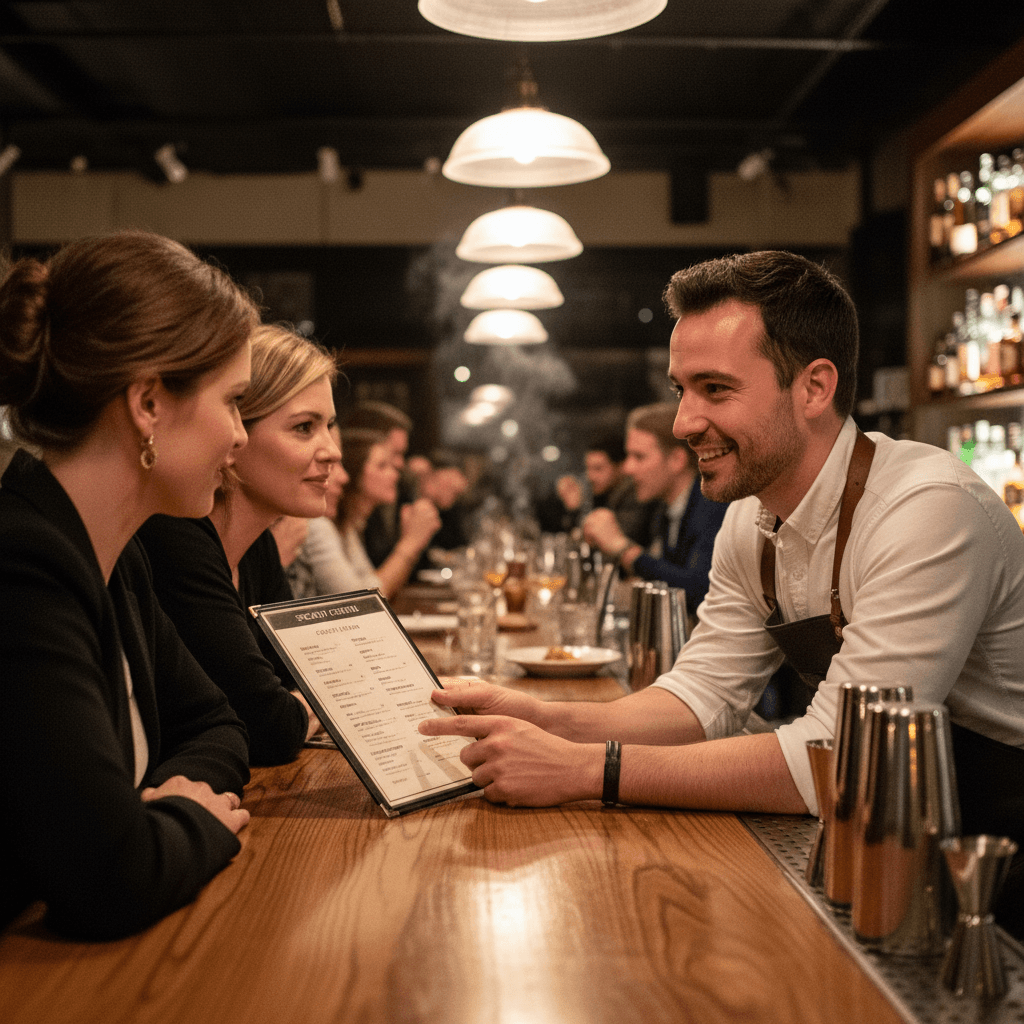
Server scripting makes or breaks this moment. "Would you like dessert?" gets a no 80% of the time. "Which of our desserts would you prefer tonight - the chocolate lava cake or the seasonal berry crisp?" frames the choice differently. It assumes they're having dessert and just needs to pick which one. This isn't being pushy - it's providing good service by reminding them of an option they might genuinely want but forgot about.
The difference is subtle but massive in execution. One question closes the door. The other opens it.
When Training Doesn't Stick
You trained your servers on suggestive selling last month. Why are dessert sales still flat? New server turnover kills consistency first. You hire someone, train them for two days, then throw them on a Saturday night. They're surviving, not selling.
Friday night rush amnesia hits everyone under pressure. When four tickets come in at once and table six needs another ranch, dessert techniques vanish from memory. The training exists in theory but disappears when the printer won't stop.
Manager follow-through is where most systems break. Who checks dessert sales weekly? Not as a punishment, but as coaching data? If you're not reviewing each server's attachment rates every Monday, you're managing blind. The gap between knowing and doing during service is where profits leak out.
This isn't about blame - it's about recognizing that human memory fails under stress. Your best server on a slow Tuesday becomes a different person when weeded on Friday night.
Building Your Dessert Culture
Start tracking dessert attachment rates tomorrow morning. Pick one simple metric: what percentage of dinner tables order dessert? Calculate it for each server. Put that number on a whiteboard in the kitchen. Make it visible and normal.
The 15-minute pre-shift drill changes everything. Before Friday dinner, gather your servers for 15 minutes. Role-play two scenarios: clearing plates without mentioning dessert, then clearing plates with proper dessert suggestion. Have them practice on each other. Time it - both methods take exactly the same amount of time but produce completely different results.
Creating signature items that sell themselves requires intentional design. Don't just have "chocolate cake." Have "warm chocolate lava cake with house-made vanilla bean ice cream." Take a picture that makes mouths water - use it on your menu, your social media, your table cards. When something sounds special, it becomes an event worth staying for.
Monthly staff incentives need to be simple and immediate. Not a complex bonus structure no one understands. "This month, every dessert sold gets you $1 cash at the end of your shift." Or "Server with highest dessert attachment rate this week gets Saturday night off next week." Immediate rewards for specific behaviors work better than distant promises.
Taking the Next Step
The shift from missing drinks and desserts to consistently capturing that revenue is practical, not magical. The logic is clear: present options properly, track what works, and create an environment where suggesting additions feels like good service rather than upselling.
Modern digital tools can automate the repetitive tracking that consumes management time - systems that calculate attachment rates automatically or prompt servers at key moments without sounding robotic.
If your current process relies on memory during busy services, consider whether technology could handle the tracking while your team focuses on execution view our pricing to understand options or start a free trial to see how automated suggestion tracking works during your next dinner rush without changing how your servers interact with guests