Why Room Service Trays Fail
Cold food starts with broken tray systems. Fix your in-room dining presentation before guests complain.
The Tray Problem That Costs You Guests
Why Room Service Trays Fail is a question answered every morning when a guest pushes away a cold omelet. They don't see your kitchen - they see what arrives at their door. Wobbly trays mean spilled coffee. Missing covers mean lukewarm steak. This isn't about fancy presentation - it's about basic physics. Food cools fast when exposed to air during transport.
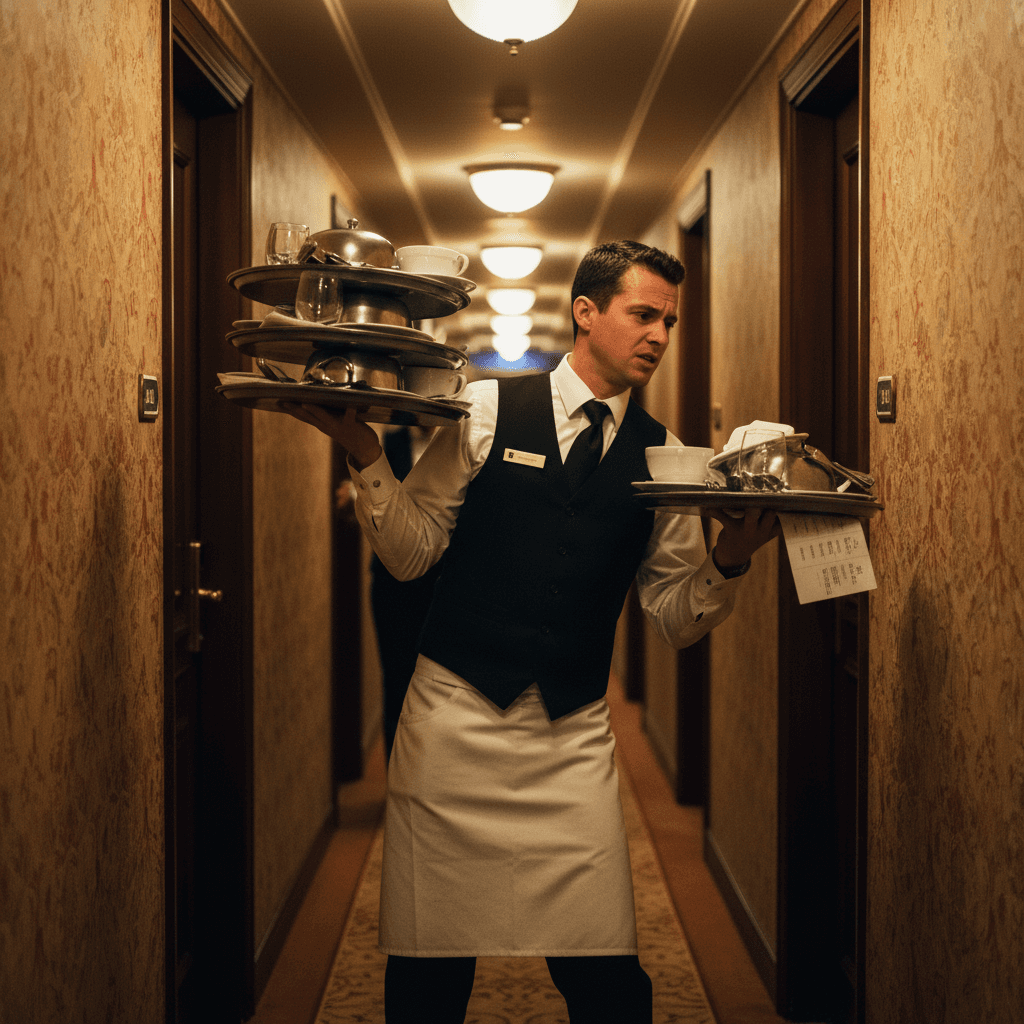
Picture your server at 8:15 AM on a Tuesday. They're balancing two trays through a narrow hallway, one hand on the coffee pot, the other steadying plates that slide with every step. The elevator ride takes ninety seconds. By the time they knock on room 514, the scrambled eggs have dropped fifteen degrees. The guest notices before they taste it.
This connects directly to the comprehensive system overhaul we detail in Room Service That Actually Works, which breaks down the full operational framework for fixing cold food, long waits, and wasted labor.
The problem isn't one thing - it's a chain reaction. A heavy tray forces slow walking. Slow walking means longer transport time. Longer transport means colder food. Each link in that chain costs you guest satisfaction, and eventually, repeat business.
The 15-Minute Tray Audit
Stop buying expensive insulated covers first. The hard truth: most tray problems start with how you load them, not what you put on them.
Start with what you have right now. Take one complete room service order from your menu tonight - something common like the continental breakfast or the club sandwich dinner. Time how long it takes from kitchen pass to guest door. Use a stopwatch on your phone.
Feel the temperature drop with your bare hand at each checkpoint. Touch the plate edge at the kitchen pass. Touch it again outside the elevator. Touch it one more time before you knock. You'll feel the heat leaving through the china.
The Rule: Hot food must travel under cover for less than seven minutes total. If your audit shows twelve minutes from kitchen to door, you've already lost the battle before service begins.
Look at how your servers carry trays. Are they using both hands? Are they walking sideways through doors? Does the tray wobble when they set it down? Every wobble is spilled liquid and rearranged food that looks careless to a guest paying premium prices.
When Your System Hits Capacity
Friday night with 30 room orders changes everything. Your perfect single-tray system collapses under volume.
Servers juggle multiple trips because they can't carry everything at once. They take coffee first, then come back for food, then realize they forgot creamer. Each trip adds minutes to delivery time and frustration for guests waiting in their rooms.
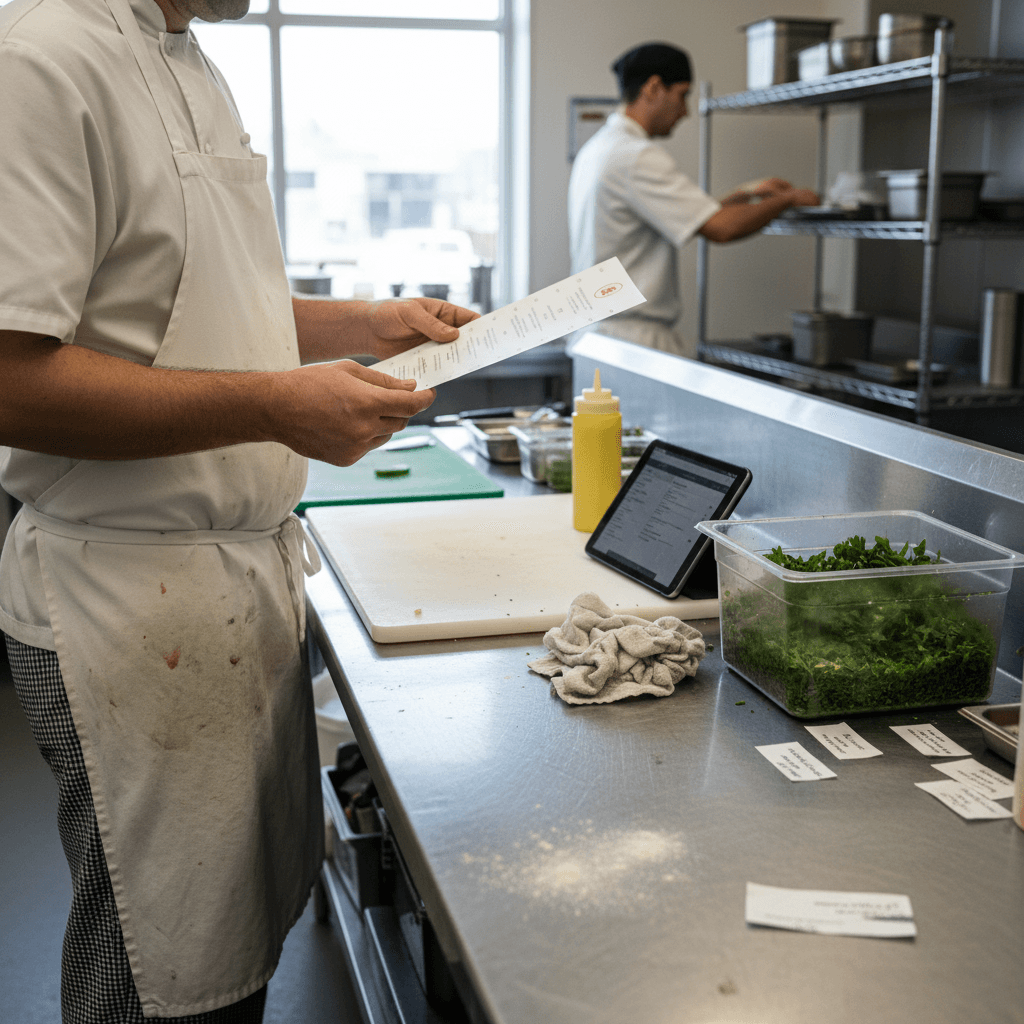
Kitchen timing gets thrown off when expo can't send complete orders together. The line cook plates eggs at 7:45, but toast isn't ready until 7:48, and by then the server is already delivering another order two floors up. The eggs sit under a heat lamp, drying out while waiting for their toast companion.
This is where good intentions meet real operations. Your beautifully plated steak frites becomes a lukewarm disappointment because the kitchen fired everything together, but delivery couldn't keep up.
Watch your expo station during peak breakfast. If you see servers waiting for missing items, or cooks replating cold components, your tray system is failing at scale. Each minute of waiting costs temperature and quality.
Building Better From Here
The fix isn't more equipment - it's better coordination between kitchen timing and delivery routes.
Start tracking which rooms order together naturally. Look at your order tickets from last weekend's dinner service. You'll notice patterns - rooms on the same floor tend to order around the same time, especially during peak dining hours.
Group deliveries by floor instead of time ordered. If rooms 512, 514, and 516 all ordered within ten minutes of each other, deliver them together in one trip with a cart or multiple trays per server. Your staff will make fewer trips up and down elevator banks.
Food will arrive hotter because it spends less time waiting for companions in the kitchen. The cook can time plating so all items for floor five are ready within a two-minute window, then everything goes out together.
Train your expo to think in delivery batches, not individual tickets. When three orders come in for the eighth floor within fifteen minutes, hold them slightly and fire them as a group. Communicate this clearly to servers so they know to expect slightly longer ticket times but much faster overall delivery.
Create simple floor maps for servers showing room locations by wing and elevator bank. A server shouldn't deliver to room 801, then 702, then back to 815 - that's wasted motion and cooling time. Cluster deliveries geographically even if it means holding an order five extra minutes in the kitchen.
The Rule: One trip per floor during peak hours beats multiple trips per room every time. Measure success by reduced footsteps per delivered meal, not just ticket-to-door time.
Manual systems work when everyone follows the same playbook. But they require constant attention from managers watching patterns and adjusting routes daily based on occupancy and event schedules.
Modern digital tools can automate this coordination work. Kitchen display systems that group orders by location give cooks visual cues about what to fire together. Simple delivery routing software can suggest optimal paths based on real-time order flow, taking the mental load off your expo person during Saturday night rush.
These tools don't replace good process - they enforce the good process you've already built manually. They ensure that when you train new servers on floor grouping, the system reminds them instead of relying on memory during chaotic service periods.
Taking the Next Step
Fixing tray failures requires changing how your kitchen times plating and how your servers plan their routes through the hotel. The logic is clear: grouped deliveries mean hotter food with less staff movement.
Start by running that fifteen-minute audit with your current trays tomorrow morning. Time one order from kitchen to door and feel the temperature drop yourself.
When you're ready to scale that manual fix into a consistent system that works every shift without manager oversight, view our pricing for tools that automate delivery routing and kitchen coordination. You can start a free trial to test how digital grouping works with your existing menu and hotel layout during your next busy weekend service period