Why Room Service Orders Get Lost
Guests hate waiting for cold food. The problem starts with how orders get taken. Fix your phone system before you fix your kitchen.
The Cold Food Arrives at 9 PM
Why Room Service Orders Get Lost starts with a tired guest in room 412. They called an hour ago. They just want the club sandwich and a beer. The food finally arrives at 9 PM. The fries are cold and soggy. The guest is now more frustrated than hungry. This isn't a kitchen failure. It's a communication breakdown that happened long before the cook ever saw an order.
The problem lives in the space between the phone ringing and the ticket hitting the kitchen rail. A wrong room number gets written down. A "no mayo" request gets lost in translation. Critical allergy information never makes it past the front desk. The guest pays for a hot meal but receives a cold problem. This failure erodes trust and guarantees a negative review. For a complete system to prevent these errors, from the phone to the plate, our guide on Room Service That Actually Works provides the operational blueprint.
Cold food is a symptom. The disease is a broken information chain.
Your Phone System Is Your First Kitchen
The moment an order is taken is the most critical point in room service. Your phone system isn't just for reservations. It's the first station in your kitchen line. If the information here is wrong, everything that follows will be wrong too. Fancy menus and talented chefs cannot save an order taken poorly.
The Rule: Train your front desk and phone staff on food terminology before you train them on check-in procedures. They need to know what "gluten-free" means for your kitchen. They must understand that "dressing on the side" is different from "no dressing." This isn't about turning them into chefs. It's about making them effective communicators who can translate guest requests into clear kitchen instructions.
Create a physical order ticket template that forces clarity. Use a pre-printed pad with bold boxes for Room Number, Guest Name, Special Requests, and Promised Delivery Time. The layout should make missing information obvious at a glance. This simple tool prevents the most common error: forgetting to ask for the room number. A missing room number doesn't just delay food. It sends a meal to the wrong guest, creating two problems instead of solving one.
Repeat every detail back to the guest before hanging up. This sixty-second habit saves thirty minutes of chaos later. "So that's the Caesar salad with grilled chicken, dressing on the side, for room 814, delivered within 45 minutes. Correct?" Confirmation catches transposed numbers and missed modifiers immediately.
When Three Calls Come at Once
Manual systems work fine until they don't. The breaking point is Friday night at 7 PM. Business travelers are back in their rooms. They're tired, hungry, and all calling at once. This is when your process gets tested under real pressure.
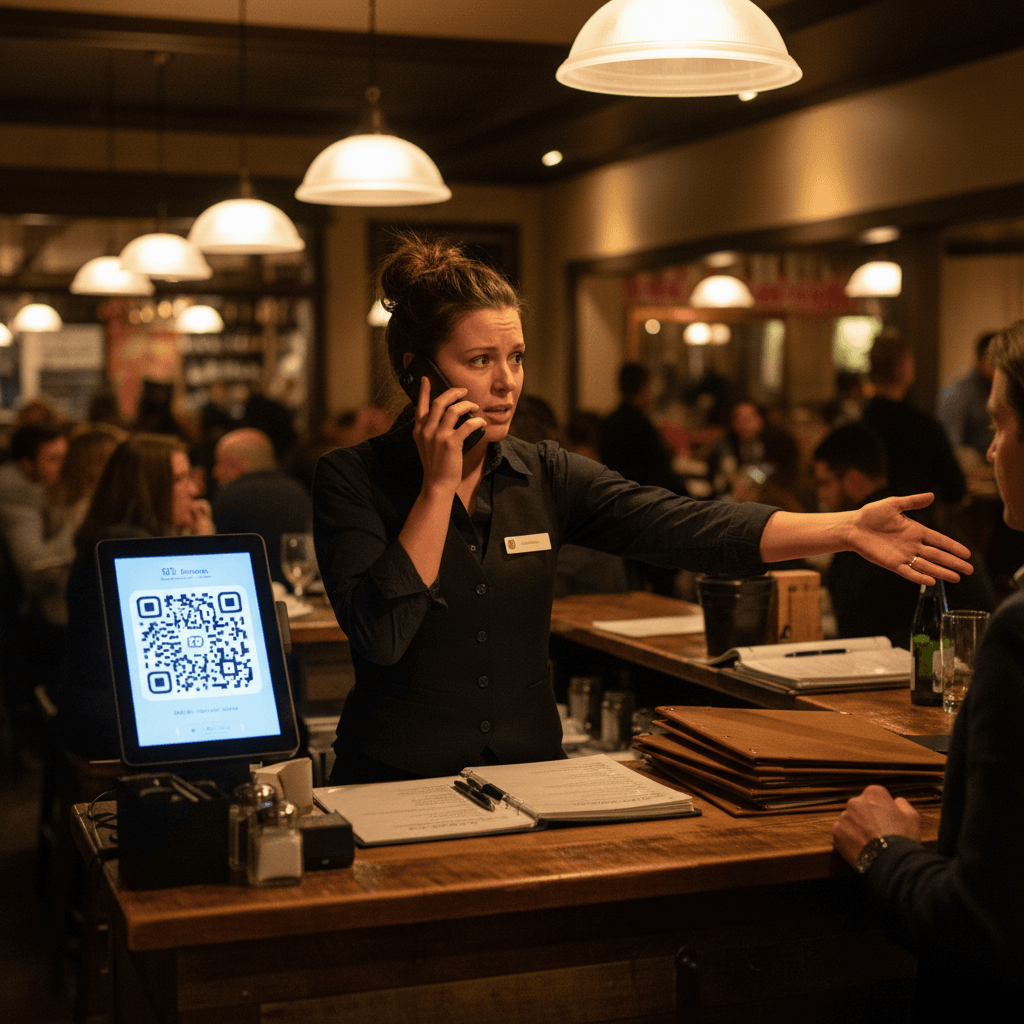
The bottleneck isn't your kitchen's capacity to cook food. It's one person's capacity to listen, write, and think clearly while handling multiple inputs. A staff member tries to write down a complex order for room 721 while another call rings through. They answer it, forgetting to finish writing "no onions" on the first ticket. A third call lights up the line before they can hang up. In this panic, errors multiply exponentially.
Wrong room numbers get transposed. 721 becomes 712. Vegetarian requests get buried under scribbled notes. Promised delivery times are forgotten entirely because the focus shifts to just getting names and dishes written down before the next ring. The staff member isn't incompetent. They are overwhelmed by a system that demands superhuman focus during peak demand.
This chaos has a direct cost. The cook prepares a steak for room 712 instead of 721. The guest in 721 waits an extra forty minutes for their re-fired meal. The steak for 712 goes cold and gets thrown away. You've wasted food, labor, and guest goodwill in one stressful ten-minute window. The problem wasn't the food or the cook. It was the scramble at the order point.
From Chaos to Clear Communication
Fixing this requires moving from reactive order-taking to proactive service flow. The goal is to build a system that works perfectly during your busiest hour, not just when it's quiet. Start by mapping the exact path an order takes from the guest's mouth to the cook's hand. Identify every place where information is transferred from one person to another or from a voice to paper.
Those transfer points are where orders get lost. Assign one person as the dedicated order-taker during peak hours if you use phones. Their only job is to answer calls and write perfect tickets. This eliminates multitasking pressure and makes accuracy their primary metric. Use a countdown timer visible to both order-taker and kitchen to track promised delivery times from the moment the call ends.
Standardize how special requests are communicated. Create simple, clear abbreviations for common modifiers (GF for gluten-free, V for vegetarian) and ban any other shorthand. Everyone on staff must use the same language. This turns cryptic notes into clear instructions.
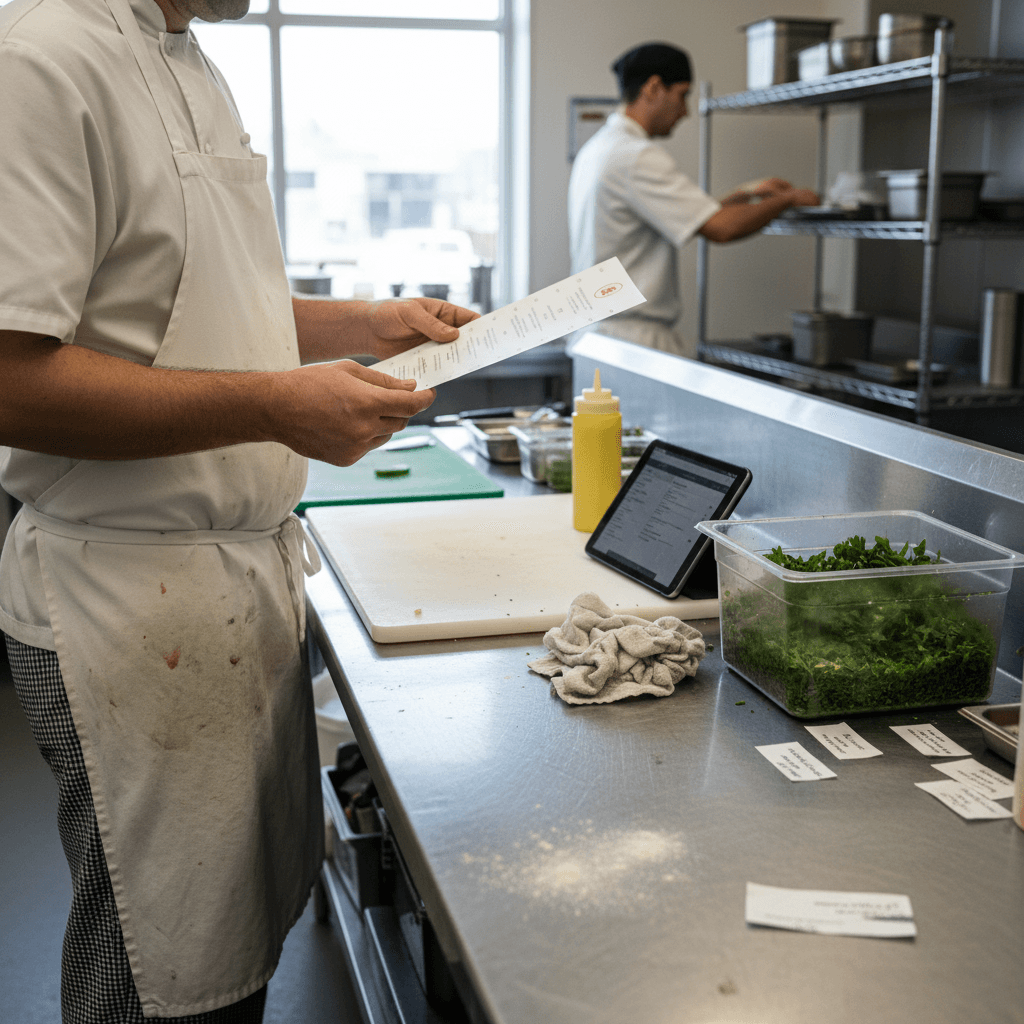
These manual fixes require discipline and consistent management oversight. They turn chaos into a repeatable routine. For operations ready to move beyond paper tickets and stopwatches, modern digital tools can automate this entire workflow. A digital ordering platform sent directly to a kitchen display system removes the human transcription step entirely. The guest's exact words become text on the kitchen screen. Room numbers are locked in digitally. Special requests can't be scribbled poorly because they are typed clearly. This technology doesn't replace good training. It eliminates the repetitive, error-prone task of writing while listening during a rush.
Taking the Next Step
The logic is clear: lost orders lead directly to cold food and angry guests. The fix starts with treating your phone system as part of your kitchen line and building communication protocols that survive Friday night pressure.
If manual ticket pads and dedicated callers are your current solution, master them completely. If you're ready to remove handwriting from the equation entirely, explore how digital ordering connects directly to kitchen operations. See if our approach fits your operation by checking view our pricing details or start a free trial to test a streamlined order flow during your next busy service period