Why Most Pre-Shift Meetings Waste Time
Stop wasting staff hours on pointless briefings. Learn the 5 topics that actually improve service and cut labor costs immediately.
The 15-Minute Time Sink Every Night
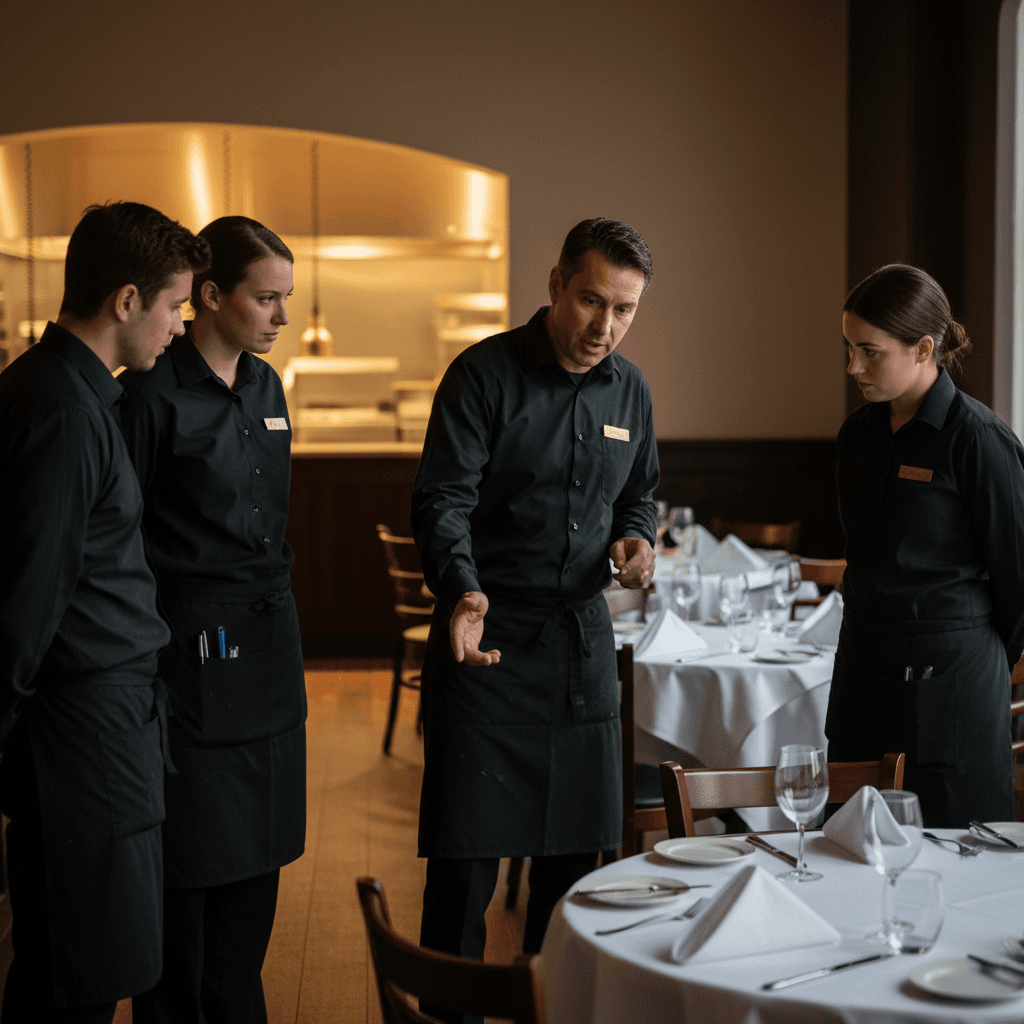
Why Most Pre-Shift Meetings Waste Time starts at 4:45 PM. The manager stands by the host stand with a printed sheet. Servers lean against the wall, scrolling phones. Line cooks shift their weight, watching the clock tick toward 5 PM when they should be firing up stations. The manager reads tonight's specials - pan-seared halibut with lemon beurre blanc, roasted fingerling potatoes, and seasonal vegetables. He lists every ingredient. No one writes it down. By 7 PM, when a guest asks about the fish, the server will say "it's halibut with some sauce and potatoes" and miss the $8 upsell.
Count the actual cost. Five staff members standing still for 20 minutes equals nearly two hours of paid time gone before service starts. That's two hours of cleaning, prep, or actual customer service you're paying for but not receiving. This nightly ritual becomes a labor cost leak that connects directly to the broader strategy we cover in Cutting Labor Costs Without Cutting Corners, which breaks down how small, repeated inefficiencies drain profitability.
The problem isn't that briefings happen. The problem is what happens during them - and what doesn't happen after them.
Five Topics That Actually Change Service
The hard truth: Your specials sheet is worthless if servers can't sell it. Instead of listing ingredients, teach one story about each dish that makes people want to order it. Give servers the exact words that worked yesterday.
The Rule: For every special, provide one selling sentence that a server can repeat verbatim.
Yesterday's halibut special sold because servers said "It's our fresh halibut pan-seared with a lemon butter sauce that regulars keep coming back for." That sentence works better than "halibut with lemon beurre blanc, fingerling potatoes, and seasonal vegetables." The first creates desire. The second is a recipe.
Cover only what changes today from yesterday. Is table 12 reserved for Mrs. Jenkins who likes extra bread before her salad? Is the walk-in cooler door sticking again so we need to prop it open during rush? Which line cook is covering sauté station while Carlos is out sick? These are the details that prevent service breakdowns.
Information that doesn't change from yesterday to today doesn't belong in today's briefing. If the chicken dish hasn't changed, don't mention it. If the wine list is the same, skip it. Focus on what's different.
Run a two-minute roleplay of tonight's most likely complaint. What if someone says the steak is overcooked? What if a table wants separate checks after ordering family-style? Practice the exact response.
Pick one scenario that actually happened last week. Have a server play the guest and another play themselves. Run through it once. The goal isn't perfection - it's muscle memory for when stress hits at 8 PM.
Name one thing each person will do differently tonight based on last night's feedback. Sarah will check back after drinks arrive, not just after appetizers. Mike will call "behind" louder at the pass when carrying hot plates. James will write "no onions" in capital letters on every ticket.
This turns feedback into action instead of criticism. It gives each person a specific, achievable improvement for their shift.
End with one number everyone needs to hit tonight. Not "sell more wine" but "three bottles of the Malbec per server." Not "upsell desserts" but "get two chocolate lava cakes per section."
Make it measurable and fair. A number creates focus during chaos. When a server has three tables at once, they remember "I need one more Malbec" instead of trying to remember everything about everything.
When Good Meetings Still Fall Apart
You nail the briefing at 4:45 PM. You cover the five topics perfectly. The team seems engaged. They nod at the right moments.
By 7:30 PM, half the team forgets which regular is at table 12. The new server sells zero Malbec because she got busy with a six-top and forgot about bottle counts. The roleplay responses vanish when an actual complaint happens - instead of using practiced phrases, servers default to "Let me get my manager."
The problem isn't your topics - it's human memory during Friday night rush. Information delivered once at 4:45 doesn't survive ticket chaos at 8:15. Stress erases details. Multiple tables asking multiple questions overwrite pre-shift instructions.
This is why most process improvements fail: they assume perfect recall under pressure. They don't account for what actually happens when four tickets hit the window simultaneously and three guests need refills.
Making Tomorrow's Briefing Stick
Start tomorrow's meeting by asking what worked from yesterday's topics. Which story actually sold halibut? Who remembered table 12's bread preference? What complaint actually happened and how did we handle it?
This creates accountability without punishment. It shows which information survived service and which evaporated.
Track one metric from yesterday's target - how many Malbec bottles actually sold? Use that number to set today's goal. If servers sold eight bottles total yesterday with a target of three each, maybe today's goal is two each because Friday was unusually slow.
The real labor savings come when briefings become cumulative learning, not nightly repetition. When servers remember yesterday's lessons today, you stop retraining every shift. You build institutional knowledge instead of starting from scratch each afternoon.
The Rule: Today's briefing should reference yesterday's results and build on them.
If Sarah improved her check-back timing yesterday, acknowledge it today and ask her to maintain it while adding one new skill. This progression feels like growth instead of correction.
Taking the Next Step
Changing your pre-shift meetings requires discipline but follows clear logic: replace generic information with specific actions tied to measurable outcomes.
The shift from reading specials to teaching sales stories happens immediately tonight. Tracking what sticks from yesterday to today begins with your next briefing.
If managing this cumulative knowledge across shifts feels overwhelming, modern restaurant platforms can automate the tracking and recall portion of this workflow, ensuring critical details survive the Friday night rush without relying on handwritten notes or perfect memory.
To implement this approach systematically across your entire operation, view our pricing for tools designed around these operational realities or start a free trial to see how digital support changes what your team remembers when tickets start piling up