When Your Coffee Line Stops Moving
The 7:45 AM bottleneck costs more than lost sales. Fix the three station setups that kill morning flow and get customers moving in 90 seconds.
The Real Cost of a Stalled Coffee Line
When your coffee line stops moving, you are losing more than just the sale in front of you. You are losing the next five customers who walk in, see the wait, and turn around. The real cost hits when customers wait past 90 seconds. That is when they start checking their watches, pulling out their phones to check other cafes nearby, and deciding this will be their last visit.
This slow service creates compounding problems all day. A backed-up line at 7:45 AM means your barista is already stressed and behind. They rush, which leads to spills, remakes, and forgotten modifications. The rush ends later, pushing back mid-morning cleaning and prep. You start the lunch transition late, and the entire day's rhythm is off. There is a clear difference between a busy morning rush and a profitable one. A profitable rush has a steady, predictable flow where customers get their order and leave satisfied in under 90 seconds. A busy rush just has a crowd and chaos. For the complete system that turns busy into profitable, from bean cost to labor scheduling, see our guide on The Coffee Shop That Actually Makes Money.
Three Station Setups That Kill Your Flow
The bottleneck is almost never your staff's speed. It is your station design. The most common failure point is the milk station bottleneck. If your barista has to turn their back on the espresso machine, walk three steps to a fridge, grab milk, walk back, steam it, then walk again to clean the wand, you have built walking into every single latte. That is 20 seconds of wasted motion per drink.
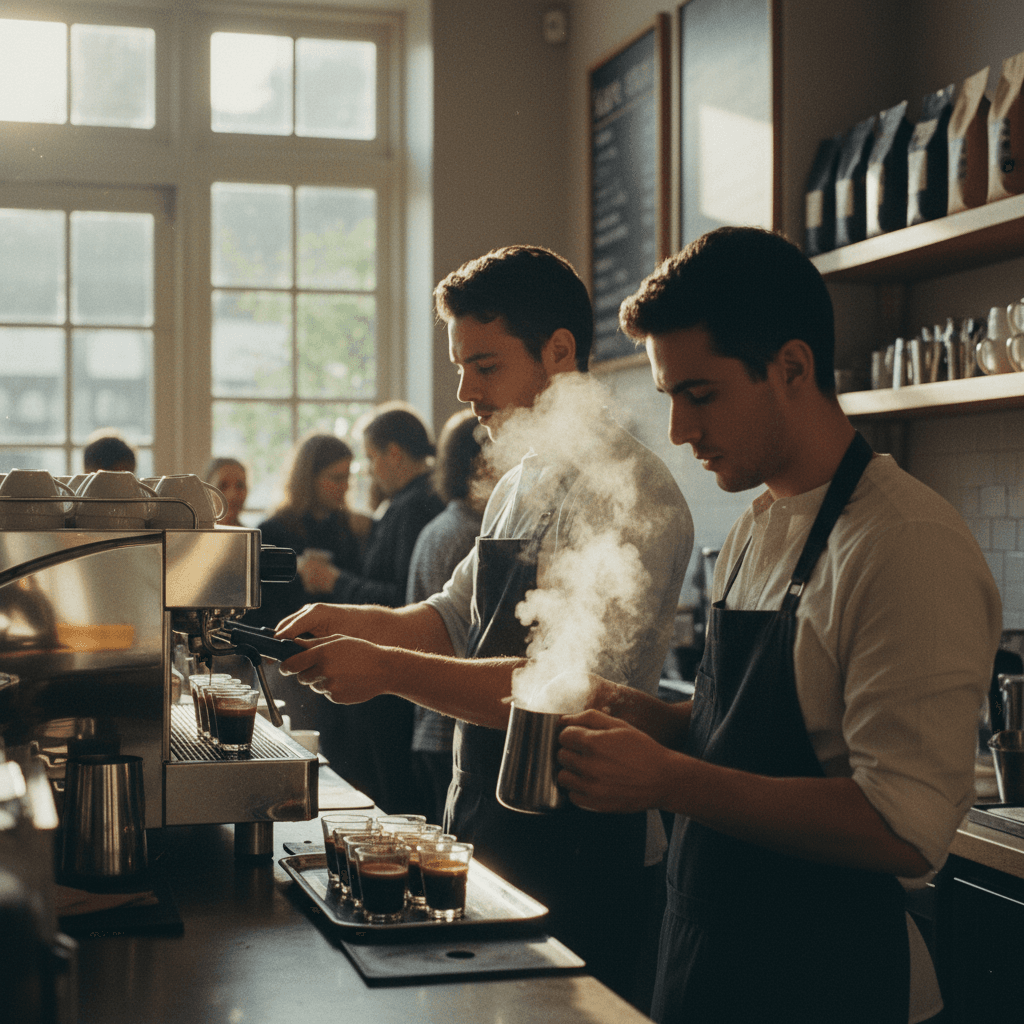
Next is the espresso machine traffic jam. A single group head machine can only pull one shot at a time. If you have two baristas trying to use it during peak, they are waiting on each other. The Rule: One person owns the espresso machine during peak. They pull all shots. The second person handles milk, syrup, and assembly. This eliminates the traffic jam of two people reaching for portafilters.
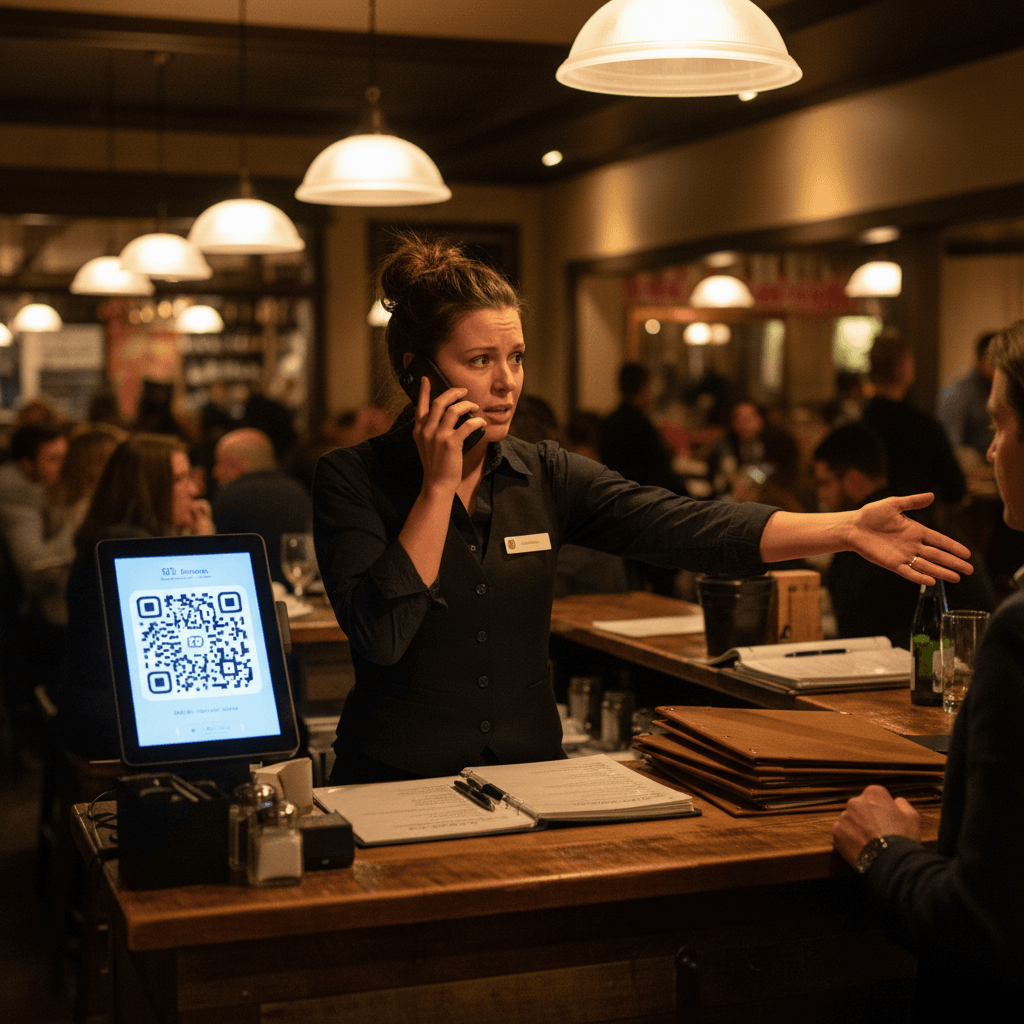
Finally, the payment processing black hole kills flow before an order even starts. When one person takes an order, processes a card, waits for approval, prints a receipt, and then calls the order back, the line stops dead. The card reader's slow connection or a customer fumbling for their phone adds 30 seconds of pure waiting time for everyone behind them.
The Hard Truth About Morning Prep
Many managers think the solution is to have staff arrive 30 minutes earlier. This rarely works. An extra 30 minutes of unfocused prep just leads to more wasted time and higher labor cost without fixing the core issue. The problem is not total prep time; it is what you prep and where you put it.
The counterintuitive setup that actually speeds service is called "open stage" prep. Instead of prepping everything in the back kitchen and bringing it out, you prep directly at the station where it will be used during service. Fill milk pitchers at the espresso machine. Portion syrups into bottles at the condiment station. Set up cups and lids in the exact order they are used on the counter.
What to prep the night before versus what to leave for morning is simple. Night before: deep clean machines, stock dry goods (cups, lids, sleeves), brew cold brew, make syrups that keep overnight. Morning of: steam milk (it separates overnight), slice pastries (they dry out), grind coffee (it goes stale), set up the "open stage" at each work station.
When Manual Systems Hit Their Limit
Checklists and verbal systems work perfectly until they don't. The moment your checklist becomes the bottleneck is when you have more than five drinks in queue. A barista trying to remember which drink gets oat milk and which gets almond while also pulling shots will make a mistake. That mistake means a remake, which backs up the line further.
Communication breaks down at 15+ orders in queue. Servers calling out modifications over the sound of grinders and steam wands leads to "I said almond!" "I heard oat!" This is not a staff problem. It is a system problem. Verbal communication is unreliable under pressure.
Why even perfect staff can't overcome bad station design is simple physics. If the espresso machine is six feet from the milk fridge, and the grinder is four feet from the machine, your barista will walk over 500 feet during a one-hour rush. That is wasted energy and time that no amount of hustle can fix.
The 90-Second Customer Flow System
You need to redesign your counter for left-to-right movement. Customer enters, orders at a dedicated register point on the far left. Their ticket prints at the espresso station in the middle. The barista makes the drink and slides it down to the pickup area on the far right. The customer naturally follows this flow from left to right as they wait. This prevents them from crowding the order point or hovering over the barista.
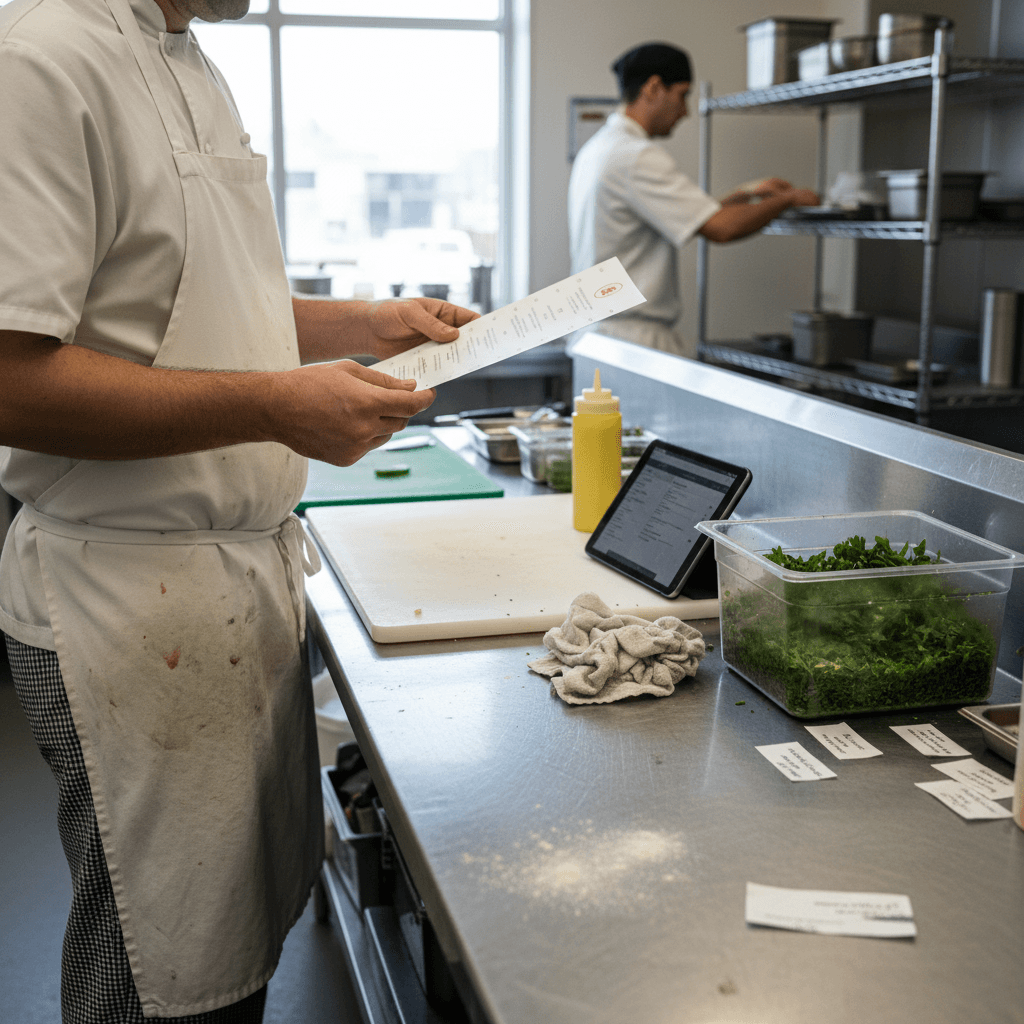
Creating visual cues eliminates verbal communication. Use colored cups for milk types: blue sleeve for oat milk, green for almond. Place modifiers like "extra hot" or "double shot" on sticky notes attached to specific cup spots on the counter. The barista just looks at the cup and its location to know what to do.
Building muscle memory happens through consistent station roles during peak. Person A: takes orders and runs register only. Person B: pulls all espresso shots and calls tickets. Person C: steams all milk and assembles drinks. Do not rotate during the rush. Let people settle into a rhythm where their movements become automatic.
The Morning Rush Reset Protocol
The most important ten minutes of your day happen right after the morning rush ends from 9:15 to 9:25 AM.This is not just cleanup.It is setting up tomorrow's success.The 10-minute post-rush cleanup has three parts: restock,wash,and reset.Restock all milks,syrups,and cups to full par levels.Wash all pitchers and steaming jugs immediately so they are ready for tomorrow morning's pre-rush setup.Finally reset each station back to its "open stage" morning configuration.
How to track what actually slowed you down requires data not feelings.Keep a simple notepad by the register.During or right after the rush,the person on register writes down every time there was a wait longer than 90 seconds.Next to it they write why:"card reader slow","waiting on oat milk","espresso machine backed up".After three days you will see patterns emerge.You are not tracking staff speed.You are tracking system failures.
Training new staff without breaking existing flow requires shadowing in reverse.Have the new person watch peak service first.They see the speed,the communication,the flow.The next day they work a slow afternoon shift practicing one station role at a time.They never jump into a full peak role until they can perform their single task without slowing down an afternoon trainee shift.This protects your morning throughput while building competence.
Manual systems get you 95% of the way.They require discipline,routine,and consistent management.The final 5% - eliminating paper tickets,tracking waste automatically,syncing online orders with your physical queue - is where modern digital tools provide leverage.Kitchen display systems that route orders directly to barista screens eliminate call-outs and lost tickets.Digital inventory tools track milk usage in real time so you never run out during a rush.Scheduling platforms ensure you have exactly enough staff based on historical sales data not guesswork.
Taking the Next Step
The shift from a stalled line to steady flow is practical.The logic is clear: design stations for movement,train for specific roles,and track system failures not people.If your morning bottleneck feels permanent,the solution starts with mapping your current customer journey from door to departure.
To see how digital tools can automate the tracking and communication parts of this system view our pricing options.The fastest way to understand if this approach fits your cafe is to start a free trial and apply one station redesign during your next morning rush