When Your Cafe Menu Costs You Money
Printed menus waste time and money. Digital boards cut reprint costs, speed up changes, and stop price confusion during busy rushes.
The Hidden Tax of Paper Menus
When your cafe menu costs you money, you feel it first in the back office. Every reprint costs real money. That seasonal latte special you want to feature tomorrow? It waits for next week's print run. The price increase on oat milk? You eat the difference until menus get updated. Customers ask about items you ran out of hours ago because the menu still shows them.
The cost isn't just the paper and ink. It's the time your manager spends designing, proofing, and placing the print order. It's the confusion when a server quotes a price from last month's menu. It's the lost sale when a customer sees an out-of-stock pastry and doesn't ask about alternatives. This operational drag is a silent leak that connects directly to your bottom line, which is why mastering these daily systems is critical for any shop that wants to move from being a hobby to a sustainable business, as detailed in The Coffee Shop That Actually Makes Money.
Think about your last menu update. You probably noticed a supplier price change on Monday. By Tuesday, you decided to adjust. Wednesday was for updating the design file. Thursday you sent it to the printer. Friday you picked up the new menus, assuming no errors. Saturday morning, finally, the new price was live. For five days, you sold that item at a loss. Multiply that across every ingredient that fluctuates - dairy, coffee, syrups - and the math gets ugly fast.
Stop Printing, Start Changing
The hard truth: Your menu should work for you, not against you. A digital board isn't just a screen - it's permission to fix mistakes immediately. When your supplier raises coffee bean prices on Tuesday, you update Wednesday morning before opening. When you sell out of croissants at 10 AM, you remove them from the board in 30 seconds.
This shift starts with a simple rule for your team. The Rule: Price and availability changes happen at the source of truth first. That means your master menu list - whether it's a Google Sheet, a whiteboard in the office, or a note on your phone - gets updated the moment you know. Before you tell a supplier yes, before you adjust your inventory count, you update that master list. Then everyone - servers, baristas, managers - checks that list at the start of every shift.
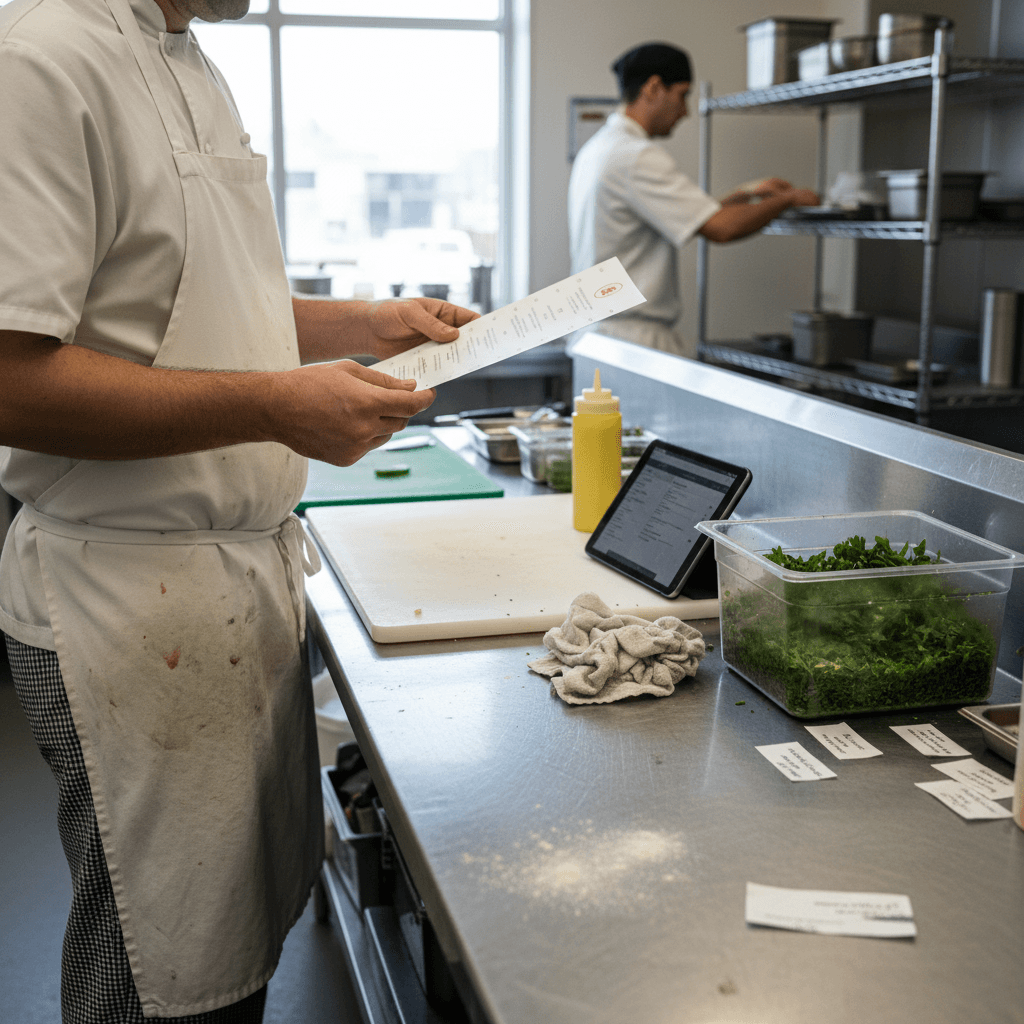
Train your opening crew to do a five-minute menu audit. They compare the printed menu on the counter to the master list. They note any discrepancies in price or items listed as out of stock. This simple habit stops 90% of customer confusion before it starts. It turns a reactive problem - "Why does my receipt say $6 when the menu says $5?" - into a proactive check that happens before the doors open.
When Quick Changes Aren't Enough
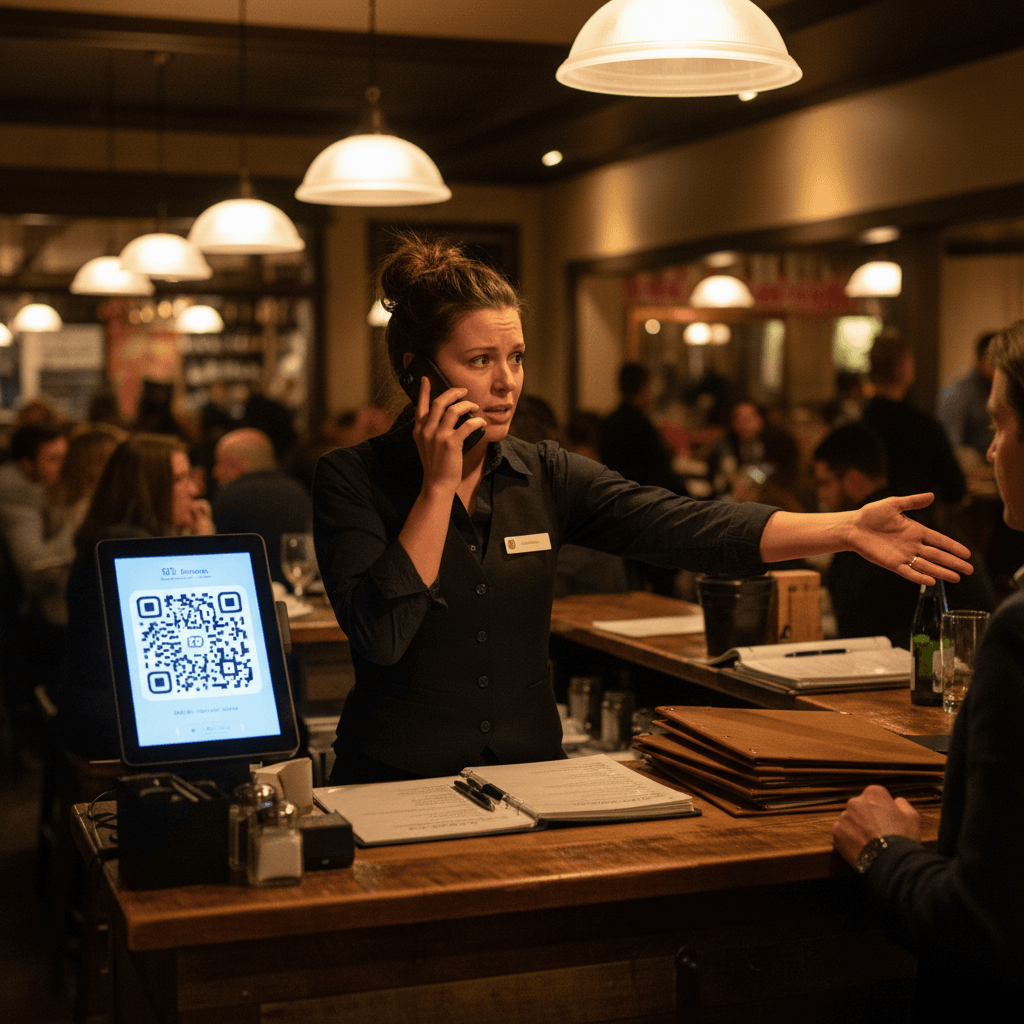
But changing prices fast only matters if customers see them. During the 8 AM rush, three people ask about yesterday's special price. Your barista has to explain the increase while pulling shots. The line grows. Digital boards show current prices to everyone at once - no explanations needed.
The real bottleneck isn't updating prices - it's communicating those updates during peak chaos. Your barista can only have one conversation at a time. A customer at the register asking about a price holds up the entire line behind them. Every second of explanation is a second not spent making drinks or taking new orders.
This is where visual management wins. If your master list says oat milk is now an extra 75 cents, that information needs to be visible without words. A small sign at the register works. A note on the digital board is better because it's part of the natural ordering flow - customers look at the board to decide what they want, then see the price right there.
Think about your busiest 30 minutes each day. How many price clarification conversations happen? How many times does someone order an item you ran out of two hours ago? Each of those moments adds friction to your service speed and chips away at customer confidence.
Your Next Move After Paper
The real win isn't just saving reprint costs. It's turning your menu into a tool that works during your busiest hours. Start by tracking how often you reprint menus each month. Then test one digital board for your seasonal specials board first.
Put that digital board where it does the most work - right in the line of sight for customers waiting to order. Use it for items that change most frequently: daily pastry selections, featured drinks, limited-time offers. This gives you a controlled environment to practice quick updates without overhauling your entire menu system.
Measure what changes. Time how long it takes to update that digital specials board versus printing and replacing paper signs. Count how many customers ask about items on that board versus your main printed menu during peak hours after both have been updated with new information.
The data will show you something simple: communication speed matters more than you think during rush periods.
Manual systems work when they're disciplined and consistent. They require someone to remember to check the master list. They need someone to print and replace signs. They depend on every staff member knowing where to look for updates. Modern digital tools can automate this workflow by connecting your point-of-sale system directly to display boards. When an item sells out in your system, it can automatically disappear from customer-facing menus. When you update a price at headquarters, it can propagate everywhere instantly. This removes human forgetfulness from critical communication loops.
Taking the Next Step
Shifting from paper menus isn't about technology for its own sake. It's about removing friction from your busiest moments and stopping profit leaks before they happen. The logic is straightforward: faster communication during rushes means better service and fewer pricing errors.
Track your reprint frequency for one month, then calculate what moving those updates to digital displays would save in both hard costs and staff time. View our pricing to understand how this shift fits into improving daily operations. When you're ready to test how immediate updates change your morning rush, start a free trial and apply it first to your most volatile menu items like daily specials and out-of-stock notifications