When Your Barista Becomes a Cash Register
The morning rush line isn't just lost sales - it's burned coffee and frustrated regulars. Self-ordering kiosks fix the bottleneck, not the barista.
The morning rush isn't just about speed - it's about what happens when your best barista gets stuck taking orders instead of making coffee.
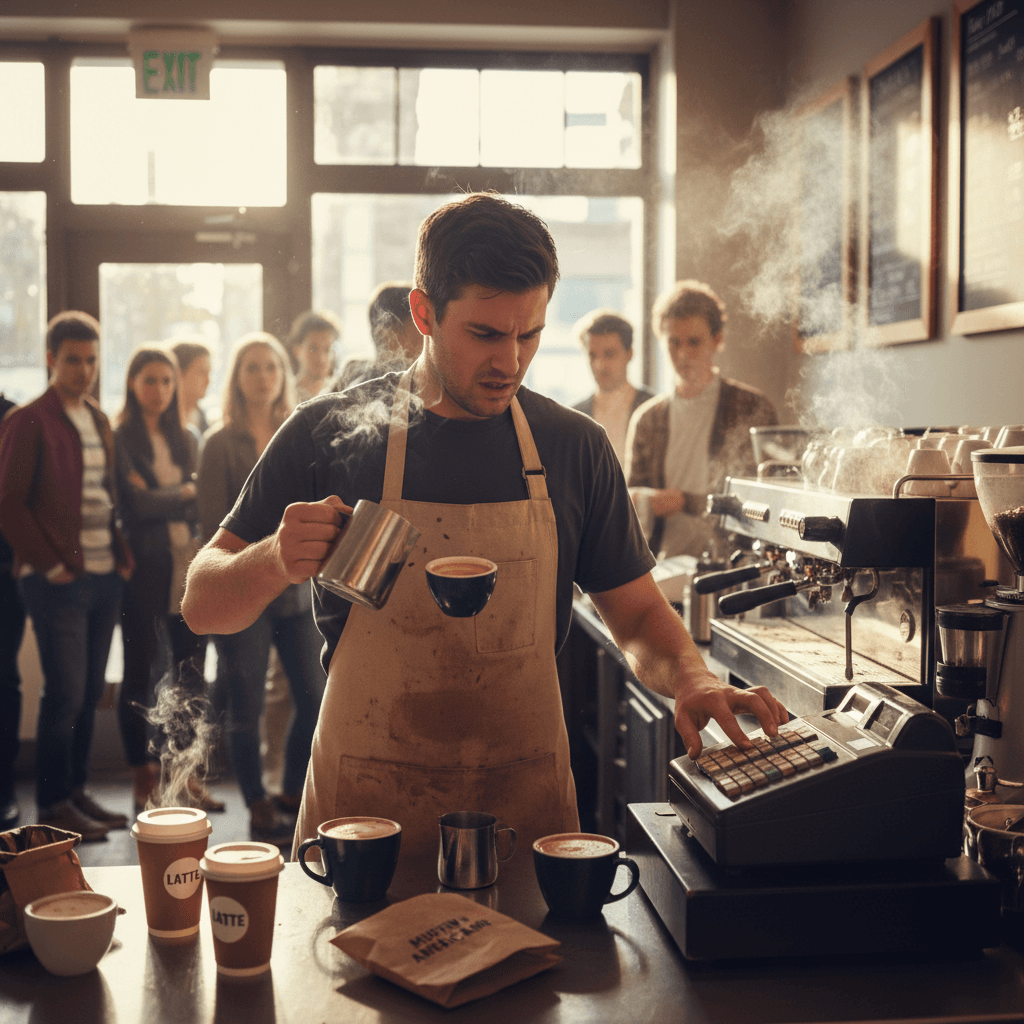
Every minute they spend at the register is a minute they're not pulling shots or steaming milk. The line builds, drinks get cold, and regulars start going elsewhere. You can feel it at 7:45 AM on a Tuesday. Your lead barista, the one who can pour perfect latte art while blindfolded, is staring at a touchscreen trying to find the "extra hot, half-caff, oat milk cappuccino" button. Behind them, three espresso shots die in the portafilter. The milk they just steamed for a flat white sits cooling in the pitcher. This isn't a service hiccup - it's your business model leaking cash onto the counter. This specific bottleneck is part of a larger system for running a profitable operation, which we break down in The Coffee Shop That Actually Makes Money.
The problem isn't your barista's skill. It's the job you're asking them to do. You hired an artist and put them on cashier duty during the only time that really matters. When your barista becomes a cash register, you lose twice: first on the sale you might have made if the line moved faster, and second on the product you waste while they're not making drinks.
The 10-Second Rule That Changes Everything
Here's the hard truth most cafes ignore: if your barista takes more than 10 seconds to ring up an order, you're losing money on every transaction. Not just in lost sales from the line, but in wasted coffee and milk that sits too long.
The solution starts with training your staff to handle transactions like a pit crew - specific phrases, exact movements, no wasted motion.
The Rule: From "hello" to payment processed must take 10 seconds or less during peak hours. This isn't a suggestion. It's the difference between a 15-person line that clears in five minutes and one that snakes out the door until 10 AM.
Start with language. Train your cashier (if you have one) or your barista on register duty to use closed-ended questions. "Hot or iced?" not "How would you like that?" "What size?" not "What size would you like?" Every extra word adds two seconds. Two seconds times twenty customers is forty seconds of dead time where coffee is burning and milk is cooling.
Next, organize your point-of-sale screen like your barista's station. The most common drinks - latte, cappuccino, americano, drip coffee - should be on the first screen or have dedicated buttons. Modifiers like milk type and extra shots should be in the same place every time. During a rush, muscle memory takes over from conscious thought. If your barista has to search for "almond milk" three times for three different orders, you've already broken the 10-second rule.
Finally, practice the handoff. The moment payment is approved, the cashier should call the drink clearly to the bar station while handing the customer their receipt. No pause. No "your drink will be right up." The transaction ends when production begins. This handoff is where most cafes lose another five seconds of precious time.
Why Faster Hands Aren't Enough
Even with perfect training, there's a physical limit to how fast one person can take orders and make drinks.
During the 8 AM rush, when three people walk in together and each wants something different, your system breaks down. The cash register becomes a bottleneck that no amount of hustle can fix. You're asking your barista to do two completely different jobs at once.
Think about the cognitive load. Taking an order requires listening, translating customer language into menu items, navigating software, processing payment, and making change. Making a drink requires measuring coffee, tamping with precise pressure, timing extraction, steaming milk to specific temperatures, and combining everything with care. These are different parts of the brain. Switching between them costs time and creates errors.
You'll see it when tickets print wrong. A customer says "large latte" but gets charged for a medium because the barista was already thinking about milk temperature when they hit the button. Or when drinks get made out of order because the cashier took payment for customer three before calling out customer two's complicated order to the bar.
The physical space creates another limit. In most small cafes, the register is between the customer and the espresso machine. Even if you have two people - one on register, one on bar - they're constantly bumping into each other. The barista needs to get to the grinder, but the cashier is in the way making change. The cashier needs to grab a pastry, but has to reach across the barista who's pouring a shot.
This isn't about working harder. It's about physics and human attention. During your peak two hours, you have maybe ten square feet of workspace and one or two people trying to perform sequential tasks in parallel. The math never works.
The Quiet Counter That Sells More Coffee
Imagine your barista never touching the register during peak hours.
They greet customers by name while pulling shots, steam milk while chatting about the weather, and hand off perfect drinks without breaking rhythm. The line moves because orders come in through kiosks before customers reach the counter. Your best employee does what they're best at - making incredible coffee - while technology handles the transactions.
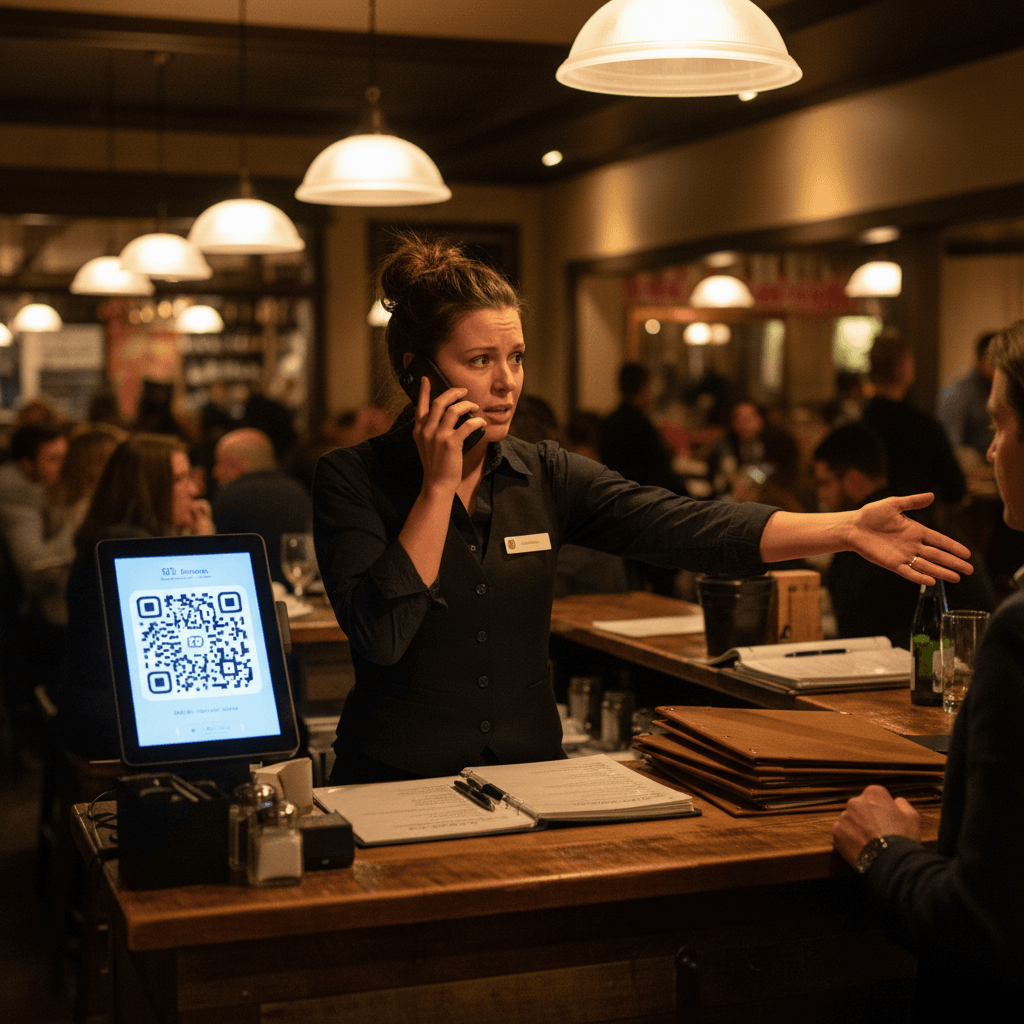
This shift changes everything about your morning rush. Instead of twenty people waiting for one person to take orders then make drinks, you have twenty people placing orders simultaneously through multiple channels. Some use their phones before they leave home. Some use a tablet kiosk when they walk in. Some still prefer to talk to a person - and now that person can be dedicated solely to helping customers choose rather than processing payments.
Your bar station becomes a production line with a steady flow of tickets instead of chaotic bursts. The barista sees six drinks queued up and can sequence them efficiently: steam milk for all milk-based drinks first, pull shots second, assemble third. No stopping to take payment for drink number seven while drink number four's milk gets cold.
Regulars notice immediately. They get their usual faster because they can order through an app while parking their car. New customers feel less pressure because they can browse the menu at their own pace on a screen instead of feeling rushed by people behind them in line.
The financial impact shows up in three places: higher sales per hour (more transactions completed), lower product waste (drinks made promptly before ingredients degrade), and better customer retention (consistent experience that doesn't depend on which barista is working).
This transition from manual order-taking requires examining your entire workflow - not just adding technology but redesigning how work flows through your space during critical hours.
Taking the Next Step
The shift from treating your barista as a cashier to treating them as a craftsman is practical and logical once you break down what actually happens during service peaks.
Your morning rush doesn't need more hustle - it needs smarter systems that let each person do what they do best without creating bottlenecks that waste product and frustrate customers.
If this specific bottleneck resonates with your daily reality at 8 AM, examining digital ordering platforms could provide relief where manual process improvements hit physical limits. You can view our pricing for solutions designed around cafe workflows or start a free trial to see how redirecting order flow changes what happens behind your counter tomorrow morning