When Hotel Guests Skip Your Restaurant
Your hotel restaurant is losing revenue every night guests order delivery instead. Fix these three service gaps to capture more guest spending.
The Empty Table Tax
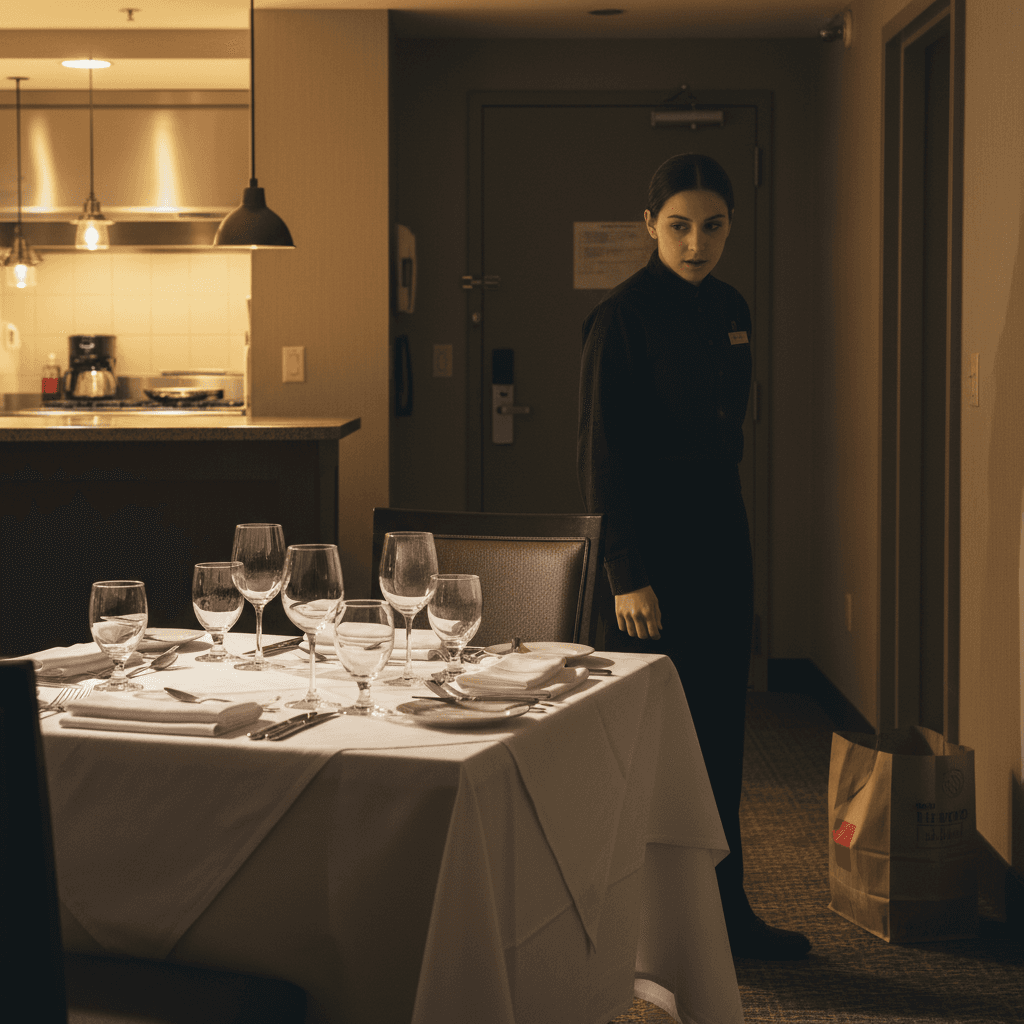
When hotel guests skip your restaurant, you can see the cost in real time. It's Friday night, your dining room is half empty, but your line cooks are prepped for a full house. Your servers are standing by their stations, checking phones because there aren't enough tables to keep them busy. Meanwhile, the front desk is handing out delivery menus, and you watch a family walk through the lobby carrying three pizza boxes to their room.
Every time that happens, you're paying what I call the Empty Table Tax. It's not just the lost $80 from a family dinner. It's the wasted labor costs for the two servers and one food runner you scheduled based on a forecast that didn't materialize. It's the extra salmon fillets and burger patties in your lowboy that will be thrown out on Sunday during inventory. It's the two bottles of wine and three cocktails that table would have ordered if they'd sat down. Most managers track covers but miss this hidden cost that drains profit every quiet shift.
This connects directly to fixing your entire food and beverage operation, which we break down in Room Service That Actually Works. That guide tackles the full system, from cold room service trays to scheduling waste.
Stop Chasing Room Service
The industry tells you to push room service upgrades and fancy in-room dining menus. Here's the hard truth: guests don't order room service because your dining room experience is broken. They've given up on eating with you altogether. Fix the dining room first.
Start with three manual checks every manager can do tonight.
First, time how long it takes for water to hit a new table. Grab a stopwatch. When a host seats a party, start the clock. Stop it when the server places water glasses down. Your target is under 90 seconds. If it takes five minutes, guests are already frustrated and less likely to order appetizers or cocktails.
Second, track how many times servers have to go back to the kitchen because they forgot something. Stand near the kitchen pass for one hour during dinner. Count each time a server returns for ranch dressing, extra napkins, or a side of fries they didn't ring in. More than two forgotten items per server per shift means there are training gaps in their ordering rhythm.
Third, listen for guest complaints about cold food at expo. If you hear "fire table four again" more than once in a night, your kitchen timing is off. Food is dying in the window because servers aren't running it fast enough or cooks are firing items too early.
When Checklists Become Bottlenecks
These manual fixes work for about two weeks. They create a brief period of better service. Then your best manager gets pulled into a banquet crisis upstairs. Your new server forgets the 90-second water timing drill because they're overwhelmed with a six-top. Suddenly you're back to 15-minute water delays and cold food complaints.
The problem isn't finding solutions - it's making them stick during Friday night rush when three large parties arrive at once and your expo is calling four different firing times. Manual checks rely on human consistency during chaos. That's why systems break.
The Rule: Any process that depends on a manager watching a stopwatch during peak service will fail. You need rhythms built into the job itself, not added as extra tasks.
Think about your busser setup. Are water pitchers and glasses kept at the server station, or do servers have to walk to the dish pit? That 30-second walk kills your 90-second target before service even starts. Move the water station.
Consider your menu design. Are servers memorizing 12 modifiers for each burger? That mental load causes forgotten items and kitchen return trips. Simplify the options or create a modifier cheat sheet at each POS terminal.
From Damage Control to Revenue Capture
The goal shifts from fixing broken service to building service that sells itself. This is where you stop losing money and start making more.
When water arrives in 60 seconds instead of five minutes, guests are relaxed. They order appetizers because they aren't staring at an empty table wondering if anyone works here. When servers don't make multiple kitchen trips for forgotten items, they have time for wine suggestions and dessert prompts. When food arrives hot, tables turn faster on busy nights because guests aren't waiting for recooks.
Start measuring what actually matters for revenue capture.
Track average check size from hotel guests versus walk-in diners. Use your POS system's check tagging feature. If hotel guests spend $10 less per person, find out why. Are they skipping drinks because service is slow? Are they avoiding desserts because the wait for coffee is too long?
Count bar attachment rates with dinner orders. How many hotel guest tables order cocktails or wine? If it's below 50%, your servers aren't suggesting drinks effectively during that critical first 90-second window.
Walk through your lobby at 7 PM and count delivery bags. How many DoorDash or Uber Eats bags do you see coming through the doors? That number is your direct competition scorecard. Every bag is a table you didn't seat.
Manual systems get you this data, but they take manager hours to compile from POS reports and handwritten logs. Modern digital tools can automate this tracking, giving you real-time dashboards instead of Monday morning spreadsheets.
Taking the Next Step
The shift from losing hotel guests to capturing their spending is practical and logical. It starts with fixing basic service timing and ends with building systems that work when you're not watching.
If slow table turns and missed drink sales are hurting your bottom line, consistent digital tools can provide the structure manual checks can't sustain during busy shifts.
View our pricing for straightforward plans based on your restaurant's size, or start a free trial to see how automated service tracking works during your next dinner rush