When Free WiFi Costs You Money
Customers camping for hours on one coffee? Your free WiFi might be draining profits. Learn smart rules that protect your bottom line without chasing guests away.
The Campers Are Killing Your Lunch Rush
When Free WiFi Costs You Money, you feel it in the middle of Friday lunch service. You have a line out the door. Your baristas are moving fast. But your three best window tables are still occupied by the same three students who arrived at 10 AM. They each bought one latte. Their laptops are open, textbooks spread out, and they show no signs of leaving. Every time a new party of four walks in, your host has to scan the room and apologize for the wait, knowing full well those prime seats are being used as a personal office.
This isn't hospitality; it's charity for people who treat your cafe like a co-working space. The math is simple and brutal. A four-top that should turn three times during a two-hour lunch rush - generating maybe $45 per turn - instead produces $12 total from three coffees over four hours. You're not just losing that table's revenue. You're losing the tips for your servers, the potential add-on sales from food, and worst of all, you're training paying customers to go somewhere else because your place always looks full. This specific drain on your lunch profit is one critical piece of a larger system for running a sustainable business, which we map out in detail in The Coffee Shop That Actually Makes Money.
The pain point isn't the quiet morning. It's the transition into peak hours when those campers become a physical barrier to your revenue. Your staff sees it. They watch a family walk away because there's "no room," even though half your seats are taken by people who stopped spending money hours ago.
The 90-Minute Rule That Actually Works
Here's the hard truth most cafes get wrong: time limits alone don't work unless you pair them with purchase requirements. Telling someone they have to leave in 90 minutes feels punitive. It puts your staff in the position of being the bad guy. The effective system has two parts that work together.
First, require a new purchase every 90 minutes for continued WiFi access. This is the key shift. You're not kicking anyone out. You're simply linking the amenity they want - unlimited internet - to an ongoing commercial transaction. The second part is communication. Post clear signs at eye level explaining this policy benefits all guests by keeping tables available for diners.
Train your staff to mention it cheerfully when seating people with laptops: "Just so you know, our WiFi resets every 90 minutes to keep tables moving during busy times! You'll just need to make another purchase to reconnect." This turns enforcement into helpful information rather than confrontation. It sets the expectation before the problem even starts.
The Rule: WiFi access requires a purchase receipt from within the last 90 minutes. No receipt, no password. This isn't a suggestion; it's a non-negotiable standard for protecting your peak service windows.
Implementing this means changing your WiFi setup. Use a system that asks for a code from the receipt, or one that times out and requires re-authentication. The goal is to make the rule self-enforcing through technology, not through your barista's memory or willingness to have an awkward chat.
Why Your Staff Hates Playing WiFi Cop
The problem isn't the rule itself - it's consistent enforcement across an entire day with different staff members and shifting customer pressure. Your morning barista might gently remind someone at 10 AM when the cafe is half empty. It feels low-stakes.
But your 2 PM shift lead faces a completely different scene. The house is packed with a post-lunch crowd. There are six campers who've been there since breakfast rush, nursing empty cups. Now your lead must choose between initiating six separate awkward conversations or letting the policy slide just this once to avoid conflict during a busy period.
Both choices cost you money and morale. If they enforce it, staff morale drops from constantly policing guests and feeling like the villain. If they let it slide, your best tables stay blocked during peak revenue hours, and the rule loses all credibility for next time. This inconsistency is why most WiFi policies fail within two weeks.
Your team didn't sign up to be hall monitors. They signed up to make great coffee and provide good service. Asking them to constantly confront guests over table time directly conflicts with their core desire to be hospitable. This role conflict creates stress, leads to turnover, and results in spotty policy application that confuses customers more than it helps.
From Policing to Profit Protection
Stop thinking about WiFi rules as restrictions on customers. Start framing them as protection for your business model and for the experience of all your guests. A cafe that turns tables makes more money than one that doesn't. This isn't philosophy; it's arithmetic.
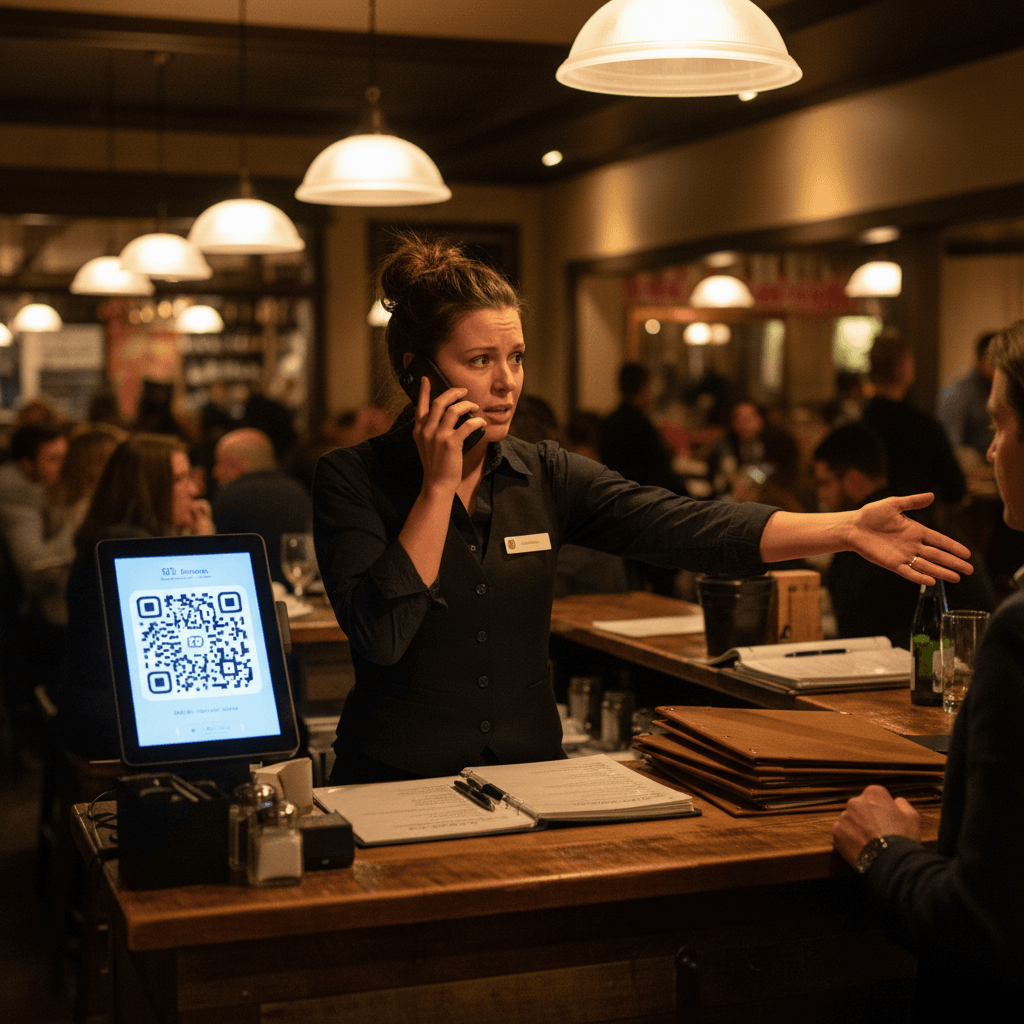
Clear communication removes the burden from your staff's shoulders and places it on a system. Update your signage today with simple language: "To ensure table availability for all our guests, WiFi access requires a purchase within the last 90 minutes." Brief your team tomorrow morning on the new script: "We're not asking you to police time anymore. Just point to the sign and hand them the WiFi card with the rule printed on it."
Watch how clear expectations create better customer behavior naturally. Most reasonable people understand that a business needs to make money. The campers who get offended by this rule were never going to be profitable customers anyway. The guests who appreciate being able to find a seat will thank you.
This shift from manual enforcement to system-based guidance is where you regain control of your floor plan without sacrificing team morale or customer goodwill.
Manual systems work, but they require constant vigilance and discipline from every team member during every shift. Modern digital tools can automate the repetitive parts of this workflow - like timing WiFi sessions or requiring receipt validation - freeing your staff to focus on service rather than surveillance.
Taking the Next Step
Controlling your table turnover is a practical shift with clear financial logic. It protects your peak revenue periods and improves the experience for customers who actually come to dine, not just occupy space.
If inconsistent policies are draining profit from your lunch rush, it's time to implement systems that work without constant staff intervention view our pricing for tools designed around these operational realities or start a free trial to see how automation can handle timing rules so your team can get back to service