The 15-Minute Table Turnover Drill
A practical drill that trains servers to turn tables 15 minutes faster without rushing guests. Real floor techniques that work during Friday dinner rush.
The Real Cost of Slow Table Turns
The 15-Minute Table Turnover Drill starts with a simple scene. It's 7:45 PM on a Friday. Your dining room is full, your waitlist is 45 minutes deep, and table six just paid. The server clears the plates, wipes the table, and walks away. Five minutes later, the hostess seats a new party there. The new guests sit at a bare table for three minutes before anyone brings water. The server is now behind before the order is even taken. That 20-minute gap between paying and ordering for the next group is pure profit walking out your front door.
Every empty table during dinner rush is money walking out the door. That 20-minute gap between parties adds up to lost reservations, frustrated servers, and kitchen pacing problems. The math is simple - one extra turn per table per night can mean thousands in monthly revenue. This isn't about theory. It's about the four-top that could have been seated at 8:05 instead of 8:25. It's about the server who could have handled one more table smoothly instead of starting every new party in the weeds.
This connects directly to managing your most controllable cost - labor. For a complete system on scheduling, cross-training, and operational efficiencies that work on the floor, see our guide on Cutting Labor Costs Without Cutting Corners. Faster table turns let you serve more guests with the same team. That's how you improve revenue without increasing your payroll percentage.
The Pre-Shift Reset Drill
Most restaurants train servers to clear plates. Few train them to reset tables with military precision. The hard truth: clearing is about removing things, resetting is about preparing for what comes next. These are different skills that need separate training.
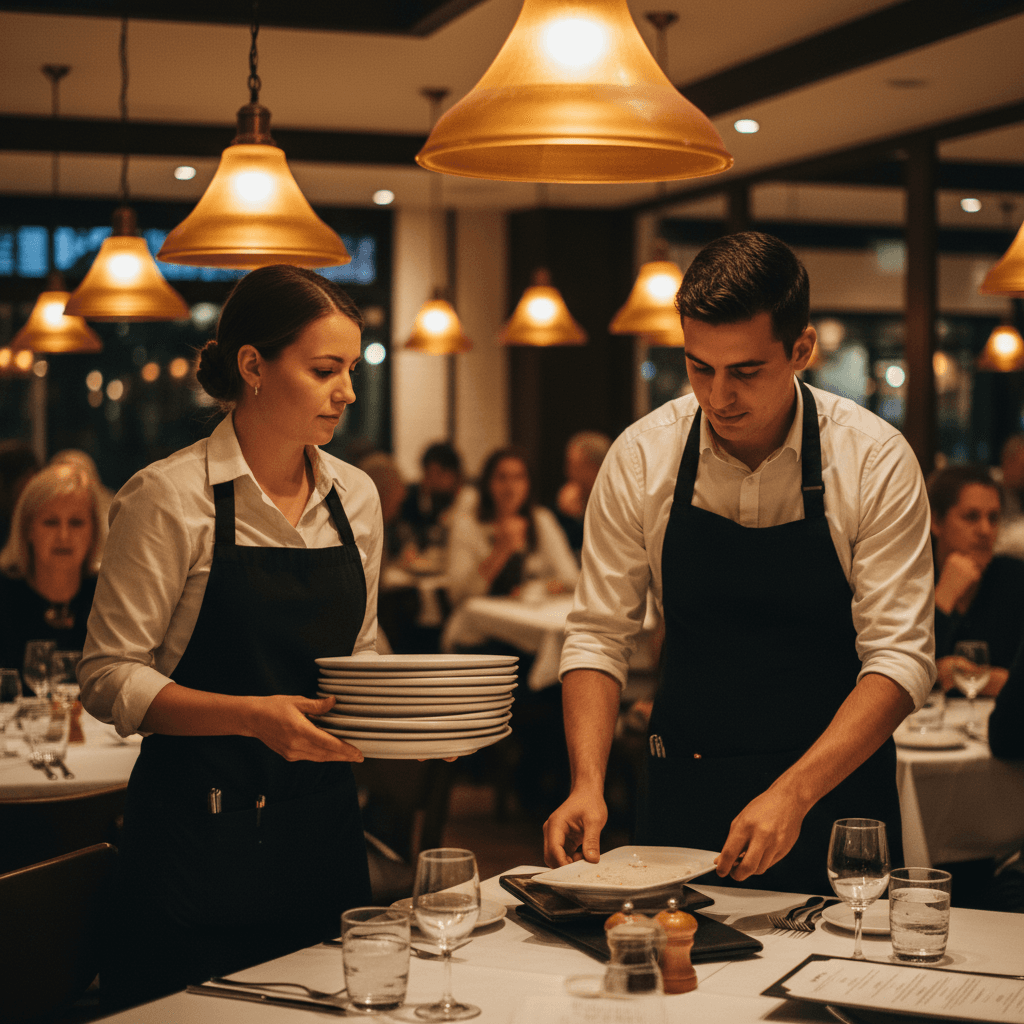
Start with a 15-minute drill before every shift. Have servers practice clearing and resetting a full table setting - plates, glasses, silverware, napkins. Time them. Then do it again. The goal isn't speed at first - it's muscle memory. Servers who can reset without thinking about it during service are the ones who turn tables faster.
The Rule: Every server must be able to clear and fully reset a four-top in under three minutes during the drill. This includes wiping the table, placing new settings, and checking chair alignment. Time it with a stopwatch during pre-shift meetings. Make it competitive between sections. The server who resets fastest gets first pick of sidework or gets cut first at the end of the night.
Break the reset into three distinct phases. Phase one is clearing: all dishes, glassware, and trash removed in one trip using a bus tub. Phase two is wiping: table and chairs sanitized with one spray and one cloth. Phase three is setting: placemats or tablecloths down first, then napkins and silverware rolled together, then water glasses. Train this sequence until it's automatic.
When Teamwork Breaks Down
The bottleneck happens when one server clears while another resets. Without coordination, you get duplicate trips to the kitchen, silverware left on tables, and water glasses forgotten. This manual system falls apart during peak hours when everyone is in motion.
Watch your floor during Saturday dinner. Count how many times two servers touch the same table without completing the reset. That's wasted labor - two people doing one job inefficiently. The solution isn't more staff - it's better choreography.
Assign clear zones for resets. If you have two servers in a section, designate one as the primary clearer and one as the primary resetter for that shift. The clearer focuses on getting dirty dishes to the dish pit quickly. The resetter focuses on having clean settings ready to go. They communicate with simple signals - a nod when a table is cleared, a hand signal when it's ready for seating.
Create reset stations in strategic locations. These aren't fancy - just a small cart or shelf stocked with everything needed: rolled silverware bundles, clean napkins, sanitizer spray bottles, and clean rags. Place them near server alleys or pantry areas so no one has to walk to the back for supplies during rush hour.
The most common breakdown happens with water service. A table gets reset beautifully but sits empty for five minutes because no one brought water glasses before seating new guests. Fix this by making water part of the reset protocol. The Rule: No table is considered "reset complete" until it has water glasses placed upside down on coasters or napkins at each setting.
From Drills to Daily Rhythm
Turn your 15-minute drill into a service rhythm. Designate specific reset stations with everything needed - rolled silverware, clean napkins, sanitizer spray. Create clear handoff signals between clearing and resetting servers.
The real win comes when table turnover becomes automatic. Servers stop thinking about it and just do it. That's when you get that extra seating during peak hours without adding staff or rushing guests.
Implement a visual system for table status. Use small colored coasters or flags that servers flip when a table changes state: green for dining, yellow for needing clearing, red for being cleared but not reset, blue for reset complete and ready for seating. This lets hosts seat instantly without asking servers if a table is ready.
Train hosts to be part of the turnover team. When hosts see a blue flag on a table, they can seat immediately and signal the server with a simple hand gesture or by tapping their watch twice - this means "table six just sat." The server knows to bring waters within 90 seconds without being told verbally.
Measure what matters most: seat-to-order time for newly seated tables during peak hours. This tells you if your turnover system is working where it counts - getting new guests ordering quickly so the kitchen can maintain pace and servers can maximize their sections.
These manual systems work because they're built on human patterns that already exist in your restaurant. They don't require new technology - just better use of existing communication channels between your team members.
The discipline required to maintain these manual systems consistently across every shift is substantial though. That's where modern restaurant platforms come in - they can automate the communication between front-of-house roles that makes coordinated table turns possible without constant manager oversight.
Taking the Next Step
Faster table turns are about removing friction points that already exist in your service flow. The logic is clear: less time between parties means more revenue per server hour without increasing labor costs or rushing guest experience.
The systems described here work because they're built from your existing staff patterns rather than imposed from outside theory.
If you're ready to implement coordinated table turns across your entire team consistently, view our pricing for platforms designed specifically for restaurant floor communication needs or start a free trial to see how automated handoff signals between hosts and servers work during your next Saturday dinner rush