Stop Wasting Pastries: 3 Ways to Sell More
Pastries going stale in your case? Learn how top cafes turn display space into profit centers with simple changes your staff can execute today.
The Pastry Case That Eats Your Profit
It's 3:45 PM. Your afternoon barista opens the pastry case and pulls out six scones, two croissants, and a muffin. They go straight into the trash. You just lost $22 in food cost, plus the labor to bake them, plus the energy to run the oven, plus the space they occupied all day. Stop Wasting Pastries: 3 Ways to Sell More begins with recognizing this daily drain as a solvable operational problem, not an inevitable cost of business. Your pastry case should be your highest profit square foot, not your biggest waste line. This connects directly to the daily systems that separate profitable shops from hobby cafes, which we break down in The Coffee Shop That Actually Makes Money.
The math is simple but brutal. A $4 croissant that costs $1.20 to make has a $2.80 contribution margin - that's what's left after food cost to cover labor, rent, and profit. When you throw it away, you lose the entire $2.80, not just the $1.20 ingredient cost. Multiply that by ten wasted items per day, and you're burning $28 in pure profit potential before you even pay your staff. That's over $800 per month disappearing into your compost bin.
The cycle feels permanent because it's built into your current process. You bake based on yesterday's sales or a weekly par sheet. Customers buy based on what they see and smell right now. The gap between those two realities is where your profit evaporates.
Display Like You Mean It (Not Just Store It)
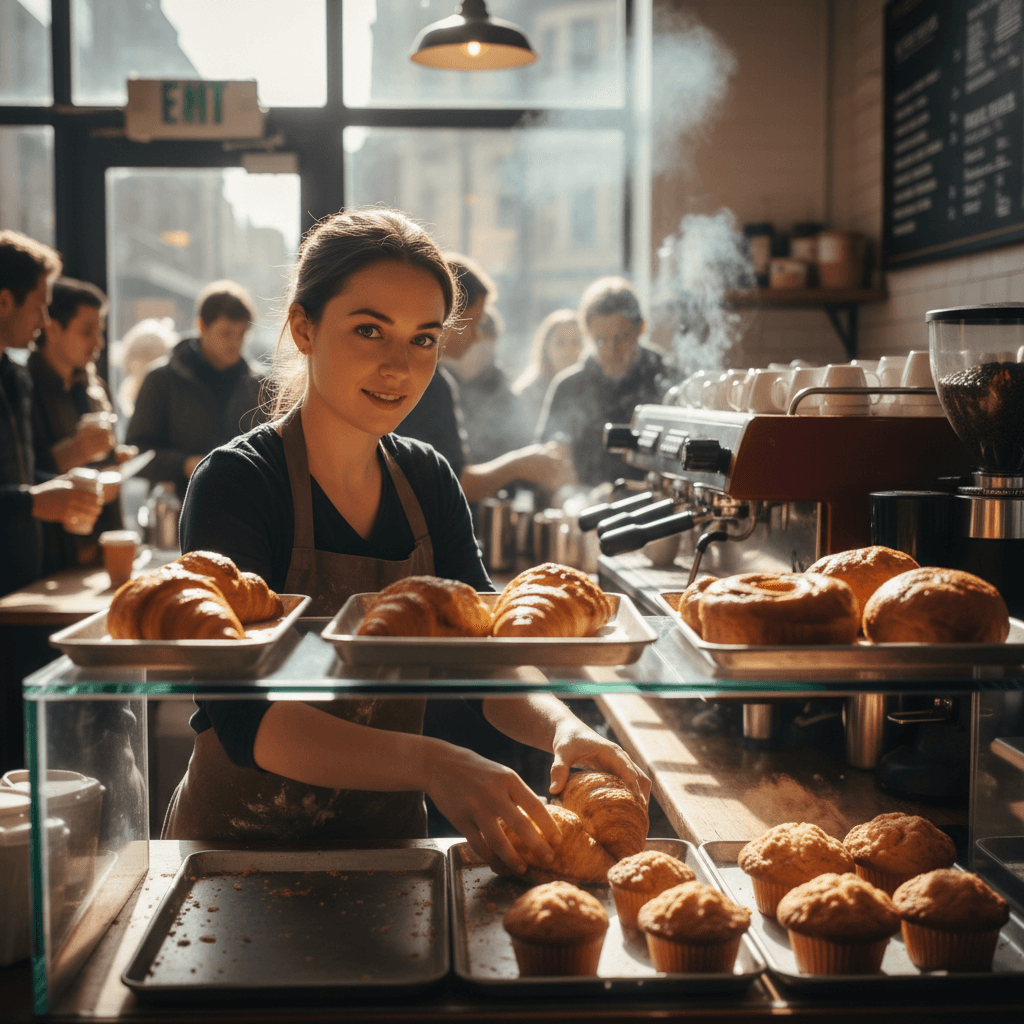
Customers don't buy what they can't see or smell clearly. Your pastry case is a sales tool, not refrigerated storage. The first fix happens before service even starts.
Place your best-selling items at eye level where people naturally look while ordering coffee. For most adults, this is the middle shelf. Put high-margin items like specialty scones or gluten-free options here too. Lower shelves are for bulkier items like loaves of bread or backup stock. The top shelf is for visually striking items that draw the eye upward - maybe a beautifully decorated cake or a tower of macarons.
Keep only what fits beautifully on each plate or tier. Empty space sells better than an overcrowded case. An overcrowded case looks like yesterday's leftovers. A carefully curated display looks fresh and intentional. The Rule: If you have to stack items or cram them together, you have too many out at once.
Rotate items every two hours during peak periods. Your morning barista should refresh the display at 10 AM after the breakfast rush. Your lunch shift should do another refresh at 1 PM. This isn't just about moving food around - it's about presentation psychology. A croissant that's been sitting in the same spot since 6 AM looks tired by noon, even if it's still fresh.
Train servers on specific language for upselling. "Fresh blueberry muffin?" works better than "Want a pastry?" Point at the specific item while asking. This creates a visual connection for the customer and makes the suggestion concrete rather than abstract.
Time your baking to match demand patterns, not just opening hours. If your coffee rush hits at 8 AM, have pastries coming out of the oven at 7:30 AM, not 5 AM when you first open. The smell of baking is your most powerful sales tool - use it when customers are actually present.
When Manual Selling Hits Its Limit
You can train perfect upsells and design beautiful displays, but you still face the same fundamental bottleneck: guessing tomorrow's demand based on incomplete information.
Tuesday's almond croissant sell-out becomes Wednesday's waste because yesterday's success doesn't predict today's reality. Maybe it rains on Wednesday and fewer people walk by. Maybe there's a school event that changes traffic patterns. Maybe your best croissant-seller called in sick and the replacement server doesn't mention them.
Manual tracking systems break down between shifts. The paper slip where servers mark what they sold gets lost, coffee-stained, or misinterpreted. The afternoon manager who notices slow scone sales doesn't effectively communicate that to the morning baker who preps for tomorrow.
Even with perfect communication, human memory is flawed. Your baker remembers selling out of muffins last Friday but forgets that was because a tour group came through - not because of regular customer demand.
This guessing game creates two types of waste: obvious waste from unsold items thrown away at closing, and hidden waste from missed sales opportunities when you run out of popular items during peak hours.
The hidden waste often costs more than the visible waste. Running out of chocolate croissants at 10 AM means turning away five customers who would have bought them plus their coffee orders. That's $25 in lost pastry sales plus $40 in lost beverage sales - $65 total versus the $4 cost of one extra croissant that might have gone unsold.
From Guesswork to Guaranteed Sales
The real shift happens when you stop reacting to yesterday and start predicting tomorrow based on actual patterns rather than gut feelings.
Systems that track what actually sells - not just what you baked - turn wasted pastries into planned profit. This means connecting your morning bake quantities directly to yesterday's sales data instead of last week's guess or a static par sheet.
Start with simple manual tracking that actually works across shifts. Use a dedicated clipboard with clear columns for each pastry item, located at the POS station where servers can mark sales as they happen. Make it part of the closing manager's duty to tally these numbers and email them to the opening baker before they start prep.
Look for patterns beyond daily totals: what sells before 10 AM versus after 2 PM? What items move faster on rainy days versus sunny days? Which server consistently sells more of certain items? This data exists in your operation already - you just need to capture it systematically.
Once you have reliable data, adjust your baking schedule accordingly. If blueberry muffins consistently sell out by 11 AM but scones move slowly until afternoon, bake muffins in smaller batches throughout the morning rather than one large batch at opening.
This is where profitable cafes separate from hobby shops: they make data-driven decisions about their highest-margin items rather than operating on tradition or guesswork.
Modern digital tools can automate this tracking process entirely, eliminating the paper slips and manual tallies that often fail between shifts. Kitchen display systems can track sales in real time, while inventory management software can suggest bake quantities based on historical patterns and even factor in variables like weather forecasts or local events.
Taking the Next Step
Transforming your pastry case from a cost center to a profit engine requires changing daily habits more than making large investments. Start with display improvements and specific upselling language today - those cost nothing but attention.
The logic is clear: wasted pastries represent lost profit potential that compounds daily through food cost, labor, and missed customer opportunities.
Ready to implement systems that track what actually sells instead of what you hope will sell? view our pricing for tools designed specifically for cafe operations, or start a free trial to see how automated tracking changes your bake quantities tomorrow morning